
Learn Mahjong Online: Courses, Resources & How to Start
Last updated: Nov 23, 2026
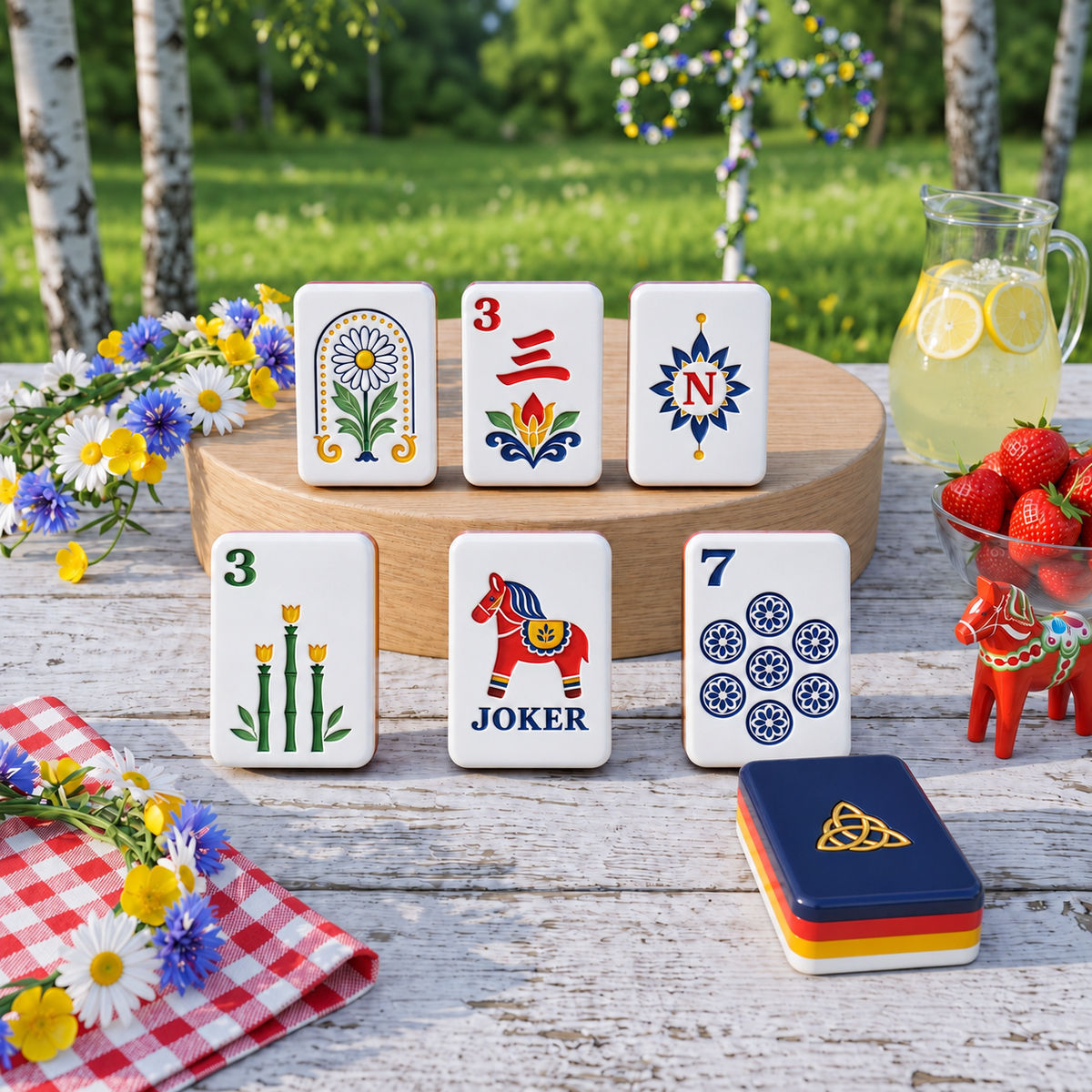
Online mahjong learning happens across three tiers: free video tutorials (YouTube, TikTok), structured courses (websites charging one-time fees or subscriptions), and live Zoom classes with instructors or local clubs. American mahjong courses typically cost between basic free options and modest single payments; Chinese and Riichi variants have similar accessibility. Most beginners learn the tile names and hand patterns in 1–2 weeks, the Charleston passing ritual in one session, and reach casual play readiness in 3–4 weeks. Quality courses cover rules, hand-reading from the seasonal card (American), or hand-building strategy (Chinese), and scoring. Avoid courses that skip the Charleston, ignore joker restrictions (American-specific), or promise fluency in days. Start with a 160-tile acrylic set to practice alongside video; Mahstead's best-selling American mahjong sets pair well with beginner tutorials.
What counts as a real mahjong course online?
A legitimate course teaches tile anatomy, hand-building rules, and live play scenarios step-by-step. For American mahjong, expect modules on the seasonal NMJL card, joker placement rules, exposure rules (pungs, kongs, quints, sextets only—no chows), and the Charleston. Chinese courses cover hand patterns, point calculation, and often wind-draw or ready-hand play. Courses worth your time include video demonstrations with physical tiles visible, downloadable hand sheets, and access to Q&A or community forums. Red flags: vague promises like "master mahjong in a weekend," courses that gloss over variant-specific rules, or no clarification on which version you're learning. The best courses separate American, Chinese, Hong Kong, Riichi, and Taiwanese rules upfront so you know what you're signing up for.

Where do most online learners actually start?
YouTube remains the largest free entry point; search "American mahjong for beginners" or the variant name to find independent instructors posting 15–60-minute overviews. Facebook groups dedicated to mahjong often link to pinned guides and live tutorial videos. Membership websites and mahjong clubs in your region (search community centers, libraries, synagogues, or country clubs) sometimes offer Zoom sessions free or at low cost to members. Paid courses typically live on platforms like Udemy, Teachable, or instructor websites; a few nonprofits and mahjong associations offer structured curricula. Live Zoom instruction with a real player beats passive video for rules clarification and hand-reading feedback. Start by identifying your variant: American mahjong for beginners is its own ecosystem with the seasonal card and eight jokers.
🀄 Shop best-selling mahjong sets →
How do you actually learn alongside a video course?
Follow these steps: (1) Watch a 10–15-minute tile-naming video; pause and sort a real or digital tile set by suit, wind, dragon, flower, and joker. (2) Play the video again, naming tiles aloud as you see them on screen. (3) Watch a hand-building tutorial; build the exact hands shown on physical tiles in front of you. (4) Learn one rule (e.g., pung = three identical tiles); build three pungs from your tiles and verify them. (5) Stop after 20–30 minutes; repetition over days beats cramming. For American mahjong, acquire a set early—you'll need to practice reading the mahjong card with real tiles in hand. Keep a notepad: jot down the three suits (Bam, Crak, Dot), winds (N, E, W, S), dragons (Red, Green, White), and joker rules as you learn them. Rewatch the Charleston explanation at least twice; it's the threshold between "knows tiles" and "ready to play."
How does learning differ by variant (American vs. Chinese vs. Riichi)?
Variant | What online courses focus on | Time to casual play | Rules complexity |
American | Seasonal NMJL card, eight jokers, exposed melds only (no chows), Charleston | 3–4 weeks | Moderate; card-dependent |
Chinese | Hand patterns, point values, declaring ready-hand, discard reading | 2–3 weeks | High; calculation-intensive |
Riichi | Draw-and-discard cycle, closed hands, waiting patterns, betting | 2–3 weeks | High; psychology-heavy |
Hong Kong | Fast-paced melds, bonus scoring, simplified hand list | 2–3 weeks | Moderate; rhythm-focused |
Taiwanese | Draw-heavy play, complex point formulas, tile economy | 4+ weeks | Very high; formula-dense |
American mahjong dominates U.S. online teaching because the seasonal card structure creates a built-in curriculum. Chinese and Riichi courses expect you to memorize hand categories or waiting patterns. Riichi uniquely emphasizes live psychology and draw timing over memorized lists. If you find a course, ask upfront which variant it teaches; many free videos don't specify. Start with American or Chinese if you're in North America; Riichi if you're drawn to Japanese culture or competitive play.
🎁 See our most-loved mahjong sets & accessories →

What mistakes do online learners make in their first month?
Not getting a real tile set early. Watching without tiles is like learning guitar from a video with no guitar—abstract and forgettable. Buy or borrow a 160-tile acrylic set in week one so muscle memory and visual tile recognition develop together.
Skipping the Charleston. American mahjong players often dismiss the pre-game passing ritual as optional flavor. It's not. The Charleston determines the opening balance of your hand and teaches you to think about tile distribution. Watch that section twice.
Confusing house rules with standard rules. Many online "courses" teach local variants—"we allow calling chows here" or "wild tiles act as any suit." American mahjong has no chows; jokers have strict rules. Learn how jokers work formally first, then learn your friends' tweaks.
Memorizing hands instead of reading patterns. Beginners often try to memorize every hand on the seasonal card. Learn the pattern logic instead: what does a quint look like? When can you expose a pung? Pattern reading transfers across years and tables.
Stopping after one video. Mahjong looks simple but has dozens of interlocking rules. One tutorial covers 40%. Watch two or three different creators; each explains melds, ready-hand, or exposure rules slightly differently, and redundancy solidifies the concept.
What's your realistic timeline and toolkit?
Week 1: Learn tile anatomy (names, suits, roles). Watch 2–3 beginner videos (30 minutes total). Buy or borrow a physical set. Sort tiles into organized piles by type. Time: 1–2 hours.
Week 2: Learn the Charleston, hand-building basics (pung, kong, exposure rules). Practice building hands from the course examples. Time: 2–3 hours over the week.
Week 3:Read the seasonal mahjong card (American) or hand pattern lists (Chinese). Build five hands from the card each day. Understand scoring at a glance. Time: 3–4 hours.
Week 4: Play a practice round with friends or a Zoom club. Let an experienced player sit with you and talk through discards. Time: 1–2 hours (the game itself).
Your toolkit:
A physical 160-tile set (or a printable tile reference).
Notepad for rules and hand patterns.
A mahjong mat (optional but clarifies tile placement and helps organize your hand on the table).
Racks with pushers (optional; helps beginners hold tiles cleanly without dropping them).
The current year's NMJL card (American mahjong only; free downloadable PDFs exist online).
Most people are playing casually by week 4. Mastery—reading hands fast, calculating scores fluidly, playing psychologically—takes months of table time, not course time.
✨ Find your Mahstead set — free US shipping →
What to check before you buy a course or join a Zoom class.
Variant clarity. The course title must say "American" or "Chinese" or "Riichi." Ambiguous titles waste your time if you want a specific version.
Creator experience. Does the instructor show their hands on camera while playing? Do they have club or tournament history? Anonymous or new creators sometimes teach outdated or regional rules.
Rule completeness. A good course covers tiles, hand-building, melds, exposure, Charleston (if American), discarding, ready-hand, winning, and scoring. If it skips any of these, it's a teaser, not a course.
Refund or access details. If paid, confirm you get lifetime access to videos or a clear expiration date. Some courses lock after 30 days.
Community access. Can you ask questions in a forum or live chat? Mahjong has edge cases; good instructors answer them.
Format fit. Do you prefer live interaction (Zoom class), self-paced video, or printable guides? Mismatch kills momentum.
Many of the best resources are regional: your local mahjong club or library may host free Zoom intro sessions. Ask in community Facebook groups which online instructors locals recommend; word-of-mouth beats review sites for niche skills like this.
FAQ
Is free online mahjong learning good enough to play casually?
Yes. Free YouTube tutorials and club recordings cover the full rule set. You'll play casually within 3–4 weeks. Paid courses speed clarity or add live feedback, but aren't required for casual games.
How long does it take to actually play a real game after starting an online course?
Most people are ready to sit at a table after 3–4 weeks of 1–2 hour weekly study sessions. First games are slow and frustrating; by game three, the pace feels natural.
Which variant is easiest to learn from online courses?
American mahjong, because courses can reference the seasonal NMJL card structure and the rule set is stable year-to-year. Chinese variants require memorizing more hand categories and are less standardized across regions.
Do I need to buy a mahjong set before taking an online course?
Not immediately. Watch one introductory video first (10 minutes) to confirm interest. Then buy or borrow a set before your second session; learning without physical tiles is slow and abstract.
What's the biggest mistake people make in their first online course?
Memorizing hands instead of learning pattern logic. Beginners often try to memorize every hand on the card. Learn what makes a pung or quint, not the card page-by-page; patterns transfer across years and tables.
Can you learn mahjong online without ever playing live?
You can learn the rules and build hands, but mahjong is deeply social. Live play teaches discard psychology, hand-reading speed, and meld timing that videos can't replicate. Plan to play at a table eventually.


View More
View More
View More
