
Large Print vs. Standard Mahjong Cards: 2027 Guide
Last updated: Nov 23, 2026
Standard American mahjong cards (typically 3.5″ × 5.5″) display the entire current year's hand library in compact form; large-print versions enlarge key text and hand symbols to 150–200% of standard size, trading coverage for readability. Both show identical hand patterns from the National Mah Jongg League official card—the difference is legibility, not content. Standard cards cost less and fit shirt pockets; large-print cards demand more table space but eliminate squinting, especially for players over 55 or under bright overhead lights. Most weekly games use standard cards during casual play, then switch to large-print for serious tournaments or when hosting mixed-age groups.
Why do so many players keep both card sizes at home?
We carry both because the right card depends on your table setup, lighting, and player mix. Standard cards slip into a coat pocket and work fine under table lamps at a regular game. Large-print cards shine when hosting a larger group, playing outdoors on a sunny patio, or welcoming newer players who haven't learned to scan quickly yet. Many of us own one of each—standard for casual play, large-print for hosting or tournament days. Learn how to read a mahjong card covers the mechanics both formats use; the card size itself never changes which hands are legal.

What's the real readability difference in bright light?
Standard text on a regular card becomes hard to parse under overhead fluorescents or daylight without tilting the card toward your face. Large-print formats maintain clarity at arm's length, reducing eye strain over a three-hour game. If your mahjong room has weak lighting or players sit far apart, large-print prevents the "pass the card around the table" rhythm that slows play. Outdoor play—increasingly common in Texas spring games—almost always needs large-print; regular cards fade or glare in direct sun. The difference isn't subtle: we've seen games jump from 45 to 60 minutes per round once large-print went into circulation, simply because no one loses time hunting tiny text.
How do you handle both formats at one table?
Practical hosting means designating one card size as the official reference, then letting each player hold their own version. We usually print or purchase large-print for the center of the table (the "house" card players reference during play) and keep standard cards as personal backups. This prevents disputes—everyone sees the same official hand on the large card, but players who prefer compact text can check their own standard copy. If you're hosting a mixed group (friends plus serious players), put large-print at center and standard on each rack. Shop best-selling mahjong sets often include a card holder; use it to angle your house card at 45 degrees, which works for both sizes.
🀄 Shop best-selling mahjong sets →
Does card size affect the tiles or table setup?
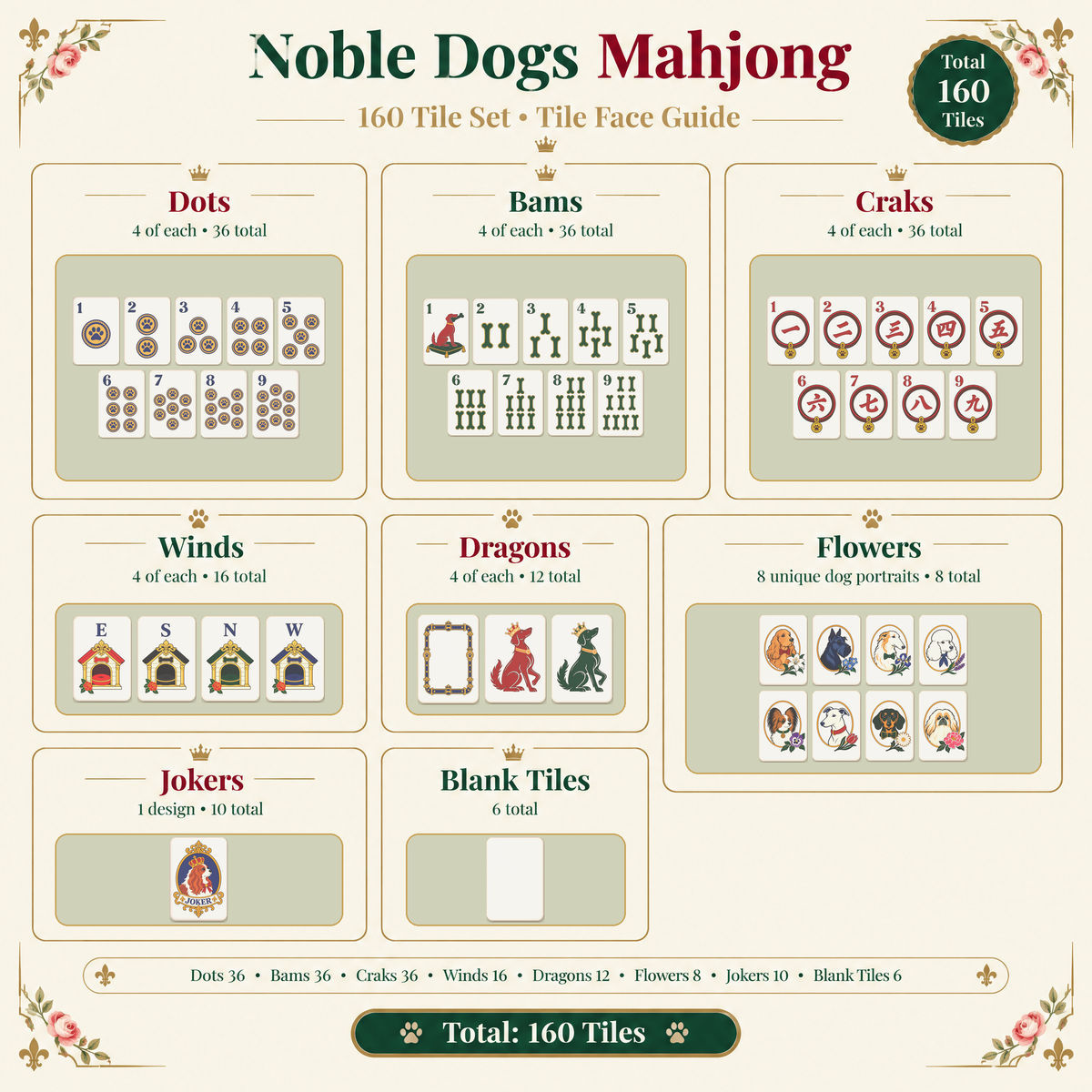
No. Whether you use a standard or large-print card, the tiles, hand counts, and table layout stay identical. A 160-tile American set works the same way. What does matter is where you rest your reference card and how far players sit from it. Large-print cards need about 1.5 extra inches of space on the table or a dedicated mahjong mat with a card pocket; standard cards tuck neatly under a rack or beside a player's hand. If you're upgrading from a small folding table to a full mahjong setup, switching to large-print at the same time often makes sense—one refresh, not two.
Which card size do tournament players prefer?
Tournament organizers typically mandate one size for all players at an event to prevent disputes about hand visibility and officiating clarity. Most official tournaments use standard cards because they fit standard card racks and tournament scoresheets without modification. However, some regional games for older players have shifted to large-print in recent years to reduce accessibility complaints. Ask your local tournament director which format they require; if you play both casual and tournament games, own both and adapt. The National Mah Jongg League issues the official card once per year in spring; check their website for current availability in each format.
🎁 See our most-loved mahjong sets & accessories →

Comparison: Standard vs. Large-Print at a Glance
Factor | Standard Card | Large-Print Card |
Typical size | 3.5″ × 5.5″ | 5″ × 7″ (approx.) |
Readability in low light | Requires tilting or moving closer | Clear at arm's length |
Pocket-friendly | Yes | No; requires card holder |
Table space needed | ~9–12 sq. in. | ~15–18 sq. in. |
Best for | Experienced players, casual games | Mixed-age groups, outdoors, tournaments |
Price basis | Lower cost per card | Slightly higher (larger paper) |
Players over 55 | May cause eye strain | Generally preferred |
How to choose: a simple checklist
Count your regular players' ages. If half are over 50, large-print saves complaints and keeps play flowing.
Check your table's lighting. Overhead fluorescents? Large-print wins. Warm table lamps? Either works.
Note outdoor games. If you host spring or summer games on a patio, buy large-print.
Ask your tournament director which size they use; match it for practice games.
Keep standard as backup. Standard cards compress into a mahjong bag alongside your set for casual travel.
Pair with a card holder or mat. Both formats benefit from a dedicated pocket or stand—neither should rest flat on the tile pile where it gets forgotten or damaged.
✨ Find your Mahstead set — free US shipping →
What to check before you buy
Print quality matters more than size. Some large-print cards use low-contrast inks or thin paper that wrinkles or fades. Buy from a source that prints on stiff cardstock (85 lb. or thicker) and uses crisp, dark text. Verify the card is current-year. Both standard and large-print cards change every spring when the National Mah Jongg League issues a new official card. A 2026 large-print card is worthless in 2027 games. Test contrast under your table's lighting. Borrow a large-print card from a friend and play one full game before buying a stack; backlighting, gloss finishes, and colored backgrounds vary by printer. Confirm hand symbols are clear. The card's value lies in quick hand recognition; if the suit symbols (Bam, Crak, Dot) or pattern icons blur when you squint, the size won't help.
Hosting with confidence: final thoughts
We've hosted thousands of games over decades, and the single best move is owning both sizes and letting your table decide. A mixed group of friends? Large-print on the table, standard in your rack. A serious hand-counting marathon with experienced players? Standard card speeds play and keeps the focus on strategy, not readability. Neither choice is wrong—just different. The card itself is only one piece of a smooth game; pair your choice with a quality engraved American mahjong set, a well-lit mahjong mat, and clear house rules about who holds the official reference card.

FAQ
Can I use a large-print card in a tournament that requires standard cards?
No. Tournament rules specify one card size for all players to ensure fair officiating. Check the event rules before you arrive; most mandate standard cards, though some newer or regional tournaments accept large-print. Call ahead if unsure.
Does large-print mean easier hands or different rules?
No. The hands, rules, and patterns are identical. Large-print only enlarges the printed text and symbols. Legal hands, joker rules, and scoring never change based on card size.
What if my card holder only fits standard-size cards?
Standard card holders (typically designed for 3.5″ × 5.5″ cards) won't hold a large-print card securely. You'll need a larger holder or a mat with an oversized pocket. Measure your current holder before buying a large-print card, or upgrade both together.
Is there a 2027 mahjong card yet?
The National Mah Jongg League issues a new card each spring. Check their official website in March 2027 for current-year releases in both standard and large-print formats.
Can I print my own large-print card from a standard card image?
Legally, no. The National Mah Jongg League card is copyrighted. Purchase official large-print editions from authorized distributors. Printing your own violates copyright, even for private use.
Do large-print cards cost much more than standard?
Large-print cards use more paper and ink, so they cost slightly more per card. The difference is typically modest—a few dollars per card. Check current pricing from your card distributor; bulk orders often have better rates.


View More
View More
View More
