
How Long Does a Game of Singapore Mahjong Take?
Last updated: Nov 23, 2026
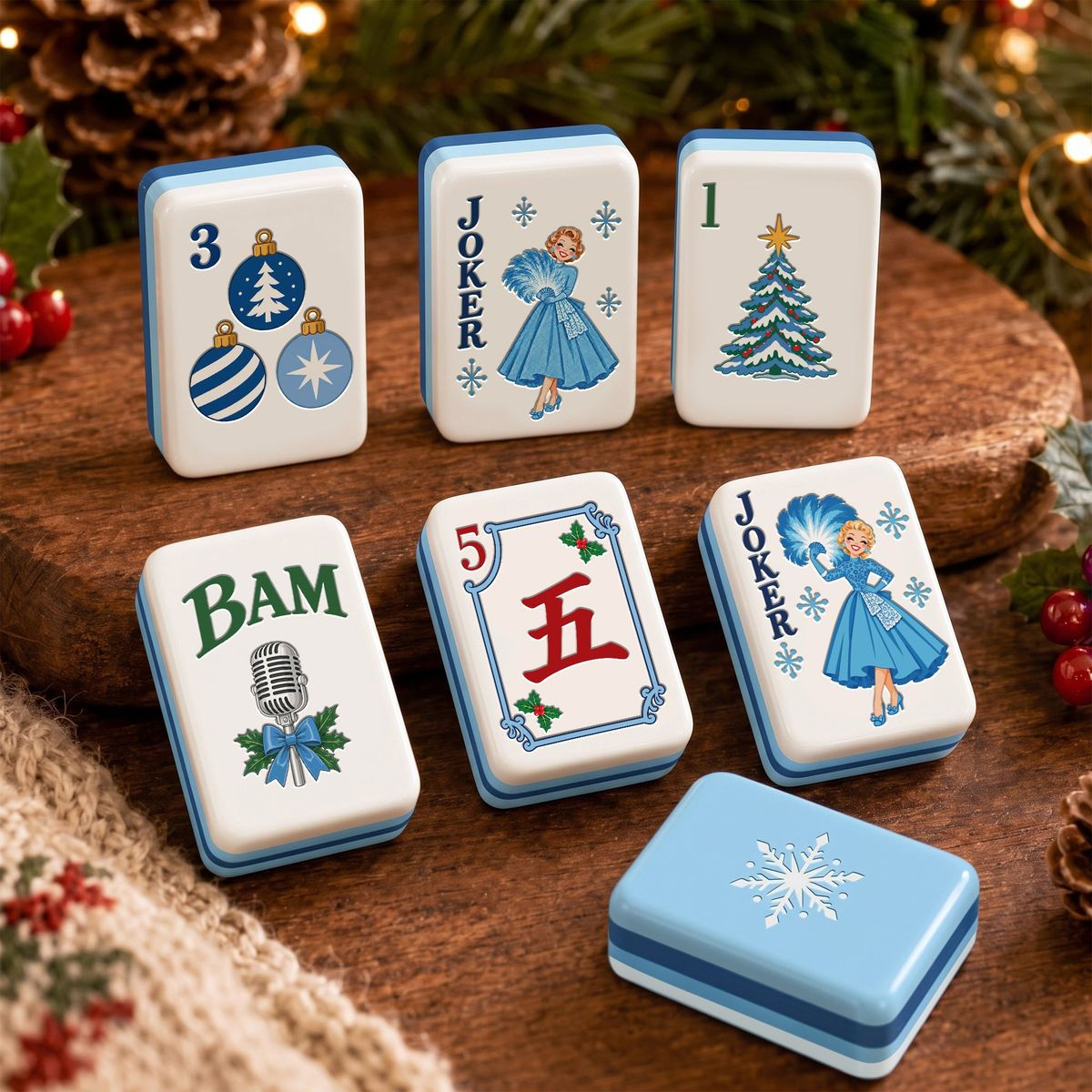
A single round of Singapore mahjong takes 30–60 minutes on average, though the first round of a new session often runs longer if players are warming up. Speed depends on three factors: hand complexity (simpler patterns = quicker wins), player experience (beginners pause more), and whether a winner emerges early or the game draws deep into the deck. Singapore mahjong differs from American mahjong: it uses 144 tiles, no jokers, and hands follow a fixed set of patterns (not a yearly card). Winning is more frequent because fewer combinations block completion. A casual four-player session with breaks typically lasts 2–3 hours for 3–4 complete games. Hosting requires a durable mat that withstands quick tile shuffling and a clear tile set; we recommend acrylic tiles from our best-selling collection for their speed and precision during fast play.
Singapore mahjong is a fast, tile-discarding variant played throughout Southeast Asia. Most games finish in 30–60 minutes per round—faster than American mahjong—because hands are simpler and jokers are rarely used. If you're hosting or joining a Singapore game, understanding what drives the pace helps you plan your evening and set realistic expectations.
What makes Singapore mahjong faster than American?
American mahjong requires matching hands to a complex yearly card and uses 152 tiles with eight jokers. Singapore mahjong strips that down: 144 tiles, no jokers, and a fixed set of basic patterns (usually numbered 1–81 or fewer). Because fewer combinations are possible, players reach winning hands sooner. American rounds often stretch 45–90 minutes; Singapore typically closes in 30–60. The trade-off is less strategic depth, but the game flows at a social pace that keeps energy high.

How does hand complexity affect game speed?
Early in a Singapore session, players build simple patterns: three pairs, a chow (run: 1-2-3), a pung (three identical tiles). These close quickly—often within 8–15 minutes. Mid-game rounds grow messier: a player might hold four incomplete melds and fish for the one tile to complete. Drawing into the dead wall (the final drawn tile), someone wins or the round ends as a draw. Complex endgames can stretch 15–20 minutes alone. Experienced players learn to read opponents' discards and speed up; beginners take longer to commit to a pattern. Average tables see 3–4 complete games per hour.
Does player experience really change the pace?
Yes. A table of veterans completes a round in 30–35 minutes; a mixed group takes 45–50. Beginners often stall when deciding which tile to discard—they fear blocking a winning pattern they don't yet recognize. They also miss fast-win signals (a pung nearly complete, a run building). Teaching mid-game slows it further. Hosting tip: pair beginners with experienced players, not in a beginner-only group. After two or three sessions, a new player's pace normalizes and the whole table speeds up.
Does the number of players affect game length?
Singapore mahjong is played by four players, always. With four, each player discards one tile per turn, cycling quickly. Fewer than four changes the rules and tile count, which most casual players don't do. If you're playing with fewer people, expect longer games because draws are fewer and hands are harder to complete. Stick with four players for standard Singapore tempo.
What happens in a drawn round?
If no one completes a hand by the time the deck runs out, the round is declared drawn and scores are often settled (or no one scores, depending on house rules). A drawn round ends in 15–25 minutes. Some groups award bonus points for ties; others restart immediately. A drawn round counts as a full game for pace purposes—you still play one complete cycle.
Comparison: How Singapore Stacks Against Other Variants
Variant | Tiles | Jokers | Avg. Round Length | Win Frequency |
Singapore | 144 | None | 30–60 min | High (common) |
American | 152 | 8 | 45–90 min | Lower (card-dependent) |
Chinese | 144 | 8 | 40–75 min | Moderate |
Hong Kong | 144 | None | 35–70 min | Moderate |

How do you keep Singapore mahjong moving during a session?
Set a round timer. Announce "20 minutes remain" halfway through if you're in a tournament or time-conscious group. This prompts faster decisions without feeling rigid.
Use a durable mat with clear markings. A mat with player zones and a discard area—like those in our mahjong mats collection—reduces confusion and speeds tile placement. Worn or unclear mats add 5–10 minutes per round because players second-guess tile positions.
Organize tiles in a rack. Racks with pushers let you see your hand at a glance, making meld decisions faster. Loose tiles on the table slow you down.
Shuffle quickly. Practice quick, neat shuffles during setup so the game starts promptly. A sloppy shuffle can waste 3–5 minutes.
Agree on house rules upfront. Ambiguity about winning conditions, Kong rules, or draw scoring halts play. A 10-minute rules discussion before the first hand prevents 15-minute mid-game debates.
🀄 Shop best-selling mahjong sets →
What to check before you buy or host
Tile clarity: acrylic tiles with sharp symbols = faster reading, fewer "wait, is that a 5 or 8?" pauses.
Set completeness: verify 144 tiles (or 160 if you want spares) are included so you're not mid-game searching for a lost tile.
Mat condition: a mat with visible separation between player zones prevents disputes about who discarded what.
Racks: pushers save 3–5 minutes per round by keeping hands organized and preventing accidental reveals.
Storage plan: a bag or case keeps tiles from warping and delays prep time for the next session.
🎁 See our most-loved mahjong sets & accessories →
Planning a Singapore mahjong evening
If you're hosting four players for a Singapore mahjong night, plan 2.5–3 hours for 3–4 complete games (including breaks). First round runs longest (players settle in, may pause to reference rules). Rounds 2–3 are your sweet spot: 30–40 minutes each. A fourth game might go 45–50 minutes if someone is chasing a difficult pattern. Build in 15 minutes for shuffles and setup between rounds and a mid-session snack break.
Players new to Singapore often ask if they should memorize all 81 hand patterns beforehand. The answer: no. Learn the first 15–20 during your first session; the rest emerge through play. This gradual learning means beginner groups run slower—expect 50–70 minutes early on—but accelerate after 3–4 sessions.
The pace of Singapore mahjong makes it ideal for weeknight hosting (a game won't consume your entire evening) and for players who find American mahjong's card-reading step too complex. The tradeoff is less puzzle-solving; the reward is more frequent wins and lighter social play.
✨ Find your Mahstead set — free US shipping →
Why acrylic tiles matter for Singapore mahjong
Acrylic tiles—the standard for fast play—resist warping from humidity and shuffling wear. Bamboo or bone tiles, while beautiful, age faster and can stick together, adding 2–3 minutes to shuffles. Because Singapore games run tight, quick tile movement is essential. Our engraved mahjong sets and new arrivals include acrylic options designed for frequent, fast play without losing clarity or color.

FAQ
Can you play Singapore mahjong with fewer than four players?
Singapore mahjong is traditionally a four-player game with fixed rules. Playing with two or three requires house rule changes (altering tile count, hand sizes) and often extends game length unpredictably. Stick with four for standard timing.
Does a drawn round (no winner) count toward the evening's game count?
Yes. A drawn round is a complete cycle and counts as one game even if no one scored. Expect drawn rounds once every 8–12 games on average, depending on how quickly players learn patterns.
How much time does shuffling add to each round?
A practiced shuffle takes 2–3 minutes; a slow or messy shuffle can stretch to 5–7 minutes. Using a mat and organizing tiles neatly before shuffling speeds this up by half.
Is Singapore mahjong beginner-friendly if I've never played any variant?
Yes. Singapore has fewer rules than American mahjong and a simpler hand set, so beginners pick it up in 1–2 rounds. First game runs slower (45–70 minutes) as you learn patterns, but speed normalizes after 3 sessions.
What's the longest Singapore mahjong round you might see?
If multiple players are chasing similar patterns and the round draws deep, 90+ minutes is rare but possible. Most casual groups with house-rule mercy (e.g., "if no win by tile 110, auto-draw") avoid this by capping rounds at 60–70 minutes.
Do jokers speed up or slow down Singapore mahjong?
Singapore rules traditionally include no jokers, which actually speeds the game—fewer tiles mean fewer blocking combinations. Variant house rules sometimes add jokers, which slightly extend rounds but add strategic play.


View More
View More
View More
