
Large Print Mahjong Set for Seniors: What to Choose
Last updated: Nov 23, 2026
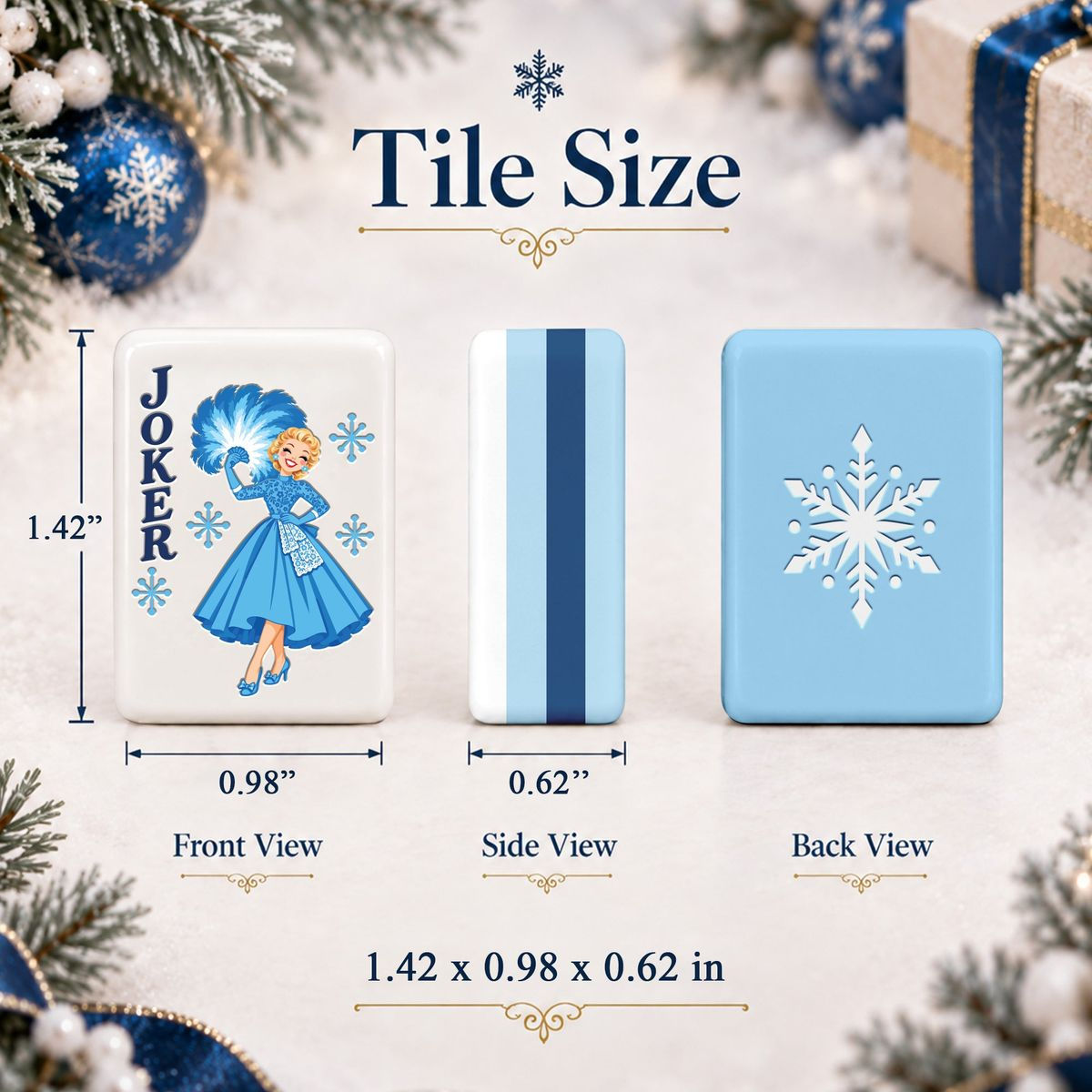
Large-print mahjong sets feature enlarged tile faces (typically 1–1.5 inches), high-contrast engraving, and bolder symbols that stand out against acrylic or bamboo backgrounds. Seniors choose them to reduce eye strain during the 2–4 hour games we typically play. A complete American mahjong set includes 152 playing tiles plus 8 jokers; when you buy from our best-selling collection, you get 160 tiles total (spares included) with free US shipping. Look for sets that offer custom engraving to deepen symbol visibility, matte finishes to reduce glare, and larger tile dimensions. Avoid sets marketed as "large print" without confirming actual tile measurements or contrast ratios—marketing alone doesn't guarantee readability at arm's length across a table. Cost varies based on material and customization; see the product pages for current pricing.
What tile size actually helps seniors read mahjong?
Industry standard tiles measure around 0.75 inches square; large-print versions jump to 1–1.5 inches. The difference matters most when players sit 18–24 inches from tiles. We've hosted games where a player with mild presbyopia could read standard tiles from 12 inches away but struggled beyond that. Larger tiles aren't just bigger—they hold more space for deeper engravings, which catch light better and create sharper edges between symbol and background. Test by holding a sample at your normal playing distance before committing to a full set.

Why does engraving depth matter more than size alone?
Flat-printed symbols fade under kitchen or overhead lighting; deep engraving creates micro-shadows that enhance contrast regardless of light angle. A 1-inch tile with shallow print can feel harder to read than a 0.9-inch tile with quarter-inch-deep engraving. Acrylic tiles hold engraving well because the material is uniform; bamboo or bone tiles can chip if carved too aggressively, so maker skill varies. Our engraved sets are hand-finished to preserve readability without compromising durability—a balance custom makers often cut corners on.
Should seniors choose bamboo, bone, or acrylic for easier reading?
Material | Readability | Glare | Durability | Best for
Acrylic (160-tile) | Excellent—deep engraving holds contrast | Low if matte finish | Very high; colors don't fade | Players wanting reliability + custom designs |
Bamboo | Good; natural color contrast visible | Medium; glossy surface reflects light | Moderate; can crack if dropped | Traditionalists who accept fragility |
Bone | Fair; cream-on-white contrast weaker | High; polished finish | High but expensive | Collectors; poor choice for vision challenges |
Acrylic dominates large-print demand because matte finishes eliminate glare and hold deep engravings without fracturing. Mahstead's 160-tile acrylic sets come with engraving options tailored to low-vision play—you can request darker symbols and simplified designs during ordering.
🀄 Shop best-selling mahjong sets →
What design choices reduce eye fatigue during long games?
Symbols simplified to clean lines beat ornate artwork when contrast is the goal. Wind tiles (N, E, W, S) rendered as block letters outperform calligraphic versions. Dragon symbols (Red, Green, White) in solid fills rather than outlined shapes let players identify them faster. Some makers offer color-coded suits—e.g., Bams in warm tones, Craks in cool tones—which helps seniors sort hands without reading every number. Jokers should be visually distinct from regular tiles (brighter color or clear labeling) so they don't blend into a hand. The National Mah Jongg League card uses standardized symbols, so any large-print set must still map to that design—but custom engraving depth and finish choices remain under your control.

How do racks and mats complement a large-print set?
A rack with pushers elevates tiles 2–3 inches above table height, bringing them closer to eye level without hunching. This single change reduces neck strain and improves reading distance for many seniors. Mahjong mats with contrast borders help players locate the center of the table and track piles visually—darker mats also absorb ambient light instead of reflecting it back into tiles. A quality mat keeps tiles from sliding, which is critical when players grip or move pieces with less precision due to arthritis. Combine a large-print acrylic set, a matte-finish mat, and a rack, and you've solved most visibility and comfort issues we see at the table.
🎁 See our most-loved mahjong sets & accessories →
What to check before you buy
Tile dimensions: Ask the seller for length and width in inches, not just "large" or "jumbo."
Engraving samples: Request photos of symbols under typical household lighting—not studio photos.
Finish type: Confirm matte (non-glossy) to avoid glare; avoid lacquered or high-gloss coatings.
Number of tiles: American mahjong always uses 152 playing tiles + 8 jokers (160 total). Verify this, not inflated counts.
Spare tiles: 160-tile sets include extras beyond the 152 in play—confirm they're included.
Set contents: Check that all 36 Bams, 36 Craks, 36 Dots, 16 Winds, 12 Dragons, 8 Flowers, and 8 Jokers are present.
Shipping: Confirm free US shipping and whether the set arrives in a durable travel case or bag.
Return policy: Large-print sets are often final sale; confirm before ordering.
Gift-giving: large-print sets as a way to keep seniors playing
If you're buying for a senior who's been sidelined by vision struggles, a large-print set can reignite years of play. New players especially benefit because they're learning to identify tiles anyway—starting with readable ones saves frustration. Mahstead offers customizable sets where you can add names, dates, or family initials through engraving, turning a functional aid into a keepsake. Pair it with a mat and rack as a complete hosting gift—this transforms a solo set into a ready-to-play package that invites weekly games.
✨ Find your Mahstead set — free US shipping →

FAQ
How much larger do large-print mahjong tiles actually need to be to help with presbyopia?
A jump from 0.75 inches to 1–1.25 inches, combined with deep engraving, typically delivers noticeable relief for players over 60. Tile size alone isn't enough—engraving depth and matte finish matter equally. Test with a sample before buying a full set.
Can I use a large-print set if I'm the only senior player at my weekly game?
Yes. Large-print sets benefit all players by reducing table-wide eye strain, especially under artificial lighting. Non-seniors often appreciate the easier reading and cleaner aesthetics, so they become table favorites even in mixed-age groups.
Do large-print tiles cost significantly more than standard sets?
Pricing depends on material, engraving depth, and customization. See the product pages on our site for current pricing; acrylic sets with enhanced engraving typically fall in the mid-range, not premium tier.
What's the difference between engraving and printing on mahjong tiles?
Engraving carves symbols into the tile surface, creating lasting contrast and texture resistant to wear. Printing applies ink to the surface, which can fade or scratch. Engraving is superior for large-print sets because it deepens readability under variable lighting.
Can I order a custom large-print set with symbols I design myself?
Customization options vary by maker. Mahstead accommodates engraving requests for names, dates, and custom finishes; confirm design limits before ordering. The tile symbols must match the National Mah Jongg League standard, so creative liberty is limited to depth, finish, and text additions.
How long does a large-print acrylic set last with weekly play?
Acrylic is extremely durable; with normal handling, a set lasts decades. Engraved symbols don't fade because they're carved, not printed. Avoid dropping tiles or storing in extreme heat, which can warp acrylic slightly over years.
Should I buy a 160-tile set if I only play with 3 people?
Yes. American mahjong always uses exactly 152 playing tiles and 8 jokers, regardless of player count. The spare tiles (included in 160-tile sets) are insurance against loss or damage, not extras added to play. You need a full 152-tile set to draw correctly.
What's the best way to store a large-print set between games?
Use a padded travel bag or case to protect engraved surfaces from dust and chipping. Store in a cool, dry place—avoid basements (moisture) and hot cars (warping). Keep the set away from direct sunlight, which can fade acrylic colors over years.


View More
View More
View More
