
Jewish American Mahjong History: From Shanghai to Your Weekly Game
Last updated: Nov 23, 2026
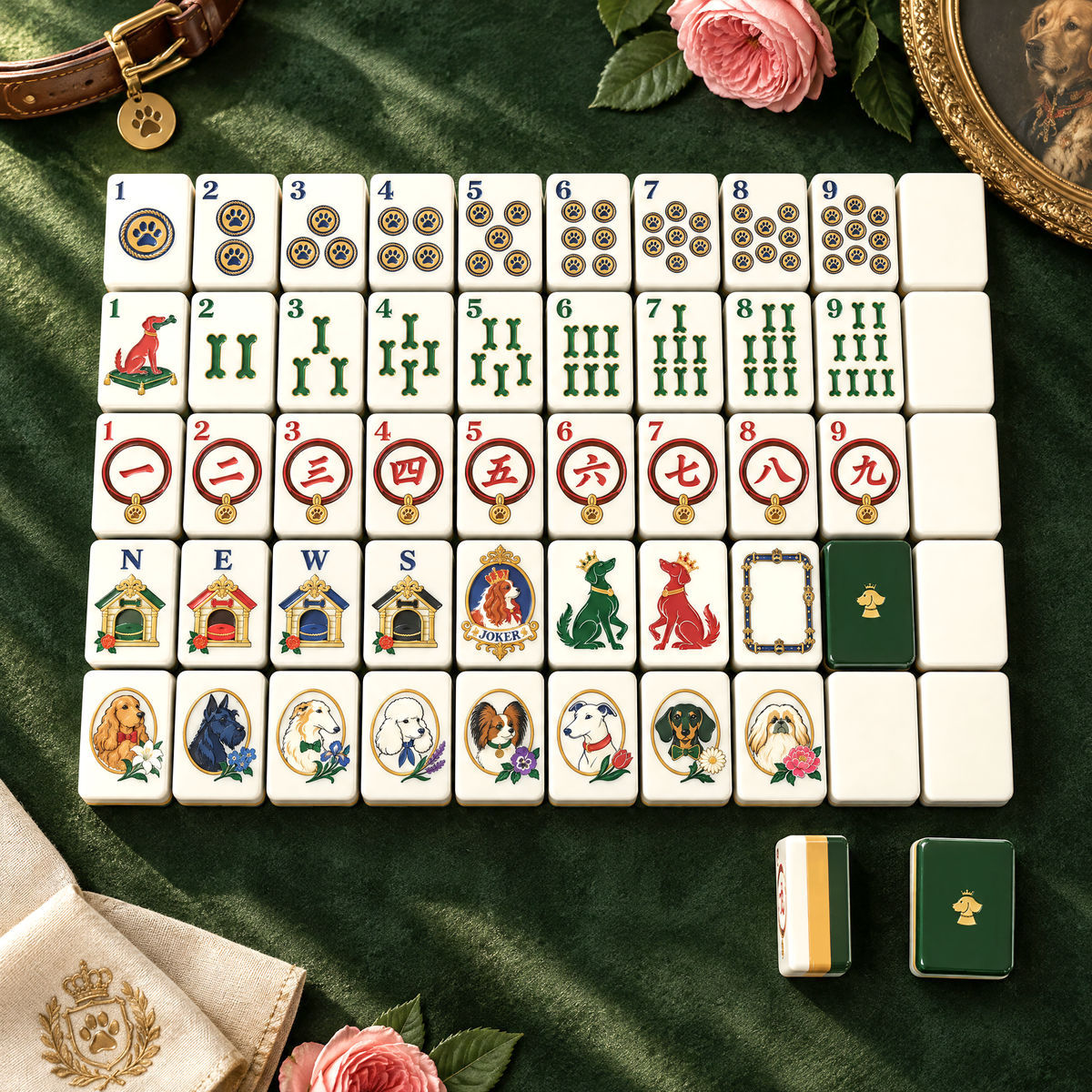
Jewish American mahjong history begins in the 1920s when Chinese immigrants and American society players—many of them Jewish women in major cities—encountered the game in Shanghai and Hong Kong. By the late 1920s and early 1930s, Jewish communities in New York, Los Angeles, and other urban centers adapted traditional Chinese mahjong into what became American mahjong: a version with eight jokers, a simplified tile count (152 playing tiles plus 8 jokers), no chows, and hands locked to the annual National Mah Jongg League card. This card system, first printed in 1937, created the rigid, puzzle-like structure that made the game accessible to Western players who found traditional rules too fluid. Jewish clubs, synagogues, and neighborhood groups became the primary organizers and standardizers of American mahjong rules through the mid-20th century. Today, American mahjong remains deeply embedded in Jewish cultural life—particularly among women's groups—though players of all backgrounds now participate in weekly games nationwide.
How did Jewish players reshape mahjong rules in America?
When mahjong first arrived in the United States around 1920, Chinese rules proved too flexible for Western players accustomed to poker and bridge. Jewish communities—concentrated in major cities with easy access to Asian imports—led the adaptation. They introduced the annual card system (beginning 1937) that locked hands into fixed patterns, added jokers as wild tiles (absent from Chinese mahjong), and eliminated chows (sequences). This made the game a tactical puzzle rather than a fluid improvisation. The result: American mahjong became distinctly Western and distinctly structured. Jewish players also established the Charleston—the pre-game tile-passing ritual unique to American mahjong—as a formal rule, turning it into a social ritual as important as the play itself. By the 1950s, Jewish women's groups had become the game's primary rule-keepers and teachers.
🀄 Shop best-selling mahjong sets →

Why did Jewish communities adopt mahjong as their own?
Mahjong arrived in America during a period when Jewish immigrants were establishing themselves in urban centers. The game offered a perfect combination: it was intellectually demanding (appealing to chess-playing, card-game-loving families), it was a group activity (matching the cultural emphasis on family and community gatherings), and it required no gambling—or minimal gambling—making it acceptable in synagogue and social-club settings. Women found mahjong particularly welcoming; unlike poker or bridge clubs that often excluded women, mahjong tables in Jewish communities welcomed female players from the start. The game became embedded in synagogue life, sisterhood meetings, and neighborhood friendships by the 1930s. Jewish-owned import businesses brought in tiles and supplies, and Jewish game manufacturers (Abercrombie & Fitch and smaller producers) began producing sets specifically for the American market. This combination of accessibility, social value, and community infrastructure made mahjong central to mid-20th-century Jewish American leisure culture.
What role did the National Mah Jongg League play?
The National Mah Jongg League (NMJL), founded in 1937, standardized American mahjong rules and created the annual card—the definitive hand guide that all serious American players still use today. The League was born from Jewish communities seeking a unified rule system. Before the card, regional variations caused confusion; a hand that won in New York might not be valid in Los Angeles. The League's card solved this by creating a single, binding list of winning hand patterns for the year. Jewish women's clubs and synagogues became the League's first institutional members and primary distributors of the card. For nearly 90 years, the card has been reissued each spring, updated with new patterns while preserving core hands. This card system is the single largest reason American mahjong plays nothing like Chinese or Riichi mahjong; it turned the game into a pattern-recognition challenge with a fixed answer key. No other mahjong variant uses a comparable system.
Where did synagogues and Jewish clubs host the earliest games?
Jewish mahjong culture took root earliest in New York City, Los Angeles, San Francisco, and Chicago—cities with both significant Chinese populations (where tiles were imported) and growing Jewish communities. Synagogue sisterhood groups organized mahjong nights to raise funds; Jewish country clubs and neighborhood centers featured dedicated mahjong rooms. In the 1940s and 1950s, dedicated mahjong parlors appeared in Jewish neighborhoods across America, some run by Jewish owners. These spaces became social anchors—particularly for women—where players gathered for weekly games, tournaments, and instruction. Jewish newspapers ran mahjong columns and advertised equipment. The game was woven into Jewish social life so thoroughly that by the 1960s, generational knowledge of how to play American mahjong was a marker of belonging to Jewish community spaces. This cultural embedding persists today; many Jewish communities still host weekly mahjong groups, and the game remains a common thread across American Jewish women's social circles and synagogue life.

How has Jewish American mahjong evolved since the 1920s?
The core rules—152 tiles, 8 jokers, the NMJL card, the Charleston—have remained stable since the 1950s, but the game's culture has shifted. Early play was serious, competitive, and often involved small stakes. Modern play, particularly in Jewish community settings, leans toward social pleasure and lower stakes or no gambling. The demographic has also broadened; while Jewish players still form the largest organized group in many regions, Asian-American players, retirees, and younger people discovering the game through social media now join traditional tables. Sets have evolved from ivory and bone (the original materials from China) to acrylic, wood, bamboo, and plastic. Engraved sets—personalized with names, family jokes, or synagogue affiliations—have become popular gifts, particularly among Jewish families introducing their children to the game. The annual NMJL card remains the unchanging spine; every variation, every advancement, serves that single fixed rule book. This stability is why Jewish American mahjong has survived 90+ years of cultural change essentially intact.
A Quick Look: How Jewish Mahjong Differs from Other Variants
Feature | American (Jewish-led) | Chinese Traditional | Riichi (Japanese) | Hong Kong |
Jokers | 8 mandatory; wild in most hands | None | None | Rare |
Tile count | 152 + 8 jokers in play | 144 | 136 | 144 |
Hand system | Fixed annual card (NMJL) | Improvised patterns | Improvised patterns | Improvised patterns |
Chows allowed? | No—only pungs, kongs, quints | Yes—sequences essential | Yes | Yes |
Strategic focus | Pattern matching to card | Flow and luck balance | Discard strategy | Tile management |
Rule flexibility | Rigid; card is law | Flexible by region | Flexible by variation | Flexible by house rules |
Social role in Jewish life | Central (synagogues, clubs) | Casual recreation | Casual recreation | Casual recreation |
🎁 See our most-loved mahjong sets & accessories →
What to check before you buy a set for a Jewish mahjong group
If you're purchasing a set for a synagogue group, sisterhood, or family games rooted in this tradition, verify that the tiles include the standard 152 tiles plus 8 jokers (the set should state this clearly). Make sure the set includes the bamboo or plastic racks with pushers—these are essential for American mahjong, unlike many Asian variants. Check that the tiles are clearly marked (not too small to read during play). Acrylic sets are durable and display well; they're the most popular choice for regular weekly games because they survive shuffling, storage, and the occasional spill. If the set is a gift for someone with family or synagogue ties, personalized or engraved options add meaning. For groups that meet weekly, a matching mahjong mat speeds setup and protects the playing surface. Avoid sets with extra tiles beyond the standard 152 + 8 unless you specifically need spare jokers for replacement. The best-selling sets are built for weekly play and come with the full American mahjong configuration.
Why does Jewish mahjong culture matter today?
Jewish American mahjong history is not academic trivia—it's the foundation of how millions of people play the game in North America. The rules, the card system, the joker-heavy strategy, the emphasis on social play in community spaces: all of these emerged from Jewish communities' deliberate adaptation in the 1920s–1950s. Understanding this history helps new players recognize why American mahjong plays so differently from Chinese or Riichi variants, and why the NMJL card is non-negotiable law at any serious table. For Jewish players, the game remains a cultural marker—a thread connecting grandmothers to granddaughters, synagogue sisterhood to family game night, immigrant resilience to contemporary leisure. For all players, the history reminds us that games evolve through community use, and that standardization (the card) can actually increase accessibility and longevity. Modern American mahjong is, in essence, a Jewish-American creation—adapted, standardized, and preserved by organized communities who saw in the ancient Chinese game a perfect fit for American social life.
✨ Find your Mahstead set — free US shipping →
Our pick for your next Jewish mahjong game
If you're starting a new weekly group or replacing a worn set, the best-selling Mahstead collection includes the full 152-tile configuration plus 8 jokers, acrylic tiles (durable through decades of games), and matching racks with pushers—everything needed for traditional American play. For family or synagogue gifts, engraved sets let you personalize with names, sisterhood affiliations, or inside jokes that honor the game's social roots. Pair any set with a mahjong mat for consistent play and easy storage. All Mahstead sets include free US shipping.

FAQ
When exactly did Jewish players invent American mahjong?
American mahjong didn't emerge from a single invention moment. Jewish communities adapted Chinese rules gradually from the 1920s onward; the National Mah Jongg League's standardization (founded 1937, first card issued) crystallized the modern American game. Full consolidation of rules took until the 1950s.
Did Jewish players invent the eight-joker rule?
Yes. Traditional Chinese mahjong has no jokers. Jewish American players added jokers (initially called "wild" or "blank" tiles) to simplify strategy and make the game more accessible to Western players unfamiliar with traditional flow-based play.
Is American mahjong still played primarily in Jewish communities?
Jewish communities remain the largest organized group of American mahjong players and primary keepers of tradition. However, the game has grown beyond that base; today players of all backgrounds participate in weekly games, online play, and tournaments nationwide.
Why does the NMJL card change every year?
The League refreshes the card annually (issued each spring) to keep hands fresh, add new patterns, and retire older ones. This prevents staleness while maintaining the rigid pattern-based system that defines American mahjong. The core structure never changes—only the hand list.
Can I use a Chinese or Riichi mahjong set to play American mahjong?
No. Chinese and Riichi sets lack jokers and use different tile counts. American mahjong requires exactly 152 tiles plus 8 jokers, racks with pushers, and hands locked to the NMJL card. A traditional Chinese or Japanese set will not work.
Do I need an engraved set, or is a standard set enough?
A standard set is completely sufficient for weekly play. Engraved sets add personalization and make excellent gifts for synagogue groups, family traditions, or longtime players—but for pure functionality, any full American mahjong set works identically.
Where can I find a weekly Jewish mahjong group to join?
Check local synagogues, Jewish community centers, libraries, senior centers, and community boards in your area. Many synagogue sisterhood groups and social committees organize regular games and welcome new players. Ask staff directly or check bulletin boards.


View More
View More
View More
