
Kong Mahjong Rule Explained: How to Form & Declare
Last updated: Nov 23, 2026
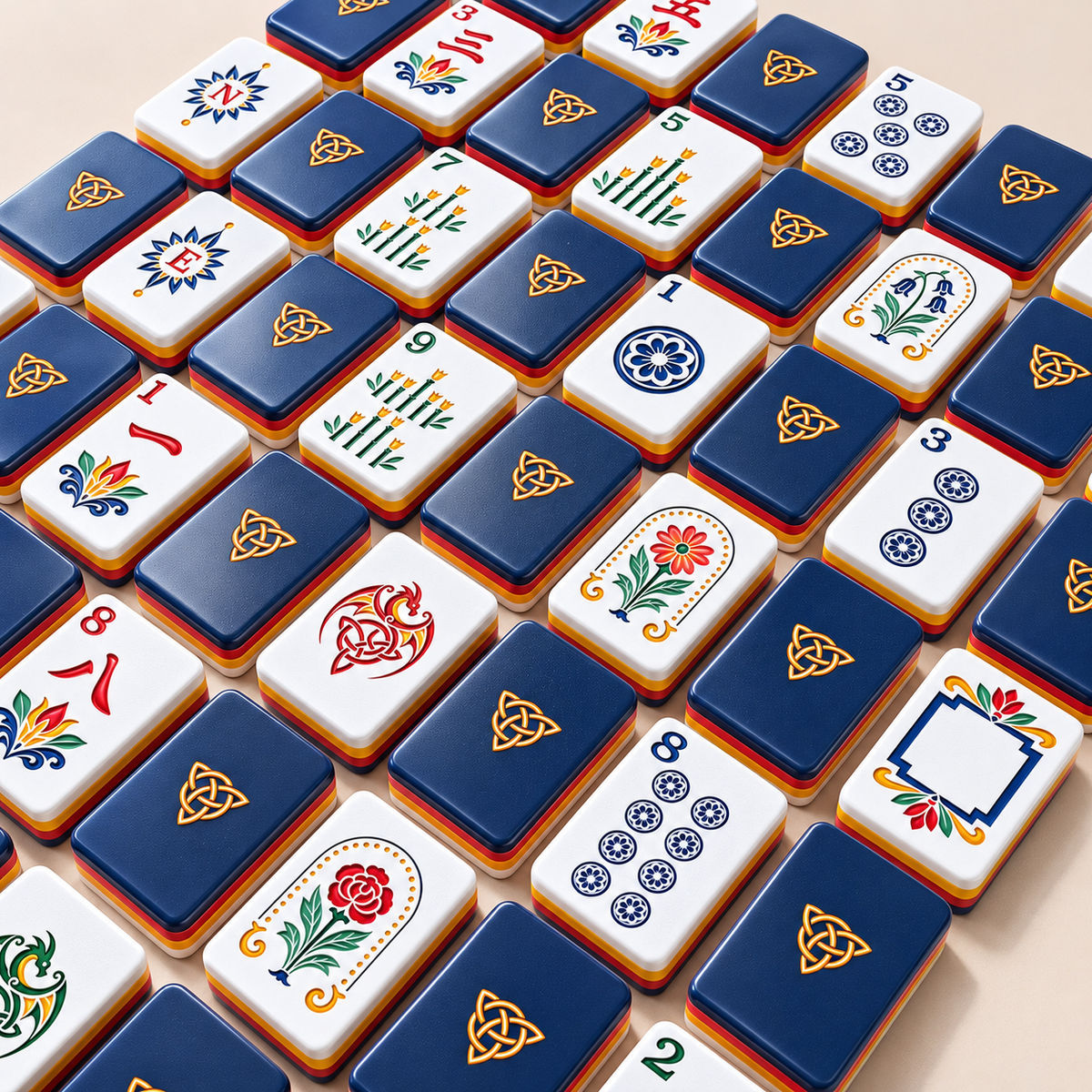
In American mahjong, a kong is four identical tiles (e.g., four 3 Dots or four West winds). When you have four matching tiles, you may expose them as a pung set and announce "kong" to draw an extra replacement tile from the dead wall, earning bonus points. A kong cannot be "called"—if you form it in your hand already, you expose it before drawing; if you pick a fourth tile from the wall after holding three, you announce the kong and draw immediately. Unlike Chinese variants where kongs trigger live wall shifts, American kongs simply add one replacement tile and scoring. You may never form a kong with jokers.
What's the difference between a pung and a kong?
A pung is three identical tiles; a kong is four identical tiles. Both are exposed sets (you show them face-up on the table). You announce and expose a pung for no bonus; you announce and expose a kong to draw one replacement tile from the dead wall and earn a point bonus according to the hand card. The key: a pung ends your turn once exposed, but a kong always triggers a replacement draw before play passes.

When can you form a kong in your hand?
You form a kong in your hand by holding four identical tiles. Before you discard, you must announce "kong," expose all four tiles, and immediately draw one tile from the dead wall (the eight tiles set aside at the start). This is called a concealed kong in American play—you reveal it, so "concealed" means you formed it without drawing the fourth tile from the wall. Once you draw your replacement, play continues normally: you discard one tile, and the next player takes their turn. If you already have an exposed pung on the table and you draw a fourth matching tile from the wall, you add it to the pung, announce "kong," and draw a replacement.
How does drawing a replacement tile work?
After you announce a kong, you draw one tile from the end of the dead wall—the stack of eight tiles reserved at the start of the hand. You must draw immediately and cannot pass. If your replacement tile completes a winning hand (mahjong), you declare mahjong at once. If not, you discard one tile (from any part of your hand), and play passes to the next player. This replacement draw is the only exception in American mahjong to the rule "draw, then discard." With a kong, you draw twice in one turn (once from the wall initially, once from the dead wall as your replacement), then discard once.
Why can't jokers form a kong?
In American mahjong, jokers are wild tiles that substitute for any tile to complete sets, but they cannot be used in a single-tile slot or a pair. A kong requires four identical tiles—meaning four of the exact same Bam, Crak, Dot, wind, or dragon. Jokers do not count as identical to themselves or to the tile they replace; they are always substitutes, never the "real" tile. Therefore, you cannot legally form a four-joker kong or a three-real-plus-one-joker kong. If you hold three 5 Bams and one joker, the joker occupies a slot in a pung (counting as a 5 Bam), but four tiles with one joker cannot form a true kong structure. This rule keeps the game's integrity: exposed sets must show the true tile, and kongs must yield to scoring based on actual combinations.

How does a kong differ across American, Chinese, and Hong Kong mahjong?
Variant | Kong definition | Replacement draw | Can it be called? | Wall shift | Key difference |
American | Four identical tiles, exposed only | One tile from dead wall | No; only formed in hand or added to pung | None | Dead wall is fixed; no live-wall mechanic |
Chinese (Cantonese) | Four identical tiles, concealed or exposed | One tile from live wall | Yes; must be called from discard in some rules | Yes; live wall shrinks | Kongs trigger wall rotation |
Hong Kong | Four identical tiles; "quint" (5) is separate | One tile from live wall | Yes; called kong is exposed | Yes; live wall shrinks | Distinguishes 4-tile and 5-tile melds |
Riichi (Japanese) | Four identical, concealed or exposed | One tile from the back of live wall | Yes; called kong declared openly | Yes; back of wall used | Concealed kongs score higher |
In American mahjong, the dead wall (eight tiles off-limits for normal play) is the only source of replacement tiles, and kongs do not cause the live wall to shift. In Chinese and Hong Kong variants, a kong reduces the live wall, forcing play closer to the dead wall and changing hand dynamics. Riichi mahjong allows called kongs and scores them differently than concealed kongs. Always check your rule variant before the game starts.
How do you score a kong in American mahjong?
Scoring a kong depends on the hand on the National Mah Jongg League card for that year. Each winning hand specifies which melds (pungs, kongs, quints, etc.) you need and what points it pays. A kong always earns more points than a pung of the same tiles because it is a longer meld. For example, a hand requiring "1 kong of Dots, 1 pung of Winds, 1 quint of Dragons, 1 pair" will pay a higher base score than one requiring "1 pung of Dots" (all else equal). You do not earn a separate "kong bonus"—the hand card tells you the total points for the complete winning combination, which includes the kong. The replacement draw from the kong does not earn extra points; it is simply a required action that can help you complete your hand.
🀄 Shop best-selling mahjong sets →
Common mistakes when declaring a kong
Many newer players announce a kong too early—before checking whether adding the fourth tile actually helps them win. Pause and confirm: does this kong fit the winning hand on the card? If not, you may want to hold the four tiles separately or discard one copy instead. Another mistake is forgetting to draw a replacement immediately after exposing the kong; if you skip this step, you have fewer tiles than your opponents, and your hand falls out of sync. A third error: trying to form a kong with three real tiles and one joker, which is not legal in American play. Finally, some players assume a kong can be called from another player's discard—it cannot. You can only form a kong from your own hand or by drawing the fourth tile yourself from the wall. If you need four identical tiles to win and another player discards one, you must wait to draw it from the wall; you cannot call their discard as your fourth kong tile.
🎁 See our most-loved mahjong sets & accessories →
What to check before you buy your first set
If you're new to American mahjong and planning to host weekly games, verify that your set includes all 152 playing tiles (three suits × 9 numbers × 4 copies = 108 tiles; 16 winds; 12 dragons; 8 flowers; 8 jokers). Our sets are sold with eight jokers and spare tiles included so you have everything you need to declare kongs legally and comfortably. Confirm the set comes with a mahjong mat or table cover—you'll want a flat, distinct surface to expose your kongs so other players can see and verify the tiles clearly. If you play frequently, invest in racks with pushers: they keep your hand organized and make it easier to spot three matching tiles so you recognize when you draw a fourth and can form a kong without hesitation. Finally, store your set in a quality bag or case so the tiles stay intact and ready for your next game.
✨ Find your Mahstead set — free US shipping →

FAQ
Can I call a kong from someone else's discard?
No. In American mahjong, you cannot call a kong from the discard pile. Kongs must be formed in your own hand—either from four tiles you already hold, or by drawing the fourth tile yourself from the wall. This rule distinguishes American mahjong from some Chinese and Hong Kong variants, where kongs can be called.
What happens if I draw my replacement tile and it completes a winning hand?
You declare mahjong immediately. You do not need to discard. Your replacement tile, combined with the rest of your hand, satisfies the winning pattern on the card, so you win the hand right then. This is one of the most rewarding moments in mahjong—forming a kong and drawing your win in one turn.
Can I form a kong with three real tiles and one joker?
No. A kong must consist of four identical real tiles. Jokers are wild substitutes and cannot make up a kong. You can use a joker in a pung (three tiles with one joker standing in), but a pung is not a kong. Four-tile melds in American play must be all real tiles of the same suit, number, or wind/dragon identity.
If I form a kong, do I earn bonus points on top of my hand score?
No bonus on top. Your score comes from the hand card entry that requires the kong (or quint, or pung). The card tells you the total points for the complete winning hand, which includes the kong. A kong is part of the structure—it does not add extra points beyond what the card specifies.
Do I have to announce a kong if I draw a fourth identical tile?
Yes. If you draw the fourth tile of an identical set from the wall, you must announce "kong" immediately, expose it, and draw your replacement tile. You cannot choose to keep it hidden and draw a second tile; the kong is mandatory and public.
How do I tell the dead wall from the live wall?
At the start of the hand, players draw 13 tiles each from the live wall (the main stack in the center). The remaining live wall tiles are drawn by players in turn. The dead wall (eight tiles) is set aside before play begins and is never drawn except as a replacement after a kong or, in some rules, for a win drawn from the wall. Ask your group to mark the dead wall clearly—some use a barrier, a different row, or a label—so everyone sees where replacement tiles come from.


View More
View More
View More
