
Japanese Mahjong Terms and Glossary for Players
Last updated: Nov 23, 2026
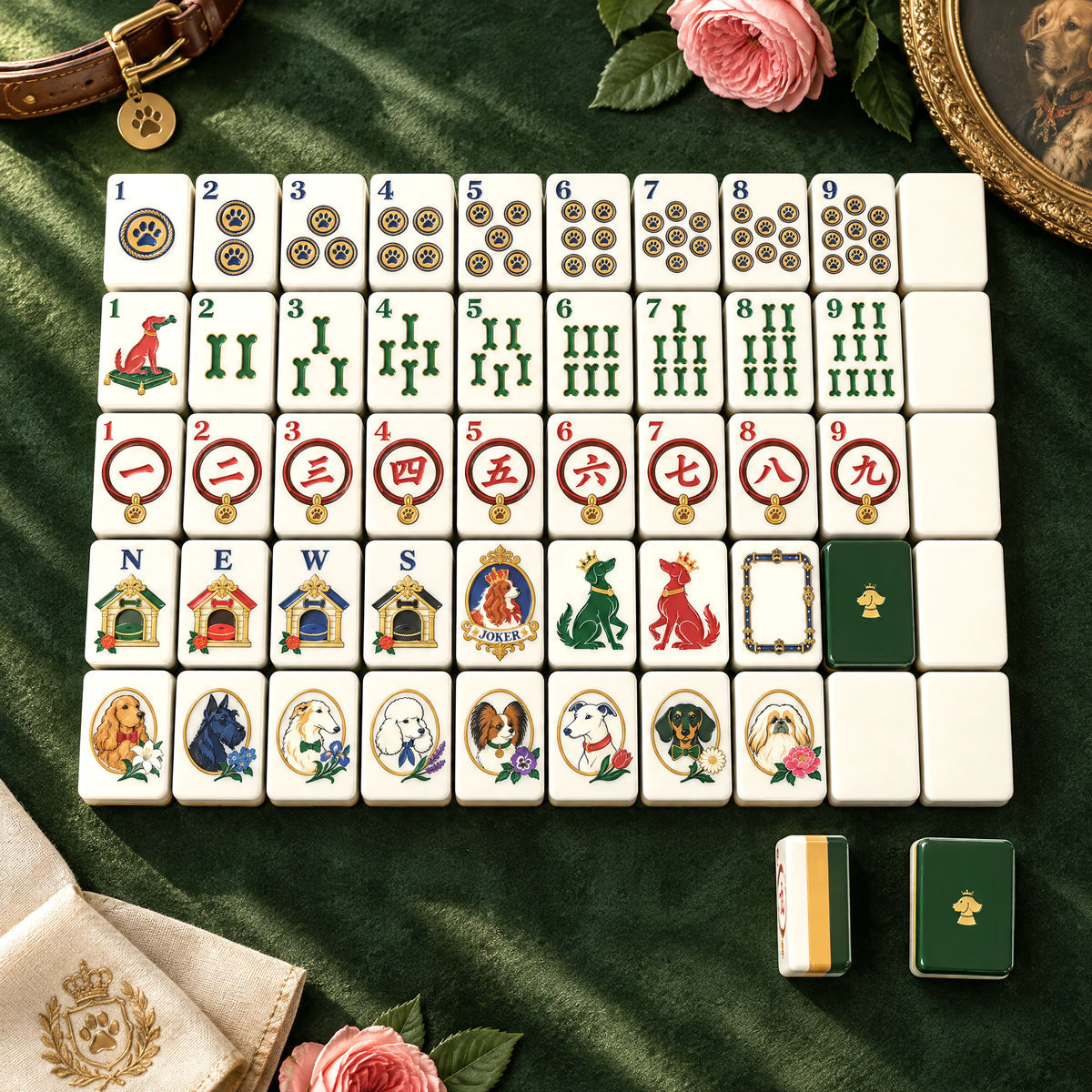
Japanese mahjong uses terminology borrowed from the Chinese game but refined over decades of play in Japan. Core terms include riichi (declaring readiness with one tile away from winning), tsumo (self-drawn winning tile), yaku (hand patterns that score), and honor tiles (winds and dragons). Unlike American mahjong, which relies on a yearly card and fixed hands, Japanese variants follow rule sets that let players build any legal pattern; sets sold today like those from our best-selling collection work for learning, though dedicated Riichi players often use smaller 136-tile sets. The vocabulary applies across Riichi (the formal tournament variant), Hong Kong mahjong (faster, gambling-friendly), and casual play. Most terms come directly from Chinese but carry specific meanings in Japan—knowing them helps you follow online streams, read guides, and play in international games.
What does riichi mean, and why is it a game-changer?
Riichi is a declaration that you're one tile away from winning and your hand is now locked. Once you announce riichi, you cannot change your hand—every incoming tile must either complete your win or be discarded. You can riichi only on your turn, before drawing, after discarding a tile; you win extra points if you complete immediately after declaring. The term literally means "ready" in Japanese, and it's one of the most powerful moments in a Riichi game because it signals strength and pressures opponents.

How does tsumo differ from ron in scoring?
Tsumo means you drew your winning tile directly from the wall—you won on your own turn without taking a discard. Ron means you won by claiming another player's discard. Both end the hand, but tsumo usually scores higher because you took no outside help. In American mahjong, all wins come from the wall or a claim, so the distinction doesn't matter; Riichi and Hong Kong games reward the faster, cleaner tsumo victory with a point multiplier called the "tsumo bonus." Understanding this shapes your strategy: you play safer when close to tsumo, riskier when fishing for ron.
What are yaku, and how many do you need to win?
Yaku are hand patterns—combinations of melds and pair types that earn points. Examples include tanyao (all simples: 2–8 only, no terminals or honors), toitoi (all pungs/kongs, no chows), and riichi itself, which counts as a yaku. A winning hand must contain at least one yaku to be valid; a hand with zero yaku is not a win and cannot be claimed. Each yaku has a point value (called fu or mangan depending on the rule set), and your final score multiplies by the number of yaku. Beginners often forget this rule and accidentally declare a non-yaku hand as a win, drawing a laugh and a correction from the table.
Which honor tiles (winds and dragons) carry special meaning?
Winds are East, South, West, North; dragons are Red (typically associated with Craks), Green (Bams), and White (Dots, also called Soap). Seat wind is the wind of your position; prevailing wind is the wind of the round. If your hand pung is your seat wind or the round's prevailing wind, that pung earns an extra yaku called "pung of your wind"—critical for point scoring. Green and Red dragons have no seat link; a pung of Green or Red always counts as a yaku. White (Soap) is the value zero in many contexts and counts as a dragon honor. Mastering wind and dragon logic unlocks many common scoring patterns, especially in Riichi where they're essential to high-scoring hands.
What's the difference between chows, pungs, and kongs in Japanese terms?
Chows (sequences like 2-3-4 of one suit) are called shuntsu; pungs (three identical tiles) are kohtsu; kongs (four identical tiles) are kantsu. A winning hand must have at least one pair (called a tou or toitsu) and four melds—for example, one pung and three chows, or two pungs and two chows. Unlike American mahjong, where you can only call and expose pungs/kongs/quints, Riichi and Hong Kong play allow you to meld chows as well. This open play happens on the table for all to see, which speeds up games but also shows your strategy. Kans (kongs) in Riichi trigger a bonus draw from the wall, adding complexity and excitement to late-game situations.
How does the concept of fu and mangan affect scoring?
Fu is a counting unit (similar to points per hand) that combines with the number of yaku to determine your final score. A hand with high fu and multiple yaku earns a mangan (a large fixed score) or beyond; reaching 13 or more fu with five yaku is a haneman (half-limit) or kazoe yakuman (13+ points/limit hand). American mahjong players used to a flat-rate scoring system may find this confusing: in Japanese variants, how many melds you have, how they're arranged, and what yaku combine all affect the payout. This is why hand-building in Riichi feels strategic—you're not matching a rigid year-card list; you're maximizing fu and yaku combinations. Learning fu calculations takes practice, but it's worth it if you play Riichi regularly.

What's a yakuman, and why do players fear it?
A yakuman is an unmakeable hand—a rare, powerful pattern worth a limit score (the highest payout). Examples include suuankou (four kongs), ryuuiisou (all Green tiles), and honroutou (all terminals and honors). Declaring yakuman ends the hand immediately with maximum points; opponents lose a fortune in a single play. Most casual games never see a yakuman because the patterns are so restrictive. When one lands, the table usually goes quiet for a moment—it's both a celebration and a sobering reminder of why some players set house rules limiting yakuman on certain rounds. No equivalent exists in American mahjong, which makes yakuman a uniquely Japanese thrill.
Comparison: Terms Across Mahjong Variants
Term | Japanese/Riichi | Hong Kong | American | Meaning |
Win from wall | Tsumo | Tsumo | Wall win | Draw your winning tile |
Win from discard | Ron | Wong/Win | Claim | Take another's discard |
Ready/one tile away | Riichi | No equivalent | No equivalent | Locked hand, extra points if win next |
Pung (3 identical) | Kohtsu | Pung | Pung | Exposed triplet |
Kong (4 identical) | Kantsu | Kong | Kong | Exposed quad; bonus draw in Japanese variants |
Sequence (1-2-3) | Shuntsu | Chow | N/A (not exposed in American play) | Meld of three consecutive numbers |
Honor tile | Honors (winds/dragons) | Honors | Winds/Dragons | Non-number tiles with scoring value |
All melds pungs | Toitoi yaku | Pung-heavy hand | Similar logic | Bonus points for all triplets |
🀄 Shop best-selling mahjong sets →
Playing Japanese Mahjong with the Right Set
If you're learning Riichi or Hong Kong rules, American-style 160-tile acrylic sets work fine for casual play—the tile design is universal. However, dedicated Riichi players often prefer 136-tile sets with smaller tiles and traditional symbols; many online players use software instead. For hosting mixed games where some players know Japanese rules and others play American, choose a clear set with readable engravings so everyone spots tiles quickly. A quality mat and racks with pushers also help beginners organize their hand neatly—especially useful when learning yaku combinations, because you'll rearrange tiles often while building patterns.
Common Mistakes When Learning Japanese Terms
Confusing riichi with a hand type. Riichi is not a hand pattern (yaku); it's a declaration that becomes a yaku once your hand is fully formed. You can riichi on almost any hand, but you must have at least one other yaku to win.
Forgetting the tsumo bonus. In scoring discussions, players often overlook that tsumo wins multiply differently than ron. If you're playing mixed tables, confirm the rule before the first hand.
Assuming all honor tiles score the same. Seat wind and prevailing wind pungs earn yaku automatically; Red, Green, and White dragons always count. But a single honor tile in your hand scores zero—it must be part of a meld to matter.
Missing the fu calculation. A hand with five yaku but low fu might score less than a hand with two yaku and high fu. Learning fu counting takes time; ask experienced players for help rather than guessing.
What to Check Before You Play
Rule set. Confirm whether the table plays Riichi, Hong Kong, or a house variant—terminology shifts slightly.
Scoring system. Ask if points are in thousands, hundreds, or raw fu. Bet sizes change with the scale.
Meld rules. Some tables allow kan (kong) bonus draws; others don't. Clarify upfront.
Yaku list. Print or bookmark a yaku reference for your first few games. Many free lists exist online; bookmark one before arriving.
🎁 See our most-loved mahjong sets & accessories →
Why Learning Japanese Terms Opens Your Game
Understanding riichi, tsumo, yaku, and honor tile logic transforms how you read the table. You'll spot opponent patterns faster, recognize when someone is close to riichi, and build your own hands with strategy instead of guesswork. The vocabulary also connects you to decades of Japanese mahjong culture—streams, books, and international tournaments all use these terms. If you play in person, speaking the language earns respect and lets you follow side conversations about hands and strategy. Most importantly, the structure behind these terms (the fu calculation, the yaku list, the round wind concept) creates a game far more tactical than pure luck. Once you see how every tile and meld connects to scoring and yaku eligibility, you'll want to play again and again.
✨ Find your Mahstead set — free US shipping →

FAQ
What's the easiest Japanese mahjong term to start with?
Tsumo (self-draw win) is the simplest because it's visual: your tile comes from the wall, you're done. It also teaches you that Japanese variants reward self-sufficiency with higher points, which shapes strategy immediately.
Do I need to memorize all yaku to play?
No. Start with five common ones: tanyao (2–8 only), toitoi (all pungs), riichi (ready declaration), and honor tile pungs. Print a full yaku list and keep it at the table. Experienced players will help you spot valid hands as you learn.
How is fu different from American mahjong scoring?
American mahjong uses a fixed card with rigid patterns and flat point values. Japanese mahjong calculates points from fu (base units) and yaku (patterns), meaning two hands with the same yaku can score differently based on how they're built. It's more complex but more flexible.
Can I play Riichi with American mahjong sets and rules mixed together?
Technically yes, but it confuses the table. Pick one variant and play it cleanly. American sets and rules work fine for learning Japanese terms; just clarify the rule set before dealing.
What does yakuman really cost in a game?
A yakuman is a limit-hand payout—typically 8,000 to 12,000 points for the winner, divided among losers. In high-stakes games, that's a significant loss, which is why it's both feared and celebrated. Exact values vary by house rules.


View More
View More
View More
