
Japanese Mahjong Strategy: Winning Tactics for Riichi Players
Last updated: Nov 23, 2026
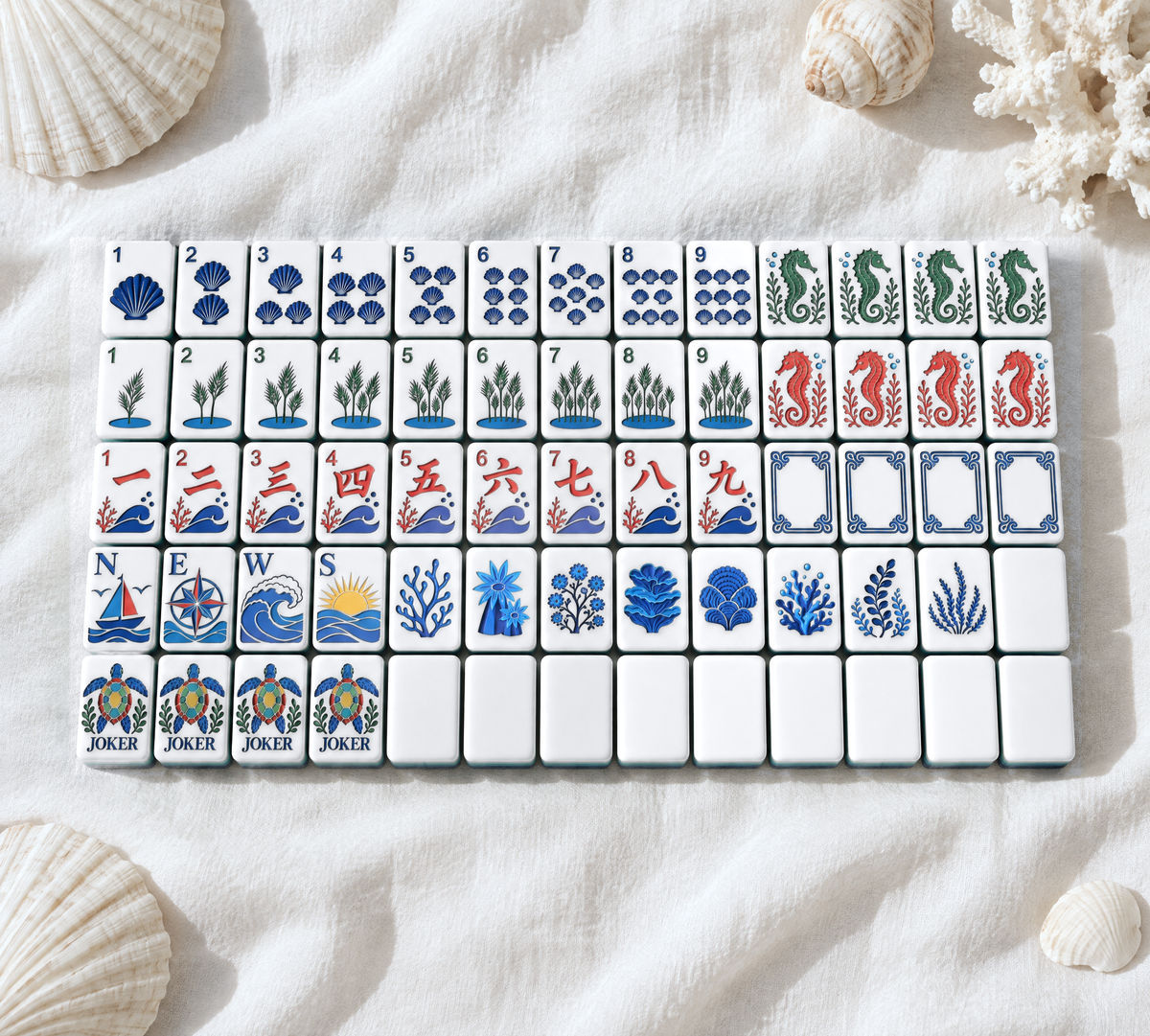
Japanese mahjong strategy centers on speed, hand efficiency, and reading discards. Unlike American mahjong—which uses a printed card and fixed hand patterns—Riichi play demands you memorize wait patterns and calculate winning odds in seconds. Core tactics: build your hand toward multiple winning shapes (winning hand types called "yaku"), minimize your wait count (ideally 6+ tiles end-game), track opponent discards religiously, and recognize when to pivot from offense to defense. Winning hands require specific combinations (triples, sequences, pairs) called melds, and you score based on hand complexity and payment from all players, not just one. Most casual Riichi games finish 12–15 rounds in 90 minutes; competitive play is faster. Strategy wins against luck over time because hand efficiency and discard reading compound across dozens of games.
Japanese mahjong, or Riichi (麻雀), is fundamentally different from the American variant most Western players know. We've hosted weekly games for years and see the same confusion: American players bring card-reading and pattern-matching into Riichi games, then struggle with speed and hand flexibility. Japanese mahjong demands live calculation, defensive instinct, and deep pattern memory. If you're switching variants, strategy resets—here's how to win.
How does Japanese mahjong differ from American play?
American mahjong uses a printed hand card updated yearly by the National Mah Jongg League; you match tiles to fixed patterns only on that card. Riichi has no card: winning hands (yaku) are memorized combinations—triples, sequences, pairs, or honor melds—and thousands of patterns are legal. American play never allows sequences in exposed melds (only triples and quints); Riichi lets you expose sequences freely. Jokers don't exist in Riichi; instead, you draw one tile each turn and discard one, cycling a live wall. American sets contain 160 tiles (152 playing + spares); Japanese standard sets use 136 tiles. In American play, one player "wins" and collects from others; in Riichi, all three losing players pay the winner (multiplying points). Riichi games move fast—decisions happen in 2–5 seconds per turn—and you cannot reference a hand list during play. Strategy in Riichi is therefore about speed and memorized shapes, not card reading.

What's the core winning strategy in Riichi?
Build hands with multiple winning patterns (called "wait" patterns) until your hand has just 1–2 tiles left to win. Early-game: keep tiles that form flexible melds (sequences 2–3–4 or 5–6–7 of suits, honor triples). Mid-game: narrow your wait—aim for a hand where 6 or more different tiles complete your win. Late-game: discard safely by reading the discard pile; if three players have discarded 4 Craks, holding 4 Craks becomes dangerous. A critical rule: you must declare "Riichi" (a bet of 1,000 points) when your hand is complete and waits for one tile—you cannot change your discard strategy after Riichi, so declare only when you're certain of safety. Example: you hold two triples (three 5 Bams, three 7 Dots) and a pair (two White dragons), waiting for any triple. That's a strong 9-tile wait. Discard safety beats greed: if an opponent is close to winning, play defensively by discarding tiles they've already shown (honor tiles, dragons, high sequences) rather than gambling for a bigger hand. Over a full game, safe play compounds—one avoided loss prevents two rounds of scoring holes.
🀄 Shop best-selling mahjong sets →
How do you read discards to avoid losing hands?
Every discard is data. Track the discard pile by suit and number: if all four 3 Dots are in the discard pile, no one is waiting for 3 Dots. If three players have discarded mostly honor tiles (winds, dragons), they're likely chasing suit combos and won't need those honors late-game—safe to discard. Watch for "suji" (safe numbers): if an opponent discarded 2 and 4, they likely need 3 to complete a sequence, so 1 and 5 are safer. Japanese players build a mental map—after 8 turns, you know roughly which tiles are dangerous. Beginners make three mistakes: (1) assuming one discard type is always safe (honor tiles go out early but get risky late), (2) ignoring your opponents' hands (if one player shows three exposed melds, they're likely chasing a quick win—defend now), (3) discarding the same suit as the player to your right just discarded (they may be fishing for a related tile). A worked example: it's turn 14 of 18, and opponent A has exposed two triples and one sequence. They're one triple away from a complete hand. You hold three 5 Craks and one 5 Bam. Honor tiles (winds, dragons) have been heavily discarded. Discard 5 Crak, not your single honor, because opponent A is chasing suit melds, not honors. Your 5 Crak is safer.

What winning hand patterns (yaku) should you memorize first?
Start with these seven basic yaku—patterns that score points and are common in casual play. All Sequences (Ippeikou): your entire hand is sequences only, no triples or pairs. Simples (Tanyao): all tiles are numbers 2–8 (no 1, 9, or honors). All Triples (Toitoi): your hand is four triples and one pair. All Honors (Honourful or Zii Pai Yaku): your hand contains only winds and dragons, zero number suits. Straight (Chanta or Junchan depending on rule set): at least one sequence or triple in each suit plus one terminal (1 or 9) or honor. All One Suit (Honitsu): one number suit plus honor tiles, no other suits. Chop or All Green (Ryuisou): every tile is green (2, 3, 4, 6, 8 of Bams and Green Dragon). In casual play, memorizing these seven lets you recognize winning shapes quickly. Competitive players memorize 13+ yaku and track rarity to maximize scoring. A practical shortcut: in your first five games, focus on All Sequences, All Triples, and Simples—they appear most often and teach pattern recognition fastest.
How do you balance offense and defense mid-game?
Turn 1–6 is pure offense: build your hand and ignore what others discard. Turn 7–12 is hybrid: keep building but start tracking discards. Turn 13–18 is defense-first, offense-only if you're ahead. A decision framework:
Scenario | Your Hand Status | Action | Risk |
One opponent close to win, you're early | 8+ tiles needed | Discard oldest honors, watch their pile | Low—they drew 11 tiles already, few remain |
Two opponents showing melds, you're halfway | 4–5 tiles needed | Stay neutral; discard middle-range numbers (4, 5, 6) | Medium—middle tiles help all opponents equally |
You're one tile from winning, opponent declares Riichi | Waiting | Discard your safest tile (one shown 3× already) or knock (declare you're blocking) | High—Riichi hand means they're confident |
You have strong hand, opponent declares Riichi | Waiting 3+ tiles | Freeze: stop building new melds, only discard proven-safe tiles | Medium—one loss is worth staying alive |
The key insight: declaring Riichi locks your hand strategy, so most competitive players wait until turn 14+ to declare, when the wall is nearly gone. If you declare early, you're gambling that the remaining 20 tiles include your wait. If you declare late, you've gathered more information and have fewer opponent moves to dodge.
🎁 See our most-loved mahjong sets & accessories →
What mistakes do American mahjong players make when switching to Riichi?
Mistake 1: Rigid hand patterns. American players hunt for one fixed pattern and discard everything else. Riichi demands flexibility—a hand that was chasing All Triples on turn 8 should pivot to Simples by turn 12 if triples aren't coming. Discard the stuck tile before it costs you.
Mistake 2: Playing Riichi too early. American players rush to declare completion because they expect a "meld call" structure like American games. Riichi is a commitment—once declared, you cannot change your discard logic. Wait until turn 14–16 when you're genuinely confident and the wall is shallow.
Mistake 3: Trusting one discard type. In American games, certain tiles (like honor pairs) tend to be safe all game. In Riichi, honor safety flips: honor tiles are safest early (turn 1–8) but dangerous late (turn 16+) because opponents who needed them would have declared by then. A player holding a dragon on turn 17 needs it urgently—they're waiting on something else.
Mistake 4: Ignoring exposed melds. American players don't see many exposed melds, so they don't read them. In Riichi, exposed melds scream intent: three sequences visible = that player needs either a fourth sequence or a triple; three triples visible = they need either a fourth triple or a pair. Shape your defense around what you see.
Mistake 5: Overvaluing single-suit hands. All-one-suit (Honitsu) hands score higher in Riichi than in American scoring, but building them takes longer. In casual play (rounds 1–8), simpler, faster patterns (All Sequences, Simples) win more often because you complete them before opponents do. Reserve all-suit hands for mid-game pivots, not your opening strategy.
What to check before you buy a Japanese mahjong set:
If you're serious about Riichi, invest in a proper 136-tile set (some sets include spares). Check that tiles are color-coded clearly—Riichi play demands you read tiles at arm's length in 2 seconds. Verify the set includes a scoring stick set (five kinds of sticks for tracking player points) and clear wind markers (a physical East wind token). Many online sets lack these, leaving you counting points on paper mid-game—slow and error-prone. Our best-selling mahjong sets collection includes acrylic sets with crisp tile faces, and while we specialize in American play, these sets are readable enough for casual Riichi games if tile size and contrast are your priority.
✨ Find your Mahstead set — free US shipping →

FAQ
Can I use an American mahjong set to play Riichi?
No. American sets have 152 tiles + jokers; Riichi uses 136 with no jokers and different tile names (Bams, Craks, Dots, Honors vs. American Dragons, Winds, Flowers). Tile counts don't match, and jokers break Riichi rules. Buy a dedicated 136-tile set.
How long does a typical Riichi game take?
One round (East, then South, then West, then North winds) takes 15–20 minutes casual, 8–12 minutes competitive. A full game (four rounds) runs 60–90 minutes casual, 35–50 minutes competitive. Speed improves with practice and pattern memorization.
What's the best first yaku to master?
All Sequences (Ippeikou)—your entire hand is sequences, no triples. It's common, fast to build, teaches you to spot number patterns, and appears in 20–30% of casual winning hands. Practice recognizing sequence combos in your first 10 games.
Is Riichi harder than American mahjong?
Different, not harder. American mahjong demands card reading and pattern hunting; Riichi demands speed and memorization. If you're strong at math and fast decisions, Riichi feels easier. If you like time to think and visual reference, American play suits you better.
How do I know if I'm close to winning?
Count your tiles in "incomplete melds" (sequences or triples with 1–2 tiles missing). If you have four complete melds and one pair, you're done—declare Riichi. If you have 4–5 melds and several single tiles, you need 2–3 more tiles to win; don't declare yet. Riichi players develop a two-second "tenpai check" (am I one tile from winning?) by feel after 20+ games.


View More
View More
View More
