
Japanese Mahjong Quick Start Guide: Rules & Setup
Last updated: Nov 23, 2026
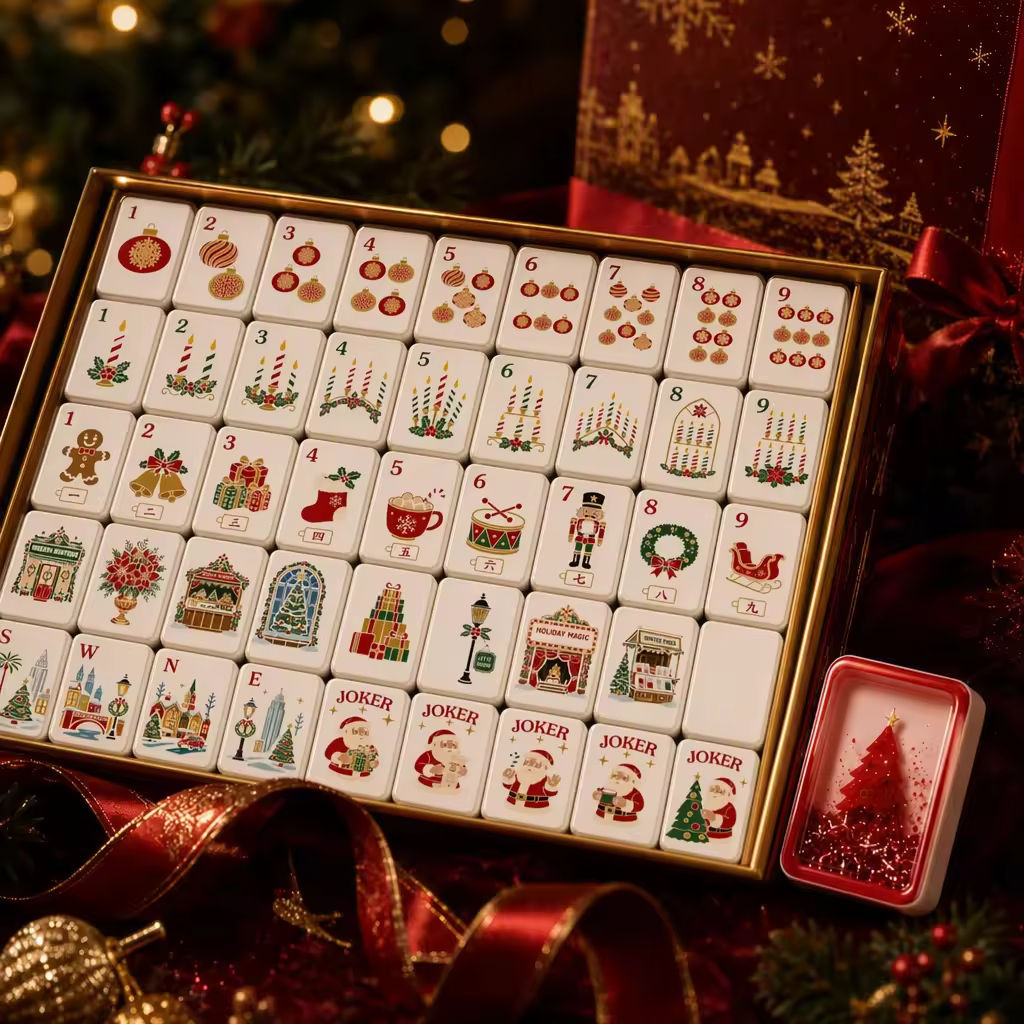
Japanese mahjong (Riichi) is played with 136 tiles—no jokers, no flowers, no winds beyond the wall-breaking ritual. You draw 14 tiles; your goal is to complete a standard winning hand (four melds plus a pair) or a bonus pattern hand. Unlike American mahjong, which uses an annual card, Riichi hands are memorized or learned through play; there's no hand-calling stage. The dealer (East) goes first and has a one-tile advantage. Rounds last until someone wins or the wall exhausts (a draw). Riichi (a declaration before winning) adds scoring multipliers, making it faster and more strategic than American play. Speed matters—players have seconds to decide, not minutes. Most players learn through online simulators or local clubs before playing live.
How is the tile set different from American mahjong?
Japanese mahjong uses 136 tiles total: three suits (Man, Pin, Sou) numbered 1–9, four of each (108 tiles) plus 16 winds (four each of East, South, West, North) and 12 dragons (four each of White, Green, Red). No jokers, flowers, or honor tiles beyond winds and dragons. The 1 Man shows a bird. Each player holds 13 tiles plus one drawn tile (14 total); the draw triggers your play. Discarding one tile back to the wall keeps you at 13. Speed and memory are central—you must instantly recognize tiles and patterns without annotated cards or jokers to "cheat." American mahjong, by contrast, uses 152 tiles including jokers, flowers, extra winds, and relies on the annual National Mah Jongg League card to define winning hands each spring.

What does winning a hand actually mean?
A winning hand in Riichi contains four melds (three tiles each) and a pair (two tiles), totaling 14 tiles. Melds are either chows (a sequence like 1–2–3 of one suit, always hidden unless you call from someone else's discard) or pungs (three identical tiles, exposed or hidden). Many players new to Riichi expect jokers to fill gaps—they don't. Every tile in your hand must be exactly where it belongs. You win by drawing the final tile you need (a "tsumo" win) or by taking a discard from another player (a "ron" win). Bonus hand patterns (like all dragons, all simples, or terminal sequences) have different shapes and scoring rules; learning these patterns takes weeks of focused study or simulator practice. American mahjong fixes hands each year on a published card; Riichi players carry pattern knowledge in their heads or build it gradually through trial and error.
🀄 Shop best-selling mahjong sets →
How does Riichi scoring change the game?
When you believe your hand is one tile away from winning, you can declare "Riichi"—a formal bet that locks your hand and signals that you're close. If you win after declaring Riichi, your score multiplies. The base scoring system counts "fan" (pattern points) and "fu" (hand structure points); higher fan means higher payout. Winning with Riichi, no melds (all hidden), or rare patterns triggers bonuses. A dealer win pays more than a non-dealer win. If the wall runs out and no one wins, the round ends in a draw ("agari nashi"). Scoring happens live in real time—no scoring card, no written calculation phases like American mahjong. Money stakes are optional; many clubs use point counters instead. This speed and layered scoring create tension American players often find electrifying once they grasp it.

What's the fastest way to learn Riichi rules?
Start with an online simulator (free platforms like Tenhou or Mahjong Soul have English modes) for 10–15 hours of solo or bot play. You'll absorb tile recognition, discard instincts, and winning patterns far faster than reading rulebooks. Watch 2–3 YouTube videos on hand structure and Riichi declaration. Join a local club or meetup group where experienced players sit beside you, call out plays, and correct mistakes live. The first live game feels chaotic; the third feels manageable. Most players are patient teachers. Avoid jumping into high-stakes games or tournaments until you can hold a basic hand in your head and spot a winning tile within two seconds. Play on a real mat if possible—the tactile speed of real tiles trains your reflexes better than a screen. Many cities have clubs in community centers, libraries, or Japanese cultural associations; search your local area online or ask at Asian restaurants or bookstores for referrals.
How does American mahjong compare for someone learning Riichi?
American mahjong uses 152 tiles, includes jokers and flowers, and requires the annual National Mah Jongg League card to play legally. Hands are called, exposed on the table, and scored after the game ends by referencing the card. A game takes 60–90 minutes; Riichi rounds are 15–30 minutes. American play emphasizes patience, planning, and collective problem-solving; Riichi emphasizes speed, memory, and individual positioning. Jokers act as wildcards in American hands, eliminating many tile-perfect constraints; Riichi allows no substitutes—your hand must match exactly. If you enjoy slow, meditative play with a rulebook beside you, American mahjong fits. If you crave rapid decisions, hidden hands, and the buzz of live scoring, Riichi is your game. Many players learn both; switching between them requires mental recalibration. American mahjong rules and Riichi are entirely distinct game systems, not variations of one another.
Comparison: American vs. Japanese Mahjong at a Glance
Aspect | American | Japanese (Riichi) |
Tiles | 152 (with jokers, flowers) | 136 (no jokers, no flowers) |
Hand structure | Four melds + pair; drawn from annual card | Four melds + pair; patterns memorized |
Melds visible | Yes, exposed on table during play | No, hidden until win (except called melds) |
Game length | 60–90 min | 15–30 min per round |
Joker use | Wildcards, essential | None |
Scoring | After game, card-referenced | Live, multiplier-based |
Speed | Moderate, thoughtful | Fast, reactive |
Best for | Social, methodical players | Competitive, reflex-driven players |
What to check before you buy a Riichi set:
Tile size & material. Riichi tiles are typically smaller (about 1.3 inches) than American tiles; acrylic or bakelite are common. Handle them if possible—speed depends on smooth, fast tile movement.
Font clarity. Numerals and suit symbols must be legible under live play pressure. Poor contrast causes misreads during rapid discard exchanges.
Completeness. Verify 136 tiles exactly—no jokers, no flowers. Count winds (16 total, four each) and dragons (12 total, four each) before opening sealed sets.
Mat or table surface. Riichi requires a smooth, level playing surface. A dedicated mat reduces tile scatter and speeds play compared to a bare wooden table.
Practice first. Don't buy a full set until you've played 5–10 games on a simulator or borrowed set. Riichi is addictive but demands different habits than American mahjong; reversing your decision mid-purchase is wasted money.
🎁 See our most-loved mahjong sets & accessories →
For Riichi play, seek best-selling mahjong sets explicitly labeled as Japanese or Riichi tiles—they're optimized for speed and tile recognition. A mahjong mat designed for fast play reduces noise and keeps tiles from sliding; many Riichi clubs use them in tournaments. Racks with pushers help newer players keep hand organization crisp during rapid exchanges, especially if you're building hand memory in real time. If you travel to clubs or tournaments, a travel bag or case protects your tiles and keeps them organized between games.
✨ Find your Mahstead set — free US shipping →
Are there online ways to practice before I buy tiles?
Yes. Tenhou (tenhou.net) and Mahjong Soul (mahjongsoul.com) are free or low-cost simulators with English UI, detailed tutorials, and ranked lobbies. Both allow you to practice Riichi rules, hand patterns, and speed at your own pace. Tenhou has no account costs; Mahjong Soul offers cosmetics for purchase but never pay-to-win mechanics. YouTube channels like "Mahjong Waits" and "Tenhou Clips" show real games with commentary, helping you internalize winning patterns faster. Playing 10+ hours online before buying a live set pays dividends—you'll know whether Riichi excites you and whether your local area has active clubs. Most simulators have Discord communities; ask there for club referrals in your region.

FAQ
What's the difference between a winning hand and just having four melds?
A winning hand must have four melds (three tiles each) plus a pair (two tiles), totaling 14. Four melds alone is incomplete. Your 14 tiles must form an exact winning pattern—no jokers can substitute for missing tiles, as they can in American mahjong. The pair is crucial; without it, you haven't won, even if every other part looks perfect.
Do I need to memorize all winning patterns before I play?
No. Start by learning the most common patterns—sequences, honor triples, and simple hands—through simulator play. New players rarely spot rare patterns in their first 20 games; that's normal. Experienced players mentor you on the table. After 30–50 games, pattern recognition becomes automatic. Simulators highlight winning patterns when you're close, speeding your learning curve.
Can I play Riichi with an American mahjong set?
No. American sets have jokers, flowers, and 152 tiles; Riichi needs exactly 136 with no jokers. You could strip out jokers and flowers and play with only the 136 core tiles, but the extra tiles create confusion. Buy or borrow a proper Riichi set to avoid errors and frustration, especially in club settings where tile count matters legally.
How fast do players move tiles during a real game?
Expert Riichi players discard within 1–3 seconds. Beginners take 5–10 seconds without penalty. Tournaments may have turn timers (30 seconds per turn). Speed comes from tile familiarity and hand memory, not from rushing. Play at a comfortable pace in casual games; speed builds naturally after dozens of sessions.
What's the most common mistake new Riichi players make?
Holding too many options and refusing to commit to Riichi. Beginners often wait for a "safer" hand or the perfect tile, delaying their Riichi declaration. Experienced players declare Riichi early and cash in on the scoring multiplier. Early Riichi pressure also forces opponents to play defensively, giving you a psychological edge.
Can I play Riichi with fewer than four players?
Yes, though three-player and two-player variants exist and have modified rules. Standard Riichi is four-player; three-player games remove some tiles and adjust hand values. Two-player mahjong is rare and nonstandard. For your first 10 games, find a four-player group to learn without house-rule confusion.


View More
View More
View More
