
Is Three Player Mahjong Hard to Learn?
Last updated: Nov 23, 2026
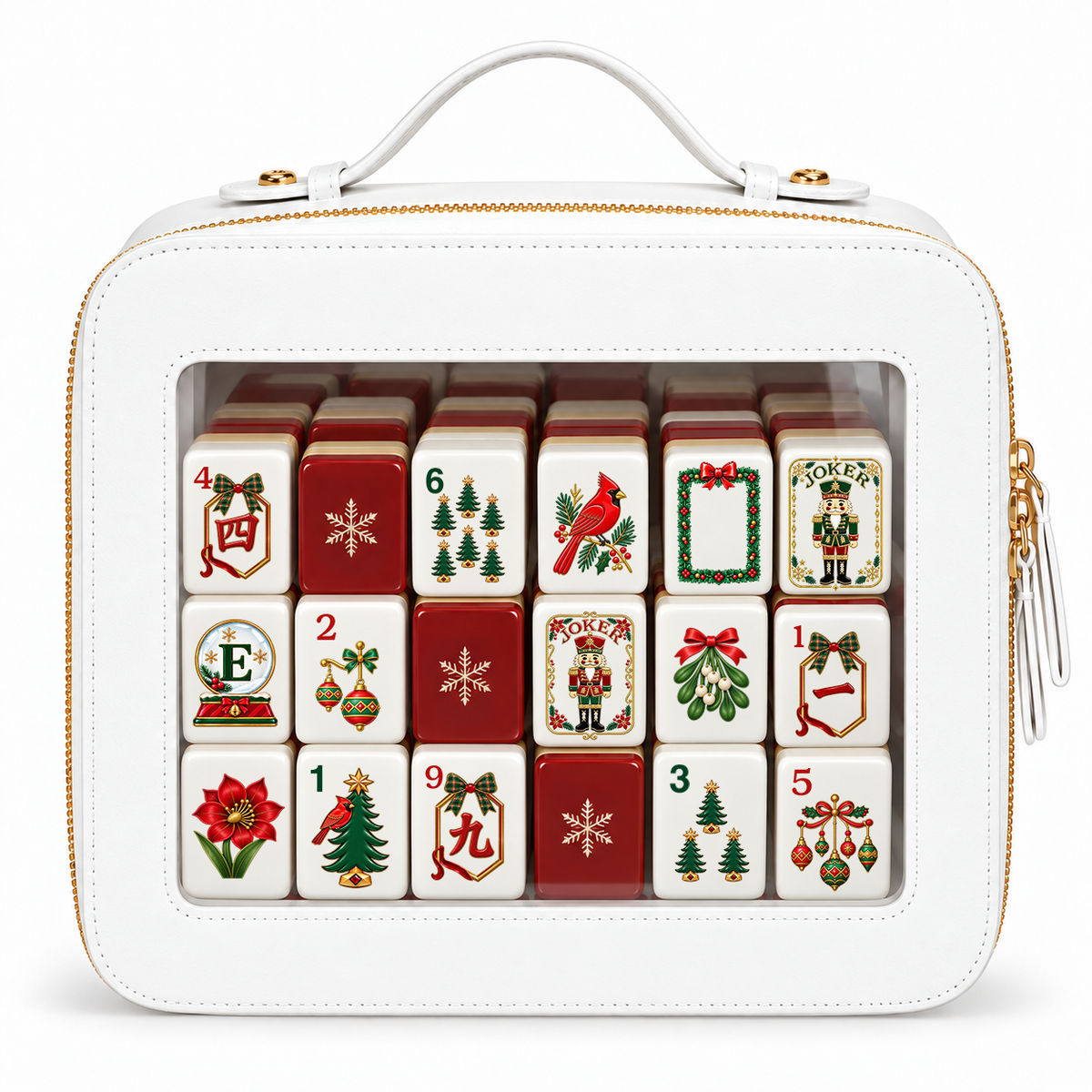
Three-player mahjong is not harder than four-player American mahjong; it's a cleaner learn because you remove one suit (usually Craks) and deal fewer tiles, so the game moves faster and hand possibilities narrow. The core rules—exposure, joker use, pung/kong formation, reading the seasonal card—remain identical to American play; what changes is the rhythm and strategy around the missing 36 tiles. Most players who know four-player American mahjong master three-player rules within one practice session. Setup takes five minutes: shuffle 116 tiles (152 minus 36), deal 13 tiles per player, and start drawing. The learning curve is sharpest on strategy—fewer tiles mean fewer jokers in play, so you read discards tighter and commit to patterns sooner—but that's advantage, not burden. Mahstead's acrylic sets work for three-player games with no modification; just set aside the Crak suit before shuffling.
Why is three-player mahjong actually easier than four-player?
Removing one suit cuts the tile pool by 36—from 152 to 116—which shrinks the number of possible hands. Fewer tiles mean fewer complete hand combinations exist, so patterns repeat more often and become recognizable faster. New players spend less time mapping the card; experienced players adapt strategy in one round. The discard pile also shrinks, making it easier to track which tiles are dead and which remain live. You win faster too—each player draws one fewer tile per deal, so hands fill quicker.

What changes in the rules when you drop from four to three players?
The National Mah Jongg League card remains the reference (hands must still match the current year's legal list). Deal rotates East, South, West the same way; after one circuit, the game ends. Exposure rules stay unchanged: pungs, kongs, quints and sextets are exposed; jokers obey their usual limits; no chows (sequences) exist in American mahjong, three-player or four-player. The major shift is psychological—you have one fewer opponent, so fewer people are discarding dead tiles into your hand, and you build hand awareness with only two other players' patterns to track instead of three.
Do you need a different tile set for three-player mahjong?
No. You use the same 152-tile best-selling mahjong sets you'd use for four-player; you simply remove the 36 Crak tiles before shuffling and set them aside. A 160-tile acrylic American mahjong set from Mahstead has spare tiles built in, so removing one suit doesn't strand you—you're still left with 116 tiles to play and 8 jokers. If you want to avoid the manual step of removing tiles before each game, some players keep a dedicated three-player set at home; in that case, buy a second set and mark it so you don't mix them. For casual play, one set covers both.
🀄 Shop best-selling mahjong sets →
How do you teach a brand-new player three-player rules in under an hour?
Start by explaining that three-player uses 116 tiles instead of 152, deal 13 tiles per player, and draw/discard as usual—that's the scaffolding. Then walk through a single hand: show what a pung looks like (three identical tiles), how a joker substitutes, and how to read the card to find a legal match. Let them play two turns without strategy talk; watching discards land teaches pattern recognition faster than lectures. After three rounds, most players internalize the speed and feel. The only tricky moment is the first time someone calls a hand—pause there, verify the match against the card together, and celebrate. Momentum builds fast once that first win happens.
Which three-player variants exist, and how do they differ from American?
Three-player American (the most common in North America) removes one suit and uses the NMJL card—this is what we cover above. Hong Kong three-player removes one suit but allows sequences (chows) and is played with melds exposed differently; calling rules also differ. Chinese three-player varies by region but typically removes either Bams or Craks and allows sequences; the card is not used (hands are built on standard combinations like sequences and triplets, not the restrictive American pattern list). Riichi three-player (Japanese) uses a different tile mix and scoring table entirely; it's nearly a separate game. For most players in the US, "three-player mahjong" means the American variant—if you're learning in a club or home group, confirm which version they play before your first session.
Variant | Tiles Removed | Sequences Allowed? | Card Used? | Learning Curve for Four-Player Players |
American three-player | One suit (36) = 116 tiles | No | Yes (NMJL card) | Easiest; rules mostly identical |
Hong Kong three-player | One suit (36) = 116 tiles | Yes | No | Medium; melds + sequences change strategy |
Chinese three-player | One suit (36) = 116 tiles | Yes | No | Medium; fewer restrictions, more hands |
Riichi three-player | Different tile mix, 108–120 tiles | Yes | No | Hardest; different system, new scoring |
🎁 See our most-loved mahjong sets & accessories →

What should you check before hosting your first three-player game?
Confirm the variant: Ask your players upfront whether you're playing American, Hong Kong, or Chinese three-player. Rules diverge enough that mixing them mid-game derails the table.
Verify the card: If playing American, print the current year's NMJL card or bring a digital version. Three-player still uses that card; don't invent house rules on the fly.
Set aside one suit before shuffling: Pick Craks (or whichever your group uses) and physically remove all 36 tiles. Place them in the box or a separate bag so they don't get mixed in mid-game.
Use a mahjong mat sized for three: A standard four-player mat wastes space. A rectangular three-player mat keeps tiles closer and makes discard tracking easier. If you don't own one, a flat surface works; the mat just speeds setup.
Deal 13 tiles per player: Not 14. East draws a 14th on the first turn; West and South draw on their turns. New players often default to four-player dealing, so state it aloud before you begin.
Slow the first hand: Let everyone call "time out" once per hand to ask questions. Speed comes naturally after round two.
Common mistakes beginners make in three-player and how to avoid them.
Mistake 1: Forgetting which suit is removed halfway through. A tile from the removed suit lands in the draw pile by accident, and players get confused about whether it's dead. Fix: Before shuffling, hold the removed tiles up and name them aloud ("We're removing all Craks today"), then seal them away where they can't be touched.
Mistake 2: Dealing 14 tiles per player like four-player. In American three-player, you deal 13 to each player; East draws their 14th as the first move of the game. Fix: Count aloud as you deal: "One, two, three…thirteen" to each player, then put the deck in the center and have East draw.
Mistake 3: Calling a hand that doesn't match the card. With fewer tiles, some hands become impossible; a pattern that works in four-player might not exist in three-player on this year's card. Fix: Before any player calls, have them point to their hand on the card and read the pattern aloud. You verify it matches. If it doesn't, no penalty—just teaching.
Mistake 4: Not tracking dead discards. With three players, the discard pile is smaller and shorter-term memory is tempting. You discard a 5 Bam, forget it left the table, and later assume a 5 Bam is still possible. Fix: Glance at the discard pile before committing to a pattern. Three players mean each discard piles faster, so it's easier to spot if a tile you need has already been thrown.
Mistake 5: Skipping the Charleston. Some groups cut corners and skip tile-passing in three-player games, thinking it's "too complicated with an odd number." Fix: The Charleston still happens; in three-player, just skip the pass to the left (or adapt: East passes right, West passes right, South passes right—confirm before starting). This randomizes the tiles and keeps the game fair.
✨ Find your Mahstead set — free US shipping →
What gear should you buy to host three-player games at home?
If you already own a best-selling American mahjong set, you're ready to play three-player tomorrow—no new purchase needed. If you're starting from scratch, a 160-tile acrylic set lasts decades and costs less than a weekly restaurant meal. Add a mahjong mat if you want to protect your dining table and organize tiles cleanly—a rectangular mat sized for three players fits better than a square four-player mat and makes reading tiles faster. If you're traveling to play, a mahjong bag keeps set, mat, and jokers together and safe in the car. For serious home games, racks with pushers let players organize their hand hands one-handed, which matters more with three players because your hand sits idle less and changes faster.
Gear | Essential? | Why It Helps in Three-Player | Where to Start |
Acrylic tile set (160 tiles) | Yes | Durable, easy to remove one suit | |
Mahjong mat (rectangular) | No, but nice | Smaller footprint, better for three | |
Racks with pushers | No | Faster tile handling, cleaner play | |
Bag or case | No | Keeps set safe if you travel |
What to check before you buy
Tile material: Acrylic sets from Mahstead are cleaner and quieter than some bamboo sets and last longer. Test one at a friend's house first if you can.
Set size: 160-tile sets contain 152 playable tiles plus spares. When you remove one suit (36 tiles), you have 116 tiles and spares left—plenty for repeated games without running short.
Mat dimensions: A three-player mat should be roughly 32–36 inches on the long side; a four-player mat is usually 36+ inches square and wastes space if you only need three seats.
Joker count: A 160-tile set includes 8 jokers. All 8 remain in play for three-player (don't remove them when you remove the suit). If your set feels light on jokers mid-game, check the box for spare jokers mixed in with the spares.

FAQ
Can you play three-player mahjong with the American NMJL card?
Yes. The card stays the same; you simply use 116 tiles instead of 152 by removing one suit beforehand. All hands on the card remain legal in three-player—none are removed or altered. Confirm with your group which suit to remove (Craks is most common).
Is three-player mahjong faster than four-player?
Yes. Fewer tiles means hands fill quicker, so each round completes 1–2 minutes faster on average. A full three-player game (one circuit of East, South, West) often takes 45–60 minutes; four-player takes 60–90. New players appreciate the tighter pace.
Do you still use the Charleston in three-player?
Yes, but adapt it for three players. The most common method: East passes three tiles right to South, South passes three right to West, West passes three right to East. Skip the "pass to the left" phase (since there's no fourth player). Confirm the exact sequence with your group before the first game.
What if someone in my group only knows Chinese three-player and I play American?
Teach them the difference upfront: American three-player uses the NMJL card and forbids sequences; Chinese allows sequences and builds hands freely (no card). They're separate games. If mixing players, agree beforehand which variant you're playing and stick to it. Most transition smoothly between the two with a five-minute rules walk-through.
Can you play three-player mahjong with a standard set you already own?
Yes. Remove one suit (36 tiles) before shuffling, set those tiles aside, and play with the remaining 116 tiles. No special set is needed. A 160-tile set gives you spares in case a tile is lost or damaged over time.
Where do I find other three-player mahjong players near me?
Check community centers, libraries, and synagogues in your area—many host mahjong clubs or game nights and can point you toward three-player groups. Meetup boards and local game shops often list standing games. Ask the organizer which variant they play before attending.


View More
View More
View More
