
Chinese Mahjong Setup: Rules, Tiles & Game Prep
Last updated: Nov 23, 2026
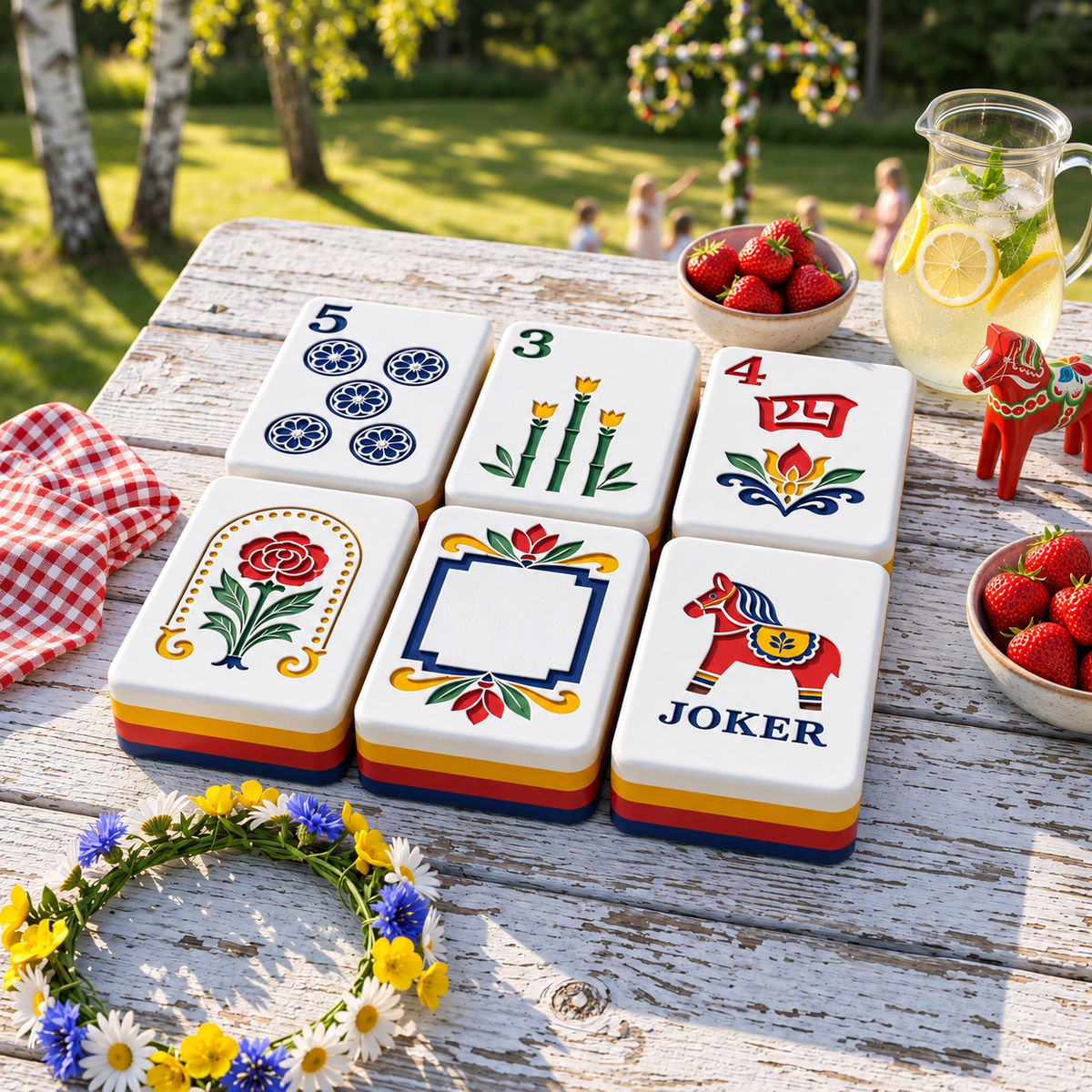
Chinese mahjong uses 136 or 144 tiles (depending on variant: standard 136 has four copies each of Bams 1–9, Craks 1–9, Dots 1–9, and 16 winds; some sets add 8 flowers and 8 seasons for 144). Players arrange tiles face-down in a square wall, typically four tiles high per side. The dealer (East) draws the first tile, and players work counterclockwise, drawing and discarding. Unlike American mahjong, Chinese mahjong permits sequences (chows: 1-2-3, 4-5-6, etc.) and pungs (three identical tiles) to be called and exposed during play. Hands are built from drawn tiles and melds, and winning requires a specific combination of melds plus a pair. Setup takes 5–10 minutes once players understand the wall-building method.
How many tiles go into a standard Chinese mahjong set?
Standard Chinese mahjong uses 136 tiles: three suits (Bams, Craks, Dots) numbered 1–9 with four copies each, plus 16 winds (4 East, 4 South, 4 West, 4 North). Many modern sets add 8 flowers and 8 seasons, bringing the total to 144 tiles. Unlike American mahjong, Chinese sets never include jokers. Before buying, confirm the box label or product description specifies 136 or 144 tiles—this determines how many combinations of melds and pairs are possible in any given hand.

What's the difference between Chinese and American mahjong setup?
American mahjong uses 152 tiles (no sequences allowed; pungs and kongs only), requires reference to the National Mah Jongg League card, and includes jokers. Chinese mahjong uses 136 or 144 tiles (sequences and pungs both permitted), allows more improvisation in hand composition, and includes no wild tiles. American requires a formal Charleston (tile-passing ritual) before play; Chinese does not. American hands are scored by type and complexity; Chinese scoring depends on the melds and pair you form. If you're learning Chinese after playing American, expect to think differently about tile value and hand construction.
How do you build the wall in Chinese mahjong?
Each of the four players builds a wall in front of them using 34 tiles (in 136-tile game) stacked two tiles per stack, making 17 stacks running left to right. In a 144-tile game, each player builds a wall of 36 tiles, stacked the same way. Tiles remain face-down. The dealer sits East and rolls two dice; the sum determines which wall and which stack the dealer draws from first. The wall breaks at that point, and tiles are drawn in a set sequence: dealer takes two stacks (four tiles), then each player clockwise draws two stacks in turn, until everyone holds 13 tiles. The dealer then draws one more tile (making 14), and play begins. This wall method differs entirely from American setup, which uses a single wall and no dice roll to determine draw order.
Can you explain the turn sequence and melding in Chinese play?
After the dealer takes 14 tiles, the South player discards first (in standard play). Then West, North, and East each take turns in counterclockwise order. On your turn, you draw one tile from the wall (or claim a discard if someone else played one you need). If you draw or claim a tile that completes a pung or chow, you may expose (declare) it to the table immediately. You may also claim discards from other players to complete melds—unlike American mahjong, this is not only permitted but essential to the game. After melding or drawing, you always discard one tile face-up to the center. Play continues until someone completes a winning hand: a combination of melds (pungs, chows, or a combination) plus one pair. The first player to declare a complete legal hand wins the round.

What equipment do you actually need to set up a Chinese mahjong game?
You need a mahjong set (136 or 144 tiles), a flat surface large enough for a square wall (a dining table works; a mahjong mat protects the table and tiles and makes the wall easier to organize), and one pair of dice. Many players use mahjong racks with pushers to hold their hand during play—this keeps tiles upright and readable, especially for players with limited hand strength. If you're traveling or sharing a set across multiple households, a mahjong bag or case prevents tile loss and keeps everything organized. The best-selling mahjong sets we stock are acrylic and durable enough for weekly play; they come packaged cleanly and ship free across the US.
Setup Element | Chinese Mahjong | American Mahjong | Why It Matters |
Tile count | 136 or 144 | 152 (plus 8 jokers) | Affects hand possibilities |
Sequences allowed | Yes (chows: 1-2-3, etc.) | No | Changes strategy entirely |
Jokers in play | None | 8 (used as wild tiles) | Jokers boost flexibility in American |
Wall-building | Four-sided square, dice-rolled break | Single wall, no dice | Changes draw order and complexity |
Melding during play | Yes, sequences and pungs | Pungs, kongs, quints, sextets only | Chinese is faster, more reactive |
Starting hand size | 13 tiles (dealer gets 14) | 13 tiles | Minimal difference |
Reference card | None (memorized combos or house rules) | National Mah Jongg League card (current year) | American requires card every round |
🀄 Shop best-selling mahjong sets →
What common mistakes should you avoid during setup?
Mistake: Uneven wall stacks. If tiles aren't stacked precisely two-high and aligned, the wall collapses or becomes hard to draw from. Take 5 seconds to square each stack.
Mistake: Wrong starting tile count. Count carefully as you deal—13 tiles to each player, then one more to the dealer. Miscounting derails the entire round.
Mistake: Placing the break in the wrong spot. After the dice roll, count carefully from the dealer's left. An error here means the wrong player draws first.
Mistake: Exposing a meld incorrectly. Once you declare a meld, it stands—you cannot change it. Verify the tiles match (three identical for a pung, or 1-2-3, 4-5-6, etc., for a chow) before announcing.
Mistake: Forgetting to discard after drawing. Every turn ends with one tile on the table. If you don't discard, the next player cannot act.
Mistake: Mixing up suit colors. In low-light settings or with unfamiliar tiles, Bams, Craks, and Dots can blur together. Take a moment to identify each suit symbol clearly before building your hand.
What to check before you buy
Tile material and clarity. Acrylic tiles are durable and readable at arm's length; bamboo-and-bone tiles are heavier and more luxurious but easier to damage in transit. Check the product description for durability and weight.
Tile size. Chinese mahjong tiles are typically 28–30 mm; confirm this matches your hand size and any racks or mats you own.
Set completeness. Verify the box lists exactly 136 or 144 tiles (depending on the variant), and that no tiles are missing or cracked upon arrival. Most sets ship in protective foam.
Spare tiles or blanks. Some sets include one or two spare tiles in case of breakage. Check the description—it's a useful safeguard.
Bag or case. If you travel with your set, confirm it comes with a storage solution or factor one into your purchase.
🎁 See our most-loved mahjong sets & accessories →
How does the mahjong mat or table improve setup and play?
A dedicated mahjong mat or table cover protects your furniture, creates a non-slip surface for tiles, and gives you visual boundaries for the wall and discard area. Many mats have a felt or velvet surface that grips tiles and prevents them from sliding during shuffling or wall-building. Some include marked zones (North, South, East, West) to help new players orient themselves. For casual play, a mat isn't essential—a bare table works—but for weekly games or tournaments, a mat speeds up setup and reduces tile damage. Choose one that fits your table size and thickness, and check the care instructions (most are machine-washable). A mat also creates a ritual: setting it up signals to everyone that a game is beginning.
✨ Find your Mahstead set — free US shipping →

FAQ
Can I use an American mahjong set to play Chinese mahjong?
No. American sets include jokers and 152 tiles; Chinese sets are 136 or 144 tiles with no jokers. The extra tiles and different tile composition change hand possibilities. You need a Chinese set to play by Chinese rules correctly.
How long does a typical Chinese mahjong round take?
A round usually lasts 15–30 minutes, depending on how quickly players make decisions and call melds. Setup takes 5–10 minutes; play itself is 10–20 minutes. Faster players and house rules can shorten this.
What's the difference between a 136-tile and 144-tile Chinese mahjong set?
The 144-tile set includes 8 flower tiles and 8 season tiles. These tiles are optional in most Chinese variants; some house rules use them, others don't. A 136-tile set is the traditional base. Ask your group which they prefer before buying.
Do I need a dice roll if I'm just playing casually with friends?
No. If everyone is relaxed about rules, you can draw from the wall in any order you agree on. However, using the dice roll keeps the game fair and follows standard play; it's worth learning.
Can Chinese mahjong be played with fewer than four people?
Yes, though rules and hand composition change significantly. Two- and three-player variants exist but differ from four-player setup. Confirm house rules before starting if you don't have exactly four players.
What happens if someone draws from the wrong part of the wall?
In casual play, most groups accept it and continue. In formal play, the round is usually voided and reset. Agree on this rule before you begin.


View More
View More
View More
