
Mahjong for Teens: Rules, Strategy & How to Start
Last updated: Nov 23, 2026
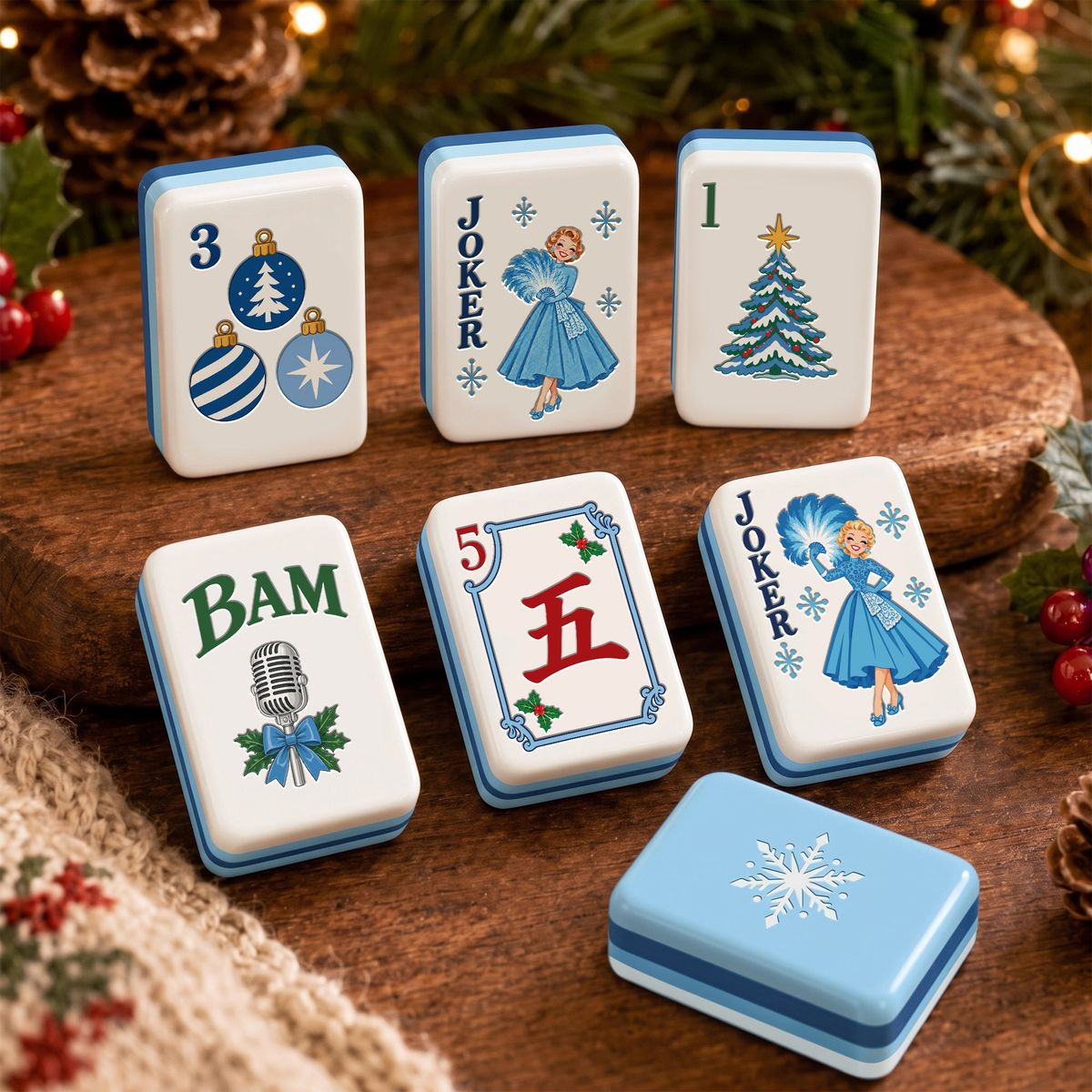
American mahjong is a 152-tile game combining strategy, memory, and luck—ideal for teens aged 13+. Players draw and discard tiles to build winning hand patterns from the current year's National Mah Jongg League card. A standard game takes 1–2 hours with four players and costs nothing after the initial set purchase; you'll need one 160-tile acrylic set and the card (updated annually in spring). Teens thrive in mahjong because it's non-violent, teaches risk assessment, and builds problem-solving under pressure. The main rookie mistake is memorizing hands instead of learning to read the card strategically—we'll show you how to avoid that and get your teen group playing fast.
What is mahjong and why do teens love it?
Mahjong started in 19th-century China as a game for adults; American mahjong evolved in the 1920s with a printed card that defines 2,000+ legal hand patterns each season. Teens are drawn to it because the game rewards quick thinking, negotiation (during the pre-game tile swap called the Charleston), and reading opponents' discards. Unlike video games, it's fully social—no screens, no solo play—and the strategy is deep enough that players improve with every hand. The learning curve is steep for day one but plateaus fast; most confident teen players emerge after 4–6 supervised games.

How long does it take to teach a teen to play?
Teaching the basics takes 30–45 minutes, but confidence arrives after 2–3 full games. Walk through hand structure (a winning hand has one pair plus four other groups of three or four tiles), tile types, and how to read the card without memorizing. Then let them play while you coach on one decision per hand—discard thinking, exposure strategy, or counting jokers. By game three, most teens stop asking permission and make bold calls. The common mistake is overexplaining the card; instead, point at patterns during live play and let repetition do the work.
What equipment does a teen group actually need?
A single 160-tile acrylic mahjong set with clear, large print is non-negotiable. Acrylic won't chip if teens drop it, and light-colored tiles (ivory or white jade) stay legible in indoor lighting. You'll also need the current year's National Mah Jongg League card (free online or printed, around the size of a postcard). Optional but game-changing: a mahjong mat keeps tiles organized and reduces table noise (important in shared spaces like a basement or dorm room), and racks with pushers prevent accidental tile reveals. For a teen study group or friend circle, one set covers everyone—tiles are shared, and the same set can host different groups throughout the week.
Need | Why it matters | Teen approval |
160-tile acrylic set | Durable, clear numbers, one set serves 4 players | High—no sharing delays |
Current year's card | Rules change annually; outdated card breaks the game | Essential—non-negotiable |
Mahjong mat | Reduces noise, organizes play space, prevents theft | High—feels "official" |
Racks (optional) | Hides your tiles, speeds up play | Very high—teen favorite |
Dice (included in set) | Determines seating and opening tile | Included; no extra buy |
How do American mahjong rules differ from what teens might see online?
American mahjong is stricter than most online variants you'll find. Here's what makes it unique: the card defines every legal hand—there are no other patterns. No hand is wild; you can't invent winning combinations. Hands change annually, so the 2026 card is nothing like 2025. Jokers can substitute for any tile except in a pair or a single tile, which stops casual play from devolving into luck. The Charleston—a mandatory tile-passing phase before the first hand—is American-specific and teaches negotiation. Unlike Chinese or Hong Kong mahjong, American has no chows (sequences like 3–4–5), only pungs (three identical tiles), kongs (four), quints (five), and sextets (six). When a teen asks "Can I call that?" the answer is always: "Check the card." This removes argument and keeps the game fair.
What are the biggest mistakes teen players make—and how to prevent them?
Mistake 1: Memorizing hands instead of reading the card. Hands shift every year; memorization dies on January 1 of the next season. Teach the card's layout (section by section, grouped by tile count and pattern type) so your teen learns how the card works, not what's on it.
Mistake 2: Holding onto "nice" tiles too long. New players keep 1-2-3 or suited runs because they "look good." In American mahjong, only complete sets from the card matter. Discard early and aggressive; never marry a tile.
Mistake 3: Calling every possible exposure. Exposing a pung (three identical tiles) feels powerful, but it telegraphs your hand and slows your progress toward a winning combination. Teach teens to count jokers left, estimate hand distance, and call only when it advances toward their goal.
Mistake 4: Losing track of tile count. After 40 discards, many teens lose count of which tiles have been played. Teach them to glance at the discard wall and note which suits are "dead" (gone).
Mistake 5: Ignoring the Charleston. The tile swap at game start is often skipped by impatient groups. Skip it and you miss the chance to improve your opening hand and read opponents' strategies.
Prevention: Play slow-motion practice hands (dealer announces every discard aloud, everyone repeats it). This burns hand reading into memory and cuts mistakes by half.
🀄 Shop best-selling mahjong sets →

How to set up a teen mahjong night or game club
Start with four players (the standard, non-negotiable count) and one 160-tile acrylic set. Seat them at a table or large desk; a mahjong mat defines the play area and silences tile clatter (crucial in shared dorms or common rooms). Print the current year's card on cardstock and place it in the center where all four can see it without reaching.
Assign one teen as scorekeeper for the first three games (later, rotate). Run the Charleston (the pre-game tile swap) exactly as written to keep play fair and teach negotiation. Play 4–6 hands per session (that's 1–1.5 hours). Between hands, let teens talk strategy and laugh—this is half the point.
For recurring teen groups (study club, friend circle, family), invest in storage with a bag or case so the set stays complete and travel-ready. A dedicated set signals commitment and keeps tiles from vanishing into backpacks.
Common setup mistake: using a kitchen table with bad lighting. Sit under a lamp or near a window so tile numbers stay crisp. Bad lighting kills the game.
How to teach strategy without overwhelming them
Strategy in mahjong has two layers: short-term (next two discards) and long-term (which hand to chase). Start with short-term only.
Hand 1–2: Just teach them to read the card and make a discard. Don't ask them to plan.
Hand 3–4: Introduce dead tiles—tiles the dealer has already discarded. Point out one dead tile per hand so they start recognizing when a tile is gone forever.
Hand 5+: Ask "What hand are you chasing?" A good answer is "I need one more 5 Dot and I win." That's it. No probability talk yet.
Hand 10+: Introduce risk: "The 5 Dot is dangerous—it was in two people's melds. Discard it." Keep advice to one idea per hand.
One powerful tip for teens: count jokers. If two jokers have been played and you have the last one in your hand, you're weak—discard anything that needs a joker. This simple habit separates confident players from anxious ones.
What to check before you buy a mahjong set for teens
Tile size: Standard American tiles are roughly the size of a postage stamp (about 1.5 inches). Teens with good vision prefer them; players with mild vision strain want one size larger. Acrylic sets offer both, so check the listing before ordering.
Print clarity: Numbers and suit symbols must be legible under indoor light. Ivory and white jade acrylic backgrounds are best; black or very dark backgrounds create glare. Look at product photos under bright light.
Joker count: Every 160-tile set includes spares (extra jokers and/or blank tiles beyond the 152 playing tiles). Spares are a safety net—if one joker cracks or gets lost, you're not stuck. Check the product description to confirm you're getting full spares.
Card included? The set itself doesn't include the League card. Download the current year's free or purchase a laminated version. This is the single most important thing—without it, the game doesn't work.
Shipping & storage: Acrylic is heavy. Confirm free US shipping is applied. Plan storage in a bag or case if the set will move between homes or a locker.
🎁 See our most-loved mahjong sets & accessories →
Building a teen mahjong culture
Once your first game lands, recruit a second group. Teens love social games and word spreads fast. Host a mahjong tournament (round-robin, 4–6 hands per round, highest total score wins a small prize like a snack). Pair competitive players with learners so everyone stays engaged. After 4–6 weeks of regular play, your teens will be teaching newcomers themselves—the truest sign the game has stuck.
Consider a travel-ready mahjong bag if your group meets across multiple locations. Acrylic sets are portable, and a dedicated bag keeps tiles organized and signals that mahjong is a real commitment, not a one-off novelty. Teens respect equipment that's treated like a sport, not a party game.
The beauty of mahjong for teens is it's timeless. Twenty years from now, they'll remember the people they played with more than the hands they won. And if you get hooked too, there's no age limit—many of our players' adult children learned mahjong at the family table and still play weekly.
✨ Find your Mahstead set — free US shipping →
What you'll need to get started
If you're building a teen mahjong night, grab a 160-tile set from our best-selling collection designed for clarity and durability. Pair it with a mahjong mat for an organized play space and optional racks with pushers to keep hidden hands private and the game competitive. All ship free across the US. Download or print the current year's National Mah Jongg League card (essential) and you're ready to teach.

FAQ
What age is best to teach mahjong?
13+ is the sweet spot. Younger players struggle with 2,000+ hand patterns and the patience needed for a 1–2 hour game; older teens (and adults) pick it up in one session and stay engaged for years.
Can five or six teens play at once?
No. American mahjong is four-player only. Run a rotation: one table of four plays 4–6 hands while the others watch, chat, or score. Swap tables every 30 minutes so everyone plays equally.
Is the National Mah Jongg League card free?
Yes, the official card is available online free from the League each spring. Laminated printed copies are inexpensive. You must use the current year's card or the game breaks—hands change annually.
How long does one game take?
One hand (one dealer's full turn) takes 5–15 minutes depending on speed. A full session of 4–6 hands runs 1–1.5 hours. Teen groups often play two sessions back-to-back (3 hours total).
Do we need a special table?
No. Any flat table large enough for four people sitting around it works. A mahjong mat improves organization and quiets clatter, but it's optional. Make sure lighting is good so tile numbers stay clear.
What's the Charleston and why does it matter?
The Charleston is a 90-second tile-passing ritual before the first hand. Each player passes three tiles to the right, then three to the left, then one to the center. It levels the playing field and is mandatory in American mahjong. Skipping it speeds up play but removes fairness.


View More
View More
View More
