
Is Mahjong Harder Than Solitaire? A Honest Comparison
Last updated: Nov 23, 2026
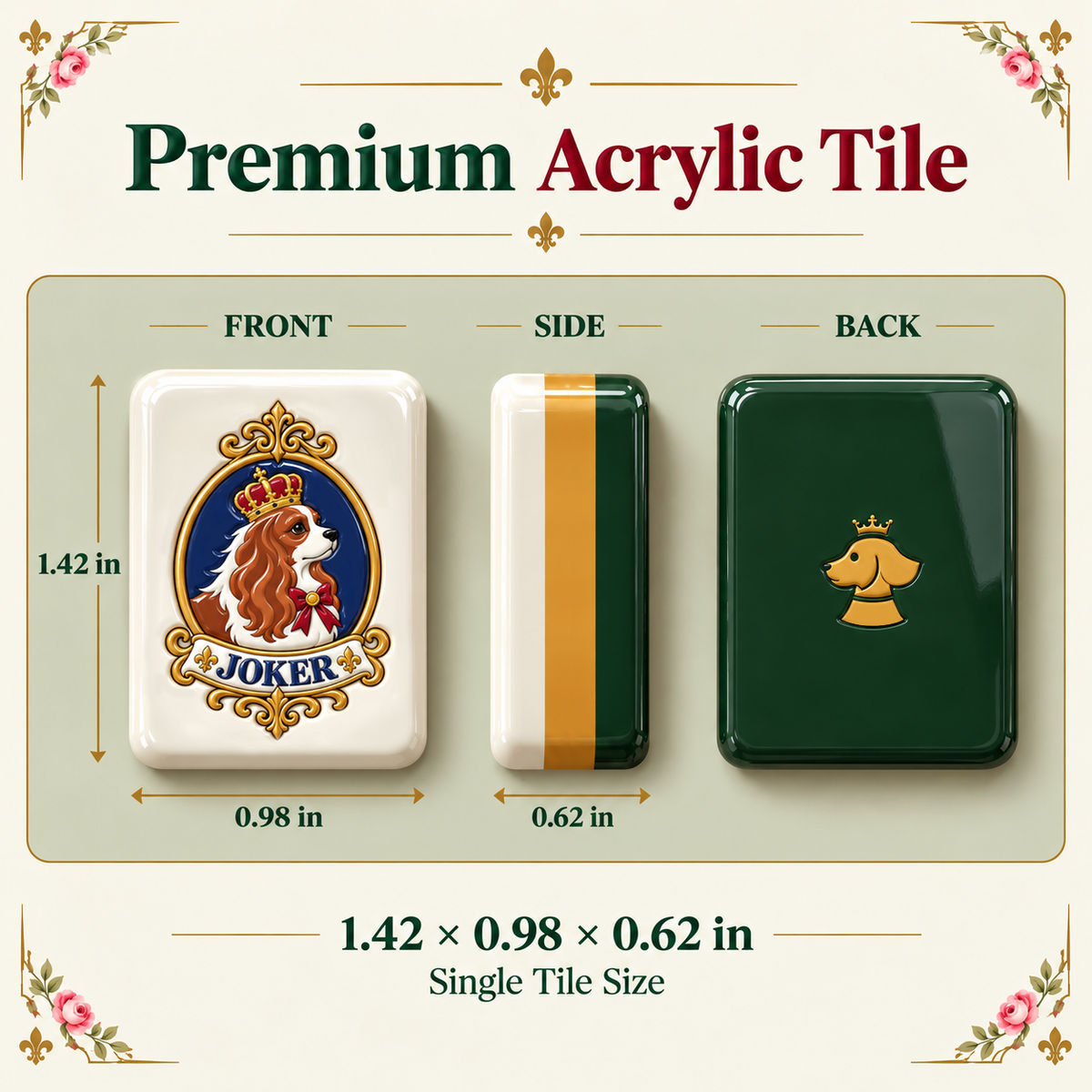
Mahjong is objectively harder than solitaire because it combines multiplayer strategy, hidden information, and a learning curve that doesn't flatten quickly. Solitaire is a puzzle you solve alone against fixed rules; mahjong pits you against three opponents who read your discards, manage their own hidden tiles, and compete for the same prize. American mahjong players must memorize or reference the current year's National Mah Jongg League card—152 valid hand patterns—and track four players' tiles simultaneously. Solitaire offers infinite shuffles and no penalty for failure; mahjong scores real money or points, and one mistake costs the round. New players typically need 10–20 games to play competently, whereas solitaire novices succeed immediately. A 160-tile set from Mahstead lets you start that journey with clear tiles and precision racks, but the real difficulty lies in reading three opponents and adapting faster than they do.
Mahjong wins on complexity because you're not just solving a puzzle—you're competing against thinking opponents who adapt to your moves in real time.
Why does mahjong demand more than solitaire?
Solitaire is a zero-opponent game where you follow one goal: arrange cards in order. The rules never change mid-hand, the deck never lies, and failure simply means reshuffle. Mahjong multiplies the cognitive load: you track four players' discards, infer what they're hunting, manage your own hidden tiles, and decide whether to claim a discard or keep drawing. A single wrong claim reveals your hand strategy; a premature discard costs you the round. Solitaire has one decision tree; mahjong has dozens of branching strategies that shift as each tile appears. After 100 solitaire games, a player's skill plateaus; after 100 mahjong games, strong players are still discovering tile sequencing and opponent tells.

What does the learning curve look like?
A beginner can play solitaire within two minutes. Mahjong requires 30–60 minutes of instruction just to understand the tile names, suits (Bams, Craks, Dots), winds, dragons, and flowers. Then you must learn how to sort and read a hand from the current year's National Mah Jongg League card—the rulebook that changes every spring and defines all 152 valid patterns. After your first game, confusion reigns: Did I understand the Charleston passing ritual? Why did she claim that discard? Most solitaire players win their first hand; most mahjong newcomers lose their first five games despite understanding the rules. Competence arrives around game 15–20; mastery takes years. The pillar guide for mahjong beginners covers this step-by-step, but nothing replaces playing.
Which game tests memory more aggressively?
Solitaire memory is mechanical: remember the position of two face-down cards, repeat once, win. Mahjong memory is dynamic and under pressure. You must remember which tiles each opponent has discarded (and in what order), infer what they're building, hold your own 13 tiles hidden, and recall whether the 5 Dot has been seen yet this hand. If a player discards a 3 Crak, then five tiles later plays defensively, you adjust your assumption about her hand. Solitaire never changes its rules mid-game; mahjong players must adapt their strategy in real time. A solitaire player who forgets the top card restarts; a mahjong player who forgets which tiles are gone simply plays worse than their opponent.
What's the role of luck versus skill?
Both games involve chance, but mahjong luck is overshadowed by skill in ways solitaire is not. In solitaire, two perfect players dealing identical shuffled decks will win or lose at nearly the same rate; skill matters, but luck dominates. In mahjong, the tile draw is random, yet a skilled player beats a lucky amateur 80% of the time because she reads opponents' discards, calculates probabilities faster, and knows when to take risks. Over 100 hands, skill crushes luck in mahjong; in solitaire, luck and skill remain roughly balanced even for expert players.

How does the equipment affect difficulty?
Solitaire needs only a deck and a table. Mahjong needs 152 tiles, four racks, a mat, and often dice—more moving parts create more friction for learners. Poor equipment slows your game: tiles that stick or chip make tile-reading harder; racks that don't hold tiles firmly waste mental energy; dim lighting turns the card reference into a chore. Quality equipment from a best-selling set collection doesn't make you a better player, but it removes obstacles to learning. Acrylic tiles with clear engravings and precision racks mean you spend brain cycles on strategy, not on deciphering tiles or stabilizing your hand. A cluttered workspace or dim setting adds cognitive load that solitaire—a one-player quiet game—never demands.
🀄 Shop best-selling mahjong sets →
Difficulty comparison at a glance
Dimension | Solitaire | Mahjong | Winner |
Rule learning | <5 min | 30–60 min | Solitaire |
First-game success rate | ~70% | ~20% | Solitaire |
Opponent interaction | None | Constant | Mahjong (harder) |
Memory load | Low | High | Mahjong (harder) |
Luck vs. skill ratio | 60:40 | 30:70 | Mahjong (skill required) |
Games to competence | 10–20 | 15–25 | Comparable |
Mastery horizon | 200–500 games | 500–1000+ games | Mahjong (longer) |
Table setup time | <1 min | 5–10 min | Solitaire |
The table makes the verdict clear: mahjong demands more across nearly every axis except initial rule absorption. If you want a casual hand-sorting puzzle, solitaire wins. If you want a game that remains challenging and social after 100 plays, mahjong is harder and more rewarding.
🎁 See our most-loved mahjong sets & accessories →
What to check before you buy your first set
Tile size and clarity: Choose a set where numbers are bold and visually distinct. Spending 10 seconds per tile decoding whether that's a 4 or a 9 exhausts you before strategy begins.
Rack stability: Racks with pushers matter. They hold your tiles upright so you see all 13 at once and free your hands to manage the discard pile and the card reference simultaneously.
Mat or surface: A dedicated mahjong mat with marked zones (your hand, discard, the wall, the dead wall) cuts confusion. Beginners benefit most from this visual structure.
Card reference: The National Mah Jongg League card is dense. Consider a high-resolution printed copy or a tablet version so you can zoom without slowing the game.
Play frequency: Plan to join a weekly game or host one. Mahjong difficulty evaporates when you play regularly; sporadic play (one game per month) keeps you perpetually confused.
Honest note: the first five games are rough for almost everyone. The sixth to fifteenth improve steadily. By game 20, you'll recognize your own learning curve and know whether you love the game. If you quit before game 10, you've only seen the difficulty, not the depth.
✨ Find your Mahstead set — free US shipping →

FAQ
Can I play mahjong solo like solitaire?
No. American mahjong requires four players: each deals tiles differently, and the competitive tile claiming is core to the game. Two- and three-player variants exist but change the rules substantially. Solitaire adaptations for mahjong exist online, but they strip the core difficulty—reading opponents.
How long does each mahjong game take?
A hand (one round) typically lasts 15–30 minutes for learners, 8–15 minutes for experienced players. A full session is usually four rounds (East, South, West, North winds), taking 45–90 minutes total. Solitaire hands average 3–10 minutes, with no mandatory session length.
Is mahjong harder if I'm new to tile games?
Yes. Familiarity with tiles, suits, and honors (winds and dragons) cuts learning time significantly. Complete beginners spend an extra 2–3 games just learning tile names. If you've played any Chinese games, dominoes, or even playing cards competitively, the jump to mahjong is smaller.
What makes one opponent harder than another?
Experienced players discard strategically—they hide their hand pattern and read your discards to infer your goal. Beginners discard randomly and claim tiles impulsively. Playing against a skilled opponent forces you to calculate probabilities faster and assume nothing based on face value, making the game significantly harder.
Do I need to memorize the hand card?
Not fully. Most players reference the card during play; it's legal and expected. However, recognizing common patterns (three pungs, a kong, a pair) without looking speeds your thinking and makes you a stronger player. Beginners benefit from frequent card checks; advanced players glance only at the card when stuck.
Will my first set be enough to learn, or will I outgrow it?
A quality 160-tile set from a best-selling collection is built for decades of play. You won't outgrow it; you might gain a second set (engraved, decorative, travel-sized) for convenience or aesthetics, but your first set will serve you as long as you play.


View More
View More
View More
