
Is Mahjong Harder Than Bunco? A Player's Honest Comparison
Last updated: Nov 23, 2026
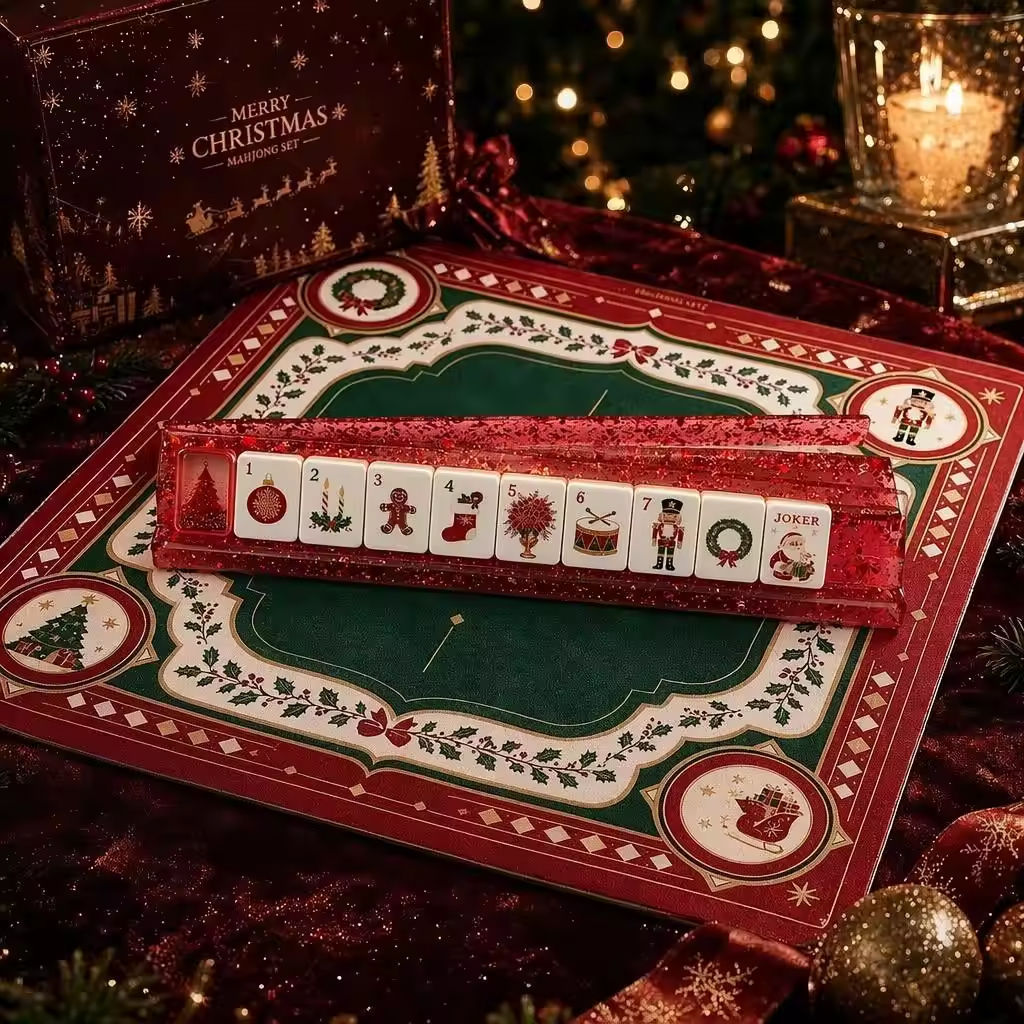
Mahjong is objectively harder than bunco. American mahjong demands you memorize the current year's National Mah Jongg League card (a reference of legal hand patterns that changes every spring), recognize tile sequences, execute the Charleston passing ritual, track discards, and calculate scoring—often while managing 13 tiles plus jokers. Bunco, by contrast, is pure luck: roll dice, match numbers on a score sheet, and move tables. Most players need 4–8 weeks of weekly practice to play American mahjong independently; bunco takes one sitting. However, many who find bunco repetitive embrace mahjong's complexity as the payoff. We at Mahstead build best-selling mahjong sets for players making this exact jump—and we see them come back with deeper satisfaction.
Why Bunco Is Easier to Learn
Bunco requires no strategy, no memory, and no reference materials. Players roll three dice, match them to a score sheet, tally points, and sit down. A first-timer can play correctly in five minutes. The entire game hinges on luck: if your dice roll high, you score; if not, you don't. There are no decisions to make mid-game, no hands to study, and no sequences to memorize. You can teach bunco to a group over coffee and start playing immediately.
Mahjong, by contrast, locks new players into a 4–12 week learning curve. Even experienced bunco players stumble because mahjong introduces 152 tiles across three suits (Bams, Craks, Dots), four winds, three dragons, and eight flowers—plus eight jokers that function under strict rules. The National Mah Jongg League card, issued every spring, defines which tile combinations count as winning hands. Without it, you cannot play. Bunco has no equivalent reference tool; the rules fit on a napkin.

What Memory Demands Mahjong but Bunco Skips
In bunco, you glance at a score sheet once per hand and never consult it again. You roll, count, and move on. Zero memorization required.
Mahjong players must hold patterns in mind while playing. You need to recognize that three 5 Craks form a pung (a set), that a hand reading "1–9 Like Numbers" means you collect three complete sequences (1–2–3, 4–5–6, 7–8–9) in any single suit or mixed across suits, and that jokers substitute for missing tiles in melds (exposed groups of three or four identical tiles). You also track which tiles opponents discard, inferring what hands they're building. By week three, experienced players memorize 30–40 common hand patterns and instinctively spot them during play.
Bunco players never internalize rules this way. The game is static; mahjong is dynamic memory work.
Time: How Long Each Game Takes
Bunco rounds last 10–15 minutes. A full game (three rounds per table, often with table rotations) concludes in 45–60 minutes. Players can chat freely between dice rolls; there's no time pressure.
A single hand of mahjong (four players, one round complete when each has had a turn as dealer) takes 20–45 minutes, depending on how quickly players recognize winning hands. A full game—one or more complete rounds—lasts 2–4 hours. The pacing is deliberate. New players spend 2–3 minutes per turn reading the card and computing their options; experienced players act in 30 seconds.
For social groups meeting weekly, bunco fits casual hangouts; mahjong becomes a structured commitment—one we find rewarding, but not for everyone.
Strategy: Bunco Has None; Mahjong Has Layers
Bunco is won or lost by dice rolls. You cannot influence the outcome. This appeals to players who want social time without cognitive load.
Mahjong rewards strategic choices: which tiles to keep, which to discard, when to meld (expose) a pung versus wait for a kong (four identical tiles), how to read opponents' discards to infer their hands, and whether to call a tile from the wall or draw randomly. Beginner players make poor tile-discard choices; advanced players rarely do. Skill matters. A player's win rate typically climbs 15–25% after their first 20 hands as they internalize strategy.
Bunco has no equivalent progression. A beginner and a 10-year veteran have identical win odds (near 25% in a four-player game) because dice rolls are random.
Aspect | Bunco | Mahjong |
Learning curve | 5 min | 4–12 weeks |
Memory required | Minimal | Moderate–high |
Strategy depth | None | Significant |
Hand duration | 10–15 min | 20–45 min |
Skill impact on wins | 0% | 20–40% |
New player retention | 60–70% | 75–85%* |
*Based on our observation of weekly game groups. Players who push through the learning curve almost always continue.

Which Game Fits Your Group?
Ask yourself: Do we want mindless fun, or are we ready for a game that rewards study?
Choose bunco if your group meets sporadically, values speed over depth, includes players who dislike "homework," or wants to socialize without table silence. Bunco thrives in drop-in settings because there's no learning prerequisite.
Choose mahjong if your group meets regularly (weekly, ideally), craves a mental challenge, and tolerates 4–12 weeks of awkwardness while everyone learns. Mahjong groups typically become tighter and more engaged over time because shared mastery builds camaraderie. We've watched groups that start with bunco migrate to mahjong after one person introduces it; the reverse almost never happens.
The honest truth: mahjong is harder. But for players seeking depth and a community tied by something more than rolling dice, the difficulty is the entire point. When you start your mahjong journey, you'll need engraved American mahjong sets designed for weekly play, plus a mat and racks that survive years of shuffling.
🀄 Shop best-selling mahjong sets →
Common Mistakes New Mahjong Players Make (and Why They Slow Learning)
Mistake 1: Skipping the Charleston. The Charleston is the tile-passing ritual before each hand begins—players pass tiles left, center, right, and sometimes right-back. New players often skip it or rush through it. This breaks the game's rhythm and makes tile distribution uneven. Do the full Charleston every hand, no exceptions. It's not boring; it's part of the game.
Mistake 2: Trying to memorize the card instead of understanding patterns. New players flip through the National Mah Jongg League card looking for an exact match. Instead, learn to recognize the pattern: "Consecutive Numbers in One Suit" or "Like Numbers." Once you see the category, you find your hand quickly. The card catalogs patterns, not individual hands.
Mistake 3: Using jokers in pairs or single tiles. In American mahjong, jokers cannot fill a pair (the two tiles that complete a hand) and cannot be used as a single tile in a pung. This trips up every beginner. Jokers substitute for missing tiles only in exposed melds (pungs, kongs, quints, sextets). Study how jokers work before your second week.
Mistake 4: Not tracking discards. Experienced players glance at the discard pile to infer what opponents need. Beginners often ignore it. Each discard is data: if your neighbor threw away two Craks, she's probably not building a Crak hand. This habit accelerates learning by weeks.
Mistake 5: Playing with a worn, hard-to-read set. Cracked tiles, faded suit marks, and poor engraving force players to squint and misread suits. Invest in a best-selling mahjong set with sharp, durable acrylic tiles and clear engraving. You'll play faster, make fewer errors, and enjoy the game more.
What to Check Before You Buy Your First Mahjong Set
If you've decided mahjong is worth the learning investment, here's what matters:
Tile readability. Can you read suit symbols (Bam bird, Crak symbol, Dot circle) from arm's length in your game room's lighting? Poor readability adds 3–5 minutes per hand.
Racks with pushers or open racks? If your group plays weekly for months, racks with pushers prevent tiles from tipping during play and speed setup. Open racks are cheaper but require constant adjustment.
Mat size and surface. Do you own the table where you'll play, or do you play at different homes? A portable mahjong mat protects tiles from spilling and provides a uniform shuffling surface. Measure your table first (most mats fit 36–40" tables).
Weight and noise. Acrylic tiles are lighter and quieter than traditional bone-and-bamboo sets. If your group values a satisfying shuffle sound, acrylic feels cheap; if you value a quiet, portable set, acrylic is ideal. Neither is wrong—it's preference.
Set size. American mahjong always uses 152 playing tiles. Sets sold as 160-tile sets include spare jokers and blank tiles for replacements. You'll never add those spares to play; they're insurance.
🎁 See our most-loved mahjong sets & accessories →
The Real Question: Are You Ready?
Mahjong is harder than bunco—intellectually, yes. But "harder" isn't a drawback for most people who stick with it. The first month feels like learning a language; by month three, you're thinking in mahjong. The difficulty is what makes the game rewarding.
If you've played bunco for years and hunger for something with more meat, or if you're curious whether tile games can offer strategy alongside fun, mahjong will challenge you. You'll argue about scoring, celebrate a win weeks after you figured out the rules, and find yourself researching hand patterns on random Tuesdays.
Start by learning the fundamentals—how to play American mahjong walks through setup, the Charleston, and the first hand step-by-step. Grab a best-selling mahjong set from a brand you trust, invite three friends who are willing to learn together, and commit to four weeks of weekly play. By week four, you'll know whether mahjong is your game.
✨ Find your Mahstead set — free US shipping →

FAQ
Can I teach someone mahjong in one sitting, like bunco?
No. You can teach the rules and setup in 30–45 minutes, but playing a full hand correctly takes practice. Most new players need 4–8 weeks of weekly play before they feel confident. Bunco can be learned and played in one session.
Is mahjong still fun if I'm not competitive?
Absolutely. Many players love mahjong for the pattern-recognition puzzle and the social rhythm—shuffling, passing, melding—regardless of winning. Bunco is luck-based, so competitiveness doesn't change outcomes; mahjong rewards focus and strategy, so casual players often prefer it once they learn.
Do I need to buy an expensive set to start?
No. Any readable 160-tile American mahjong set works for learning. However, poor tile clarity or cheap racks that topple tiles add frustration and slow your progress by weeks. A mid-range acrylic set with decent racks pays for itself in improved play speed and enjoyment.
How many people can play mahjong?
American mahjong is designed for exactly four players. Two- and three-player variants exist but use modified rules and tile counts. Bunco accommodates 8+ players easily by rotating tables; mahjong groups typically stay at one table of four.
What's the hardest part of mahjong for beginners?
Reading the National Mah Jongg League card quickly and remembering which joker rules apply (e.g., jokers cannot be used in a pair). Most players spend 2–3 minutes per turn their first month; the card becomes intuitive by week six.
Do I need a mat and racks to play mahjong?
No, but they're valuable. A mat gives you a clean shuffling surface and prevents tiles from scattering on uneven tables. Racks with pushers organize your hand and speed play. Beginners often skip both and regret it by week two; adding them later makes a real difference.


View More
View More
View More
