
Fujian Mahjong Strategy: Winning Tactics for Chinese Play
Last updated: Nov 23, 2026
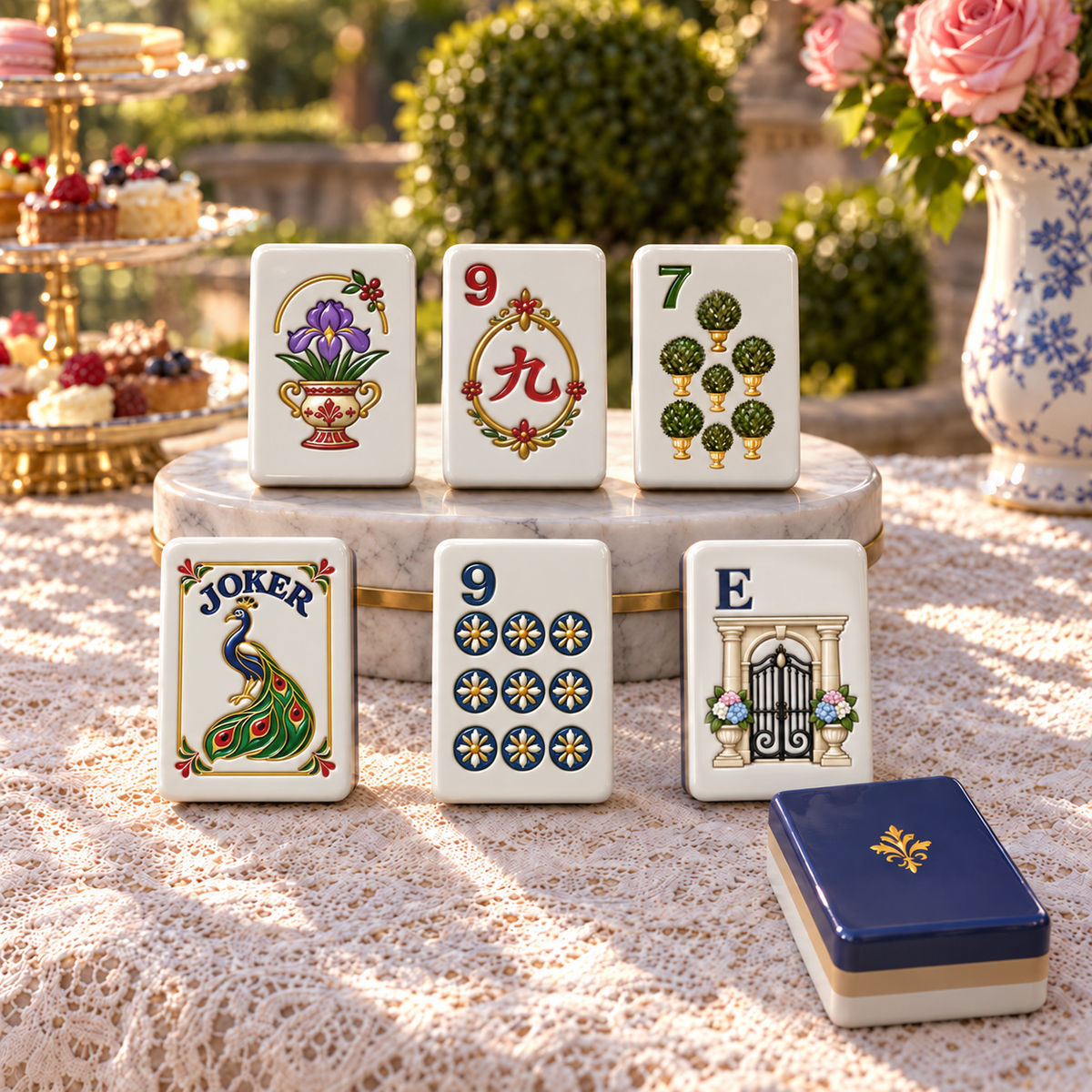
Fujian mahjong strategy differs fundamentally from American play: the game uses 108 tiles (one suit—Bamboos—plus Winds, Dragons, Honors) with hand-building around pairs rather than the three-suit American system. Winning hands require managing concealment (many tiles stay hidden), reading opponent discards to block their melds early, and recognizing standard patterns—such as All Pairs, Mixed Sequences, or Dragon combinations. The speed is faster than American mahjong; discards are called quickly and tile pickup rules are stricter. Key tactics include (1) building redundant pairs early to stay flexible, (2) discarding safely by reading table history, (3) blocking opponents' obvious progress immediately when their discard patterns emerge, and (4) watching Flower and Bonus tile draws carefully since they trigger immediate replacements. Unlike American mahjong's rigid National League card, Fujian play adapts regionally, so confirm house rules on winning conditions, payout multipliers, and whether Flowers reset the hand. A typical 4-player game lasts 8–16 rounds per session, and strategy improves fastest with consistent table practice and a reliable set with clear, durable tile markings—many Fujian players prefer best-selling acrylic mahjong sets because their engraved tile faces remain legible during fast play and multi-round sessions.
Why Does Fujian Mahjong Feel Faster Than American Play?
Fujian mahjong operates on a claim-and-draw cycle that rewards speed: the moment an opponent discards, you must decide instantly whether to claim it or let it pass. Unlike American mahjong, where you cannot form sequences (chows) and must expose only pungs or kongs, Fujian play allows both concealed melds and exposed combinations, creating simultaneous decision points. The active discarder in Fujian play cannot simply wait; the next player can claim immediately, and if they do, they take the tile, meld it, and discard—all within seconds. This creates psychological pressure: slow play signals weakness or indecision, which experienced opponents exploit by shifting their discard strategy. Additionally, Flowers in Fujian variants (which trigger free tile draws when drawn from the wall or picked up) cycle faster than expected, meaning your hand composition can shift unexpectedly mid-round. The game ends quickly when any player forms a legal winning hand or when all tiles are drawn with no winner, resetting the round. Over a 4-player session, this means 12–20 rounds per evening rather than the 4–8 typical in American play.
🀄 Shop best-selling mahjong sets →

What Hand Patterns Win Most Often in Fujian Play?
Fujian winning hands fall into discrete categories, and recognizing them shapes your blocking and building strategy. All Pairs (thirteen tiles forming seven pairs plus a winning pair) is the most common and highest-value hand in most regions—it requires zero sequences and rewards defensive play, making it ideal when the table is volatile. Dragon Hands (three complete Drag sets—Red, Green, White—plus two pairs) are powerful but visibly progressing, so opponents spot and block you early; they're riskier on crowded tables. All Honors (hands using only Winds and Dragons, no Bamboos) are rare but typically pay triple or more in regional scoring. Mixed Sequences (sets that combine sequences with pairs, e.g., three consecutive Bamboos plus a pair) are the "in-between" hand—less obvious than All Pairs but harder to conceal than Dragon hands.
Regional rule books (available from Fujian community centers or online forums) define sub-categories: some regions split All Pairs into Soft Pairs (one or more pairs can be substituted by sequences) and Hard Pairs (all pairs are locked), with Hard Pairs paying double. The strategic implication: if you're building an All Pairs hand and you have five solid pairs by round midgame, your opponents will notice and pivot their discards; conversely, if you discard aggressively early, you can misdirect the table into thinking you're chasing a Dragon hand, buying time to complete All Pairs concealed. The best defensive players memorize the five most common winning patterns and can instantly judge whether an opponent is one tile away or still building, based purely on their discard sequence and tempo.
How Do You Block Opponents Without Sacrificing Your Own Hand?
Blocking in Fujian mahjong means discarding tiles your opponent needs without damaging your own progress—a razor-thin balance. The key principle: the tile that blocks them must be one you can afford to lose. Start by observing each opponent's discard pattern for the first two rounds. If East player has discarded three Bamboos (1 Bam, 5 Bam, 8 Bam) and kept a Wind and a Dragon, they're likely chasing an All Honors hand or a Dragon combination. If you have a spare 9 Bam or an unused Wind you don't need for your own hand, discard it—it won't help them, but if they claim it, you've learned they were building a different hand than you suspected.
The danger zones are rounds 4–6, when most players have 8–10 tiles concealed and are close to winning. At this point, blocking becomes risky: a tile that "looks safe" because no one has claimed similar tiles in rounds 1–3 might actually be a one-tile-away winner for someone. Mitigate this by watching pickup patterns: if North player draws from the wall, hesitates, then discards a tile immediately, they likely drew a Flower (which triggered a replacement draw) and are still looking to complete their hand. If they grin or nod, they probably drew a tile they needed. A blocked player who sees their winning tile discarded by you will pivot their strategy, sometimes abandoning a near-win hand to switch to something else—which disrupts the table's balance and may inadvertently help a third player.
The advanced tactic: discard your blocking tiles in a pattern. If you throw three "safe-looking" tiles across three rounds, opponents may infer you're discarding dead tiles (tiles you don't need), making them more willing to discard around you. Then, in round 5 or 6, discard a tile that looks just as safe but is actually blocking the one player who's progressing fastest. This psychological layering takes 10–15 games to master but is how regional champions separate themselves.

What's the Best Strategy for Reading Opponent Discards?
Every discard tells a story. In Fujian play, the order and timing of discards are as important as the tiles themselves. Start tracking this mental checklist from round 1:
Early discard pattern (rounds 1–2): Players discard freely, often from their starting hand without much calculation. Look for tiles they discard immediately (likely not fitting their initial draw) versus tiles they hesitate over (likely "useful but not immediately needed"). If West player discards a 1 Bam on turn 1 and an 8 Bam on turn 3, they're probably not chasing a Bamboo-heavy hand like All Pairs; they're steering toward Winds, Dragons, or Honors.
Mid-round pivot (rounds 3–4): This is when players' hands solidify and blocking pressure increases. If East player stops discarding Bamboos and pivots to exclusively discarding Winds, they've likely completed a Bamboo run or pair set and are now chasing Winds/Dragons. Counter: if you have spare Winds you don't need, begin discarding them to depressurize East and free up better tiles for yourself.
Late game tells (rounds 5+): Hesitation becomes costly. A player who pauses for 3+ seconds before discarding is usually one or two tiles away from winning. A player who discards quickly is either (1) certain the tile is dead, or (2) fishing for a reactive claim (e.g., hoping someone claims their discard so they trigger a replacement draw). Watch for these players on your next round—they're often close.
Comparison of reading methods:
Discard Signal | What It Usually Means | Your Response |
Hesitation (3+ sec) + sudden discard | Player is close to one specific hand or unsure of table safety | Block aggressively; avoid claiming from them if possible |
Rapid, emotionless discard | Player is confident the tile is unneeded or "dead" | Safe to discard similar tiles around that player |
Discard followed by glance at you or North | Player is testing whether you'll claim (reactive fishing) | Claim only if your hand genuinely needs it—avoid baiting |
Discard of a high-value tile (Dragon, Wind) | Player has multiple copies or considers it expendable | They're likely not chasing Dragon or Honor hands |
Discard of a mid-range Bamboo (4–6 Bam) | Depends entirely on round; weak signal unless part of pattern | Combine with previous two rounds' discard order to infer strategy |
Master this table by playing 5–10 games with the same opponents; patterns emerge faster than you'd expect.
🎁 See our most-loved mahjong sets & accessories →
How Does Scoring Differ From American Mahjong, and How Should It Change Your Play?
Fujian scoring is regional, but the most common system uses multipliers based on hand type and conditions, rather than the point-based system used in American mahjong (which awards fixed points per pattern). Understanding the payout structure changes your hand selection strategy fundamentally.
Base payouts typically follow a pyramid:
All Pairs: 1× base unit (most common, least risky)
Dragon hands (three dragon sets): 2–3× base
All Honors (no Bamboos): 3–4×
Mixed Sequences + All Pairs: 1.5×
Self-drawn winning tile (vs. claiming opponent's discard): ×2 multiplier on top of hand type
Bonus conditions (house rules vary; confirm before play):
No tiles claimed from opponents (all concealed until win): Can multiply payout by 2–4×
Round-winner bonus: The player who won the previous round starts with small advantage or penalty
Flower/Bonus tile draws: Some regions credit bonus points per Flower drawn; others reset payout counts
The strategic implication: if a Dragon hand pays 3× and an All Pairs hand pays 1×, but Dragons are visible to the table (opponents see you collecting three Dragon sets and block you), you might only complete a Dragon hand 1 in 10 games. An All Pairs hand, though less profitable per win, hits 3–4 times per 10 games because it's concealed longer. Over 20 games, All Pairs wins 6–8 times (net: 6–8 units) while Dragon attempts win 1–2 times (net: 2–6 units). The expected value of All Pairs is higher, even at lower payout. Advanced players calculate this tradeoff on the fly, adjusting after each round based on what the table paid and how many players are close to winning.
To verify the scoring rules your group uses before your first session, ask: Does a self-drawn win pay double? Are Flowers reset every hand? Does concealment (no claimed tiles) increase payout? Write the answers down; regional rules can vary by town, and misunderstanding payout structure guarantees costly mistakes in your early games.
What to Check Before You Buy a Set for Fujian Play
If you're hosting Fujian mahjong regularly or traveling to play, invest in a durable, clear-faced set. Here's why: Fujian play is fast, tiles are claimed and discarded rapidly, and unclear markings—faded tiles, glossy surfaces that glare under overhead lights, or poorly engraved Bamboo faces—cost you reaction time. You'll misread a tile, misclaim, or hesitate at a critical moment.
Tile readability: Choose a set with high-contrast, engraved faces (not printed). Acrylic tiles hold engraving better than bamboo or plastic alternatives and don't yellow or dull over hundreds of games. Verify that the Bamboo suits (1–9 Bams) are clearly distinct, especially in the mid-range (4–6 Bam), where confusion is most common.
Set size and weight: Fujian play typically uses 108 tiles (one suit + Winds + Dragons + Honors), but Western players often use full 152-tile sets (three suits) for flexibility. Either works, but confirm your group's standard. The tiles should feel substantial enough not to scatter when discarded onto a mat, but not so heavy that fast play becomes fatiguing.
Mat and racks:Mahjong mats with clear zone markings help you organize your hand quickly, especially during fast rounds. If you use racks, choose racks with pushers that let you adjust tile positions without fumbling—wasted seconds add up over 12–16 rounds. A mat with a dedicated discard zone (usually a center square or area) prevents the common mistake of claiming a discard that's not actually in play.
Travel and storage: If you're joining a traveling Fujian group or hosting games in different locations, a quality mahjong bag or case protects your tiles from warping, chipping, or losing engraved detail. Tiles exposed to humidity or extreme temperature changes lose definition quickly.
✨ Find your Mahstead set — free US shipping →

FAQ
How is Fujian mahjong different from Cantonese or Hong Kong mahjong?
Fujian uses 108 tiles (one Bamboo suit) and emphasizes All Pairs as the primary winning hand. Cantonese uses 136 tiles and includes sequences (chows) as valid melds. Fujian is faster-paced and relies more on concealment; Cantonese involves more open melding. Both are played widely in overseas communities, so confirm which variant your group plays.
Can I use an American mahjong set to play Fujian mahjong?
Yes. American sets contain 152 tiles (three suits, 16 Winds, 12 Dragons, 8 Flowers, 8 Jokers). You'll simply ignore the extra suits and use only Bamboos, Winds, Dragons, and Honors. However, this is wasteful; most Fujian players prefer purpose-built 108-tile sets or use an American set only if that's the table standard.
What's the best opening hand strategy in Fujian play?
Aim to build two solid pairs and one flexible pair by the end of round 2. This gives you a foundation to adapt—toward All Pairs if the table is blocked, or toward mixed sequences if paired tiles dry up. Avoid committing to a Dragon or Honor hand before round 3; the table's blocking pressure will force you to pivot.
How do I know when to switch strategies mid-game?
If by round 4 you have not formed even two complete pairs and opponents are discarding aggressively into your hand type, abandon your current plan. Discard the tile that blocks the player closest to winning, and pivot to a defensive, high-pair hand like All Pairs. Switching costs one round but saves you from a zero-point loss on a doomed Dragon hand.
Are there any common beginner mistakes in Fujian strategy I should avoid?
The three most costly: (1) claiming too many tiles early from opponents—this locks your hand and makes you an easy target for blocking. (2) Discarding high-value tiles (Dragons, Winds) without first observing the table's patterns; you might accidentally give an opponent their winning tile. (3) Hesitating too long before discarding; it signals weakness and accelerates blocking against you. Play decisively, even if you're uncertain—speed is a tool. --- INTERNAL LINK USAGE SUMMARY: - best-selling acrylic mahjong sets — opening answer, set durability/readability for fast play - Mahjong mats — storage/play setup section - racks with pushers — hand organization during fast play - mahjong bag or case — travel/portability for Fujian groups - best-selling collection CTA buttons — three verbatim CTA lines placed after opening, after "Why Faster" section, and at end


View More
View More
View More
