
Is Mahjong Harder Than Backgammon? A Player's Honest Comparison
Last updated: Nov 23, 2026
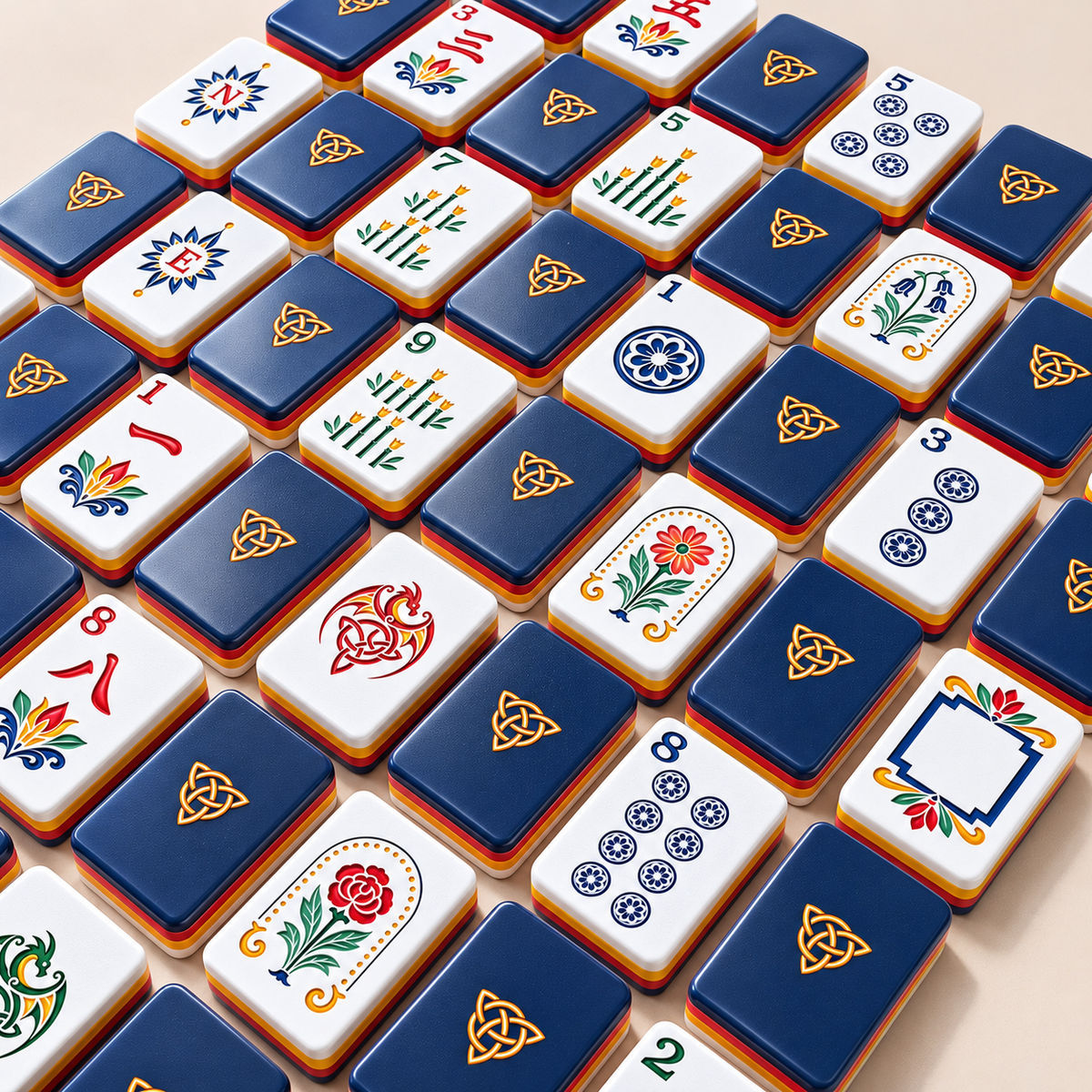
Mahjong is harder than backgammon for most beginners, but not for the reason you might think. Backgammon has simpler tile mechanics (two players, 15 pieces per side, one deck of moves determined by dice) and reaches a playable skill level in a few hours. Mahjong requires memorizing 152 tiles, four players, and an entirely new hand structure each season from the National Mah Jongg League card—a different goal every week. However, backgammon demands sharper risk calculation once you know the rules, while American mahjong rewards pattern recognition and patience. Neither game is truly "hard"; they're different. Backgammon asks what move wins the race? Mahjong asks what hand exists on this card, and can I build it? If you prefer decisive logic and head-to-head combat, backgammon wins. If you enjoy collaborative puzzle-solving with mild bluffing, mahjong is your game. We recommend starting with the beginner guide to test the waters with a quality best-selling American mahjong set before committing.
How does the learning curve differ?
Backgammon teaches in 30 minutes: move your pieces home, block opponents, roll dice, bear off first. You're playable by lunch. Mahjong takes 3–5 hours to play one full hand competently. The Charleston (tile-passing ritual), hand-reading from the card, joker rules, and exposure mechanics create friction for newcomers. But this friction vanishes after 4–6 games. Once you've seen the card three times, it clicks. Backgammon, by contrast, reveals new strategy layers for years—endgames, cube ownership, position evaluation. Mahjong's strategy plateau is lower: most players plateau around game 20, then plateau stays stable. Winner: backgammon for depth; mahjong for speed-to-fun.

Which requires more luck versus skill?
Backgammon is 50–60% luck (the dice) and 40–50% skill (move selection, risk management). A weaker player can beat a strong one if the dice favor them; a strong player can minimize bad rolls but cannot eliminate them. Mahjong is 30–40% luck (the draw order, the discard stream) and 60–70% skill (tile memory, reading opponents' hands, timing your claim). Once you see four rounds, the tile pool narrows, and observation becomes dominant. A skilled mahjong player beats a novice nine times out of ten; backgammon odds favor the skilled player 65–70% of the time. For players who hate coin-flip outcomes, mahjong wins. For players who enjoy a graceful comeback mechanic, backgammon delivers it more often.
What about the social experience?
Backgammon is intimate: two players, one board, quiet calculation. Matches last 20–60 minutes. Conversation halts during critical rolls. The game is portable and works in a coffee shop. Mahjong is ensemble: four players, 152 tiles, one mat. Games run 45–120 minutes. Constant low-level chatter (joking about the Charleston, table talk about missed calls) is expected. The social baseline is higher; quiet, serious mahjong feels odd. Backgammon suits one-on-one rivals; mahjong suits friend groups and family nights. If you want to host weekly gatherings, a quality mahjong mat and coordinated set become social anchors. Backgammon is friendship; mahjong is community.
Which one teaches transferable logic?
Backgammon teaches probability estimation, real-time risk assessment, and tactical concession—skills that transfer to business, poker, and life decisions. Every move is a cost–benefit calculation under uncertainty. Mahjong teaches pattern recognition, memory, reading non-verbal cues, and cooperative deception—skills that transfer to card games, negotiation, and data analysis. Neither teaches the other's logic; they're orthogonal skill trees. A chess player often excels at backgammon. A Rummikub player often excels at mahjong. If you're training your decision-making under pressure, backgammon is the sharper knife. If you're building your observation and memory, mahjong is the finer lens.

Which should you choose?
Factor | Backgammon | Mahjong | Winner |
Learn time | 30 min | 3–5 hrs | Backgammon |
Playable skill | 1–2 games | 4–6 games | Backgammon |
Depth of strategy | Very high | Moderate | Backgammon |
Luck factor | 50–60% | 30–40% | Mahjong (more skill) |
Social rhythm | Quiet, 1v1 | Lively, 4-player | Mahjong |
Setup & cleanup | 2 min | 10–15 min | Backgammon |
Weekly variety | Same rules always | New card each spring | Mahjong (more novelty) |
Hosting groups | Best for pairs | Best for 4 players | Mahjong |
🀄 Shop best-selling mahjong sets →
We play both in our Dallas community. Backgammon feels like chess with a dice tax; mahjong feels like collaborative puzzle-solving with a poker face. Backgammon teaches you to calculate; mahjong teaches you to listen. Neither is objectively harder—difficulty is a mismatch between game design and player temperament. If you hate waiting for your turn (backgammon requires it; mahjong's discard stream keeps all four players alert), mahjong wins. If you hate memorizing a new reference document yearly, backgammon wins. If you have four friends and want a ritual, mahjong is your answer.
The honest truth: start with a quality American mahjong set if you have a group of four; start with backgammon if you want a solo opponent or partner. Both games are learnable. The "harder" game is the one that bores you, not the one that takes longer to teach.
What to check before you buy
For mahjong: Confirm your playgroup has or will get the current National Mah Jongg League card (changes every spring). Without it, the game is impossible. Verify all four players commit to 3–6 trial games; half-hearted play stalls the learning. Our guide to reading the mahjong card walks you through the only hard part.
For backgammon: Ensure your opponent enjoys calculated risk. Backgammon punishes reckless play; if your partner hates losing money (even imaginary stakes), tension rises fast.
Set quality: Mahjong sets need readable tiles and a stable rack system. Backgammon boards need smooth checkers and a cup that feels balanced. Both are non-negotiable for weekly play.
🎁 See our most-loved mahjong sets & accessories →
A decision framework: Will you like mahjong?
Ask yourself:
Do I have or will I recruit three other players? (Mahjong needs exactly four.)
Can I tolerate learning a new hand pattern every spring? (Backgammon never changes.)
Do I prefer collective puzzle-solving or head-to-head combat?
Do I want to develop observational memory or probability instinct?
Is my group chatty, or do we prefer silence?
If three answers lean mahjong, grab an engraved acrylic set and a comfortable mat. Your investment is a weekend afternoon with four people you like. If three answers lean backgammon, buy a board and commit to 10 matches before deciding; backgammon's appeal deepens with play.
Both games are centuries old because they work. The question isn't which is harder—it's which difficulty rewards you.
✨ Find your Mahstead set — free US shipping →

FAQ
Can I play mahjong with only two or three people?
Yes, with rule modifications. American mahjong technically requires four, but 2- and 3-player variants exist. Backgammon requires exactly two and works perfectly at any skill level.
Do I need a special board or set to play backgammon?
A backgammon board, 30 checkers (15 per player), two dice, and a cup. Setup takes 2 minutes. Mahjong requires 152 tiles, a mat, and racks—15 minutes to organize.
How long does a typical game last?
Backgammon: 20–60 minutes per match; best-of-matches can run hours. Mahjong: 45–120 minutes per hand; four hands = one evening.
Is backgammon easier to learn but harder to master?
Exactly. Backgammon is intuitive entry with deep strategy. Mahjong is friction-filled entry but reaches a stable mastery plateau faster. Different learning curves.
Which game teaches better card-game skills?
Neither; they teach orthogonal skills. Mahjong teaches tile memory and reading discard patterns (useful for Rummikub, Chinese mahjong). Backgammon teaches probability and bluffing (useful for poker, bridge). Choose based on which skill set attracts you.


View More
View More
View More
