
What Set Do You Need for Thai Mahjong?
Last updated: Nov 23, 2026
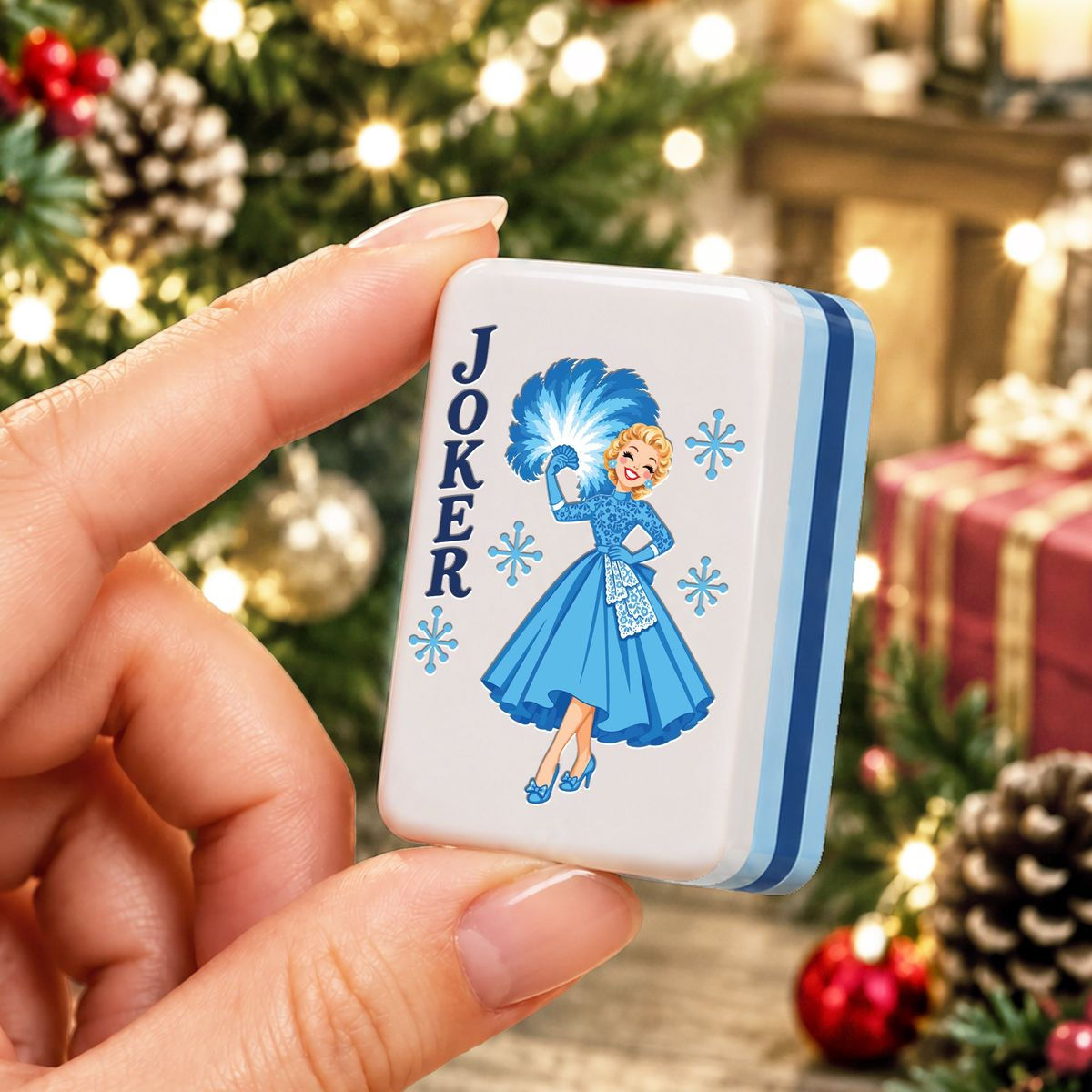
Thai mahjong plays on a 144-tile Chinese set (not the 152-tile American version), with three suits (Bams, Craks, Dots 1–9), winds, dragons, and flowers. The core difference: unlike American mahjong, Thai rules allow chows (sequences like 4-5-6 Dots) to be called and exposed during play, and winning hands follow a point-based system rather than a printed card. Most Thai games use jokers, but the hand combinations themselves are fluid—not locked to a yearly card. If you already own a set designed for American play, you cannot use it for authentic Thai without understanding that the tile count and legal melds are fundamentally different. A Thai set costs less than specialty American equipment but requires players to learn a new strategy and hand vocabulary entirely.
How does Thai mahjong differ from American mahjong?
American mahjong is a closed system: hands come only from the current year's National Mah Jongg League card, pungs (three identical tiles) and kongs (four identical) are the only exposed melds, and chows are strictly forbidden. Thai mahjong is open-ended: any player can call chows (1-2-3, 5-6-7, etc.) and expose them mid-game, winning hands follow traditional Chinese scoring rather than a card, and the game flows more like Hong Kong or Riichi variants. In Thai play, you're not racing to match a specific hand pattern—you're building toward any winning combination that meets the point threshold your group agrees on. The tile count also differs: Thai uses 144 tiles (108 from three suits plus 16 winds, 12 dragons, 8 flowers), while American mahjong sets contain 152 tiles. This makes Thai sets cheaper and smaller to store, but incompatible with American league play without modification.

What tiles should your Thai mahjong set contain?
A proper Thai mahjong set contains exactly 144 tiles: Bams, Craks, and Dots numbered 1–9 (36 tiles per suit, 108 total), four copies each of North, East, West, and South winds (16 tiles), four copies each of Red Dragon, Green Dragon, and White Dragon (12 tiles), and four copies each of Spring, Summer, Autumn, and Winter flowers (8 tiles). No jokers are required by Thai rule, but many casual games add them to speed play and reduce dead hands. When ordering, confirm the set includes exactly 144 tiles in standard Chinese design—not American-style jokers or blank tiles built in. Many Chinese sets sold online include jokers as bonus tiles beyond the standard 144, which is fine for home play but not required. Check the listing before you buy to ensure you're getting the full classical Chinese tile count and not an American hybrid.
Can you use an American mahjong set for Thai play?
No. American mahjong sets contain 152 tiles plus 8 jokers, built specifically for the National Mah Jongg League card and American-only hand patterns. The 152-tile American format includes four extra tiles and a different joker count that throws off traditional Chinese game balance. More critically, American mahjong forbids chows entirely—calling a 4-5-6 sequence is a rule violation—while Thai play depends on chow melds as a core winning strategy. If you own one of our best-selling American sets, you'd have to learn an entirely separate hand system and rewrite how you play. The opposite is also true: a 144-tile Thai set cannot legally substitute for American league play because it lacks the American joker configuration and tile count. If you play both variants, buy separate sets—mixing them creates confusion at the table and violates each game's rules.
Where can you buy a Thai mahjong set in the United States?
Thai mahjong sets are less common in the US than American or Chinese export sets, but available through online retailers specializing in Chinese games and imports. Search for "144-tile mahjong set" or "Chinese mahjong set" on major marketplaces, game suppliers, and specialty import sites. Most sets arrive from overseas manufacturers and ship within 1–3 weeks. When shopping, confirm the description says "144 tiles" or "Chinese standard"—not "American" or "160-tile." If you prefer customization, some US makers offer acrylic or wooden sets in Thai-compatible 144-tile layouts. Check the product photo to ensure all four flower tiles are present (Spring, Summer, Autumn, Winter) and that wind markers are clearly visible. Avoid sets marketed only for "beginners" or "travel" unless the tile count is explicitly stated—small travel sets often contain fewer than 144 tiles and won't work for a full four-player game.

What setup and accessories do you need for a Thai game?
Unlike American mahjong, Thai play does not require a player-specific mat with tile racks or the Charleston tile-passing ritual. Thai players typically use a simple table, deal tiles into a wall, and hold tiles in hand or in simple rows without pushers. You'll want a smooth mahjong mat to protect the table and make tiles easier to move, though a cloth or felt sheet works fine. If players prefer not to hold tiles in hand, lightweight racks without pushers are optional—some Thai players use bamboo tile holders or simple ledges. Dice are essential: Thai games use two standard six-sided dice to determine the starting position and wall, just like Chinese play. A travel bag or case is handy if you move games between homes or want to keep your set safe. Most Thai home players keep setup minimal—tiles, a table, and dice are the core; luxury accessories are secondary.
🀄 Shop best-selling mahjong sets →
Comparison: Thai, Chinese, Hong Kong, and American mahjong—which is right for you?
Variant | Tile Count | Melds Allowed | Hand System | Setup Complexity | Best For |
Thai | 144 | Chows, pungs, kongs, quints | Open-ended scoring | Low—mat, dice, optional racks | Casual home play, traditional rules |
Chinese | 144 | Chows, pungs, kongs, quints | Open-ended scoring | Low—similar to Thai | Similar to Thai; regional variation |
Hong Kong | 144 | Chows, pungs, kongs, quints | Closed hand patterns | Low | Competitive play, fixed winning hands |
American | 152 | Pungs, kongs, quints, sextets only (no chows) | Closed card-based hands | High—racks, pushers, mat, Charleston | Leagues, organized clubs, strategic depth |
Thai and Chinese mahjong suit players who want relaxed rules and open-ended play. Hong Kong is a middle ground: structured but less rigid than American. American mahjong is for serious players who value strategy, yearly hand card updates, and organized competition. If you're a casual home player who enjoys traditional tile-calling and doesn't want to memorize a card, Thai mahjong is simpler. If you're joining a league or playing in a club, American mahjong is the standard.
🎁 See our most-loved mahjong sets & accessories →
What to check before you buy a Thai mahjong set
Before ordering, verify the seller confirms "144 tiles" in the product description—not 152, 160, or 166. Check the tile list to confirm all four dragons (Red, Green, White, bonus Blank or Soap), four winds, and four flowers are included. If the set description mentions jokers, confirm they're bonus tiles beyond the standard 144, not replacing them. Look at product photos to ensure tiles are clearly marked (Bams show a number and bamboo symbol, Craks show a number and circle symbol, Dots show a number and dots). Confirm tile material matches your preference—acrylic is durable and affordable, bone and bamboo are traditional but pricier. If you're ordering from overseas, check whether the listing specifies "Traditional Chinese tiles" or "Simplified Chinese"—some sets use slightly different character formats. Finally, verify shipping time and return policy: Thai sets are specialty items, and international orders may take weeks. Request photos or call ahead if a set is custom or region-specific.
✨ Find your Mahstead set — free US shipping →

FAQ
Is Thai mahjong the same as Chinese mahjong?
Thai and Chinese mahjong use the same 144-tile structure and allow chows, but Thai rules emphasize specific scoring thresholds and payout patterns tied to Thai gambling culture. Chinese mahjong varies by region; both are more open-ended than American play.
Can I learn Thai mahjong if I already play American mahjong?
Yes, but you'll need to unlearn the "no chows" rule and memorize new hand patterns instead of relying on a card. Many American players find Thai easier because it's less rigid, though the strategy differs significantly.
Do I need jokers to play Thai mahjong?
No. Traditional Thai play uses only the 144-tile set. Jokers are optional add-ons some groups use to reduce dead hands, but they are not required by rule.
Where do I find the rules for Thai mahjong?
Thai mahjong rules vary by region and group. Ask the players in your circle for their house rules, or search online for "Thai mahjong rules" and regional variations. Most Thai games rely on oral tradition rather than a published league card like American mahjong.
How much does a Thai mahjong set cost compared to an American set?
Thai 144-tile sets typically cost less than specialty American 152-tile equipment because they require fewer tiles and no custom racks or pushers, though prices vary by material and maker. Check the product page for current pricing on specific sets.
Can I mix tiles from different sets if one is incomplete?
Not recommended. Mismatched tile sizes, colors, or weights cause uneven game play and unfair shuffling. If a set is damaged, replace the entire set rather than patch it with tiles from another.


View More
View More
View More
