
Is Mahjong Good for Expats? Community, Brain Health & How to Start
Last updated: Nov 23, 2026
Yes—mahjong is exceptionally good for expats. The game requires no spoken language (symbols are universal), builds lasting friendships through regular play, and the rule system is identical worldwide, so skills transfer immediately between cities or countries. Research on tile games shows sustained cognitive benefits including memory, pattern recognition, and decision-making under pressure. Culturally, mahjong connects expats to the history of communities they've joined; playing it signals respect and deepens integration beyond small talk. The barrier to entry is low: a beginner can learn the basics in 3–4 hours, and most established game groups actively welcome newcomers. Mahstead's best-selling mahjong sets are designed for players who travel or host weekly games, so you can start a game anywhere or bring your set when you move.
Why Expats Choose Mahjong Over Other Social Games
Mahjong solves a problem unique to expats: the need to belong without first mastering the host country's language, humor, or cultural references. Chess, poker, and cards all involve bluffing, talking strategy, or quick verbal exchanges. Mahjong is different. The tiles speak for themselves—a 1 Dot looks the same in Dallas and Taipei. You watch, you learn, you win or lose based on skill and luck, not whether you understood a joke.
Expat groups (from international professional networks to university towns) regularly organize mahjong nights specifically because the game transcends language barriers. A player from Brazil, Korea, Germany, and Canada can sit down together, and after two rounds, they're laughing at the same moments. The social payoff happens during play, not in conversation before or after. Within four weeks of regular play, expats report feeling genuinely integrated into a friend group—faster than most hobby-based communities.
🀄 Shop best-selling mahjong sets →

What Science Says About Mahjong for Memory & Focus
Mahjong requires you to hold patterns in working memory, track discards, predict opponents' hands, and adapt strategy in real time. Studies on mahjong players (particularly in East Asian populations) show sustained improvements in spatial reasoning, attention span, and reaction time compared to control groups. The game engages the prefrontal cortex (planning), parietal lobe (spatial awareness), and temporal lobe (memory)—a full-brain workout that lasts 60–90 minutes per session.
For expats, this matters because learning a new language, navigating unfamiliar systems, and managing culture shock already tax cognitive reserves. Mahjong becomes a form of active recovery: your brain is genuinely challenged, but the challenge is fun and social, not stressful. Expats who play weekly report clearer thinking and better sleep.
The learning curve is steep enough to stay interesting but shallow enough that a complete beginner can make smart plays by week two. You're never "stuck" the way you might feel in a new job or language class.
How to Find Mahjong Games in Your New City
Most established mahjong communities advertise on community boards, library notices, or faith-based organizations (synagogues, churches, and temples often host weekly games). In larger cities, check Meetup.com for "[city name] mahjong" groups; many list skill level and whether they teach. University international student offices frequently coordinate game nights. Workplace expat networks, coworking spaces, and country clubs are reliable sources too.
When you arrive, email 2–3 groups and ask if they accept beginners. Reputable groups will answer "yes" and tell you what to bring—usually just yourself. Most provide a set, or you can contribute by bringing one from Mahstead. Avoid online-only groups until you've played in person a few times; face-to-face games build community faster.
A first session lasts 2–3 hours. Arrive early, watch one round, and ask questions. By the end of your second night, you'll be playing full hands.
Setting Up Your Own Game: Gear for Traveling Expats
If you move frequently, hosting your own game gives you control over the experience and attracts new friends quickly. You'll need a mahjong set (152 playing tiles plus 8 jokers), a mat or table cover, and racks with pushers to keep tiles organized. Mahstead's mahjong racks with pushers include built-in tile holders that make setup and scoring faster—especially helpful when you're teaching newcomers.
A mahjong mat defines the space, reduces noise, and protects your table. For expats who move every few years, a portable mat and a travel-friendly mahjong bag mean your set is ready to go. Premium acrylic sets (lighter and more durable than bone and bamboo) survive packing and unpacking better than traditional materials.
Decision framework for expat hosts:
What You Need | Why It Matters | Best Setup |
Set (152 tiles + 8 jokers) | Core game; acrylic lasts through moves | Mahstead acrylic set |
Mat (36"×36" or larger) | Defines table space; reduces noise | Dedicated mat or tablecloth |
Racks with pushers (4 sets) | Speeds teaching and scoring | Mahstead racks |
Bag or case | Protects tiles in transit | Hard case if moving internationally |
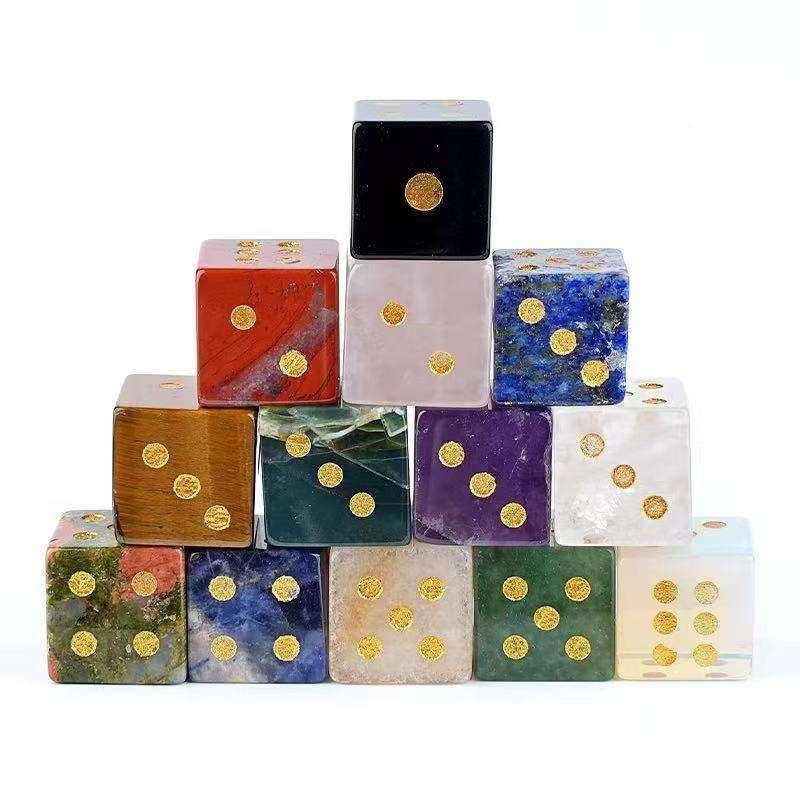
Dice | Determines starting player (1 per game) | Standard acrylic dice |
Cost depends on customization—basic sets are affordable; engraved or themed sets (like Mahstead's options) add personality and become gifts for players who become close friends.
🎁 See our most-loved mahjong sets & accessories →

Learning American vs. Other Mahjong Rules: What Expats Should Know
The world plays multiple mahjong variants. American mahjong (played mainly in North America) uses a printed card that changes every year—the "hand" (winning pattern) must match the card for that year. Other variants (Chinese, Hong Kong, Riichi/Japanese, Taiwanese) have open hand building and no printed card. Neither is harder; they're just different.
Expats often ask: "Which should I learn?" Answer: learn what your local community plays. If you're joining an established group, ask them first. If you're starting from scratch, American mahjong is the easiest entry point for English speakers because the printed card eliminates memory burden—you can reference it during play. For a full breakdown of how to play American mahjong, start with the beginner guide.
Most expat groups stick to one variant so new members have a level playing field. Switching between variants mid-friendship is rare and often feels awkward. Commit to learning your group's version, become competent in 4–6 weeks, then you can explore other variants when you meet players in other cities.
Building Friendships Through Mahjong: What Expats Report
Expats cite mahjong as their fastest path to a real friend group—not acquaintances, but people they see weekly, text between games, and invite to birthday dinners. Why? The repetition and mild competition create a unique bond. You're not pretending; you're genuinely trying to win, which makes celebrating or consoling each other feel authentic.
Most weekly games build rituals: same time, same place, same people. Newcomers quickly become regulars. Expats who play mahjong integrate into their host city's social fabric faster than those who rely on work friendships or hobby classes alone.
One practical advantage: mahjong players cross age, profession, and background lines. A 28-year-old expat engineer, a 65-year-old retired teacher, and a 45-year-old nurse can sit at the same table as equals. That diversity is rare in modern social life and creates unexpectedly deep friendships.
✨ Find your Mahstead set — free US shipping →
What to Check Before You Buy a Mahjong Set
If you're buying your own set to host or travel with, verify four things:
Tile count: A legal American mahjong set has exactly 152 playing tiles (108 suited, 16 winds, 12 dragons, 8 flowers, 8 jokers). Mahstead's 160-tile sets include 152 playable tiles plus spare tiles for games that wear out jokers or flowers over time.
Tile clarity: Can you see the symbols at arm's length? Expats with varied eyesight benefit from larger, engraved numerals. Acrylic tiles hold engravings longer than printed images.
Portability: If you move or travel, confirm the set fits in a bag and tiles don't rattle loose during transport. Hard cases cost more but protect acrylic and bone equally well.
Racks and pushers: Do they come with the set or require separate purchase? Mahstead includes racks and pushers in most bundles, which saves money and setup time.
The Expat's Checklist: From First Game to Hosting
[ ] Attend one game in your community (find via Meetup, library, or workplace groups)
[ ] Play 2–3 sessions before hosting; learn your local variant (American, Chinese, Hong Kong, etc.)
[ ] Ask the host which set type they use (acrylic, bone, bamboo); replicate it for consistency
[ ] Purchase a set, mat, and racks with pushers if you plan to host monthly or more
[ ] Host your first game on a weekend; invite 3 established players + 2 newcomers
[ ] Establish a regular day and time; treat it like a weekly commitment
[ ] Join a messaging group (WhatsApp, Telegram) to coordinate and build community
[ ] After 8 weeks of regular play, invite players to a social dinner outside the game

FAQ
Do I need to speak the host country's language to play mahjong?
No. Mahjong is played silently—tiles show numbers and symbols universally recognized. You'll hear "pung," "kong," "mah-jong," and "chi-chi" (or their equivalents in your variant), but these are the same words worldwide and learnable in one session.
Is American mahjong harder than Chinese or Hong Kong mahjong?
Not harder, just different. American mahjong uses a printed yearly card that tells you which hand patterns win; you don't memorize hands. Chinese and Hong Kong variants let players build any winning hand from memory. American is easier for newcomers because you can reference the card. Chinese variants reward memory and experience. Choose based on what your local group plays.
How often do expat mahjong groups meet, and how long does a session last?
Most weekly groups meet once per week (usually evenings or weekend afternoons) for 2–3 hours per session. Some groups meet twice weekly; casual groups meet monthly. A single game lasts 45–90 minutes depending on player speed and skill level.
What's the best age to start playing mahjong as an expat?
Mahjong has no age minimum or maximum. Expats aged 20–75 play together regularly. Younger expats (students, early-career professionals) appreciate the social integration; older expats value the cognitive engagement and friendship continuity. Most groups have a mix.
If I move to another country, will I have to relearn mahjong?
No. If your new city plays the same variant, you'll recognize every tile and rule. If the variant differs (e.g., you learned American in Texas, then moved to Hong Kong where Hong Kong mahjong is standard), you'll need to learn the new hand patterns and scoring—usually a 4–6 hour adjustment. The core tile recognition and strategic thinking transfer immediately.
How much does it cost to host a regular mahjong game from home?
A one-time equipment investment (set, mat, racks, dice) ranges from affordable to premium depending on material and customization; see current prices on the product page for specific collections. Ongoing hosting is free—players often take turns providing snacks. Most expat groups rotate hosting to distribute the workload. --- ✨ Find your Mahstead set — free US shipping →


View More
View More
View More
