
Is Mahjong Gambling? Rules, Money & How to Play Safe
Last updated: Nov 23, 2026
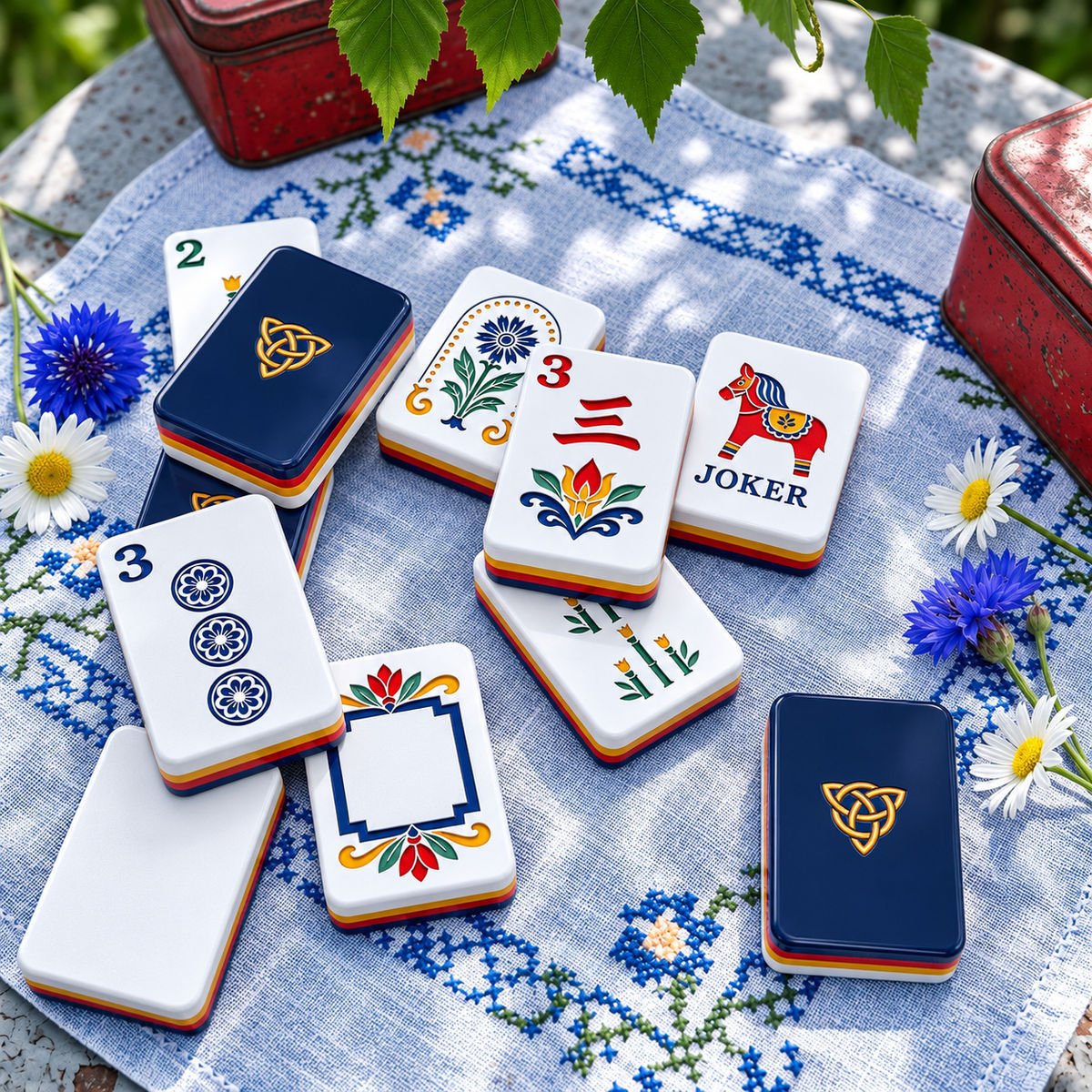
Mahjong is a game of skill and strategy, not inherently gambling. You can play for fun with zero money involved, or players can agree to wager small amounts; the game doesn't require money to work. In the United States, mahjong played socially among friends for modest stakes is generally legal in most states and is treated as a game of skill rather than chance (unlike slots or dice games). However, organized gambling or high-stakes play may violate state or local laws. Whether money is involved is entirely up to the players at your table. Most weekly home games involve no money, just competition and bragging rights. If you're learning American mahjong for the first time, we recommend starting with a quality 160-tile set to focus on strategy rather than stakes.
Mahjong itself isn't gambling—it's a tile game of skill and strategy, not inherently gambling. You can play for fun with zero money involved, or players can agree to wager small amounts; the game doesn't require money to work. In the United States, mahjong played socially among friends for modest stakes is generally legal in most states and is treated as a game of skill rather than chance (unlike slots or dice games). However, organized gambling or high-stakes play may violate state or local laws. Whether money is involved is entirely up to the players at your table. Most weekly home games involve no money, just competition and bragging rights. If you're learning American mahjong for the first time, we recommend starting with a quality set to focus on strategy rather than stakes.
🀄 Shop best-selling mahjong sets →
Why Is Mahjong Considered a Game of Skill, Not Chance?
American mahjong is a game of skill because winning depends on your ability to read the current-year National Mah Jongg League hand card, track discards, manage your tile inventory strategically, and make real-time decisions about which tiles to hold or release. Chance plays almost no role in determining the outcome. Unlike poker, where a deal of cards can favor one player, every mahjong game starts with identical pieces and identical drawing odds for all four players. The tiles you draw are random, but what you do with them—how you interpret the hand card, which discards you study, whether you recognize a winning pattern quickly—is pure skill. Courts in several U.S. states have recognized mahjong as a skill game for this reason, which affects how social play is taxed or regulated. The National Council on Problem Gambling and state gaming boards have generally excluded mahjong from "games of chance" classifications.

Do You Have to Play Mahjong for Money?
No. Millions of players worldwide enjoy mahjong in friendly, zero-stakes home games every week. Money is optional and entirely up to the people at your table. Many players keep a scorecard and track points instead, competing for bragging rights or small honors (like who sits in the dealer seat first next week). Others play purely for the social experience—the ritual of the Charleston, the rhythm of the tiles, the puzzle of finding a hand. In our experience hosting games, removing money actually deepens the focus on strategy and skill. When players aren't counting dollars, they concentrate more on the card, on watching which tiles are being discarded, and on the longer game. If you're new to the game, a no-money approach lets you learn the how to play American mahjong rules and hand patterns without pressure. A good set and mat create the right atmosphere for any table.
🎁 See our most-loved mahjong sets & accessories →
What Counts as Legal vs. Illegal Wagering?
In most U.S. states, mahjong played among friends for modest stakes is legal under social gambling exemptions. Generally, "social" means: game is played at a private residence or social setting (not a public or commercial venue), no house or operator takes a cut (all money stays among players), stakes are small relative to players' income, and players have equal opportunity to win or lose. For example, a Thursday-night home game where four players each put in a small amount and the winner takes the pot typically fits this definition. What is not protected: organized mahjong gambling operations (like commercial clubs where the house takes a rake), high-stakes play that could ruin a household budget, or games that violate state law even in private. Nevada, for instance, prohibits private gambling of most kinds; California explicitly exempts skill games including mahjong from gaming licensing; New York permits social gambling. The safest approach: check your state or county gaming regulations online or ask a local gaming attorney if you're unsure. Never assume your game is legal; know the rules where you live.
How Much Money Do People Usually Wager?
In traditional American mahjong circles, wagers are typically very small—often a few cents per point or per hand, or a flat small amount per game. The goal is to make the game feel "real" without creating financial pressure or addiction risk. Examples from common home games: one player keeps a running tally (e.g., "You owe me 50 cents"), or four players each contribute a quarter and the winner takes a dollar. Some groups score in "stones" or imaginary chips and don't convert to money at all. A few players do keep ongoing weekly sheets and settle once a month for slightly larger sums, but this remains well below recreational gambling thresholds. The culture in mahjong emphasizes fun and friendship over profit. If anyone at your table is stressed about money or betting more than they can afford to lose, that's a signal to dial back the stakes or stop wagering altogether. The game is excellent at any money level—or none.

What Should You Know Before Hosting a Game?
If you're hosting a mahjong game, the first step is to be clear with your guests about whether money is involved and, if so, how much. Set the rule before anyone sits down. Have a quality 160-tile American mahjong set with clear tile markings—worn or unclear tiles breed mistakes and disputes. Use a mat to protect your playing surface and keep tiles organized; good mats include a scoring area and clear markings for each player's hand section. Ensure everyone has a current copy of the National Mah Jongg League card (released each spring; the current year's card is mandatory in American mahjong). Agree on which rule variant you're playing (most home games use the standard American rules). If anyone is new to the game, do a practice hand first to confirm everyone knows the Charleston, how to read the card, and how the hand is drawn. If money is involved, keep a scorecard or calculator visible and settle bets at the end of each round, not the end of the night. This prevents confusion and keeps the game fun. If hosting regularly, racks with pushers and a sturdy travel bag or case make setup and storage simple.
Element | What It Means for Your Game | Why It Matters |
Set quality | Clear tile markings, full 152 tiles + spares | Prevents misreads and disputes; no missing bamboos or dragons. |
Mat type | Padded surface, marked player sections, score area | Keeps tiles organized, protects your table, speeds up play. |
Current hand card | National League card, printed this year | Hand patterns change annually; using last year's card invalidates hands. |
Racks with pushers | Plastic or wooden, holds 13–14 tiles upright | Speeds up play, prevents accidental tiles drops, looks professional. |
Stakes clarity | Agreed before game starts, written down if needed | Avoids end-of-night arguments; keeps friendships intact. |
✨ Find your Mahstead set — free US shipping →
How Do Different U.S. States View Mahjong Legally?
Mahjong's legal status varies by state. California explicitly permits skill games including mahjong under its gambling exemptions, so social play with friends is clearly legal. New York recognizes mahjong as a game of skill and permits social wagering. Texas, Florida, and many other states have social gambling exemptions that typically cover mahjong if played at home for modest stakes with no operator or house advantage. A few states—Nevada, for one—restrict private gambling broadly, so even a friendly home game for money could technically violate law; check before hosting. The federal government does not ban mahjong, and the IRS treats winnings from friendly games as taxable income only if they exceed certain thresholds or if gambling is a profession. For most people playing casually, no tax filing is needed. If you play mahjong frequently and for significant money, consult a tax professional. The key takeaway: social, small-stakes mahjong among friends is legal in most of the U.S., but always verify your state and local rules before wagering.
What to Check Before You Buy a Set
Tile count: Ensure the set is a full 160-tile set (152 playing tiles + spares) so you never run short mid-game.
Marking clarity: Look at photos or samples to confirm bamboos, dragons, and flower tiles are legible; faded or unclear tiles cause misreads.
Mat fit: If buying a mat, confirm it fits your table and has marked player zones and a score area.
Racks & pushers: Check that racks hold 13–14 tiles upright without them sliding or falling; pushers should be smooth and not damage tile edges.
Case or bag: If you host weekly, a durable travel bag or case protects your set during storage and transport.
Current-year card: Verify the hand card included or ordered is the 2026 National Mah Jongg League card (or request one separately if not included).

FAQ
Is playing mahjong for money illegal in the United States?
In most U.S. states, mahjong played socially among friends for small stakes is legal under social gambling exemptions because mahjong is a skill game, not a game of chance. Commercial gambling operations or high-stakes games may be restricted; check your state and local regulations before hosting.
How much money do typical home mahjong players wager?
Most friendly home games involve small amounts—a few cents per point, a quarter per game, or a flat small dollar amount per hand. The goal is fun and competition, not profit; wagers are intentionally modest to keep the game recreational and affordable for everyone.
What makes mahjong a game of skill instead of chance?
Winning depends on reading the hand card, tracking discards, managing your tile inventory, and making strategic real-time decisions—not on luck. Every player starts with equal odds to draw any tile; the outcome is determined by player decision-making, not random chance.
Do I need money in my game to have fun playing mahjong?
No. Many players enjoy zero-stakes games using only points or bragging rights as competition. Money is entirely optional; the game is equally engaging without it, and newer players often learn better without financial pressure.
What should I do if I'm unsure about the legality of wagering in my area?
Research your state and county gaming laws online, contact a local gaming attorney, or ask your state's gaming or attorney general's office for clarification. If you're unsure, play for no money until you have a clear answer.
What tiles or equipment do I need to host a legal, fair game?
A full 160-tile American mahjong set, the current-year National Mah Jongg League hand card, a mat, racks with pushers, and clear pre-game agreement on stakes (or no stakes). Worn or unclear tiles can cause disputes; invest in a quality set and keep records if money changes hands.


View More
View More
View More
