
Iridescent Mahjong Racks: Choose the Right Tile Holder for Your Game
Last updated: Nov 23, 2026
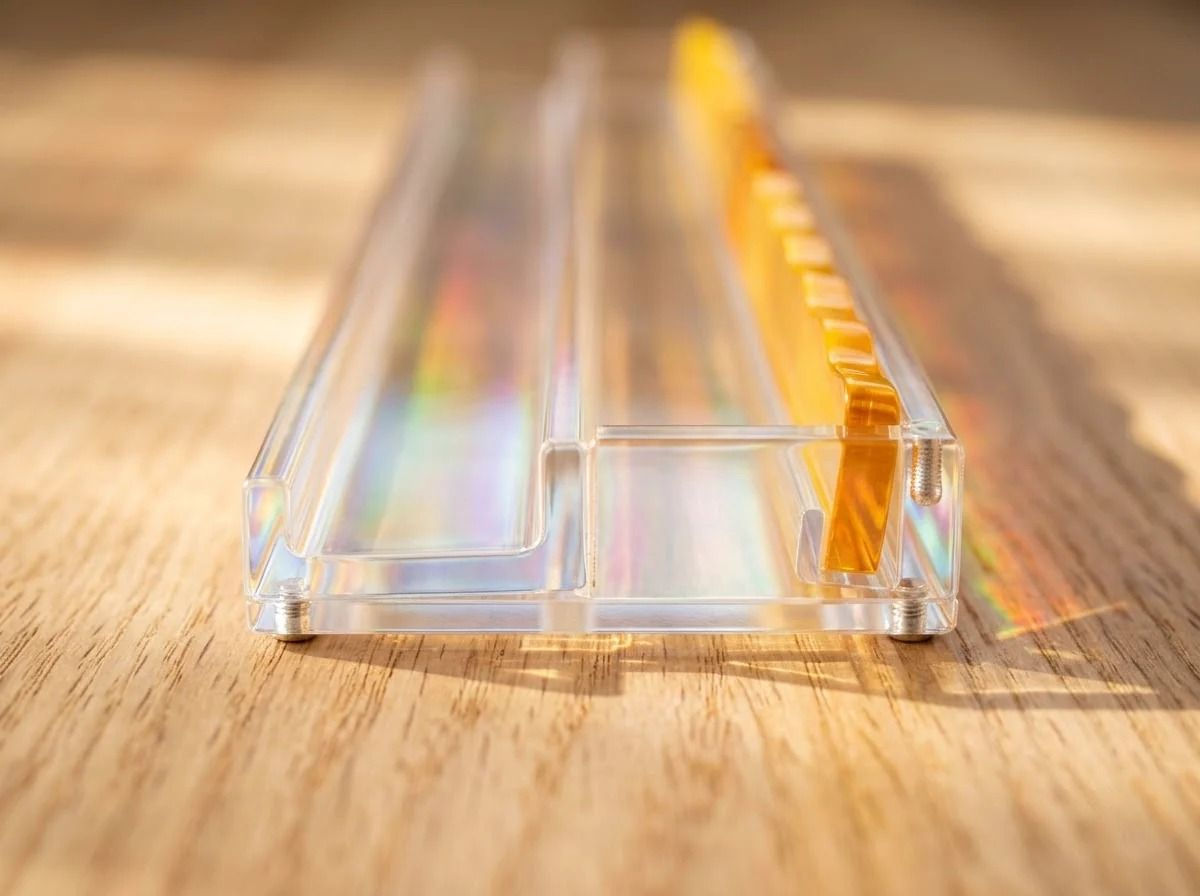
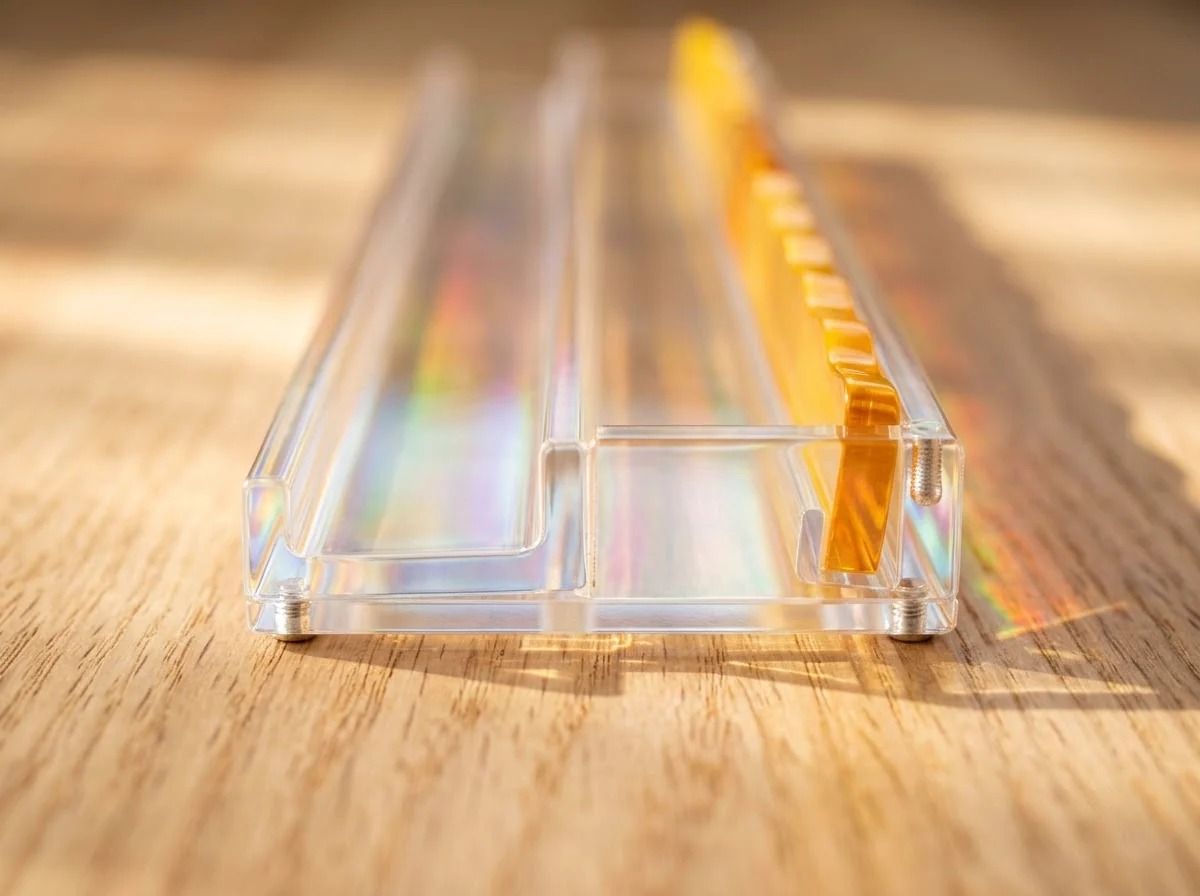
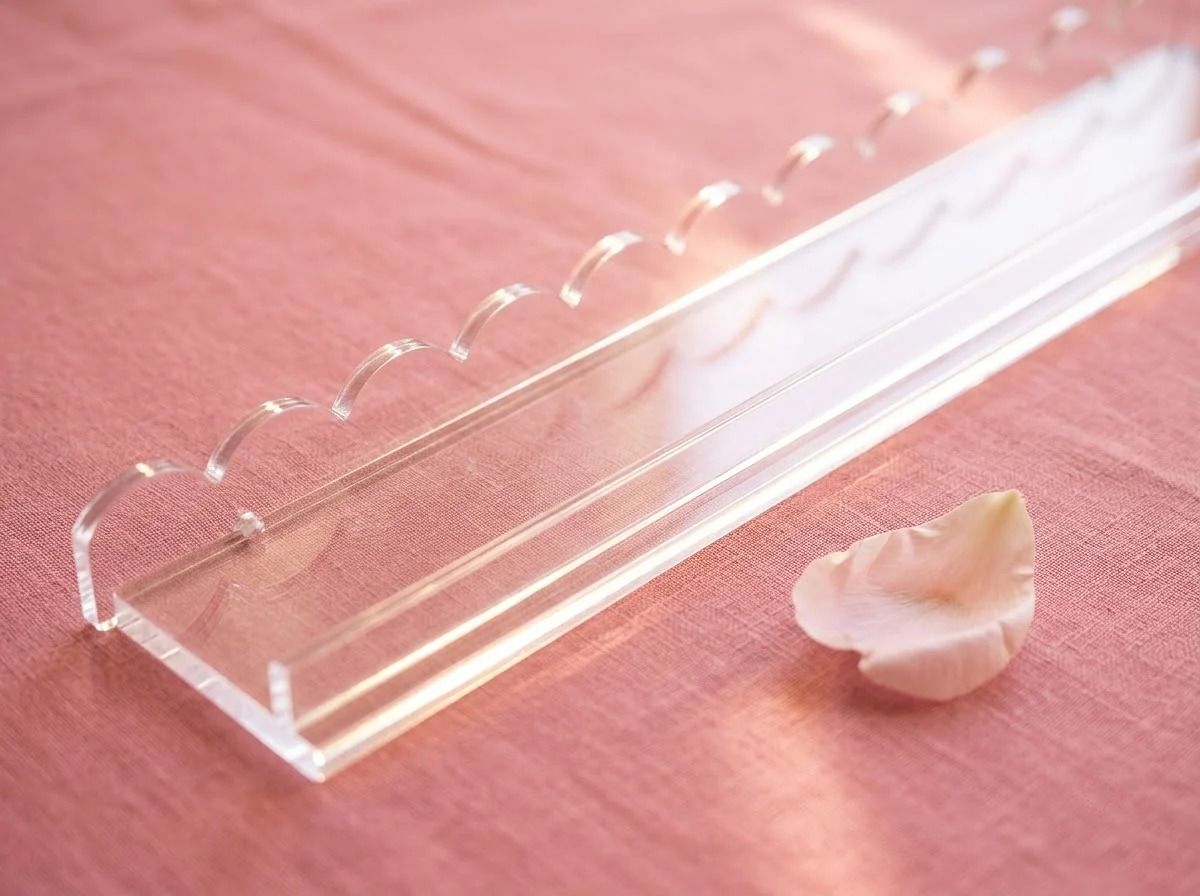
An iridescent mahjong rack is an acrylic tile holder designed to display your hand at a stable, readable angle during play. Most racks come with a matching pusher—a small tool that slides tiles along the inner groove, keeping your count neat without touching each piece. Racks hold between 13 and 20 tiles depending on depth and width, work best on hard table surfaces (less reliable on cloth or uneven wood), and are made from cast acrylic that refracts light for a prismatic effect. The iridescent finish is durable if not dragged across rough surfaces, and works equally well with traditional or engraved tile sets. At Mahstead, we offer mahjong racks with pushers in multiple acrylic styles, many paired with matching sets and mats. Plan on one rack per player, keep racks upright in a protective bag between sessions, and avoid direct sunlight for extended storage to prevent discoloration. 🎁 See our most-loved mahjong sets & accessories →
Why does iridescent finish matter for game sessions?
Iridescent acrylic catches and splits light into a spectrum of colors as the rack shifts position during play. Unlike solid clear or frosted finishes, it creates visual interest without obscuring the tile count inside—you can still see exactly how many tiles each player holds from across the table. The rainbow effect has no impact on gameplay but signals a premium set aesthetic, especially when paired with matching iridescent mats or engraved tiles. Many hosts choose iridescent racks to unify the table's look.
What size rack do you actually need for your tile count?
American mahjong players draw between 13 and 16 tiles in hand during active play, depending on whether they've drawn the live tile or declared their final hand. A standard rack should accommodate 16 tiles comfortably with the pusher; deeper models hold 18–20 for players who prefer extra breathing room or prefer racks that don't sit as high on the table. If you're hosting two tables, having one set of four racks per table prevents mid-game swaps. Measure your table depth first—racks sit 3 to 5 inches from the edge, and angled models reduce glare and back strain during long sessions.
How do acrylic racks compare across game styles?
Style | Best for | Player angle | Durability concern |
Angled iridescent | Tournament-style, long sessions | 35–45° tilt | Scratches if slid on rough felt |
Straight acrylic | Casual play, small tables | Flat or 15° | More stable on cloth, less visibility |
Tall iridescent | Players with vision needs | 50°+ tilt | Top-heavy if not weighted; pushed tiles may slide off |
Compact (mini) | Travel, folding mats | 25–30° | Fast wear on pusher grooves from repeated use |
Standard angled racks work for 90% of home games. Straight racks are safer on uneven surfaces. Tall angled racks suit players with presbyopia or those sitting farther from the table; test one before committing four.
✨ Find your Mahstead set — free US shipping →
What pushers should you use with iridescent racks?
The pusher is a small acrylic or wooden bar that sits in a groove on the inside of the rack's back panel. It slides tiles forward one at a time as you draw, keeping your count organized and preventing manual contact that can smudge tiles or disturb neighbors' concentration. Iridescent racks typically ship with a matching acrylic pusher in the same finish. Wooden pushers are quieter and don't scratch acrylic tiles; acrylic pushers are faster and less prone to warping. If your pusher becomes loose, it usually means the groove has widened from repeated hard pushing—replace it rather than force-fit the old one, which can crack the rack's side wall.
How do racks fit into your full table setup?
A complete hosting setup pairs each rack with a mahjong mat, a set of four matching best-selling mahjong sets, and a travel bag or case for safe storage. Racks sit at each player's side of the mat, roughly 3 inches inward. If the mat has a wood or neoprene backing, racks grip securely; if you're using a cloth tablecloth instead, racks can slide—place a non-slip mat pad underneath or use rubber bumpers on the rack feet. Iridescent racks look sharp paired with iridescent or frosted tiles and matching mat borders, creating a cohesive visual line around the table. Mixing finishes (shiny rack + frosted tiles) reads as accidental rather than intentional, so plan the set color first, then rack.
🀄 Shop best-selling mahjong sets →
What should you check before ordering iridescent racks?
Confirm your table surface. Racks slide on hard tables (wood, glass, laminate) but stick on fabric. If your table is cloth-covered, test a single rack first or plan to use non-slip underlays.
Measure existing tiles. Iridescent racks are cut for standard American tiles (roughly 1.25 inches wide × 0.75 inches tall). Oversized tiles or tiles with embossed edges may not fit smoothly; check your set dimensions against the rack's internal groove width before buying four.
Count your players. Order one rack per player. If you host tables of 3 or 4, you need one 4-rack set; if you split into two tables, two sets. Spare racks are useful but rarely necessary unless you do repair replacements.
Check the pusher grip. Acrylic pushers grip differently based on surface texture. If you have sensitive hands or arthritis, request a sample or watch a video of the pusher in use. Some pushers ship with a small protective sleeve; confirm whether yours does.
Inspect on arrival. Acrylic racks can develop hairline cracks during shipping if packed loosely. Open the box immediately, place racks on a hard, level surface, and look for cracks along the groove, corners, or tilt supports. Report shipping damage within 48 hours.
Plan storage. Racks stacked flat can be scratched by tiles shifting inside a shared bag. Store them upright in a padded mahjong bag or case, or use a protective sleeve between each pair.
Do iridescent racks work for 2- and 3-player games?
Yes, but the setup differs. In 2-player mahjong, each player uses one rack; the center of the table holds the unseen wall and discard pile. In 3-player games, one player sits out (often the dealer's seat), and their rack may hold the wall or remain empty. Standard 4-rack sets don't adjust for smaller games, so if you frequently host 2 or 3 players, buy individual racks rather than a full set to avoid storage clutter. See our guide on 2 and 3 player mahjong rules for seating and draw order.
Iridescent vs. frosted, clear, and opaque racks
Iridescent. Rainbow shimmer; catches light beautifully; shows tile count clearly; pairs well with engraved or premium sets; slightly more visible wear over time.
Frosted. Matte finish; elegant, professional; doesn't reflect light; tiles inside are visible but less dramatic; very durable, minimal maintenance.
Clear acrylic. Maximum transparency; all tiles fully visible; most practical; least stylish; can look plastic-y on a nice table.
Opaque (solid color). Matches specific tile colors or table themes; hides tiles until drawn; adds mystery; can feel old-fashioned compared to iridescent.
Most best-selling mahjong sets come with matching racks, so choose the set first and the rack aesthetic follows.
✨ Find your Mahstead set — free US shipping →

FAQ
Can I use one iridescent rack for multiple tile sets?
Yes. A standard American mahjong rack fits any 160-tile set with traditional tile dimensions. If you own sets with jumbo or mini tiles, test the rack fit first—non-standard sizes may bind or slide inside the groove.
How do I clean iridescent racks without damaging the finish?
Wipe with a soft, dry cloth after each session. For stubborn dust or sticky residue, use a barely damp microfiber cloth and dry immediately. Never use abrasive scrubbers, solvents, or the dishwasher—acrylic scratches and can cloud with harsh chemicals.
What's the difference between a pusher and a tile pusher—are they the same?
Yes, they're the same tool. "Pusher" and "tile pusher" are used interchangeably. Some vendors call it a "pusher stick" or "rack slider." It's the small bar that slides tiles within the rack groove.
Do iridescent racks ship with protective padding?
Most do. Racks arrive wrapped in bubble wrap or foam sleeves to prevent cracking. Open the box immediately to confirm all four racks arrived intact, as acrylic damage during transit is rare but possible. Report any breakage within 48 hours.
Can I use iridescent racks outdoors or in direct sunlight?
Not for extended play. Direct sunlight heats acrylic, can soften the pusher groove over time, and makes the iridescent finish hard to read due to glare. Use them indoors or under shade. Store out of sunlight between sessions to prevent discoloration.
What's the typical lifespan of an acrylic rack and pusher?
With normal home play (1–2 sessions per week), a quality iridescent rack lasts 5–10 years. Pushers may need replacement after 3–5 years if the groove wears from heavy use. Cracking usually results from impact or extreme temperature change, not time.
Are iridescent racks more expensive than solid or frosted racks?
Iridescent and frosted racks are typically priced similarly, falling in the mid-range. Clear acrylic is often less expensive; specialty colors or custom engravings cost more. See the Mahstead mahjong racks with pushers collection for current options.


View More
View More
View More
