
How to Play Harbin Mahjong: Rules, Strategy & Setup
Last updated: Nov 23, 2026
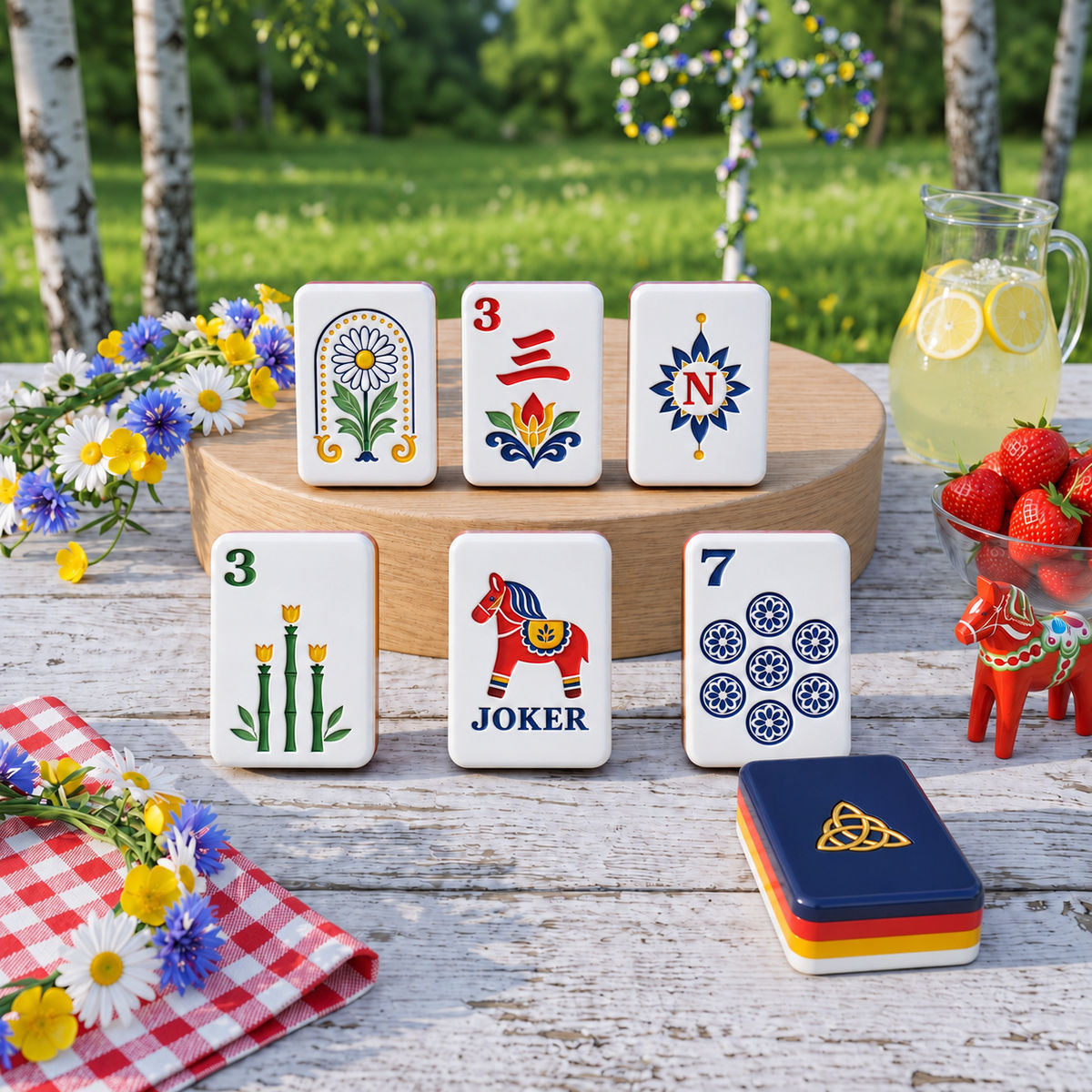
Harbin mahjong is a traditional Chinese variant from Northeast China that uses 108 tiles (no honors, no flowers) and plays in rounds of four where players draw from the wall and discard, building melds of three or four identical tiles (pungs/kongs) or numbered sequences (chows: 1-2-3, 8-9-10, etc.). Games typically last 30–90 minutes depending on pacing and player skill. A hand wins by completing fourteen tiles into four melds plus a pair, with winning combos called "eyes." Unlike American mahjong's seasonal card system, Harbin play is freeform—no published hand list—so players negotiate which combinations count before play starts. Most casuals play for chips or low stakes; serious players study regional scoring tables. You need a standard Chinese 108-tile set (Mahstead offers best-selling mahjong sets in acrylic for durability), a mat, and racks if playing formally.
Harbin mahjong sits between pure social play and tournament-level strategy. It rewards quick reads of the wall, memory of discards, and gut calls about when to go "all-in" on a hand. We've hosted weekly Harbin games for years—here's how to get started the right way and avoid the beginner pitfalls that slow down new players.
What tiles do I use for Harbin mahjong?
You'll play with 108 tiles only: three suits (Bams, Craks, Dots), each numbered 1–9, with four copies of each tile (36 per suit = 108 total). There are no wind or dragon honors, no flowers, and no jokers. Harbin purists say this simplicity forces skill—you win by reading the wall and your opponents' discards, not by luck with wild cards. Before your first game, count your tiles to confirm you have exactly 108 and no stray blanks or duplicates; a missing tile ruins the game mid-play. A fresh best-selling mahjong sets includes the right count for Harbin.

How do I set up the wall and deal tiles?
Shuffle all 108 tiles face-down on the table, then each player builds a wall of 18 tiles in two rows facing inward (9 tiles per row = 36 tiles per wall, 144 total). Decide dealer by rolling dice or drawing a tile—the dealer sits facing south (though compass direction is just convention). Dealer draws 14 tiles from their wall, working right-to-left; other players draw 13 each. Tiles stay in your rack, grouped by suit and number, visible only to you. The dealer discards one tile face-up to the center (the "discard river"), and play flows counterclockwise (dealer, then left, then opposite, then right). New players often miscount the wall rows or deal tiles in the wrong order—take 60 seconds to confirm everyone has 13 or 14 before discarding first.
What are the basic winning hand patterns?
A winning hand ("a win" or "hu") is always 14 tiles: four melds (pungs, kongs, or chows) plus one pair (two identical tiles). A pung is three identical tiles (e.g., 5 Bam, 5 Bam, 5 Bam); a kong is four identical. A chow is three consecutive numbers in the same suit (2 Dot, 3 Dot, 4 Dot). The pair must be identical too. Winning combinations depend on which melds you expose (called or "melded") versus kept hidden in your rack. Some regions score "concealed" hands (all melds hidden until the win) higher. Before play, agree on your table's rule: Do we allow only pungs and kongs exposed, or chows too? Can you expose a chow by calling another player's discard, or must chows stay hidden? These house rules vary wildly in Harbin. Most friendly games allow any meld type to be exposed—it speeds up play and keeps new players engaged.
How does drawing and discarding work turn-by-turn?
On your turn, draw one tile from your wall (moving right-to-left through the wall structure) and add it to your rack. Look for melds (groups of three or four identical tiles or a sequence) and arrange them mentally. Discard one unwanted tile face-up to the river. If another player can use your discard to complete a pung, kong, or chow, they call it immediately ("pung!" or "chow!"), take the tile, expose the meld on the table, and then discard a different tile to continue the turn chain. Once a tile is discarded and the next player draws, that discard is "dead" and cannot be called. This is where speed matters—hesitate and you lose the call. A common trap: calling a discard too late. If the next player in turn order has already drawn from the wall, the window closes. Watch the wall closely; skilled players memorize discard sequences and pressure hesitant opponents into discarding tiles they fear.
🀄 Shop best-selling mahjong sets →

What happens when someone wins, and how is the round scored?
When a player completes 14 tiles in a valid hand (four melds + pair), they call "win!" or "hu!" and lay down all tiles. The winner takes the pot or receives payment from the other three players based on scoring rules your table agrees on beforehand. Scoring in Harbin varies by region and house rules—some tables use a simple point system (e.g., 1 point per meld), others award higher scores for "special" hands (all pungs, all sequences, self-drawn wins, etc.). Many casual groups play "all-pay" (each loser pays the winner equally) or "draw-pay" (the player whose discard caused the win pays double). The dealer rotates after each round; the new dealer is typically the player to the previous dealer's left. Before money or stakes change hands, read the room: What scoring system did your host choose? Ask explicitly—don't assume. Harbin players are opinionated about scoring, and a mismatch kills the mood fast.
Setup Detail | Harbin Standard | Why It Matters | Beginner Trap |
Tiles per game | 108 (no honors/flowers/jokers) | Fewer combos = faster, cleaner play | Adding jokers breaks the game |
Deal size per player | 13–14 tiles (dealer gets 14) | Even split means skill dominates | Miscounting tiles delays the start |
Meld types allowed | Pungs, kongs, chows (agree on exposed rules) | Decides how open/hidden the game feels | No house rule = arguments at win |
Win condition | 4 melds + 1 pair = 14 tiles | Standard across all Chinese variants | Trying to win with 13 or 15 tiles |
Scoring system | Varies by region/house (agree first) | Determines pot size and payout logic | Guessing the scoring costs money |
🎁 See our most-loved mahjong sets & accessories →
What strategy mistakes do new Harbin players make?
Holding tiles too long. New players hoard potentially useful tiles (like 5s or mid-range numbers) hoping to build chows. Meanwhile, opponents smell fear and discard tiles they think you want—then you never draw them. Discard faster; let the wall decide your hand's path.
Chasing concealed hands. If you're not winning by draw 8 or 9, let go of the "concealed" idea and call melds aggressively. A live meld beats a beautiful hand that never comes.
Ignoring the river. Harbin pros track every discard. If someone hasn't discarded a single Craks all game, don't throw your 7 Crak away—they're probably holding or avoiding that suit. Read the table's discard patterns.
Calling too late or too early. Wait 0.5 seconds to see if the next player reacts; if not, call your meld. But don't call a tile you're unsure about just to stay in the game—a wrong call (if your table penalizes it) costs points.
Agreeing to play without house rules. Before the first hand, confirm: Do all four players know the scoring system? Can chows be exposed or only hidden? What counts as a "special" hand? A 60-second conversation saves 60 minutes of argument.
What equipment do I need to play Harbin mahjong comfortably?
A mahjong mat keeps tiles organized and protects surfaces; racks with pushers let you hold and sort tiles without fumbling. A cloth travel bag protects tiles during transport. Harbin games move fast—good equipment means less fumbling and more focus on strategy. Many serious players prefer acrylic tiles over bamboo for speed: acrylic is uniform in weight and slides smoothly.
What to check before you buy:
Tile count: Confirm exactly 108 tiles for Harbin (no spares needed—play with all of them every game).
Tile size & weight: Heavier tiles (around 8–12 grams each) stay put on the mat during fast play.
Mat surface: Non-slip backing prevents sliding; soft pile reduces noise.
Racks: Opt for ones tall enough to hide your tile count from opponents.
Storage: If you host weekly, a durable bag protects your set from dust and accidental damage.
✨ Find your Mahstead set — free US shipping →

FAQ
Can I play Harbin mahjong with an American mahjong set?
No. American sets have 152 tiles (including jokers, winds, dragons, flowers); Harbin uses only 108. You'd have the wrong tile count and prohibited tiles. Start with a Chinese 108-tile set to avoid confusion.
How long does a typical Harbin game last?
A single hand takes 5–15 minutes depending on player speed and luck. A session of 6–8 hands runs 60–90 minutes. Faster tables finish in under an hour; teaching games stretch to two hours.
Can I win by drawing my own tile from the wall, or must another player's discard trigger a win?
Both are valid; most Harbin tables allow self-drawn wins (often worth slightly more points). Confirm this with your table before starting—some regions count self-drawn wins only; others allow discard-triggered wins too.
What's the difference between Harbin, Shanghai, and Cantonese mahjong?
All three are Chinese variants using 108 or 144 tiles, but they differ in melds (Cantonese allows chows and pungs; Harbin is flexible), scoring, and special hands. Harbin tends to be fastest and simplest, favoring pungs and quick reads over complex combos.
Do I need a mahjong mat to play Harbin?
No, but a mat protects tiles, reduces noise, and keeps your wall organized during fast play. Tables with a mat feel more professional and are easier to host regularly.
What happens if I draw a tile and can't use it—can I put it back?
No. Once you draw a tile, it's yours for that turn. You must discard a different tile before your turn ends. There's no "undo" in live play.
Is Harbin mahjong played for money?
Often, yes—though stakes vary widely (chips, casual dollars, or nothing). Always agree on stakes before shuffling the wall. Many friendly groups play for glory only.


View More
View More
View More
