
How to Use the Soap Tile in American Mahjong
Last updated: Nov 23, 2026
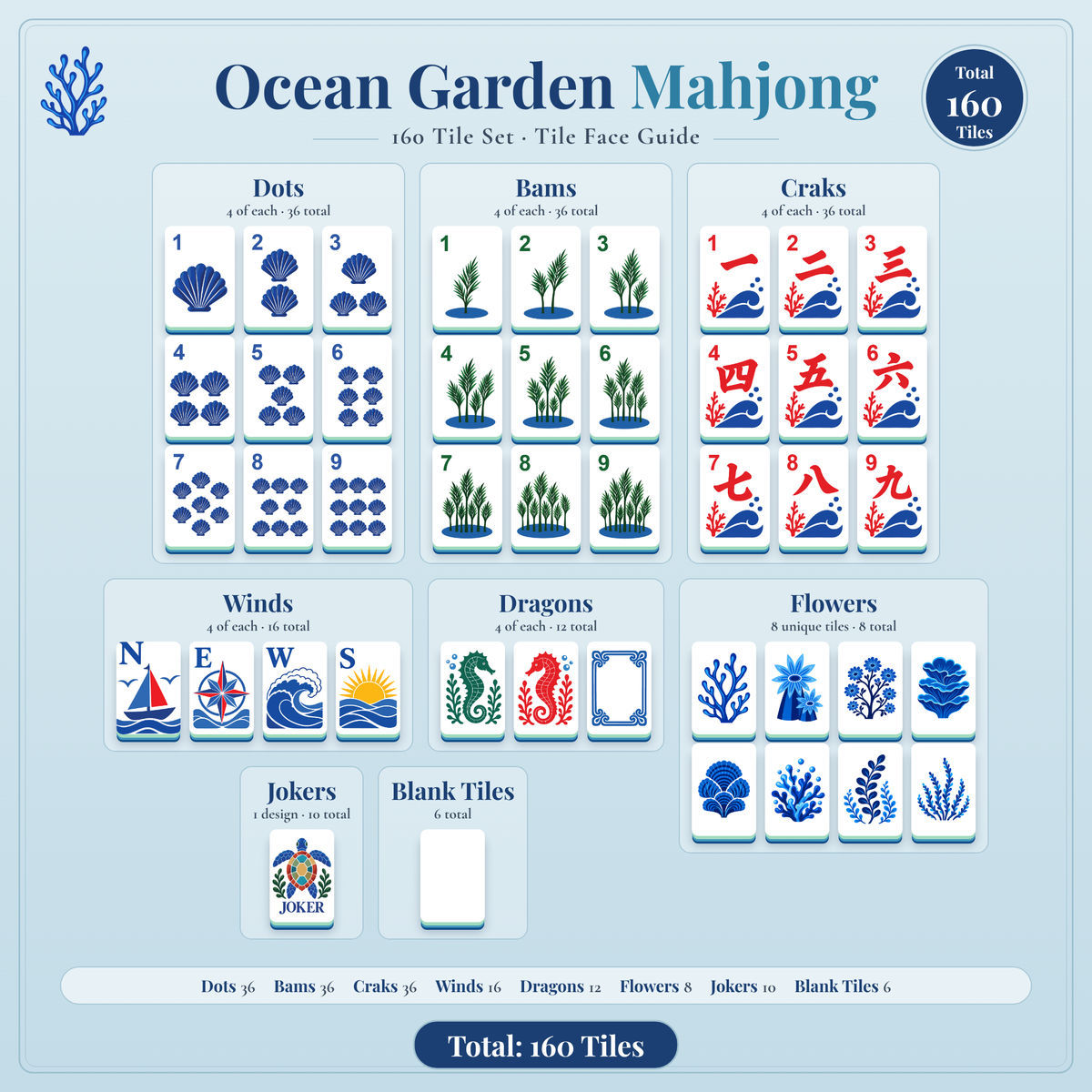
The White Dragon, known as "Soap," appears once in the standard set of 152 playing tiles and is the only Dragon that works as both a Dragon and a zero (in place of a 0 in certain number sequences). In a pung or kong, three or four Soap tiles form an identical set. When building a hand from the current year's National Mah Jongg League card, Soap may substitute for zero in sequences like "0-1-2" or "8-9-0" within the Bams, Craks, or Dots suits—but only where the card explicitly shows a zero, never as a joker replacement. You cannot use Soap alone as a single tile or as part of a pair; you can call it openly when another player discards it to complete a pung, kong, quint, or sextet on your hand. Common mistake: assuming Soap can fill any role a joker can—it cannot. Its power lies in giving you two lookup paths on the card, not in wildcard flexibility.
The White Dragon—or "Soap" as we call it at the table—occupies a strange, elegant middle ground in American mahjong. It's the only tile in the entire standard American mahjong set that serves two completely different functions at the same time. Most players new to the game miss this dual nature entirely, which often leaves points on the table or leads to discards that ruin an otherwise solid hand. Mastering the Soap tile transforms how you read hands and spot opportunities your opponents might miss.
Why is the White Dragon called "Soap"?
The White Dragon earned the nickname "Soap" because early mahjong sets featured a plain white blank tile without decoration—resembling a bar of soap. The name stuck even though modern sets now print "White Dragon," a Dragon symbol, or a decorative pattern on it. Our best-selling sets clearly mark the White Dragon so you know it instantly. The name is pure table tradition; use it freely in friendly games, though formal league play calls it the White Dragon on scorecards.

What are the two uses of the Soap tile?
Soap works in two distinct roles. First, it is a standard Dragon tile—one of three Dragons (along with Red and Green). Three or four identical White Dragons form a pung or kong, just like any other tile. Second, and uniquely, Soap acts as zero in numerical sequences on hands that include "0-1-2" or similar patterns shown on the card. When the card displays a zero in a Bams, Craks, or Dots sequence, Soap can fill that zero slot. You cannot use Soap as a joker or wild card in any other capacity; it operates only in these two defined paths. Once you understand both uses, you can spot hands that require Soap in ways you might otherwise dismiss.
🀄 Shop best-selling mahjong sets →
How do you call and use Soap in play?
You may call Soap—meaning you go out of turn and claim it—only when another player discards it and it completes a visible set (pung, kong, quint, or sextet) on your hand. When you call, you expose the complete set immediately and announce which hand you are playing. Soap cannot be called as part of a single tile, a pair, or any concealed combination. If you are holding Soap in your hand and waiting to complete a sequence that requires zero (such as "0-1-2 Bams"), you cannot call it from the wall or from another player's discard unless that discard is specifically that White Dragon tile. The card shows exactly where zero lives on each hand pattern—always check the card before assuming a sequence needs zero. Many players mistakenly think they can substitute Soap freely; the card dictates every single use.

What hands commonly use Soap as zero?
Hands that feature mixed suit sequences or special numbered patterns often build around a zero slot. The card shows these patterns clearly—look for sequences written as "0-1-2," "7-8-9-0," "1-2-0," or any other zero-inclusive string. These patterns exist across different sections of the card depending on the year's card design. Soap fills that zero and only that zero. If the card shows "1-2-3," do not use Soap there; use the actual 1, 2, and 3 tiles instead. The card is your law. When you're studying your hand, scan the card for every mention of zero, then check whether you have Soap and the other required tiles. This discipline prevents costly discards.
🎁 See our most-loved mahjong sets & accessories →
What mistakes do players make with the Soap tile?
Mistake | Why It Fails | How to Avoid It |
Using Soap as a joker | Jokers have their own rules; Soap never replaces a joker | Check the card—if zero is not listed, Soap cannot substitute |
Calling Soap for a single tile or pair | American mahjong rules forbid calling single tiles or pairs | Only call Soap as part of a complete pung, kong, or sequence |
Discarding Soap carelessly | One Soap per set; losing it ruins hands that need zero | Know which hands on your card use zero before you discard |
Holding Soap when no hand uses it | Blocks your hand; ties up a valuable tile unnecessarily | Study your card before the game; identify Soap-dependent hands |
Confusing Soap with Jokers | Jokers can appear anywhere on the card and substitute for any tile | Soap works only where zero appears on the card, never as a wildcard |
The most common error we see: a player assumes Soap can fill any gap, like a joker. It cannot. The second most common: holding Soap the entire game without a hand that needs it, only to realize too late that discarding it earlier would have altered your options. Remedy this by doing a quick pre-game scan of your card. Identify every hand that needs zero. Now you know which hands make Soap valuable this game and which ones don't.
How does Soap interact with jokers?
Soap and jokers are fundamentally different. Jokers appear on the card as wildcards that can stand in for any tile the card specifies. Soap has zero wildcard function—it is either a Dragon or a zero, nothing else. In a hand that needs both Soap (as zero) and jokers (as other tiles), use Soap only in its zero slot and use jokers elsewhere as the card directs. You cannot use a joker as a zero if Soap is available; you must use Soap where the card shows zero. Many hands mix several jokers and one Soap requirement—the discipline is to keep each tile in its designated role. A strong player reads the card first, then inventories their hand against the card, tile by tile. Soap clarity comes from this habit.
✨ Find your Mahstead set — free US shipping →
What to Check Before You Buy or Play
Before your next game, verify three things:
Your set has one clearly marked White Dragon. Our best-selling sets and engraved sets include one White Dragon per set. If you have an older set or one with unmarked tiles, confirm the White Dragon is present and identifiable.
You can read the card's zero notation. Grab the current year's National Mah Jongg League card (not a printout or old card) and identify every hand that uses zero. Mark them. This one habit eliminates 80% of Soap-related mistakes.
Your game mat or racks support clear hand visibility. A quality mat with dedicated discard zones and hand slots keeps Soap and your other tiles organized so you spot it instantly.

FAQ
Can I use Soap as a joker if I run out of jokers?
No. Soap is never a joker. It functions only as a Dragon or as zero where the card explicitly shows zero. Jokers have their own allocation and rules; Soap cannot substitute for them.
If the card shows "0-1-2 Craks," can I use Soap in other zero sequences?
Only if the card explicitly lists zero in that other sequence. The card dictates every legal position for Soap as zero. You cannot assume zero works in sequences where it is not written.
What if I call Soap by mistake—say, for a single tile?
In casual play, most groups allow you to return the tile to the wall and continue. In league play, a misdeclared call is a foul and typically results in a dead hand. Always pause before calling to confirm the set is complete.
Can multiple players use Soap in the same hand pattern?
No. Only one player can claim and win a hand each round. If you call Soap to complete a hand, the round ends immediately and that hand is scored. Other players do not get to use it.
How do I remember which hands need Soap if I'm new?
Study the card before playing. Make a quick list of every hand that mentions zero. Review it during the game. Within three or four games, the patterns stick. Our beginner's guide walks you through reading the card too.
Is the White Dragon always called "Soap"?
In casual home games, "Soap" is common slang. In formal league play, it is called the White Dragon. Both names refer to the same tile. Use whichever term your group prefers.


View More
View More
View More
