
How to Use the Flower Tile in American Mahjong
Last updated: Nov 23, 2026
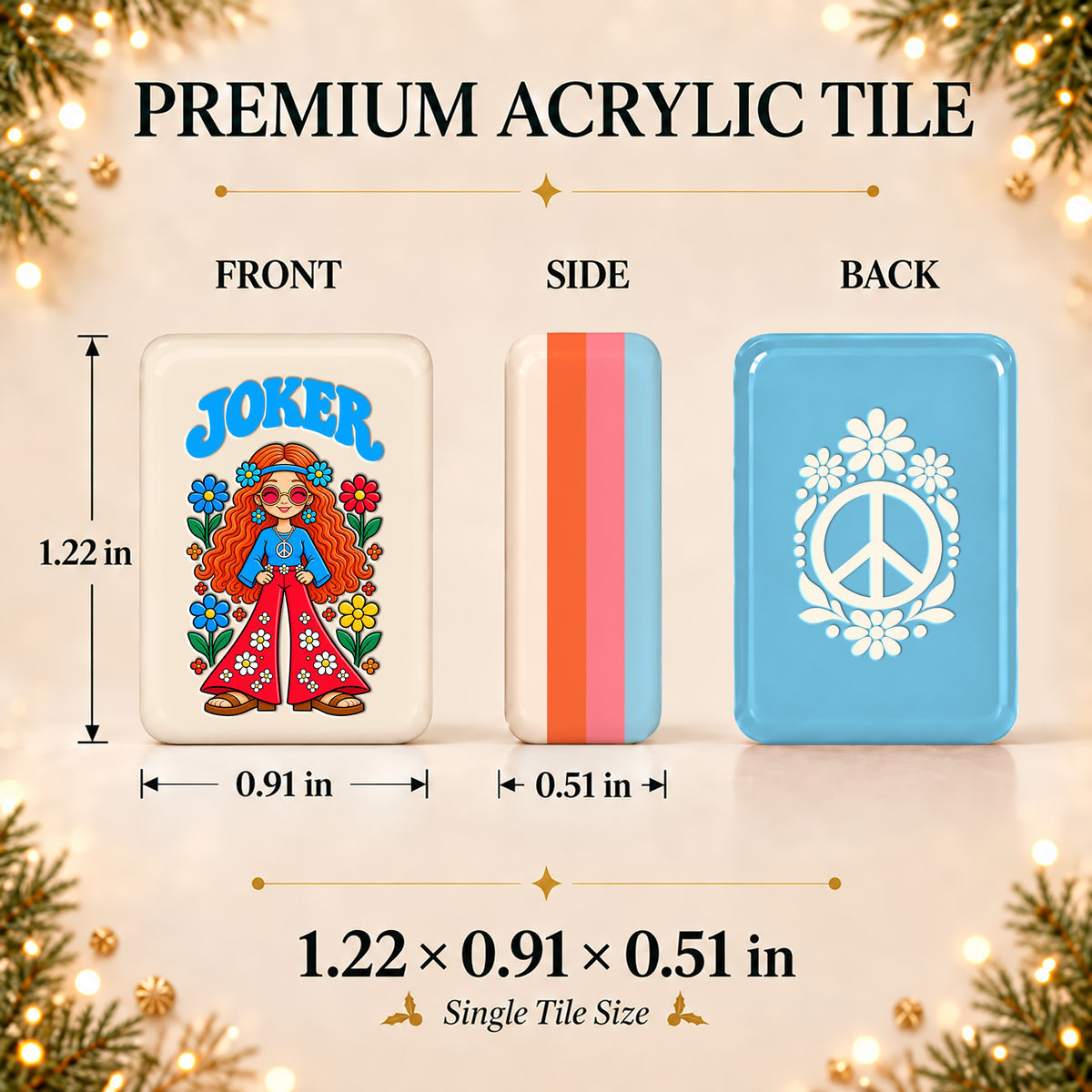
In American mahjong, each of the eight flower tiles (typically labeled 1–8 and displayed as actual flowers or seasonal symbols) counts as a bonus when drawn—you keep it and immediately draw a replacement tile from the wall. Flowers never form their own combinations; instead, they fill empty slots in your hand. The critical rule: flowers act as jokers only when the NMJL card explicitly shows them in a hand pattern, usually marked as "F" (flower). Outside those designated patterns, a flower drawn during play is simply kept; it does not replace jokers in other hands. The eight flowers in a 160-tile Mahstead set sit in the rack just like wind and dragon tiles. Beginners often misuse flowers as universal wild cards, which costs points. Always consult the current season's card before assuming a flower can substitute.
In American mahjong, the eight flower tiles are a constant source of confusion. They look special, they feel bonus, and yet new players often treat them as jokers. The truth is simpler: flowers are bonus tiles that speed up your hand, but they only act as wild cards when the card tells them to. Learning to read flower rules directly from the official card separates confident players from those who second-guess themselves at the table.
What exactly is a flower tile, and why do I have eight?
A flower tile is one of eight bonus tiles in the American set, each unique (usually numbered 1–8, or marked with seasonal or floral imagery). When you draw a flower during play—whether from the live wall or the dead wall—you keep it in your hand and immediately draw a replacement tile from the wall. This is the only tile type that triggers an automatic replacement draw. Because flowers are bonus tiles, they help you complete your hand faster than standard Bams, Craks, Dots, winds, and dragons. The eight flowers exist because American mahjong's structure requires them: without flowers, the drawing mechanics slow dramatically, and the game becomes tedious. Think of flowers as the game's built-in accelerator—they keep fourteen tiles moving through your hand.

When does a flower act as a joker or wild card?
Flowers act as jokers only when the current National Mah Jongg League card explicitly marks them in a hand pattern, typically using the symbol "F" or listing them alongside joker counts. For example, you might see a pattern that reads "2 F, 3 Bams, and 4 Craks with 1 joker"—in that specific hand, flowers substitute for any tile the pattern requires. Outside those marked hands, a flower drawn during play is simply a bonus tile; it does not substitute for anything else and cannot replace a joker in unrelated patterns. Many beginners assume all eight flowers are always wild, which leads to illegal plays and lost rounds. The card is the sole authority: if it does not say "F," the flower is not a joker. Reading the card accurately before committing to a hand prevents costly errors and keeps everyone at the table in agreement.
How do I read the card to know if flowers are in my hand?
The NMJL card changes every spring and lists all legal hand combinations in sections by pattern type (pairs, like tiles, sequences, and mixed). Each hand entry shows the tiles required; if a hand includes flowers, they are listed as "F" (sometimes with a number, such as "2 F"). Flowers are almost always grouped with jokers in the card layout, because they serve the same function: filling gaps and completing combinations. To check if a flower works in your hand: (1) find your hand on the card, (2) read the tile list left to right, (3) verify the exact count of flowers required. If the card says "1 F, 2 Jokers," you need one flower and two jokers; two flowers without jokers will not work, even if they look complete. Beginners often skim the card too quickly and assume a flower-looking combination works; always read the entire line, left to right, to confirm counts. This step-by-step habit prevents misreads and keeps your game honest.
Why don't flowers work as wild cards in every hand?
American mahjong hand patterns are fixed by the card, not improvised. Each pattern specifies exactly which tiles (and how many flowers or jokers) are allowed. If a pattern requires three 5 Craks and two jokers, you cannot swap a flower for one of the jokers—you must use two jokers, no flowers. This rigid structure is what makes American mahjong different from some Chinese variants, where tile combinations are more flexible. Flowers are restricted to maintain game balance and ensure that all players at the table are working toward the same legal hands. If flowers were always wild, the card would become meaningless, and players would argue constantly over which substitutions are fair. The card is the contract; flowers honor that contract only where listed. Players who learn to respect this boundary avoid disputes and play faster, because everyone knows exactly what tiles fit and what do not.

What's the fastest way to remember flower rules during a game?
Use this single rule: Flowers are bonus tiles that trigger a replacement draw; they act as jokers only when the card marks them as "F" in your hand pattern. Keep the current year's card in clear view at the table and glance at it whenever you draw a flower or consider a hand with flowers. Many experienced players keep a folded card propped on the mat or rack so it is visible to all four players without constant passing. If anyone at the table is unsure whether a flower works in a hand, pause and read the card together—a ten-second check prevents a mis-call and keeps the game running smoothly. The card never lies; your memory might. Beginners often try to memorize hand patterns after a few games, which leads to errors. Instead, train yourself to reach for the card reflexively. After thirty or forty hands, the most common patterns will stick in your memory, but checking the card remains the fastest, clearest way to play.
Decision Framework: Flower in Hand? Check This First
Scenario | Card says? | Flower works? | Next step |
You draw a flower from the wall | (doesn't matter) | Yes, always | Draw a replacement tile immediately |
You have a hand with "2 F, 3 Bams" | "2 F, 3 Bams" listed | Yes | Play it; it's legal |
You have a hand marked "1 Joker, 3 Bams" | No "F" or "flower" shown | No | Flowers do not substitute; need actual joker |
You see "1 F, 2 Jokers, 3 Craks" on the card | Exact match on card | Yes | Use one flower and two jokers only |
Teammates argue if a flower is legal | (any disagreement) | Unclear | Stop; consult the card together |
🀄 Shop best-selling mahjong sets →
How do flower tiles differ across mahjong variants?
American mahjong is unique in its treatment of flowers. In Chinese and Hong Kong mahjong, flowers (typically called "honors" or "seasons") are often melded like Bams and Craks—they form their own combinations and are worth bonus points. In Riichi mahjong, flowers are usually not present. In Taiwanese mahjong, flowers play a different role in scoring and are sometimes counted as pairs or melded sets. American mahjong treats flowers as pure bonus tiles: they speed up your hand but do not form their own melds or combinations. This is why many players switching from Chinese to American mahjong are surprised—they expect to meld flowers together, but American rules forbid it. Understanding the full American set and how each tile type moves helps prevent confusion when playing across variants. If you host players familiar with other mahjong styles, a quick reminder at the start of the game (flowers = bonus tiles only, no melds) saves time and keeps the game welcoming.
What should I check before buying a set with flowers?
When you buy an American mahjong set, confirm that all eight flower tiles are distinct, clearly marked, and easy to identify at a glance. A worn or unclear flower tile can cause hesitation during play, especially for newer players who are still learning to read the set. Our best-selling sets are engraved and printed with crisp flower symbols so you can spot them instantly in your rack. Check that the flowers are the same size and weight as other tiles in the set—a lighter or thinner flower tile can feel strange during the draw and shuffle. If you play in a home setting, test the tiles on your mat (if you own one) and racks (with pushers, if you use them) to ensure they glide smoothly. Scratches or fading on flowers happen after years of play; if you are replacing an older set, compare the flower clarity side-by-side. A set with crisp, distinct flowers reduces errors, speeds up card-reading, and makes the game more enjoyable for everyone.
🎁 See our most-loved mahjong sets & accessories →
Common mistakes players make with flowers (and how to avoid them)
Mistake 1: Assuming flowers are always jokers. Solution: Read the card for every hand before declaring it legal. Flowers are jokers only when marked "F."
Mistake 2: Not drawing a replacement tile after picking a flower from the wall. Solution: Develop a habit: flower drawn = immediate replacement draw. Do it before you add the flower to your rack.
Mistake 3: Trying to meld flowers together (two or three flowers as a pung). Solution: Remember—American flowers do not form their own sets. Flowers only fill gaps in patterns the card specifies.
Mistake 4: Forgetting that the eight flowers are eight distinct tiles, not duplicates. Solution: Each flower is one-of-a-kind. You cannot use two identical flowers in a pair or pung; they are not copies like winds or dragons.
Mistake 5: Drawing a flower but continuing to draw from the wall without replacing it. Solution: Replace the flower immediately, before your next draw. This keeps the tile count correct (always 13 tiles in hand, never 14).
Avoiding these five errors will put you ahead of most casual players and keep your game flowing without disputes.
✨ Find your Mahstead set — free US shipping →

FAQ
Can I use a flower as a substitute for any tile I need, the way I use a joker?
No. Flowers substitute only when the card marks them as "F" in your hand pattern. Outside those specific patterns, flowers are bonus tiles and do not substitute for anything.
What happens if I draw a flower and forget to draw a replacement tile?
You must draw that replacement immediately before your next turn. If the error goes unnoticed and you play with 14 tiles, your hand is illegal; most groups rule the round void and restart.
Are the eight flowers the same tile printed eight times, or are they all different?
All eight flowers are different. Each flower is unique (numbered or symbolically distinct), so you cannot use two flowers to form a pair or pung.
If the card says "1 F, 2 Jokers," can I use two flowers and one joker instead?
No. The card specifies exact counts. One flower and two jokers means exactly that—no substitution or swap.
How do I count flowers toward my tile total during the hand?
Flowers are regular tiles in your hand count. When you draw a flower and replace it, your tile count stays at 13 (plus the initial 14 on your first turn). Flowers do not reduce the number of tiles you need to complete a hand.
Can I pick up a flower that another player discarded, or are flowers only drawn from the wall?
Flowers are only drawn from the wall (or the dead wall during the dead wall draw phase). Discarded tiles are never flowers—if a flower lands on the table, it means the player drew it from the wall, replaced it immediately, and then played a different tile.


View More
View More
View More
