
Mahjong for Bingo Players: What Skills Transfer
Last updated: Nov 23, 2026
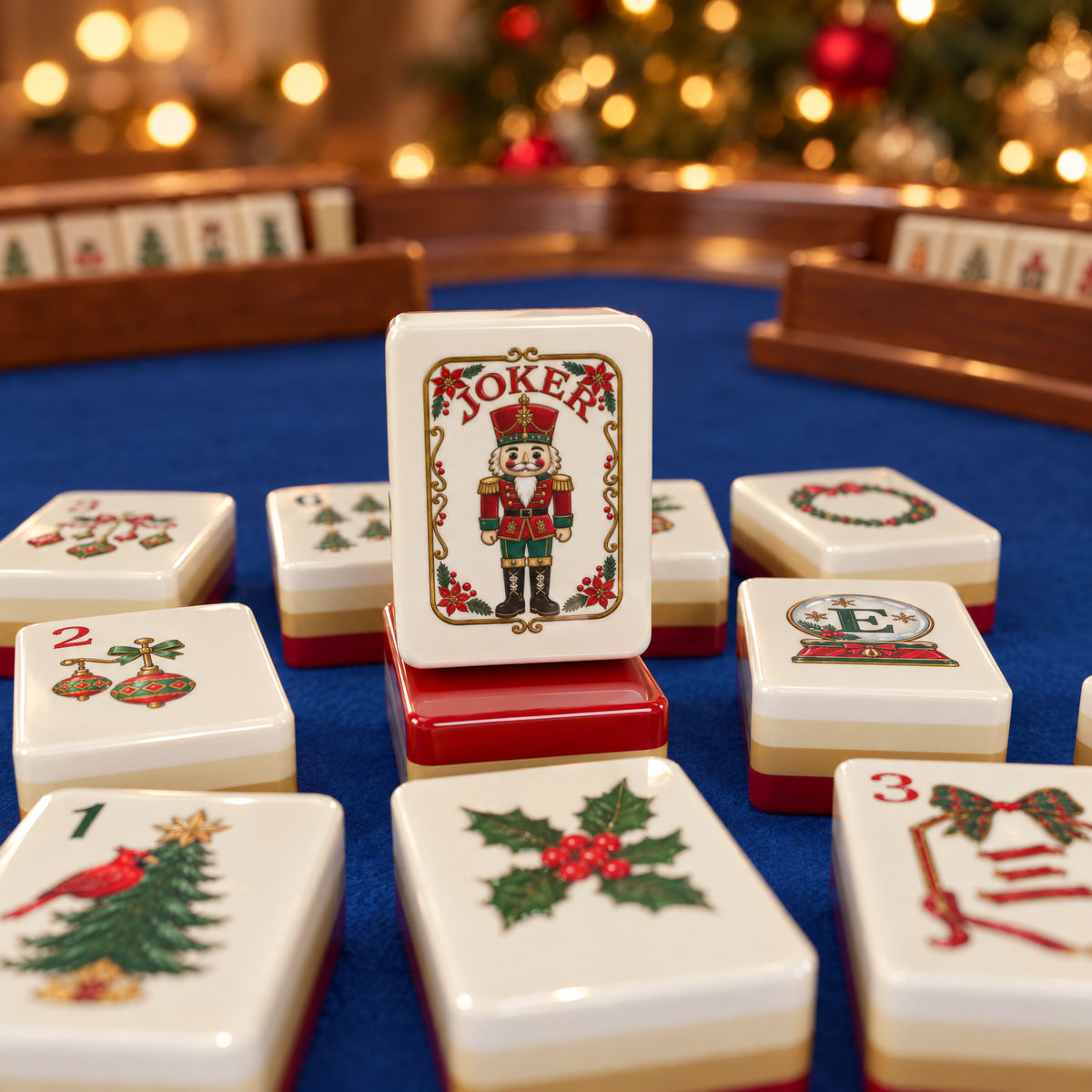
If you play bingo, you already own pattern recognition, number sense, and the discipline to track multiple objects at speed. American mahjong borrows these strengths—you'll spot tile combinations faster than a raw beginner—but diverges sharply on rules, play speed, and decision-making. Bingo is chance-driven; mahjong is strategy-driven. Bingo uses 75 balls called in random order; American mahjong uses 152 identical tiles split across four players, governed by a single official card that changes yearly. Games last 1–2 hours (not 15 minutes), require memorization of hand patterns, and involve a formal tile-passing ritual called the Charleston before play begins. You'll need engraved sets designed for tactile durability, a mat to organize your tiles, and racks to hold your hand upright. The barrier to entry is real, but your bingo habits—patience, focus, call discipline—will shorten your learning curve significantly.
What pattern recognition you bring to mahjong
Your bingo card trains your eye to scan dozens of squares in seconds. American mahjong applies this same skill—but to a 14-tile hand arranged across a rack. Instead of searching for called numbers, you're mentally matching the tile you drew against the hand patterns printed on the current year's National Mah Jongg League card. A bingo player typically spots these combinations 20–30% faster than someone new to pattern games. The card itself is dense—dozens of legal combinations—so your ability to parse columns and rows transfers directly. However, bingo rewards passive waiting; mahjong requires active memory. You won't just spot a pattern; you'll need to remember which tiles are in the discard pile, who's likely holding what suit, and which patterns are still achievable given the tiles already played.

How speed and calling work differently
Bingo thrives on reflexes: you hear a number, you mark it, you listen for the next call. Mahjong strips away that auditory urgency. Games move turn-by-turn, not in real time. One player draws a tile, one player discards, and each of the other three players has time to decide whether to claim (or "call") that discard to complete part of their hand. This is where bingo players often stumble. You're used to passive watching; mahjong demands active negotiation at every discard. You must decide in two to five seconds whether a discarded tile completes your pung (three identical tiles), kong (four), or quint (five), or moves you closer to your hand. You cannot call a chow or sequence; exposed melds in American mahjong are only pungs, kongs, quints, and sextets of identical tiles. Jokers—wild tiles in your set—can substitute for any tile in these melds but can never be used as a single tile or a pair. Bingo rewards speed of recognition; mahjong rewards speed of decision-making under incomplete information.
Memory and tile tracking: the real learning curve
This is where bingo stops and mahjong begins. Bingo cards don't change once marked. Mahjong hands shift constantly. You draw one tile, discard one tile, and observe what everyone else is throwing away. Tracking the discard pile—which tiles have left play—is critical to calculating your odds of drawing what you need. Experienced bingo players sometimes transfer faster here because bingo already teaches you to hold multiple number sequences in working memory (your entire card, plus the last five or six calls). Mahjong goes further: you're tracking not just your own hand and the discard pile, but inferring what your opponents might be holding based on what they've chosen to throw away. A tile nobody discards for three rounds signals they're likely holding it or avoiding it for strategic reasons. Bingo never asks you to think that way. This memory layer typically takes new bingo-to-mahjong converts two to four weeks of weekly games to internalize.
Skill | Bingo | American Mahjong | Transfer Difficulty |
Pattern spotting | 75 random numbers; passive scanning | 152 tiles; 14-tile hand against card | Low—your speed helps |
Speed of response | Auditory cue → mark reaction time | Draw/discard cycle; 2–5 sec decision | Medium—different stimulus |
Number memory | Card holds all numbers passively | Active tracking of 20+ discarded tiles | High—new mental load |
Strategic depth | None; purely random | Infer opponents' holdings; plan three moves ahead | Very high—entirely new skill |
Rule complexity | One rule; one outcome per call | 152 tiles, card-based hands, jokers, exposures | Very high—steep learning |
Game duration | 10–20 minutes per card | 60–90 minutes per game | New commitment |
The Charleston: a ritual with no bingo parallel
Before a single tile is drawn in American mahjong, players pass tiles to one another in a formal sequence called the Charleston. This three-round ritual gives you a chance to improve your starting hand before play begins and levels the playing field—nobody starts with a random advantage. In the first round, you pass three tiles right, then three tiles come from your left, then you repeat passing left and passing right. In the second round, the same happens but tiles pass to the player across from you. In the third round, players exchange as they wish. Bingo has no equivalent. You sit down, your card is printed, and the game starts. The Charleston is one of the reasons mahjong teaches you to evaluate tile combinations quickly: during those two minutes of passing, you're constantly reassessing whether a new incoming tile advances your hand closer to a playable pattern. The Charleston explained walks through each round step-by-step.
🀄 Shop best-selling mahjong sets →

Scoring and winning: complexity bingo doesn't demand
Bingo declares a winner when one player completes a pattern (five in a row, corners, full card, etc.) and calls "bingo." Points don't matter; finishing first does. American mahjong flips this. You cannot win until your 14-tile hand matches exactly one of the legal patterns on the current year's card. Once your hand matches, you call "mahjong" and score points based on which pattern you completed—not all patterns are worth the same. Some basic patterns pay minimum; others pay triple or quadruple based on rarity and difficulty. Every game you sit down involves studying that year's card to understand which hands pay high, which are risky, and which require tiles less likely to be available. Bingo players sometimes find this overwhelming at first—the mental load of pattern evaluation plus point calculation. But your comfort with tracking numbers across a sheet transfers well. The card itself is your bingo sheet; the scoring table is your point tracker. After three to five games, bingo players typically navigate scoring faster than non-bingo players.
Tile quality and equipment: what you'll actually need
Bingo uses paper cards and a dauber or marker. Mahjong uses 152 plastic or bone tiles, four racks, a mat, jokers, and often a bag to carry the set. Because tiles move constantly—drawn, discarded, passed, exposed—durability matters far more than in bingo. Tiles suffer wear from shuffling (called "cooking" the tiles at the start of each game), tile-on-tile friction during play, and repeated gripping. A quality best-selling mahjong set uses durable acrylic or bone and includes racks with pushers to help you manage your 14 tiles comfortably. Many bingo players first play mahjong with borrowed sets, then purchase their own within four to six weeks once they know they'll continue. Engraved sets personalized with your name, a favorite saying, or a memorable date also make strong gifts if you're introducing mahjong to a bingo group. If you plan to host weekly games, mahjong mats protect your dining table from tile damage and provide dedicated discard areas and a clear center for the "wall" (the central tile pool). Racks with pushers let you organize your tiles upright so nobody else can see what you're holding—essential for strategy and fairness.
🎁 See our most-loved mahjong sets & accessories →
What to check before you buy
If you're moving from bingo to mahjong, here's your pre-purchase checklist:
Will you play weekly? Mahjong asks more time commitment (60–90 min per game) than bingo (10–20 min). If you're serious, invest in a set; if you're testing, borrow first.
Does your group have the current year's card? American mahjong hands change yearly. You cannot play 2026 hands with a 2025 card. Confirm your group has the current card before buying or hosting.
What's your hosting setup? A mat and racks transform a kitchen table into a mahjong venue. If you're hosting, a mat with tile pushers eliminates most damage and confusion.
Are you gifting to other bingo players?Engraved sets personalized with a inside joke or group name often spark interest and commitment in bingo groups considering the switch.
Do you need portability? Weekly games at different venues call for travel bags or cases to protect tiles and racks during transport.
✨ Find your Mahstead set — free US shipping →
Once you understand these divergences, the transfer becomes smooth. Your bingo discipline—focus, rule adherence, patience with other players—actually translates well to mahjong culture, which prizes courtesy and calm. You already know how to sit for an hour in concentrated play. You know when to listen and when to speak. The new layer is strategy: learning to build hands, calculate odds, and anticipate opponent moves. Get started with mahjong for beginners covers the foundation rules in detail. Most bingo-to-mahjong converts feel genuinely comfortable by week three.

FAQ
Can I use my bingo card-reading skill to learn the mahjong card faster?
Yes, partly. Both cards use dense row-and-column layouts. Your ability to scan columns helps. However, the mahjong card requires you to understand tile notation (Bams, Craks, Dots, winds, dragons, flowers, jokers) before the layout makes sense. Most bingo players spend one game just learning notation, then one to two games learning to spot patterns on the card. The layout transfer saves you maybe one week of learning time.
Is mahjong faster or slower than bingo?
Much slower. A bingo card typically plays in 10–20 minutes. An American mahjong game runs 60–90 minutes. If you prefer rapid-fire play, mahjong may feel glacial at first. However, once you're engaged in strategy, most players find the pace meditative rather than boring.
Do I need to memorize all the hand patterns on the card?
No. You're allowed to study the card during play. Most players reference it several times per game, especially in their first month. Memorization happens naturally after 20–30 games. Beginners often keep notes about which patterns they prefer and flag them on their card.
Can I play mahjong if I've never played bingo?
Absolutely. We mentioned bingo here only to highlight what transfers. Mahjong stands alone as a game. However, bingo players typically reach intermediate skill 2–3 weeks faster than someone with no pattern-game background.
What happens if I call "mahjong" and my hand doesn't match the card?
You've called a false win (a "misdeclare"). In casual play, you forfeit your turn and set your hand aside. In tournament play, false declares carry penalties. Always double-check your hand against the card before calling. Newer players often flag a suspected winning hand and ask the group to verify before declaring.
Do racks and mats make a big difference for a beginner?
Racks make a functional difference: they hold your 14 tiles upright so you see your hand clearly and others cannot. Mats make a surface difference: they protect your table and organize the game layout (your hand, your melds, the discard area, the central wall). Neither is required to play, but both dramatically improve focus and reduce accidents. If you're playing casually at someone's home, you can skip them initially. If you're hosting regularly, they're worth the investment.


View More
View More
View More
