
How to Use the 5 Dot Tile in American Mahjong
Last updated: Nov 23, 2026
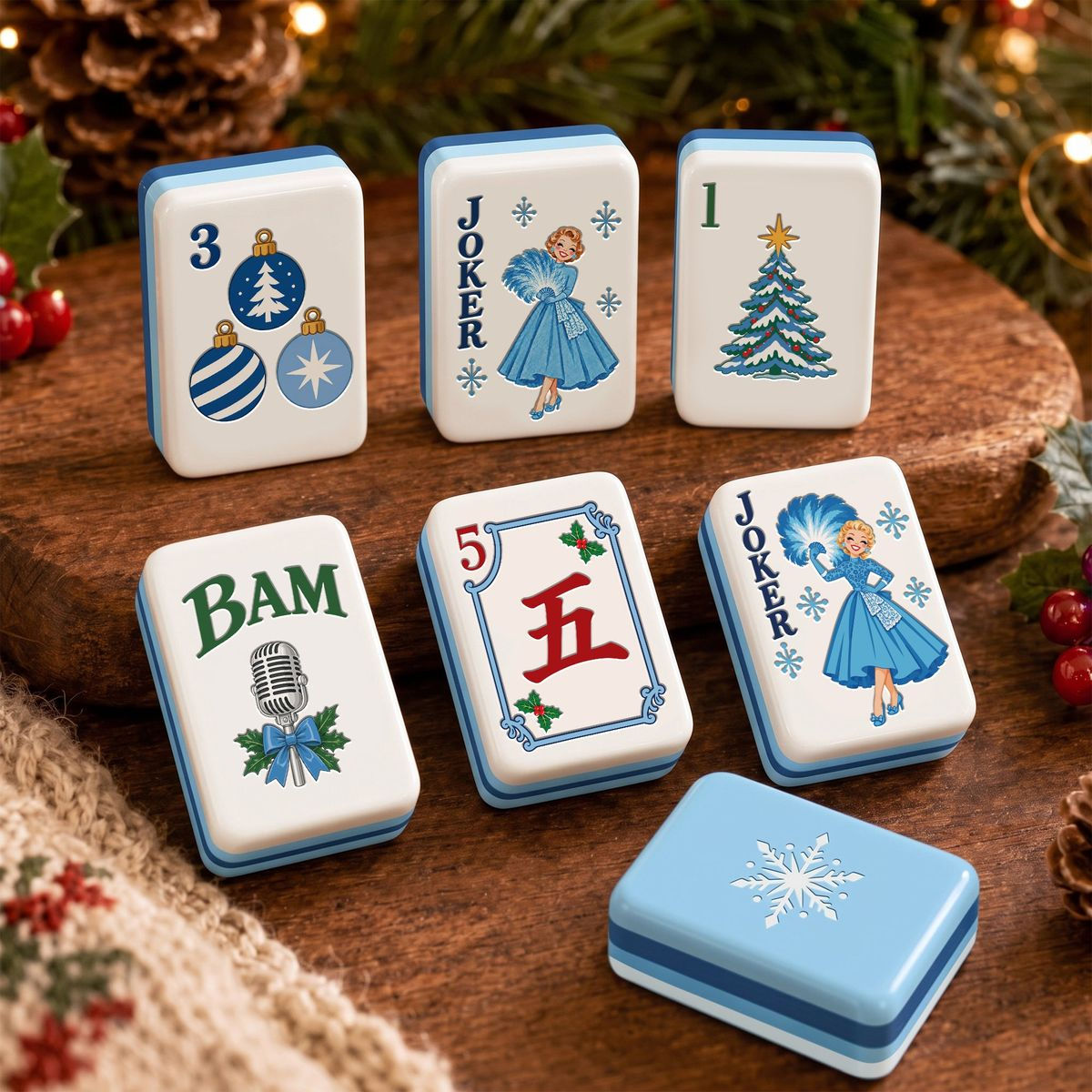
The 5 Dot tile is one of four identical tiles in a standard American mahjong set representing the number 5 in the Dot suit. It appears in two main contexts: as part of a meld (pung, kong, quint or sextet of identical 5 Dots) or as one half of a pair. On the National Mah Jongg League card, 5 Dots can anchor everything from simple three-tile sequences on the card to more complex patterns requiring a pair plus exposed melds. Unlike Chinese variants, American mahjong has no sequences or chows—every 5 Dot must be grouped only with other identical 5 Dots, never with 4 Dot or 6 Dot tiles. Spot the 5 Dot by its symbol: five solid circles arranged in an X-pattern on the tile face. It belongs to the Dot suit (often called pips), distinct from Bams and Craks, and plays exactly the same mechanical role as any other numbered tile—you hold it, meld it, or discard it based on the hand you're building. 🀄 Shop best-selling mahjong sets →
Where does the 5 Dot appear on a winning hand?
The 5 Dot tile appears in hands printed on the current year's National Mah Jongg League card. Every hand pattern specifies exactly which tiles form the winning combination. A 5 Dot may serve as part of a pung (three identical 5 Dots), a kong (four identical 5 Dots), or a pair (two 5 Dots). The card also uses notation like "5 Dot pair + other melds" or simply lists "5 Dot" in a pattern row, telling you whether that tile is required, optional with a joker, or part of a specific meld type. Always cross-reference the exact hand you're playing against the current season's card to confirm the 5 Dot's role.

Can you use a 5 Dot in a sequence with 4 or 6 Dots?
No. American mahjong forbids sequences—called chows in other variants. Every meld must be three, four, five or six identical tiles. A 5 Dot can only be grouped with other 5 Dots; mixing it with a 4 Dot and 6 Dot would create an illegal meld and cannot be declared, exposed or used to win. This rule is one of the biggest differences between American and Chinese mahjong, where chows are central to play. Stick to identical tiles only, and you'll stay legal every hand.
How do you identify the 5 Dot tile quickly during play?
The 5 Dot displays five solid dots or circles arranged in an X-pattern (one in each corner, one in the center) on the tile face. Most traditional tiles show this clearly; some modern engraved sets use etching or inlay that may require a glance under good light. Hold the tile at a slight angle if needed. The Dot suit's symbol is always a small circle or pip, never a stick (Bam) or bamboo pattern (Crak). In our acrylic sets from the best-selling mahjong collection, each suit is also color-coded: Dots are typically red or one primary color, making visual sorting even faster once you know the key.
What happens if you meld a 5 Dot incorrectly?
If you expose a meld containing a 5 Dot tile that violates the hand pattern on the current card—for example, mixing a 5 Dot with a 4 Dot or 6 Dot—you have an illegal meld. Your table may rule it immediately dead (you cannot win from that hand), or you may be allowed to pick it back up and play continues. House rules vary, but the golden rule is: always check the card before you expose. Never expose a meld unless you're certain it matches the printed pattern exactly. Beginners often fail to read the card notation; take an extra beat to verify the suit, number and meld type before claiming your melds aloud.
How many 5 Dot tiles are in a complete set, and can you use them all?
A standard American mahjong set contains four 5 Dot tiles (one per complete set of the Dot suit). During play, exactly 152 tiles are on the table and in hand; all four 5 Dots can be in play at once if a winning hand requires melds using multiple 5 Dots (for example, one hand might need a pung of 5 Dots plus a pair of 5 Dots, using all four). Our best-selling mahjong sets include these four tiles as standard. You cannot add extra 5 Dots to the game; the game is always played with exactly 152 tiles and 8 jokers. Spare tiles included in a 160-tile set are backup jokers or blanks only, never extra numbered tiles.

Choosing the Right Set to See 5 Dots Clearly
Feature | Best for | Why it matters |
Acrylic, engraved numerals | Competitive, fast play | Etched numbers stay legible after hundreds of games |
Large tile size (standard) | Aging eyes, outdoor games | 5 Dot pips visible at arm's length without squinting |
High-contrast colors (red Dots) | Low-light venues | Red Dots pop against green Bams and white Craks |
Smooth bamboo racks | Organizing by suit | Rack dividers separate Dots from other suits; less fumbling |
🎁 See our most-loved mahjong sets & accessories →
Step-by-Step: Spotting & Using a 5 Dot Correctly
1. Recognize the symbol. Look for five dots in an X-pattern. If you see four corners + one center, you've found a 5 Dot.
2. Check the suit. Confirm it's the Dot suit (small circles, not sticks or bamboo), not a Crak or Bam.
3. Find the hand on the card. Locate the row or section on this season's National Mah Jongg League card where 5 Dots appear.
4. Read the meld type. Does the card specify "5 Dot pung," "5 Dot kong," "5 Dot pair," or "5 Dot + joker option"? Follow it exactly.
5. Count your tiles. You must have the correct number (3 for pung, 4 for kong, 2 for pair, etc.) before you expose or win.
6. Expose only when certain. Once you declare a meld aloud, you usually cannot change it. Double-check the card one more time first.
7. Place on your rack or mat. Organize all 5 Dots together so you can see at a glance whether you have enough for your hand.
What to Check Before You Buy Your Set
Tile readability: Can you quickly spot 5 Dots under your playing lights? Order a set from the best-selling collection that matches your table's brightness.
Suit separation: Does your set or rack help you sort Dots from Bams and Craks? A rack with dividers speeds up play and prevents meld errors.
Durability: If you play weekly, acrylic tiles with engraved numerals hold up better than paint.
Spare tiles: Confirm your 160-tile set includes spare jokers, not extra numbered tiles.
Common Mistakes with the 5 Dot Tile—And How to Avoid Them
Mistake 1: Mixing 5 Dot with 4 and 6 Dot as a "sequence." Remember: American mahjong has no sequences. Verify each meld contains only identical tiles. Check the card before you expose.
Mistake 2: Using a joker to fill in a missing 5 Dot. Jokers can substitute in a pung, kong, quint, or sextet of 5 Dots, but only if the card allows a joker for that hand and meld type. Read the notation closely; if it shows "5 Dot pair," no joker substitution is legal for a pair in American mahjong.
Mistake 3: Confusing 5 Dot with 5 Crak or 5 Bam. Slow down. The symbol is always five dots (small circles). A 5 Bam shows five sticks; a 5 Crak shows five lines or a bamboo pattern. Organize your tiles by suit using a mahjong rack with pushers to keep them sorted.
Mistake 4: Forgetting there are only four 5 Dots in the game. If you need a 5 Dot and cannot find it, another player must hold it or it's in the wall. You cannot create a fifth one or use a joker outside the card's rules.
Mistake 5: Exposing a 5 Dot meld before reading the card. Always read the hand description on the current season's card first. Premature exposure can end your turn or lock you into an illegal hand.
Understanding the tiles you're playing with is the fastest path to confident, error-free hands. The 5 Dot is a workhorse tile—simple in concept, powerful in play—once you know where it belongs. Invest in a set with clear, durable numerals and a matching mat that lets you organize by suit, and you'll spot every 5 Dot instantly. Learn how to read the card next, and you'll move from spotting tiles to building winning hands with confidence.
✨ Find your Mahstead set — free US shipping →

FAQ
Is the 5 Dot tile always red?
No. Color varies by set manufacturer. Dot tiles are typically one suit color—often red, but sometimes green, black or white—to contrast with Bams and Craks. Check your set's color scheme to learn which shade represents Dots.
Can I use the 5 Dot as a wildcard or substitute tile?
Only if the current year's National Mah Jongg League card permits a joker in that specific hand and meld. The 5 Dot itself is not a wildcard; jokers are separate tiles that substitute under card rules.
How many 5 Dots do I need for a winning hand?
Two to four, depending on the hand. A pair uses two; a pung uses three; a kong uses four. Check the card for your exact hand to know the count.
What if I accidentally expose a 5 Dot meld that's illegal?
House rules vary. Some tables allow you to pick it back up; others declare your hand dead. Always read the card before exposing to avoid this penalty. Verify melds before you claim them aloud.
Why does American mahjong not allow 5 Dot + 4 Dot + 6 Dot like Chinese mahjong does?
American mahjong uses only identical-tile melds (pungs, kongs, etc.), not sequences. This rule simplifies play and changes strategy entirely from Chinese and Hong Kong variants.


View More
View More
View More
