
How to Travel with a Mahjong Set: Packing & Protection Guide
Last updated: Nov 23, 2026
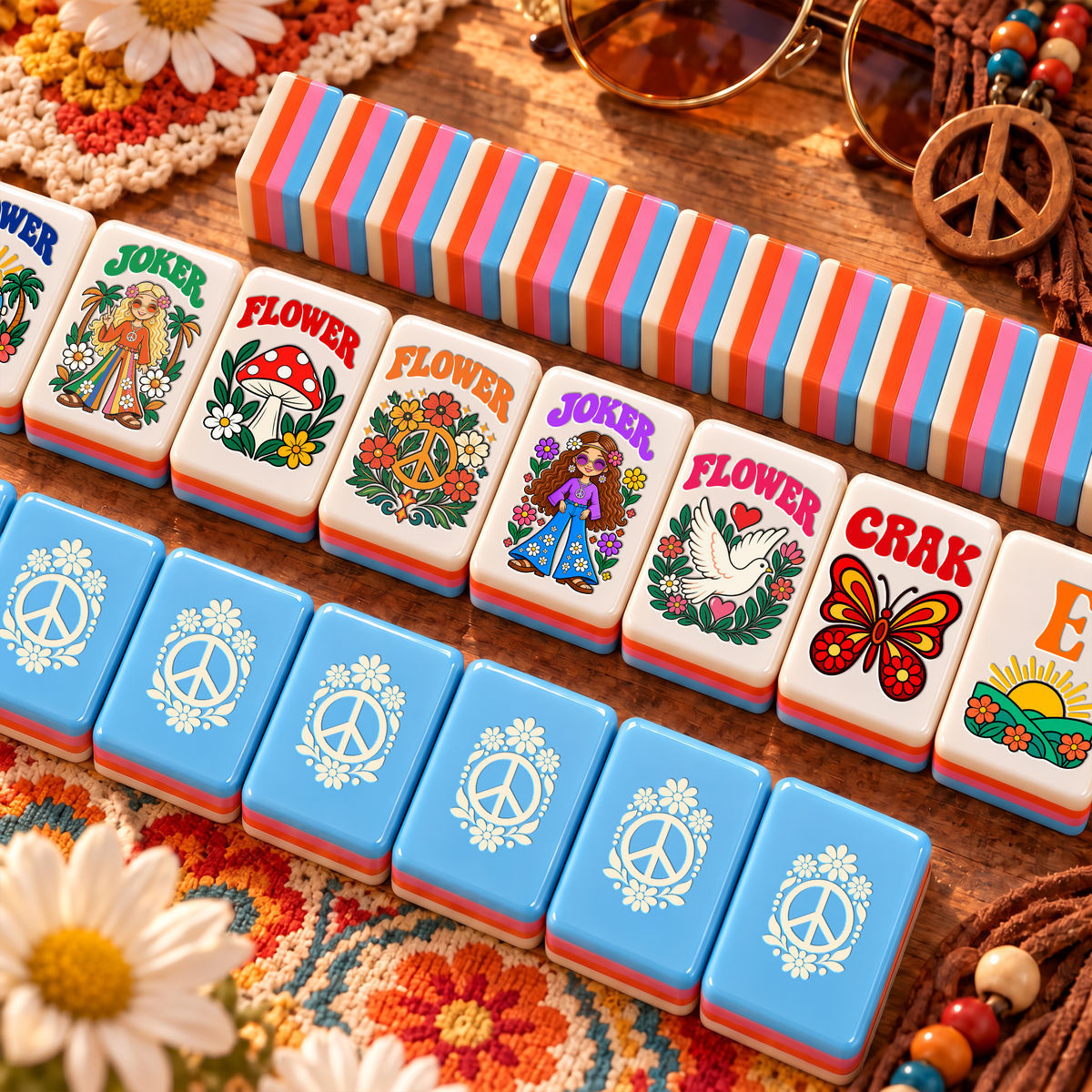
Traveling with a mahjong set means protecting 160 tiles, racks, a mat, and jokers from damage and loss. Most players pack their American mahjong set in a dedicated case or reinforced bag with padded compartments—racks and pushers nest inside tile trays, the mat rolls flat, and jokers go in a separate pouch. A 160-tile acrylic set fits into a compact carryon if you choose a slim case, though checked luggage offers more peace of mind. Acrylic tiles survive bumps better than bamboo; keep them away from extreme heat (car trunks in summer) and moisture. TSA allows mahjong sets on planes—tiles are non-hazardous—but check airline carryon size limits (usually 22×14×9 inches). Ship high-value sets separately if traveling internationally. Budget 30–45 minutes for packing before each trip.
Traveling with mahjong doesn't mean leaving your game behind. We pack and travel with our sets constantly for weekend tournaments and casual games with friends across the country. Here's how to keep your tiles safe, organized, and ready to play anywhere.
What's the best way to pack tiles for a road trip?
For car travel, pack your set in a padded case or reinforced bag on the seat or floor, never in a roof rack where temperature swings cause warping. Place the tile tray in the center (heaviest item first), nest racks with pushers on top, roll your mat and position it along one edge, and fill empty space with soft materials—socks, scarves, or packing paper—to prevent shifting. Acrylic tiles don't crack easily, but the rims of racks can snap if tilted too sharply. Keep the set in the passenger cabin, not the trunk, where summer heat can reach 140°F and weaken acrylic joints.
🀄 Shop best-selling mahjong sets →

Can you bring a mahjong set on an airplane?
Yes. TSA classifies mahjong sets as non-hazardous game pieces—tiles, racks, jokers, and mats are all permitted in both carryon and checked luggage. However, carryon space is tight: a standard mahjong case measures roughly 10×14×6 inches and fits most airline carryon size limits (22×14×9 inches), but confirm with your airline before booking. Checked luggage offers more flexibility and peace of mind; pack your case inside a larger suitcase with clothes as cushioning. Never leave a set unattended at security or in an overhead bin where turbulence may unseat it. Remove the set from your bag before X-ray screening and place tiles directly on the conveyor—no additional inspection is needed.
Which travel bag or case actually keeps tiles safe?
A dedicated mahjong bag or case with interior compartments beats a generic duffel. Look for one with a rigid outer shell, padded dividers, and a handle rated for repeated lifting (seams and stitching fail faster than fabric). Acrylic sets weigh 3–4 pounds, so a lightweight nylon shell with reinforced corners lasts longer than soft canvas. Cases with zippered mesh pockets hold your current-year card, pen, and tile marker separately, reducing clutter and loss. If you travel monthly or more, invest in a wheeled case—your wrists will thank you. For occasional trips, a well-padded shoulder bag with a removable tile tray works; just test it on a short drive first to confirm zippers and seams hold under weight.
✨ Find your Mahstead set — free US shipping →
Travel scenario | Best container type | Why it works | Durability factor |
Road trip, <4 hours | Padded shoulder bag | Light, accessible, fits car seat | Seams tested by weight |
Airline carryon | Slim hard case | Compact, protects corners, fits overhead | Shell absorbs impact |
Checked baggage | Medium soft case | Flexible, fits in suitcase, robust zippers | Nylon withstands pressure |
Permanent club storage | Large rolling case | Minimal repeated packing, organized | Wheels and handle durability |
Casual overnight | Drawstring pouch + small bag | Ultra-portable, minimal prep | Velcro closures, light use |
How do you protect tiles from heat and humidity during travel?
Acrylic tiles are stable in normal climates (50–75°F, 40–60% humidity) but warp if exposed to extremes. Never store a mahjong set in a parked car, attic, or basement during summer; the adhesive binding jokers can soften and tiles may yellow or crack under UV light. If traveling by car in hot weather, pack your set in an insulated lunch bag or place it in a cooler (without ice touching it directly) during long stops. For trips to humid regions—coastal areas or tropical climates—keep tiles in their case until play begins and store the case in air-conditioned rooms. If you live in a dry climate and travel to a humid zone, acclimate your set indoors for a few hours before opening to prevent condensation on tiles. Never place mahjong sets near radiators, heating vents, or sunny windows.

What should you check before traveling with your set?
Use this pre-trip checklist to avoid losing pieces or arriving with damaged equipment:
Count tiles: Confirm all 152 playing tiles + 8 jokers are in the set; missing even one tile ruins a hand. Use your set's dividers or a spare pouch to keep jokers separate—they're easy to lose and often mistaken for blanks.
Inspect racks and pushers: Check that pushers slide smoothly and rack hinges aren't cracked; a broken pusher can't be replaced mid-trip. Bring a spare pusher if you own one.
Test zippers and closures: Open and close your case or bag three times; a stuck zipper on day one means disaster. Carry a small sewing kit or duct tape as backup.
Pack the reference card: Bring your current-year National Mah Jongg League card in a waterproof sleeve. Laminated cards survive spills better than cardstock.
Protect the mat: Roll your mat around a pencil or tube to prevent creasing; a crease disrupts tile placement and throws off game feel. Mats don't compress well, so pack them last, on top.
Label your set: Write your name and phone number inside the case lid or on a label. If your set is lost in transit, airport staff can contact you.
Insure high-value sets: If your engraved American mahjong set carries sentimental or material value, add it to your travel insurance or homeowner's policy—games are often excluded from standard coverage.
🎁 See our most-loved mahjong sets & accessories →
What's the difference between a mat and a case for travel?
A mat is a flat playing surface (usually rubber or neoprene, 30×24 inches) that rolls and protects tiles during play; a case is a rigid or semi-rigid container (typically 10×14×6 inches) that holds all your equipment during transport. Many players carry both: the mat lives in the case during transit and is unrolled at the table. If you only travel with tiles and racks, a case alone is sufficient—you can play on any flat surface (dining table, hotel desk) without a mat. However, a mat improves ergonomics and protects your table from tile scratches and moisture. Lightweight neoprene mats weigh under a pound and roll to 3 inches diameter, fitting easily into carryon luggage or a checked bag alongside your case. Choose a mat based on travel frequency: weekly road-trip players benefit from a durable mat; casual vacationers may skip it and play on tables.
What to check before you buy a travel case
Before investing in a dedicated mahjong travel bag, ask yourself:
How often do you travel with the set? Monthly or more = invest in a wheeled case or padded shoulder bag. Twice a year or less = a simple zippered pouch works.
What's your airline? Does it fit your carryon? Measure your preferred case against your airline's posted limit.
Do you need separate compartments? Players who carry a current-year card, pen, tile markers, and dice benefit from pockets; minimalists can use a single-chamber bag.
Is the bag washable? Nylon and canvas bags collect dust and spills; machine-washable fabrics save time and money.
Does the case hold racks, mat, and dice? Confirm the interior fits your mahjong racks with pushers before buying—oversized cases waste luggage space.
We know that preparing a mahjong set for travel takes effort, but spending 30 minutes on packing prevents eight hours of regret. A reliable case or bag protects your investment, keeps your tiles organized, and lets you focus on the game—not on whether a tile is missing. Whether you're heading to a weekend tournament across the state or a casual game at a friend's cabin, your set deserves a home as much as you deserve a worry-free trip.

FAQ
Can I pack a mahjong set in a carry-on bag with other items, or does it need its own case?
You can share luggage if the case fits snugly and other items don't crush it. Nest soft clothing (socks, scarves) around the case to absorb shock and prevent sliding. Dedicate a case if you travel monthly or more; it's faster and safer than repacking each trip.
Are bamboo and bone tiles harder to travel with than acrylic?
Bamboo and bone crack more easily under impact or temperature swings because they're porous and less forgiving than acrylic. Acrylic tiles are ideal for frequent travelers. If you own bamboo or bone tiles, pack them in a padded case and avoid car trunks or unheated spaces.
What happens if I lose a tile or joker during travel? Can I replace it?
Individual tiles and jokers are rarely sold separately—manufacturers sell complete sets. Contact the set maker or Mahstead to ask about spare tile availability. To prevent loss, count tiles before packing and again when you arrive, and keep jokers in a separate pouch.
Can I travel internationally with a mahjong set, or are there customs issues?
Mahjong sets are game pieces and allowed through customs in most countries. Pack them in checked luggage to avoid delays at security. If traveling to China or Taiwan, note that some regional variants (Hong Kong, Riichi, Taiwanese) differ from American sets—confirm house rules with local players beforehand.
How do I clean and dry a mahjong set after it gets wet during travel?
Wipe acrylic tiles with a soft, dry cloth immediately. Remove racks and mats and air-dry them in a warm room (not direct sunlight) for 4–6 hours. Never use a hair dryer or oven; extreme heat warps acrylic. If tiles remain damp after 24 hours, store the set open in a dry room until moisture evaporates.
Is a rolling case worth the extra cost for occasional travel?
Only if you travel with other heavy items (clothes, shoes) or have back or shoulder strain. A rolling case weighs more than a shoulder bag and takes up extra luggage space. For trips with only your mahjong set and light belongings, a padded shoulder bag or slim hard case is more practical.


View More
View More
View More
