
How to Teach Mahjong to Poker Players: A Game-Changer's Guide
Last updated: Nov 23, 2026
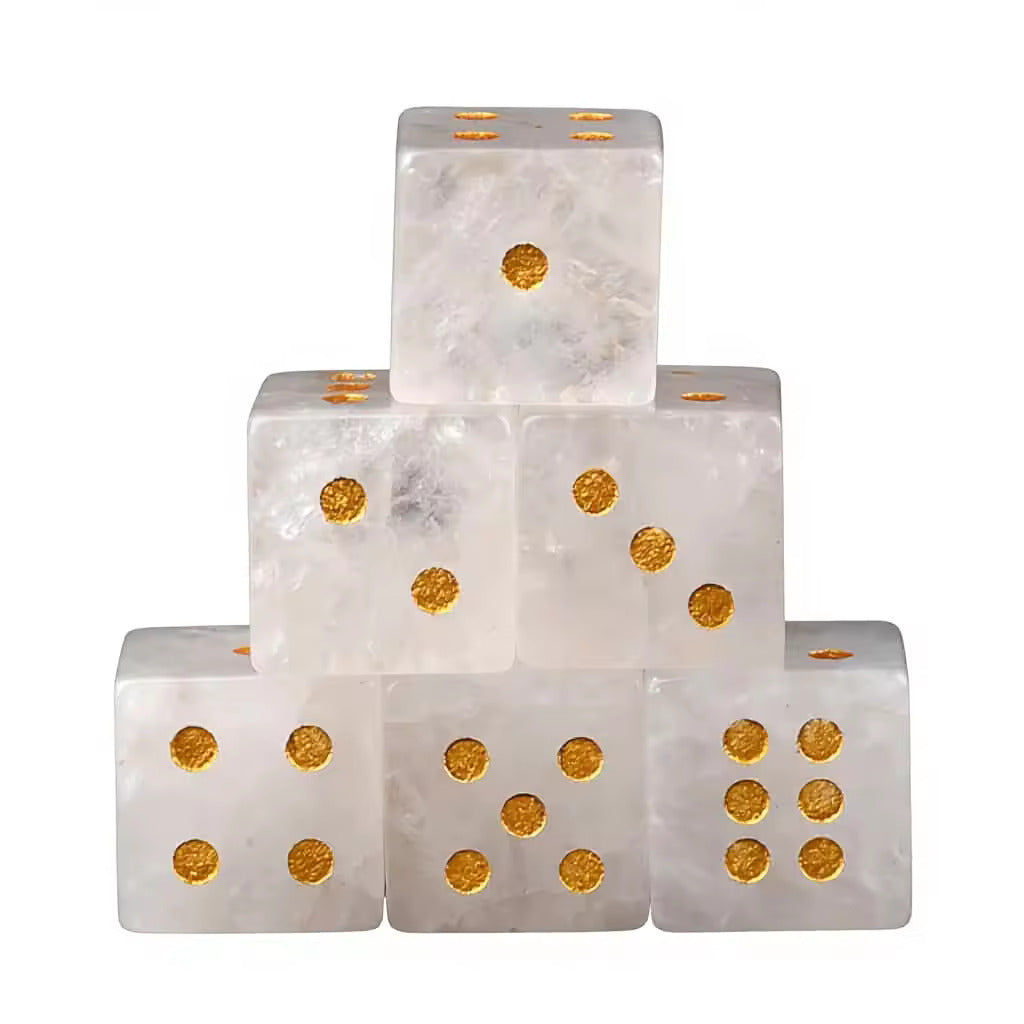
Teach poker players mahjong by framing it as a different probability puzzle, not a card game variant. Start with the core difference: mahjong has no sequences—only identical-tile groups (pungs, kongs) or special patterns from the yearly National Mah Jongg League card. Spend 10–15 minutes on the Charleston (tile-passing ritual), 20 on reading the card, then play one full hand with the card visible. Emphasize that unlike poker's position advantage, mahjong rotates winds each hand, so every player seats equally. Most poker players grasp the hand-matching logic in 30 minutes and are playing competitively within two games. Avoid comparing draws or bluffing—mahjong is purely about pattern recognition, tile tracking, and the luck of the draw. Use our best-selling mahjong sets with clear tile markings so new players read suits instantly.
Poker players already own two skills mahjong rewards: they track probabilities (which tiles are still in play) and they read the table (who's collecting what). But mahjong's rule set—no straights, a fixed-hand library, and a nightly card refresh—is alien enough that teaching it well means stopping analogies and starting fresh. We host games every week with players who came from card rooms and casinos, and the ones who learn fastest are those who dump their deck intuition and treat mahjong as its own discipline.
Why poker players struggle with mahjong's first rule
Poker brains scream for straights—1-2-3, 4-5-6 sequences you can build and call. American mahjong has no sequences at all. You win only by matching patterns printed on the current year's National Mah Jongg League card: triplets (three identical tiles), quads, quints, sextets, pairs, and special combos like "2024 dragons with terminals" or "consecutive pungs."
This breaks poker logic instantly. A 1-Dot, 2-Dot, 3-Dot hand is junk—it's nothing. Three 1-Dots is playable. Your job is to study the card before the game starts and commit two or three likely hands to memory, then steer your draws toward one pattern. A poker player's instinct to "see where my draw goes" becomes a liability; you must decide your target hand early. Spend 5 minutes as a group scanning the card together. Ask: "What hands use mostly Bams and winds?" "Where are the flower-heavy combos?" This primes pattern-matching instead of sequence-chasing.

The Charleston: your teaching moment
The Charleston is the tile-passing dance before round one—you swap tiles three times (right, across, left) and then pass any 13 remaining tiles back across. Poker players often see this as dead time. It's not.
Frame it this way: "In poker, you're dealt five cards that are half your story. In mahjong, you're gifting yourself fourteen tiles through four passes—you're buying into a hand actively." Teach the Charleston step-by-step:
Right pass: Take any 3 tiles from your hand and pass face-down to your right neighbor.
Across pass: Take 3 new tiles from your left neighbor, select 3 of yours, pass across.
Left pass: Take from left again, pick 3, pass left.
Kitty pass: Anyone passes 1, 2, or 3 tiles (or none) face-down to the center. No one sees these until the wall is depleted.
Poker players will try to "count" what you have mid-Charleston. This is pointless—the wall still holds 108 unrevealed tiles. Emphasize: the Charleston is intuition, not information. You're hedging bets on hands you've memorized. If you see an extra Green Dragon come your way, adjust your target hand. That's all. New players often second-guess their passes; tell them once tiles leave your hand, commit to your new tiles and stop analyzing—you'll paralyze yourself.
Once three players have played a Charleston, the fourth player (East Wind) does not pass right, since no one sits to their right; they pass across and left only. Mark this clearly on a scorepad.
Reading the card: pattern-matching beats probability math
The National Mah Jongg League card refreshes every spring and lists 100+ legal hands organized by suit, number of flowers, number of jokers, and tile count. Most beginners memorize 3–5 hands and win consistently.
Show your poker player a sample card section. Say: "This row means 'three Bam pungs plus a Crak pung plus two flowers, 14 tiles, no jokers needed.'" Now ask: "What hand beats this one?" They'll see that every hand has a unique tile footprint—you're solving a matching problem, not calculating odds. Poker players often grasp this faster than they expect because they're used to reading strength tiers.
Give each new player a pen and a printed mahjong card, and ask them to circle one hand they'd build if they drew mostly Craks and winds. They commit, keep it visible during play, and adjust only if they get a completely unexpected gift (a quint of Dots when they're chasing Craks, for example). This removes decision paralysis and teaches you what the table's likely competing for—critical intel poker players already value.
The hand-building mindset: abandon "outs"
In Texas Hold'em, you calculate outs—how many cards improve your hand. In mahjong, you have no outs: the card is fixed, your target hand is fixed, and you win if you complete it first. This is fundamentally different.
Teach it this way: "Your job is to pick a hand you're closest to and hold that line. Every tile you discard is a signal to the table about what you're not building. Don't discard a Bam unless you've truly abandoned Bams—because your left neighbor will collect Bams and beat you."
Poker players often discard defensively ("I'll drop this Green Dragon to slow the leader"). In mahjong, defensive discard strategy is weaker than defensive hand selection—you're safer chasing a hand no one else can build than you are throwing blind shots. Ask your table: "Who's collecting what?" If two players are chasing Red Dragons, the third player collecting Craks has an edge. This is table-reading, which poker players already do; you're just pointing the skill at a new problem.
Common mistakes we see every week
Here's the truth: poker players make the same three errors in their first five games.
Error 1: Holding tiles for sequences. A player draws 1-Dot, 2-Dot, 3-Dot and refuses to discard because "it's a run." Remind them: runs don't exist in American mahjong. If your hand doesn't use all three as singles or as part of a larger pung/kong, they're dead weight. Discard the tiles that don't fit your target hand, period.
Error 2: Over-calling. A player has a pung of 5-Dots and someone discards a 5-Dot, so they call it and expose their pung. Now the table knows exactly what they're building. In mahjong, you can only expose pungs, kongs, quints, and sextets if you're committing fully to that suit or number. Poker players sometimes call just to feel active. Sit with them and ask: "Does this exposure help your hand? Or does it telegraph your target to an opponent three turns ahead of their win?" Restraint wins more games than aggression.
Error 3: Confusing jokers. In American mahjong, jokers are wild tiles—they fill any slot in a pung, kong, or special pattern. But a joker cannot be a single tile or a pair. Poker players sometimes try to use a joker as a singleton "wildcard" for points. Wrong. Jokers only work inside groups of three or more. Reinforce this by reviewing how jokers actually work before your first game. One wrong joker use derails a beginner's entire hand.

Setting up your first teaching game: what you'll need
The table and tiles: You need a set of 160 American mahjong tiles with clear suit markings (Bams, Craks, Dots) and large, legible numbers. New players will squint; good tile contrast saves frustration. If you're hosting multiple games weekly, a durable mat keeps tiles from sliding and makes cleanup fast.
The wall: Teach your players to build a wall by stacking all 152 tiles face-down in rows, four high and 19 tiles per side. This is the pool from which the table draws. New players often misstack; have them practice once before the first hand. If you have racks with pushers, pass them out after the Charleston so players can organize their 14 tiles vertically and read them clearly.
The card: Print the current year's National Mah Jongg League card for each player or project it on a screen. Do not hand-wave the card. Mahjong is a rule-based game—the card is the rulebook. Refer to it constantly in your first games.
Scorepad: Keep a running tally of who reached 500 points first (that's one game). Poker players are used to chip counts; a written score sheet feels familiar and keeps everyone aligned on the goal.
What to grab | Why poker players need it | When to use it |
Printed card (4 copies) | Removes guesswork; pattern-matching replaces probability estimation | Before shuffle, during hand selection, at table disputes |
Organizes 14 tiles vertically; prevents accidental exposure | Right after Charleston; lasts entire game | |
Scorepad (pen) | Familiar format; reduces mental math | After each hand; tally to 500 points |
Dice (two) | Determines who's East (dealer) each round; fair allocation | Before Charleston; rotates after each hand |
Contains tiles; speeds cleanup; protects table surface | All game long; especially if you host weekly |
What to check before you buy a set for teaching
Tile readability: Mahjong tiles for teaching must have large, high-contrast numbers and suit symbols. If your set uses tiny print or pale colors, new players spend 40% of the game squinting. Look for sets with bold numerals and distinct suit icons (bird on 1-Bam, bamboo stalk on Bams, coins on Craks, circles on Dots).
Tile stability: American mahjong tiles are typically acrylic, bamboo, or ivory. Acrylic tiles are loud and slick—they slide into each other easily, which frustrates beginners trying to build walls. Bamboo and bone-composite tiles have slight texture and a quieter feel. If you're teaching in a casual setting, acrylic is fine; if you're hosting multiple weekly games, a middle-ground material (like quality acrylic with micro-texture) reduces noise complaints.
Completeness: Your set must include exactly 152 playing tiles and 8 jokers (American standard). Verify the box contents list before purchase—some older sets sold elsewhere are incomplete or include jokers that are hard to spot (especially jokers marked only with a small logo). A incomplete set halts a game mid-hand.
Storage: If you're teaching regularly, a storage bag or case saves setup time and keeps tiles organized. Loose tiles in a shoebox lead to lost tiles and a ruined game.
🎁 See our most-loved mahjong sets & accessories →](https://mahstead.com/en-us/collection/best-selling)
Your first hand: a step-by-step teaching script
Shuffle and build the wall. All 152 tiles face-down, stacked four high, 19 per side.
Seat players by wind. Roll dice to pick East (dealer), then sit East, South, West, North clockwise. East always goes first.
Draw opening hands. East takes 4 tiles from the wall, then each player (South, West, North) takes 4. Go around again so everyone has 8, then a final pass of 4 to East so East has 13, others have 13. East draws one more tile and starts with 14 (dealer advantage).
Run the Charleston. Right pass (3 tiles), across pass (3), left pass (3), then open kitty pass (1–3 or none). Everyone now has 14 tiles.
Read the card together. East picks a hand from the card, announces suit focus ("I'm building Bam pungs and Winds") so the table knows their intent. This transparency helps beginners—no bluffing.
East discards. East plays one tile face-up to the center. Now play rotates.
Other players draw/discard. Each player draws from the wall, looks at their hand, discards one face-up tile. If someone discards a tile that completes your exposed pung, you call "Mahjong" (or "Pung") and expose the group. Jokers can fill any slot.
First player to complete their card hand wins. They call "Mahjong," expose their entire hand, and score based on the card's point value (hand type + joker/flower bonuses).
Rotate winds. East seat rotates counterclockwise (East → North, North → West, West → South, South → East). New dealer draws opening hand again.
Play to 500 points. First to reach 500 wins the game.
Poker players often ask: "What if I don't have a call and it's my turn?" You simply draw from the wall and discard. There's no action outside the discard—no betting, no raises, no folds. This quiets the table and slows the pace just enough for beginners to follow. Use this first game to celebrate small wins ("Great read of the card!") and normalize mistakes ("Drawing wrong tile on a wall rebuild? Happens—replace it and move on.").
How to ease the scoring conversation
Scoring trips up beginners because the point value changes based on hand complexity, number of jokers, and number of flowers. Don't teach scoring in detail on game one; just keep the math simple: most beginner hands are worth 10–30 points. At the end of each hand, all non-winners pay the winner based on the card's value. Total points move toward 500.
For poker players, frame it as antes: "Everyone antes 5 points each hand to the winner." This feels natural to them. Once you've played three games, introduce bonus scoring (extra points for flowers, jokers, or special hand types). By then, players have pattern intuition and won't be overwhelmed by the point math.
If someone questions a hand or a score, refer to the full scoring rules after the hand ends, not mid-game. Keep early games moving and fun; rigor comes later.
✨ Find your Mahstead set — free US shipping →](https://mahstead.com/en-us/collection/best-selling)
Your weekly rhythm: scaling from one game to hosting
After your first teaching game, you'll know which players want to return. Poker players who learn mahjong often become loyal weekly players because the game combines luck, skill, and table dynamics in a new way. Here's how we structure recurring games:
Week 1–2: Two games, four players each. Alternate tables so teaching repeats if needed. Keep the card visible and time-outs short (max 2 min per play decision). Celebrate the first win loudly—it builds momentum.
Week 3–4: Shuffle groups or expand to six players (who plays four-handed mahjong in your group?) and introduce pair-play (partnerships). Poker players adapt to partnership strategy quickly once they understand individual hand-building.
Month 2+: Split into two rotating groups if demand grows. Advanced players help teach newcomers. You've now built a standing game.
🀄 Shop best-selling mahjong sets →

FAQ
Can I teach mahjong using Western playing cards instead of tiles?
No. Mahjong's hand library (printed on the National Mah Jongg League card) is tile-specific—each hand requires exact suit and number combinations that don't map to card ranks. Tiles are essential. Poker players may resist "learning a new game format," but the tile-based nature is exactly what makes mahjong a different puzzle worth solving.
How long does it take a poker player to play competitively?
2–4 games. Poker players already track probabilities (which tiles are played, which remain) and read table dynamics (who's chasing which suit). Once they stop looking for sequences and embrace the fixed-hand card, they're competitive immediately. Most reach 500 points within two evenings of play.
Should I let a beginner play with or without the card visible?
Always with the card visible for their first 5 games. The card is the rulebook and the strategic foundation. Hiding it slows learning and frustrates new players. Once they've memorized 3–5 common hands, they can play from memory, but always have a printed card at the table for disputes.
What's the biggest mistake a poker player makes on game one?
Calling a pung or kong too aggressively. In poker, aggression is rewarded. In mahjong, exposing your hand telegraphs your target to opponents who might block your winning tile. Teach restraint by saying: "You call only if that group is essential to your win plan—not just because you can."
Is four-handed American mahjong the only variant worth learning first?
Yes. Four-handed is the standard and the variant for which the National Mah Jongg League card is designed. Two- and three-handed variants exist but are much less common in casual settings. Start with four-handed—it's the game that will get you invited to clubs, seniors' groups, and home games across the country.
How do I handle a player who insists mahjong is too complicated?
Slow down and play one hand all the way through without scoring or rule complications. Let them see the rhythm: shuffle, wall, Charleston, draw, discard, expose groups, win. Most "too complicated" feedback comes from information overload, not actual difficulty. One hand, no pressure, no score-keeping on the first play, and the game clicks.


View More
View More
View More
