
Riichi Mahjong Push or Fold: When to Play Aggressively
Last updated: Nov 23, 2026
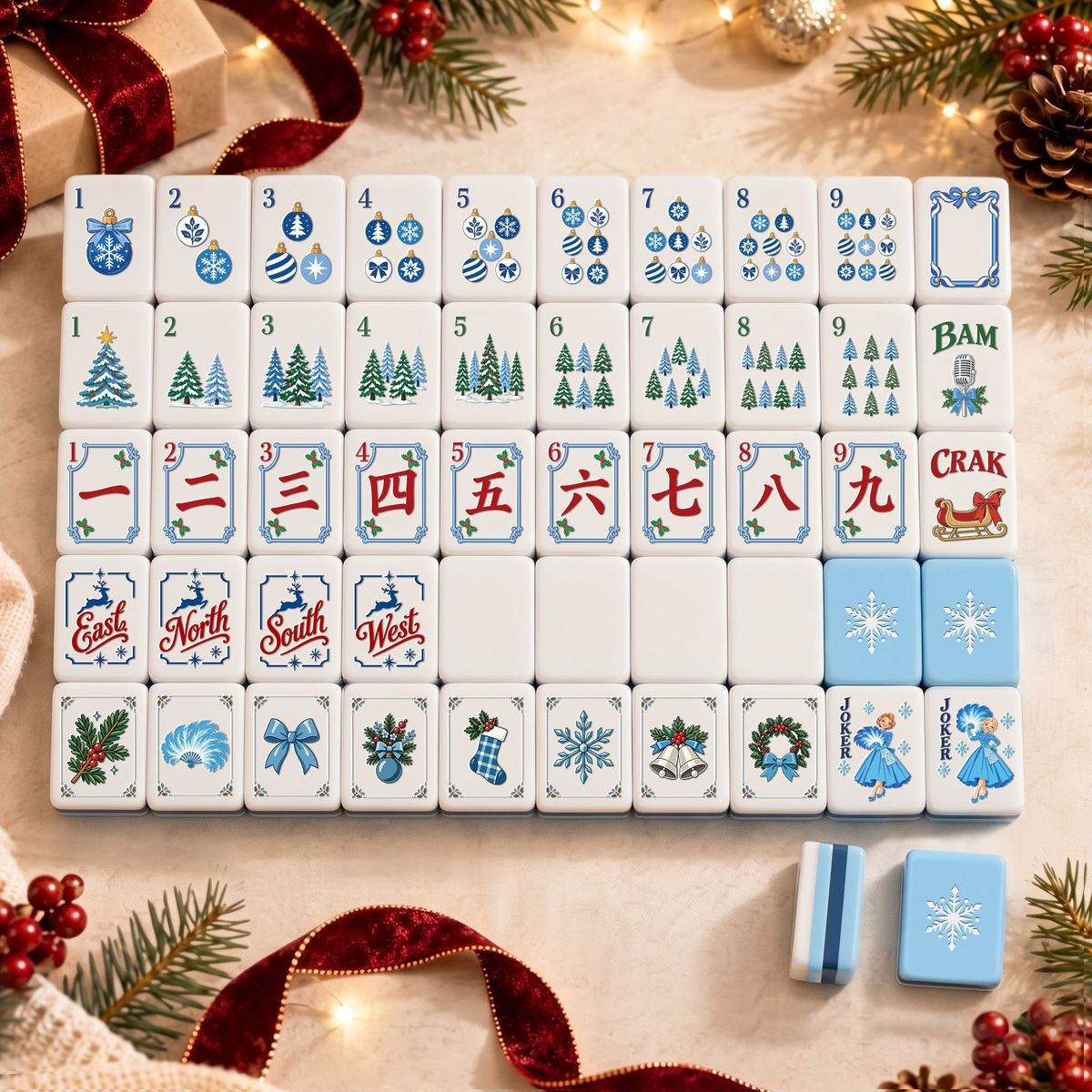
In riichi mahjong, "push" means discarding tiles that risk your hand's safety to pursue a winning combination; "fold" means discarding only truly safe tiles to minimize loss when others are closer to winning. Push early when you hold strong wait patterns (fewer tiles needed) and few opponents show ready hands; fold when multiple players have declared riichi or your winning tiles are buried. The decision hinges on tile counts—how many winning tiles remain unseen—and position relative to the dealer. Most players push too aggressively early, burning critical safe tiles, then fold too late when three players are one tile away. The framework: count visible waits across the table, estimate your draw probability against their speed, and adjust discard safety accordingly. Riichi differs sharply from American mahjong, which has no riichi declaration or real-time discard safety strategy—every hand plays to a fixed National Mah Jongg League card pattern. Hosting weekly riichi games requires a flexible tile set and a mat with clear position markers to track discards safely.
What does "push or fold" mean in riichi mahjong?
Push means you discard a tile that could be useful to others because your own hand is strong enough to justify the risk. Fold means you discard only tiles that are genuinely dangerous—tiles opponents have already discarded or that fit no obvious wait pattern. In riichi, players declare their intent to draw just one more tile to win; at that moment, everyone else must weigh risk against survival. Pushing prioritizes your own win; folding prioritizes preventing others' wins. Most hands demand a mix: you push early when you're closest to winning, fold when dealers and adjacent players have riichi.

How do you count visible winning tiles to decide?
Winning tiles are those that complete your hand. If you need a 5 Crak to finish, count how many 5 Craks you've seen discarded, are in your hand, or remain on the table. With eight 5 Craks in a 136-tile deck (riichi uses 4 tiles per rank), and five already visible, three remain unseen—your draw odds are low. Count for all players too: if someone discarded their 5 Crak, they needed it less; if they held it or called it, that tile is gone for you. A simple habit saves mistakes: after each discard, glance at the table and count suits and ranks that appear twice or more—redundancy signals safety. When three identical tiles sit in the discard pile, the fourth is either in someone's hand or in the remaining draw pile; riichi veterans use this to estimate live tiles and adjust push/fold calls instantly.
When should you push despite danger?
Push when your hand needs only one or two more tiles, no player has riichi, and the draw pile has many tiles remaining. This early-game window—typically within the first six draws per player—is your safest aggressive zone. Push also when you sit across from or behind the dealer (seating gives positional advantage in turn order); pushing forces them to react and may disrupt their own plans. Push hardest when your wait is "good shape," meaning multiple tile patterns win (two-sided wait: either a 4 or 5 completes your hand, not just a specific rank). Avoid pushing if you're the youngest player (furthest from the dealer's turn) and two players already have riichi; the dealer will act first on each draw, and you'll face a long wait cycle with high loss risk. Push is also wise when your hand shows no obvious blocking patterns—if you're already unsafe, pushing to accelerate your own win often costs less than slowly folding into someone else's victory.
What signals mean it's time to fold hard?
Fold immediately if a player declares riichi or if three identical tiles appear in the discard row. Riichi signals a single-tile wait; three matching discards mean the fourth is dangerous. Fold harder if the discard row clusters around one suit (too many Bams, too few Craks): opponents are using that suit to build waits, and your Bams become liabilities. Fold when the dealer or a left-neighbor player shows an unusually clean, rapid discard pattern—they're discarding redundant tiles, suggesting they're ahead. If you've seen four of a tile type in the discard row, discard another of that type freely; opponents can't win with it. Fold ruthlessly in the "danger zone," the final ten draws of the round, when unopened tiles shrink and push becomes suicidal. Most hands in this zone are decided; defensive discard accuracy matters more than chasing a low-probability win.
Scenario | Push Score | Fold Score | Reasoning |
You need 1 tile, no riichi around, 80+ tiles left | 9/10 | 1/10 | High win probability, low loss cost. |
You need 2 tiles, one player riichi, 60 tiles left | 5/10 | 5/10 | Balanced: riichi is a threat but you're competitive. |
You need 3+ tiles, two players riichi, 40 tiles left | 2/10 | 8/10 | Riichi speed outpaces your draw; folding minimizes loss. |
Your winning tile is 75% visible (3 of 4 seen), two players riichi | 1/10 | 9/10 | Your tile is nearly dead; fold to survive. |
Early round, you have good shape, dealer position, no riichi | 10/10 | 0/10 | Textbook push: speed, safety, and positional edge. |
How do position and dealer status change the math?
In riichi, the dealer (East) acts on every draw before other players; this turn order advantage makes dealer push mathematically sounder than others' push. If you're the dealer with a strong hand, push harder—you draw before West, North, South, so you'll see your winning tile sooner if it's live. Reverse: if you're South (last to act), a riichi-declared player draws before you, and their win threat materializes before your draw. Sitting behind the dealer (West) is compromise: you can react to their discard but act before North and South. Most players ignore position bias and push equally from all seats; riichi veterans adjust their push threshold downward for South and upward for East. A hand needing two tiles looks aggressive from East but defensive from South with a riichi dealer. Before each hand, note seat rotation; your push-fold plan adjusts with it.

What's the biggest beginner mistake with push or fold?
Beginners push too much early and fold too late. They fear missing a win they can see forming, so they burn safe tiles chasing a riichi call—then face an exposed hand and must fold everything later, losing anyway. By contrast, advanced players concede marginal hands early, fold decisively while tiles remain safe, and push only when the math heavily favors them. A concrete error: holding three 1 Bams and seeing the other 1 Bam discarded. A beginner thinks, "1 Bam is safe" and discards a 4 Crak; the 4 Crak was actually live and completes an opponent's wait. They pushed with false confidence. The fix: after every discard, ask, "Is this tile already visible three times?" If no, discard it. If yes, discard freely. Safe-tile discipline beats hand-watching intuition.
To host riichi games with confidence, set up a mat with clear position markers to track discard piles and manage the psychological space around riichi calls.
🀄 Shop best-selling mahjong sets →
Decision checklist: Push or fold right now?
Use this before every discard:
Count tiles remaining: _____ (fewer than 20 left? fold more).
How many players have riichi? _____ (two or more? fold).
How many winning tiles are live? _____ (three or fewer? fold).
Are you dealer or sitting behind dealer? Yes / No (Yes? push easier).
Is your wait one-sided or two-sided? One / Two (Two-sided? push).
Have you seen three copies of a tile you're considering? Yes / No (Yes? safe to discard).
Answer each in 10 seconds. If two or more answers favor folding, fold. If three or more favor pushing, push. A tie: discard your least-wanted tile, not your safest one.
✨ Find your Mahstead set — free US shipping →
Riichi vs. American mahjong: push-or-fold dynamics
American mahjong has no riichi mechanism—every hand is played to a published card pattern, and all hands are equally valid until the round ends. There is no in-hand declaration of intent, no real-time discard safety strategy, and no concept of being "closed" (pursuing a single tile). This eliminates push-or-fold decision-making entirely. In American play, discard safety revolves around the card: expose only pungs, kongs, and legal patterns; never hold an unmatched pair exposed. By contrast, riichi mahjong is a live conversation between all four players' hands and intentions. American mahjong rewards pattern recognition and card knowledge; riichi rewards probability judgment and psychological reading. If you rotate between American and riichi games, remind yourself: American discard safety is static (follow the card); riichi discard safety is dynamic (count visible tiles and adjust moment by moment). The variants demand different skill sets. Many players enjoy both but struggle to switch mindsets quickly; the clearest way to stay sharp in both is hosting separate weekly groups rather than mixing them.
🎁 See our most-loved mahjong sets & accessories →
What to check before you buy a riichi tile set
Riichi mahjong uses 136 tiles (four of each rank, 1–9 in three suits; winds and honors to fill the deck). Make sure any set you buy lists a full 136-tile complement and includes clear suit markings (suit symbols or colors that distinguish Bams, Craks, and Dots without squinting). Acrylic tiles with printed icons are easiest to read during fast play; bone and bamboo sets are heavier and slower but traditional. Check that the set includes a wind indicator token (East marker) and a draw wall reference guide—both critical for tracking seat rotation and draw order. If you host regularly, mahjong racks with pushers and durable mats improve play speed and reduce tile-counting errors by letting players organize their hands cleanly. Avoid sets with ambiguous dragon or honor markings; in riichi, misreading an honor tile mid-hand is costly.

FAQ
If I see three copies of a tile I'm about to discard, is it always safe?
Yes. The fourth copy is either in someone's hand (already locked away) or not yet drawn. Discarding a tile with three visible copies cannot complete an opponent's current wait.
How many tiles should be left in the draw pile before I stop pushing?
Fewer than 15 tiles remain unseen, and most waits are now unrealistic. Fold unless your hand needs only one tile and you're dealer.
Can I push if I'm one player away from the dealer but they just discarded riichi?
Riichi status matters more than position. If the player before you declared riichi, fold everything except absolute safe tiles until the hand resolves.
What's "good shape" and why does it matter for push decisions?
Good shape means your hand can win with multiple tile types, not just one. A two-sided wait (4 or 5 both win) is good; a one-sided wait (only 5 wins) is weak. Good shape makes pushing safer.
If I folded aggressively in the last two hands and lost, should I push harder now?
No. Push or fold based on this hand's math, not recent outcomes. The "hot hand" fallacy kills riichi bankrolls. Stick to the checklist regardless of streak.
How do I know if an opponent's discard pattern means they're pursuing a specific suit?
If they've discarded five tiles of one suit and kept few, they're probably using another suit to build their hand. Discard the suit they're abandoning.


View More
View More
View More
