
Chinese Mahjong Big Hand Strategy: Tile Reading and Risk
Last updated: Nov 23, 2026
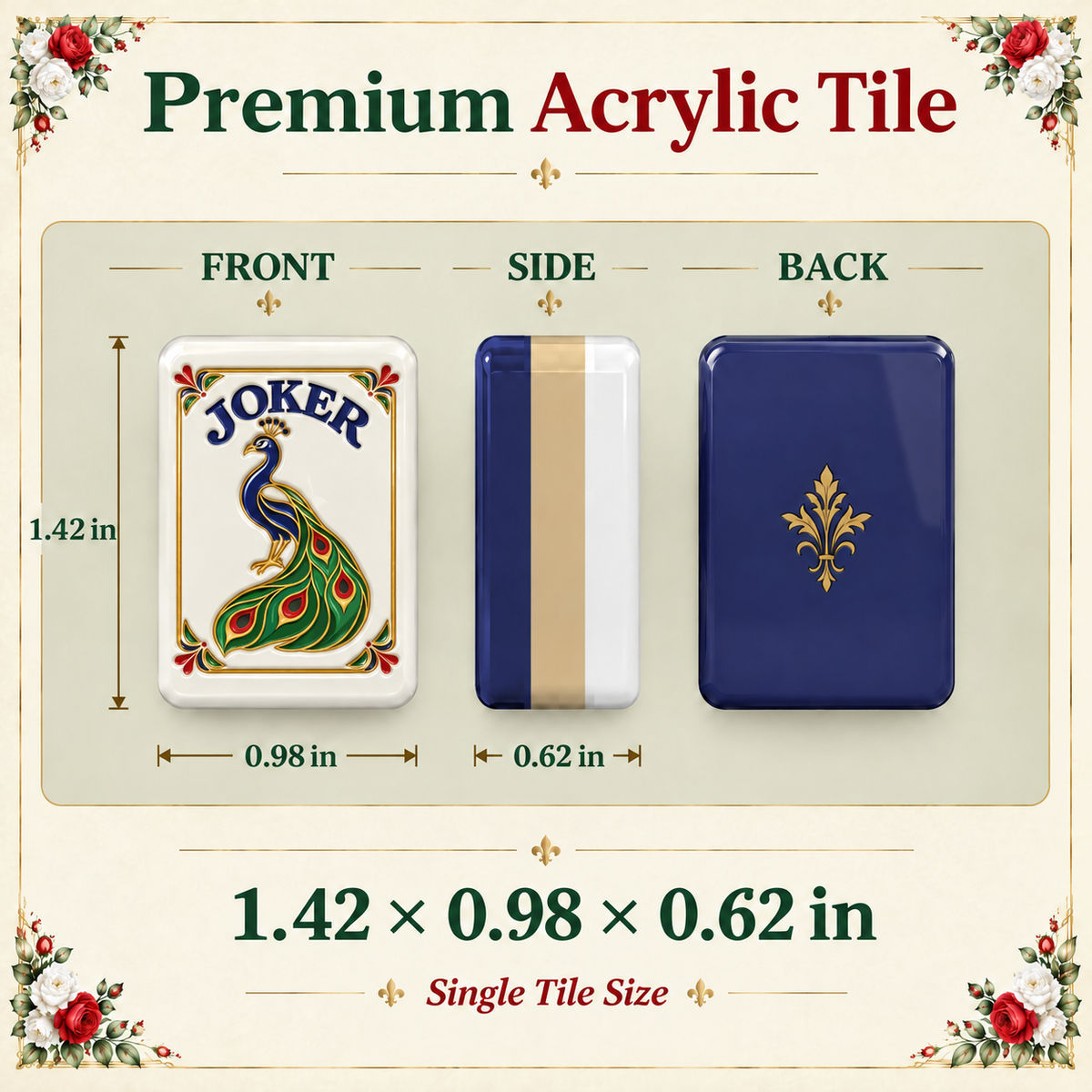
Chinese mahjong big hand strategy hinges on three moves: first, identify which high-value hand patterns are still mathematically possible given visible discards and draws; second, track which tiles your opponents need and avoid feeding them; third, know when to pivot to a simpler hand if your big hand dies. Unlike American mahjong, which locks players to the published card each season, Chinese mahjong players call melds immediately (pungs, chows, kongs), exposing tiles and shrinking the pool of unknown cards. A big hand typically waits 8–12 turns, accepting slower rounds to claim 16–24 points instead of 4–8. The risk: if three players discard safely, you draw dead tiles and fold with zero points. Winning requires reading discard patterns (what others fear losing), counting remaining tiles in each suit and rank, and recognizing when three identical tiles have already appeared—signaling your quint or kong is impossible.
🀄 Shop best-selling mahjong sets →
Why Chinese mahjong big hands differ from quick wins?
A quick win takes 4–6 turns and scores 2–4 points; a big hand waits 10–14 turns for 12–24 points. Speed favors safety—fewer draws mean fewer chances opponents block you. Big hands require exposing melds early (calling pungs and chows aloud), which telegraphs your strategy but locks in half your hand before draw chaos deepens. You trade concealment for a locked path to a high score. The payoff is mathematical: one big hand win offsets three or four quick losses in a session, but only if you finish it.

How do you spot a dead big hand before losing?
Dead hands appear when three or four identical tiles surface in discards before you own them. Count visibles: if you need three 5-Craks and two already walked past you, that hand dies—pivot now. Also watch opponents' calls: if East player just claimed a pung of 8-Dots and you were counting on that rank to complete a chow, recalculate immediately. A third signal: if you hold 14 tiles with no clear path to a pair and melds, you're not one draw away—you're four or five draws away, and the table will block you by then. Quit by turn 10 if you haven't exposed at least two melds and don't hold the pair and one complete meld. Continuing costs you 1–2 points per turn in discard liability while you wait.
What tile-tracking system helps you win?
Track three columns mentally: (1) What I need, listed by suit and rank with a target count. (2) What's visible, counting each tile type in melds on the table and in all discard piles. (3) What's impossible, marking any tile that has already appeared three or four times. Cross off your need list when three copies are gone. If you need two red dragons and three are already exposed, your big hand containing red dragons is dead—simplify to an all-Bam or all-Dot hand instead. Write nothing down in formal play, but in friendly rounds a tally sheet near your rack speeds decisions. This system takes three games to internalize; by the tenth game, you'll spot dead hands in turns 6–8, not turn 13.
What patterns score highest in Chinese mahjong?
Pattern | Points | Tiles | Risk Level |
All one suit (tanyao variant) | 16–24 | 14 same suit | Very high; many competitors chase it |
All honor tiles (dragons, winds) | 24–32 | 14 honors | Extremely high; rare; table blocks hard |
Pung of honors + melds | 8–12 | 3 identical honors | Medium; common pivot target |
Chow-heavy hand (all sequences) | 6–10 | 3 chows + pair | Low; easy to block |
Kong + pung (5 + 3 identical) | 12–16 | Kong + pung | High; wait time justified |
All-suit hands (tanyao) reward waiting: one suit has 34 tiles total (if using a 144-tile Chinese set), and you need 14 of them plus a pair. But three opponents know this too, so Craks dry up fast. Honor hands (winds and dragons) offer 28 tiles and score highest, but you're competing directly—when another player calls their first honor pung, you've lost four tiles from your pool. Mid-tier patterns (pung of dragons + two melds in Dots, for example) balance point value (12–16) against availability; these win most big hand rounds because they don't saturate the table.
🎁 See our most-loved mahjong sets & accessories →

How do you read opponent discards to avoid feeding them?
Every discard tells a story. If West throws a 3-Crak on turn 4, West either doesn't want 3-Craks or has too many and plays redundantly. If West later discards 4-Crak and 5-Crak, West is abandoning Craks entirely—safe zone. But if West throws a 7-Bam and then suddenly a 9-Bam appears from East, and you hold 8-Bam, stop throwing Bams: someone is chasing a Bam sequence. Watch honor tiles hardest: if North discards a green dragon, North probably needs red or white for a pung or is fleeing honor hands. If three green dragons appear in discards before anyone calls a green pung, the fourth green is dead—anyone holding it wastes a tile slot. Use this: match discard speed. If you're waiting for a big hand, throw tiles that landed recently in other piles (safe, no one chased them); if opponents are hunting, you throw old discards to bury the pattern. This reading earns 2–3 extra rounds per session by avoiding crashes.
When should you switch strategies mid-hand?
Pivot when: (1) Two copies of a critical tile have already been discarded. (2) An opponent calls a meld that overlaps your target tiles. (3) You've passed turn 10 without a complete meld and only draw one new tile per turn. (4) Three players have discarded so safely that the deck is running dry (fewer than 40 tiles remain). At that point, win with a simple hand: any two-pung-plus-chow combination scores 4–6 points fast and saves face. Switching mid-hand is not defeat; it's math. If your odds drop below 20% by turn 12, a 4-point fast hand beats a 0-point fold. Pro players pivot twice per session; beginners cling to big hands and lose 8 points overall. Practice this: keep a "pivot hand" in mind from your first draw—a secondary pattern worth 6–8 points that uses 70% of your big hand tiles. When big hand dies, your pivot is already half-built.
✨ Find your Mahstead set — free US shipping →
What to check before you buy a Chinese mahjong set
A Chinese set typically has 144 tiles (36 per suit, 16 winds, 12 dragons, 8 flowers). Check tile size: 25–30 mm wide tiles are standard and easy to read quickly—critical during fast-paced call rounds. Ensure corner indexing (small suit symbols in two corners) so you can fan your hand and read ranks without opening it fully. Test the acrylic or bamboo: bamboo scratches under heavy play and sounds loud; acrylic lasts longer and offers quieter games. Verify the case: games with frequent big-hand waits (8–12 turns per round) mean you'll transport sets weekly. Look for a travel-friendly bag or hard case. Read the manual for local rules: some regions play with no flowers, others with three jokers; one rule difference switches your strategy completely. Finally, ensure all 144 tiles are present—Chinese sets don't include spare tiles, so missing even one breaks future games. Mahstead's best-selling collection carries 160-tile acrylic sets built for durability and clarity in fast American games; if you're bridging to Chinese play, verify your set's tile count and marking style before your first session.

FAQ
What is the biggest mistake when chasing a big hand?
Throwing a tile an opponent just discarded, hoping it's safe. They threw it for a reason—you missed the signal. If someone discards a 6-Dot, immediately asks for a tile from the deck, and then discards a 7-Dot, they're signaling Dot danger. Your 5-Dot might complete their chow. Wait and read the next two discards before trusting one tile is truly safe.
How many turns should I wait before pivoting to a simpler hand?
By turn 12 in a 144-tile Chinese game, you've seen roughly 36 tiles (your 13 + discards). If your big hand still needs four specific tiles, your odds of drawing one in the remaining 10 turns drops below 25%. Pivot at turn 10 if you lack two complete melds and a clear pair. Waiting past turn 12 costs points faster than abandoning early.
Can I build a big hand if I'm East and have first draw advantage?
Yes—East draws first and calls melds first, giving a 1–2 turn head start over South, West, North. That cushion makes big hands 15% more likely to complete. But East also discards first, giving opponents immediate data on your strategy. Other players read East's choices more carefully, so you gain speed but lose concealment.
What's the difference between a "big hand" in Chinese mahjong versus Hong Kong mahjong?
Hong Kong mahjong scores hands on point values (fans), not points-per-hand. A hand with 5 fans scores roughly 16–24 points, but the scoring is more granular. Chinese mahjong uses simpler point tallies (2–24 points per hand). Hong Kong demands more precision; one fan difference swings the payout. Both reward patience—Hong Kong big hands wait similar lengths but attract bigger payoffs if you win.
How do I know if my big hand is actually possible given the tiles I can see?
List every tile you need (e.g., three 5-Bams, two 7-Dots, two white dragons). Count how many of each have been discarded or called in melds. Subtract from four (the max copies). If fewer than the number you need remain in the unseen deck, that hand is dead. Example: you need two white dragons; three have been discarded; only one remains hidden—your hand is broken. Spot this by turn 6–8, and switch patterns immediately.


View More
View More
View More
