
How to Play Siamese Mahjong: Rules, Tile Count & Setup
Last updated: Nov 23, 2026
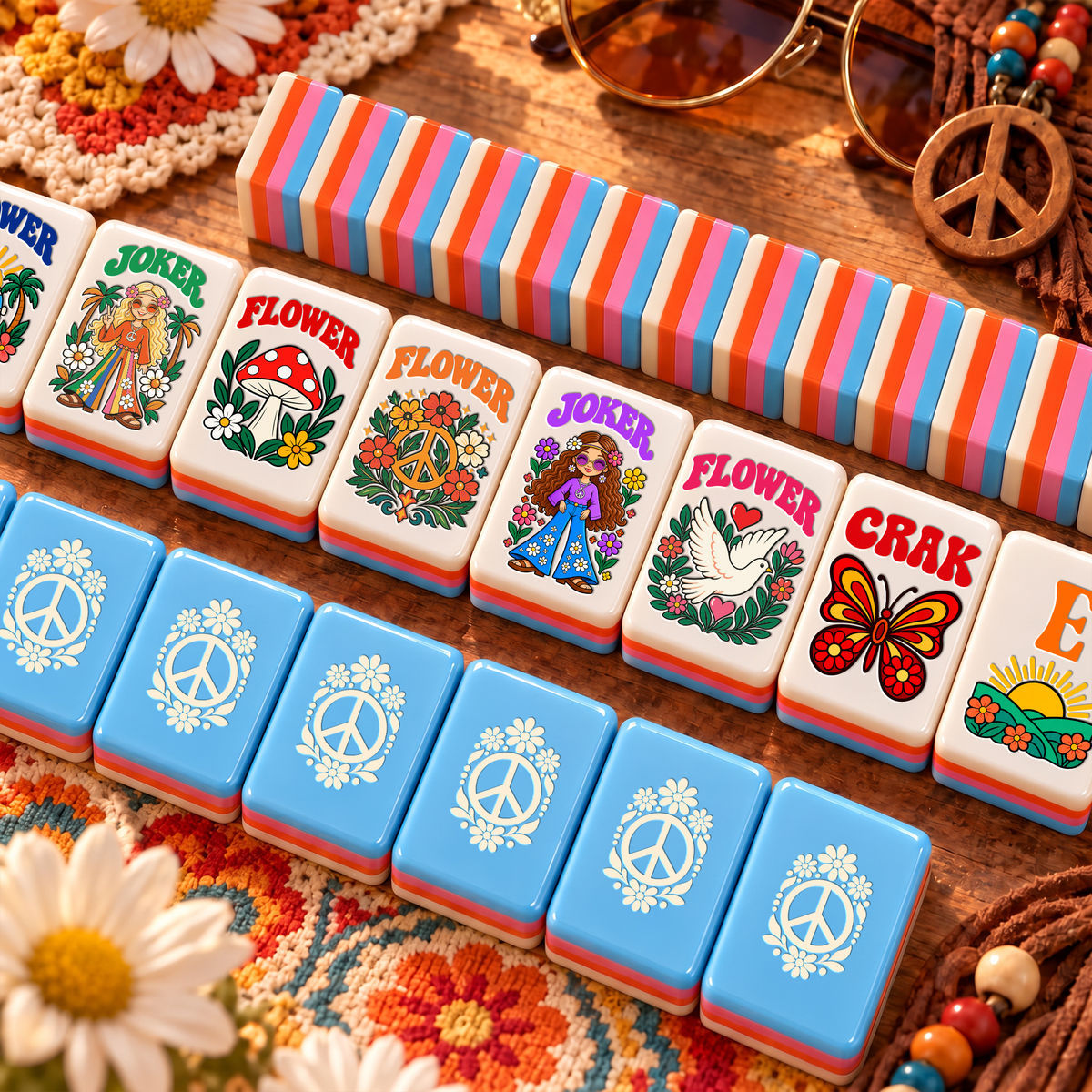
Siamese mahjong uses 136 tiles—three suits (Bams, Craks, Dots numbered 1–9, three copies each = 81 tiles), four winds, four dragons, and eight flowers (each appearing twice). Unlike American mahjong, there are no jokers, no Charleston, and hands form from melds of identical tiles only (pungs, kongs, quints). Players draw from a wall and discard; winning requires a complete hand of melds plus a pair, with flowers counting as bonus tiles that trigger replacement draws. Games typically last 15–25 minutes per round. Siamese mahjong emphasizes speed and flower luck over hand selection from a yearly card. If you're used to American play, expect a simpler tile pool but stricter meld rules and faster decision-making. Our best-selling mahjong sets work well for learning variants because their clear tile faces help new players read suits quickly. 🀄 Shop best-selling mahjong sets →
What tiles do you need for Siamese mahjong?
Siamese mahjong requires exactly 136 tiles: 27 per suit (Bams, Craks, Dots in numbers 1–9, three of each), 16 winds (four each: North, East, West, South), 12 dragons (four Red, four Green, four White), and eight flowers (four each of two types, or one flower per player paired with one universal flower). Unlike American mahjong's 152-tile standard, Siamese uses fewer tiles and no jokers, which speeds up wall depletion and creates a tighter hand-drawing rhythm. You cannot substitute or add blanks to reach American tile count—Siamese sets are purpose-built for the 136-tile format, and mixing tile types breaks meld recognition and hand speed.

How do the flowers work in Siamese mahjong?
In Siamese mahjong, flowers are bonus tiles drawn immediately upon picking or claiming one. When you draw a flower, you set it aside (it doesn't count toward your 14-tile hand), then draw a replacement tile from the wall's bonus section or from the live draw. If your replacement is also a flower, you immediately draw again; this chain continues until you draw a non-flower tile. Flowers never form melds and are worth bonus points at win, typically 10 points each. This mechanic is radically different from American mahjong, where flowers don't exist; it also differs from Chinese mahjong, where flowers replace a drawn tile but don't trigger additional draws. The result is that Siamese games reward flower luck heavily—a player drawing three flowers in one turn gains a strong hand advantage and faster tile cycling.
What hand patterns win in Siamese mahjong?
A winning hand in Siamese mahjong consists of four melds (each a pung, kong, or quint of identical tiles) plus one pair, totaling 14 tiles. You cannot use sequences (chows) like 1-2-3; every meld must be identical ranks. The pair must be two identical tiles (never mixed ranks). Flowers counted separately earn bonus points but don't substitute for melds. For example, a winning hand might be three 5 Dots, three 2 Craks, three West winds, four Red dragons, plus a pair of 7 Bams, with one bonus flower. Scoring varies by region—some count flowers as +10 per tile, others double or triple points for kongs (four identical) versus pungs (three identical). Unlike American mahjong, where hands come from an annual league card, Siamese mahjong has fixed win patterns; all players use the same winning combinations, so learning one hand applies to every game.
How does play flow—draw, claim, and discard?
Play starts with the dealer (East wind) drawing 14 tiles; other players draw 13 each. East discards first, then players move counterclockwise (in most Siamese variants). On your turn: draw one tile, check for flowers (draw replacements as needed), then either form a meld by claiming a discard from another player or discard one tile face-up. Claims are "pung" (three), "kong" (four), or "quint" (five) of the discarded tile rank—you call the claim, add the claimed tile to your set, and discard a tile to rejoin play. If no one claims a discard, the next player draws from the wall. The wall shrinks throughout the round; when it depletes, play ends and points are tallied (or the round is void, depending on house rules). Speed matters: Siamese mahjong games move faster than American games because the tile pool is smaller and hand requirements are fixed, not card-dependent.
How does Siamese mahjong scoring differ from American mahjong?
Siamese mahjong uses a points-per-meld system rather than American mahjong's complex scoring card. A base win is typically 1 point; bonuses stack for kong (2–4 points per kong), flowers (10 points each), and self-drawn wins (drawn your own winning tile, not claimed from a discard—usually double base points). Some regions award bonus points for all-identical-suit hands or speed bonuses if play finishes before the wall depletes halfway. American mahjong scoring requires consulting the National Mah Jongg League card every hand and involves intricate multipliers—Siamese mahjong is transparent and fast. The lack of a reference card means players memorize scoring quickly; a typical round of four players might resolve 6–8 scoring questions per game compared to 2–3 in American play because the rules are fewer and more standardized. Settle points in cash or chips immediately after each win.

What are the most common mistakes Siamese players make?
Forgetting flower replacement draws: Beginners often pick a flower, set it aside, then draw a regular tile without checking whether that tile is also a flower. Always draw your replacement immediately and check it before moving to the discard phase.
Mixing up identical vs. sequence melds: Coming from American or Chinese mahjong, new players sometimes try to claim a 3 when they hold 1-2 hoping for a sequence. Siamese mahjong has no sequences—all melds must be exact duplicates. If you hold 1 and 2, they're useless together.
Claiming out of turn: In some house variants, only players in certain positions can claim a discard; confirm position-claim rules before starting. Most Siamese variants allow any player to claim, but some regions restrict claims to the next player only.
Discarding too many honor tiles early: Winds and dragons are harder to meld (fewer copies in play than number tiles), so holding them early signals weakness to other players. Discard them early unless you have a clear pair or partial meld forming.
Ignoring wall depletion: When fewer than 10 tiles remain in the wall, most Siamese variants end the round. Don't waste time forming melds if the wall is nearly gone; speed up and push for a win or accept the void round.
Decision Framework: American Mahjong vs. Siamese Mahjong
Factor | American Mahjong | Siamese Mahjong | What This Means |
Tile count | 152 (+ 8 jokers) | 136 (no jokers) | Siamese wall depletes faster; fewer tiles per player |
Tile copies | 4 per rank | 3 per rank (mostly) | Fewer pung options; ties break more often in Siamese |
Hand source | Annual league card | Fixed patterns (any 4 melds + pair) | American needs card reference; Siamese memorizes patterns |
Sequences (chows) | Allowed, can be exposed | None allowed | American offers more hand variety |
Flowers | Don't exist | Bonus tiles, trigger replacement draws | Siamese adds luck element; American is pure skill |
Jokers | 8 in play, essential | None | American sets are more flexible; Siamese games move faster |
Scoring | Card-based multipliers | Points per meld + bonuses | American scoring takes longer; Siamese is instant |
Charleston | Required pre-game ritual | None | American adds 10–15 min prep; Siamese starts immediately |
Game length per round | 20–45 min | 15–25 min | Siamese is faster-paced |
What to Check Before You Buy a Siamese Mahjong Set
Tile count: Confirm the set has exactly 136 tiles or label indicates "Siamese" format. Standard American sets (152 + 8 jokers) won't work.
Flower count: Check that flowers appear twice (or one per player variant). Some Asian sets mix flower types or counts.
Suit clarity: Ensure Bams, Craks, and Dots are visually distinct. Siamese play relies on quick suit recognition because games move fast.
Tile thickness and weight: Lighter acrylic tiles suit casual play; heavier tiles with edge wrapping last longer in weekly games.
Wind/dragon markings: Verify that winds and dragons are clearly labeled in English or your local language to avoid mid-game disputes.
Storage included: Siamese sets often come in cloth bags; check that the bag fits 136 tiles plus a tile holder or rack.
If you're learning Siamese mahjong alongside American play, a best-selling set with clear acrylic tiles makes tile recognition faster during transitions. Once you've mastered Siamese rules, consider exploring other variants—mahjong mats with printed rules for multiple variants can reduce setup confusion when hosting players of mixed skill levels.
🎁 See our most-loved mahjong sets & accessories →
Why Siamese mahjong appeals to experienced players
Siamese mahjong strips away the annual-card dependency of American play, making it ideal for travelers or players who want a rule-light variant they can teach on the spot. The smaller tile pool and flower mechanic create tighter decision-making; every discard signals intent, and every claim reshapes the wall. Experienced American mahjong players often find Siamese games more dynamic because there's no "safe" discard strategy—luck (flowers) balances skill (meld timing and position awareness). The fixed hand patterns mean new players can join mid-session without needing a current-year card reference, making Siamese mahjong a go-to for casual or tournament play in regions where American play isn't established.
✨ Find your Mahstead set — free US shipping →

FAQ
Can I play Siamese mahjong with an American mahjong set?
No. American sets have 152 tiles plus 8 jokers and four copies of most ranks; Siamese uses 136 tiles with three copies of number tiles and no jokers. Tile count mismatch breaks meld recognition and wall math. Use a Siamese-format set.
What's the minimum number of players for Siamese mahjong?
Four players is standard. Three-player Siamese variants exist (using 102 tiles, removing one wind suit), but rules vary widely by region. Confirm house rules before starting with fewer than four.
Do I have to play counterclockwise in Siamese mahjong?
Most Thai and Southeast Asian variants play counterclockwise (East draws first, then South, West, North). Some regions play clockwise. Agree on direction before the Charleston or first draw.
How do I know if I've won in Siamese mahjong?
Call "mahjong" when you hold four complete melds (pung/kong/quint) plus a pair totaling 14 tiles. Self-drawn wins are declared when you draw your own winning tile; claimed wins are declared immediately after claiming a discard. No hidden melds—all must be revealed simultaneously.
Is Siamese mahjong easier than American mahjong?
Siamese has simpler rules and faster gameplay but higher luck (flowers). American mahjong requires memorizing an annual card but rewards pure strategy. Siamese is easier to teach; American is easier to master strategically.
Where can I find Siamese mahjong partners to play with?
Check community centers, universities with Asian studies programs, temples or cultural centers in areas with Thai, Laotian, or Vietnamese communities, and online mahjong forums. Local meetup boards often list regional game groups.


View More
View More
View More
