
What Set Do You Need for Korean Mahjong?
Last updated: Nov 23, 2026
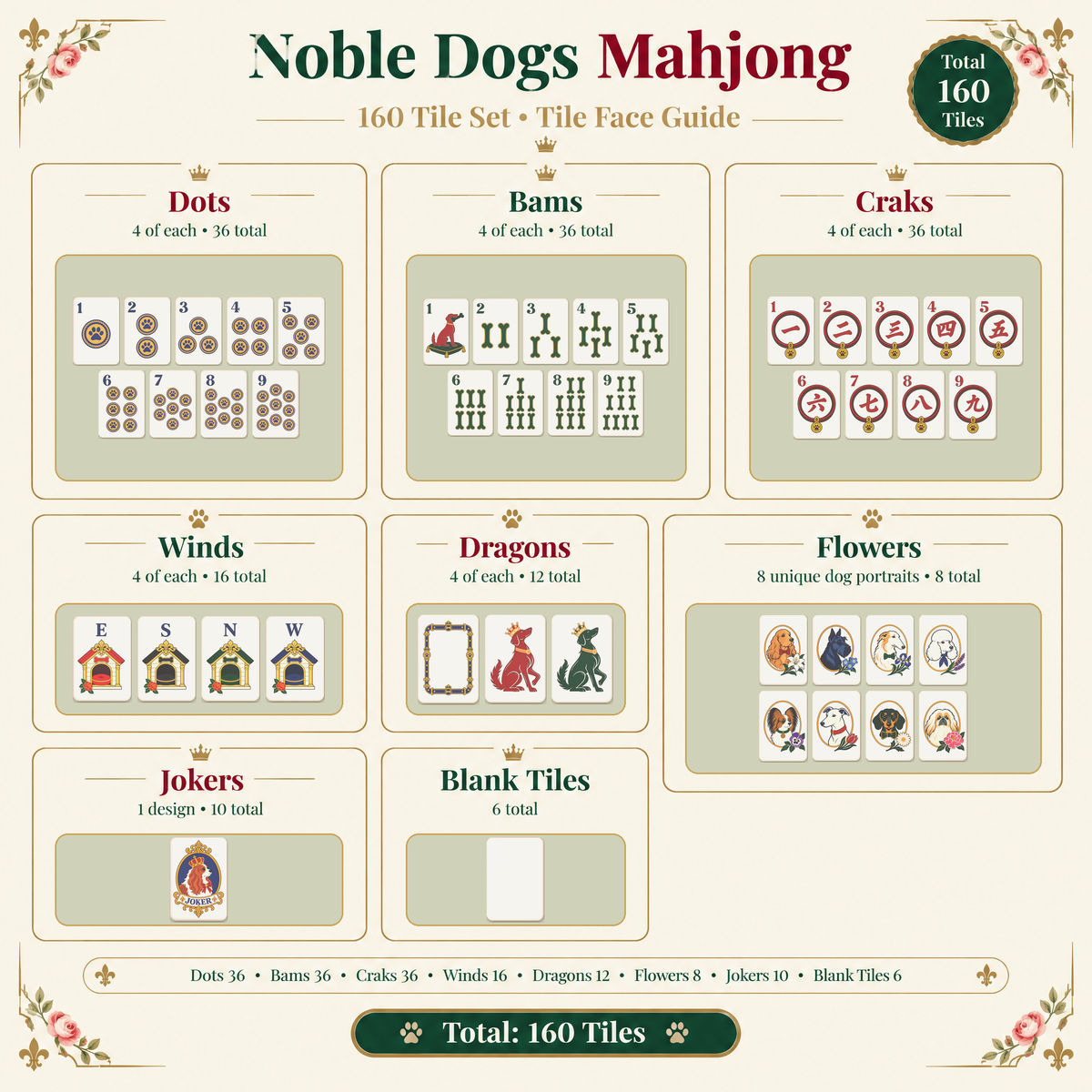
Korean mahjong uses 144 tiles—the same count as classical Chinese play but different tile inventory than American mahjong's 152-tile standard. A Korean game requires Bams, Craks, Dots (numbered 1–9 in each suit), winds (N/E/W/S), dragons (Red, Green, White), and flowers; jokers and blanks do not exist in Korean play. Hands are built from the current year's rulebook rather than a seasonal card. Since Korean games play with exposure of melds (pungs, kongs, and chows—sequences that American play forbids), the tile face design and tile size matter more than in American sets. Most Korean players purchase either dedicated Korean sets or adaptable Chinese 144-tile sets from specialty retailers. Mahstead's best-selling mahjong sets are engineered for American rules, so Korean players typically source from vendors focused on that variant. What to avoid: assuming American and Korean sets are interchangeable—they are not.
How does Korean mahjong differ from American mahjong tiles?
Korean mahjong omits jokers and blanks entirely, using exactly 144 tiles with no spares. American mahjong adds 8 jokers and 8 blanks (in our 160-tile sets) and forbids sequences; Korean and Chinese variants allow chows (1-2-3 sequences exposed on the table). Korean tiles are often narrower and taller than American acrylic tiles, designed for faster flipping and stacking. If you play Korean rules, an American set will feel awkward and confuse other players at your table. Tile thickness and weight differ too—Korean sets favor speed and precision over the tactile heft American players prefer.

What size and material works best for Korean play?
Korean mahjong tiles are traditionally bamboo or bone with hand-painted details, though modern plastic and acrylic sets exist. Tile dimensions run narrower (roughly 1 inch wide versus American mahjong's wider face) to enable rapid single-hand shuffling and stacking. Material choice affects speed and durability: bamboo sets are treasured but fragile; plastic or acrylic sets withstand years of weekly play without warping. For weekly casual games, a mid-weight plastic or acrylic set with Korean-specific imagery (simplified hanzi or Korean script) performs well. Heavier tiles slow the game slightly but feel more substantial to experienced players. Most dedicated Korean players own at least two sets so one can dry after a spill while play continues with the backup.
Do you need a Korean-specific rack and mat?
Korean racks and mats are shallower than American equivalents because tiles stand narrower. A standard American mahjong rack with pushers will not fit Korean tiles properly—your tiles tip or slide sideways. A Korean rack typically holds 14–16 tiles per player in a compact footprint, ideal for smaller tables. Mats for Korean play are often smaller (around 30–32 inches square) versus American play's 36–40 inch standard. If you lack a dedicated Korean mat, a non-slip rubber placemat or folded blanket works in practice, though a proper mahjong mat with dividers for tile stacks prevents collisions. Many Korean clubs and home players combine an acrylic American-style set with a Chinese-compatible mat rather than buy all three pieces Korean-specific.
How do hand types and melds affect your tile set choice?
Korean mahjong hand types resemble Chinese play more than American: you win with sets of pungs (three identical), kongs (four identical), chows (1-2-3 sequences), and a pair. American mahjong hands come only from the official yearly card; Korean hands follow a rulebook that varies by region and club. Because chows are exposed and called, players see tile imagery constantly—chip-painted or faded tiles cause misreads and slow the game. Tile quality matters: buy a set with crisp, durable symbols that won't fade after six months of play. If you move between American and Korean games, buy a Korean set for Korean nights and keep an American set separate; mixing rule systems on one tile set invites costly mistakes.

What's the real cost difference between Korean and American sets?
Set Type | Tile Count | Who It's For | Why Choose It |
Korean dedicated | 144 tiles exactly | Weekly Korean game players | Proper size, height, traditional imagery |
Chinese acrylic | 144 tiles exactly | Korean + casual Chinese players | Compatible with both rule sets, durable |
American mahjong | 152 tiles + 8 spares | American Mahjong League players only | Forbidden Hand card, jokers, thicker tiles |
Korean sets typically cost less than American equivalents from comparable vendors because jokers and blanks add manufacturing overhead. A dedicated Korean set runs roughly 30–40% less than an American 160-tile set, based on tile count and material grade. However, Korean sets sold outside East Asia often cost more due to shipping and rarity. Chinese-made 144-tile sets (neutral design, plastic or resin) bridge the gap: they work for both Korean and introductory Chinese play, cost similar to a Korean set, and are easier to source in North America. American mahjong sets from Mahstead include extra tiles, acrylic quality, and optional engraving, so they command higher pricing—but they are incompatible with Korean rules.
🀄 Shop best-selling mahjong sets →
What should you check before you buy a Korean mahjong set?
Before ordering a Korean set, confirm the tile count (144 tiles, no spares). Verify the tile dimensions (width, height, thickness) match your racks and mats—ask the vendor for measurements in millimeters. Check whether symbols are hand-painted or screen-printed: hand-painted fades faster but looks richer; screen-printed lasts longer but feels less luxe. Ask if the set includes a wind-wheel or dice and whether a mat or rack is sold separately. If you plan to play both Korean and American mahjong, buy Korean only for Korean nights; do not expect one set to serve both rule systems. Inspect the storage bag or case to ensure tiles won't rattle and crack in transit—a padded mahjong bag or case is not optional.
🎁 See our most-loved mahjong sets & accessories →
Where do you source a Korean mahjong set in North America?
Specialty mahjong retailers in major cities (Los Angeles, San Francisco, New York, Toronto) stock Korean sets or order them on request. Online vendors serving the Korean expat community often ship to US and Canadian addresses. Alibaba and direct Chinese manufacturers sell 144-tile acrylic sets at bulk pricing if you order 10+ sets for a club. Ask your Korean mahjong club or community center (check synagogues, community colleges, and cultural centers) for vendor recommendations—local players have trusted sourcing after years of games. Read reviews carefully: confirm the vendor guarantees tile size and honors returns if tiles don't fit your existing racks. Mahstead focuses on American mahjong equipment; for Korean play, partner with a vendor specializing in that rule set so you receive accurate guidance on tile fit and mat compatibility.
✨ Find your Mahstead set — free US shipping →

FAQ
Can I use an American mahjong set to play Korean mahjong?
No. American sets include 8 jokers and blanks Korean play forbids, and tiles are wider. Tiles won't fit Korean racks, gameplay pace suffers, and hand types don't align. Buy a dedicated Korean set if you play Korean rules weekly.
What is a Korean mahjong set's typical price range?
Korean 144-tile sets range from entry-level plastic (~mid-range) to bamboo or bone sets (premium). Exact pricing varies by vendor, material, and import costs. Request a quote from the retailer; compare total cost including shipping and any mats or racks you need.
Do Korean sets come with jokers like American mahjong?
No. Korean mahjong uses exactly 144 tiles: Bams, Craks, Dots, winds, dragons, and flowers. No jokers, no blanks, no extra tiles. This makes Korean sets lighter and cheaper to produce.
Can a Korean rack hold American mahjong tiles?
No. Korean racks are narrower and shallower because Korean tiles are smaller. American tiles will tilt and slide. Use racks matched to your tile set's dimensions.
Is a mat necessary for Korean mahjong?
A mat prevents tiles from sliding and damaging table surfaces, but a folded blanket or placemat works in practice. A proper mahjong mat with sections speeds setup and reduces mistakes during play.
What material lasts longest in a Korean mahjong set?
Acrylic and resin outlast bamboo and bone if played weekly. Bamboo is cherished for aesthetics but chips and warps easily. Most clubs use plastic or acrylic for durability.


View More
View More
View More
