
Cantonese Mahjong Hand Examples: Patterns and Rules
Last updated: Nov 23, 2026
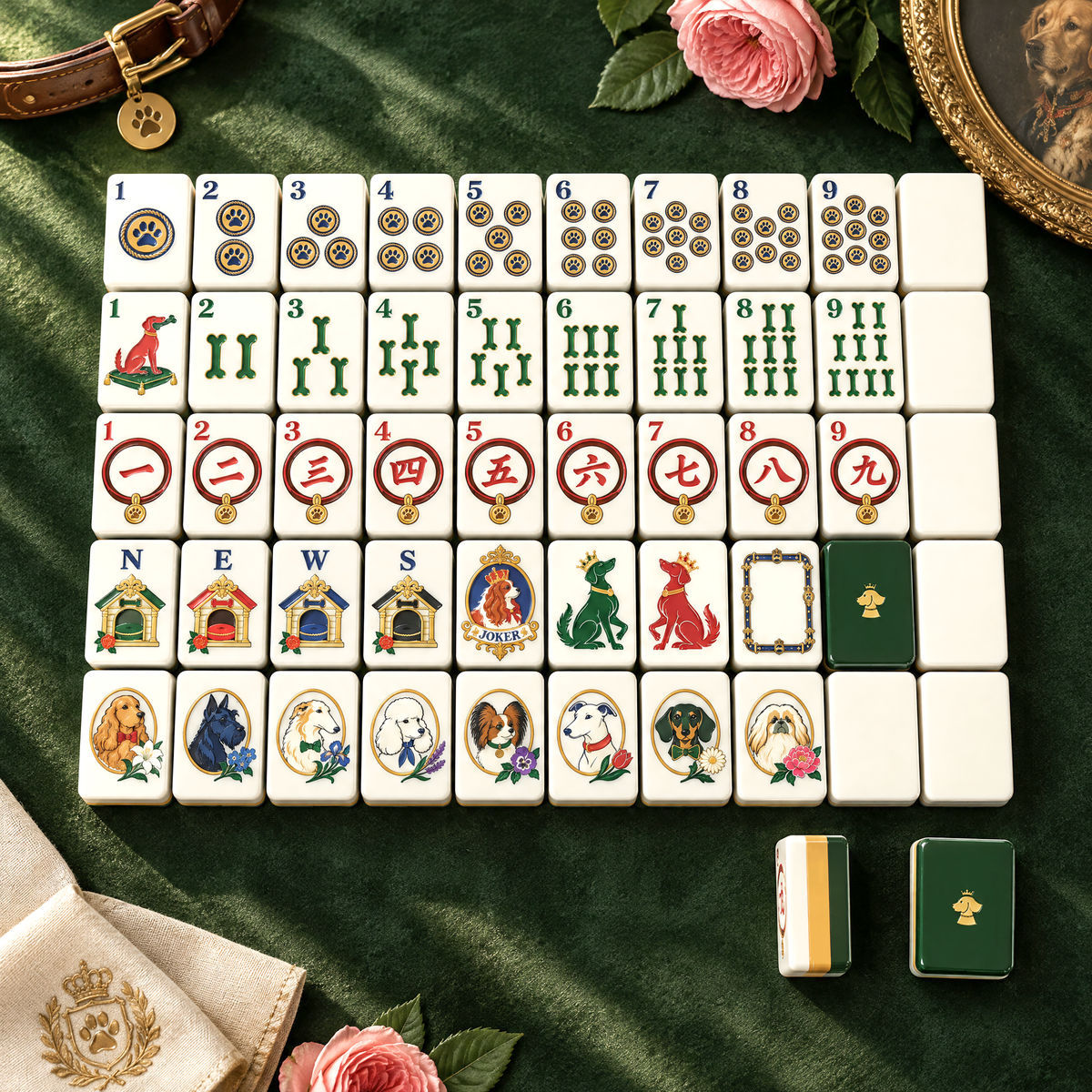
Cantonese mahjong hand examples look very different from American tile games. We'll walk through real patterns, show you how melds stack, and explain why variant rules change everything about which hands win.
What tiles make up a Cantonese hand?
A Cantonese winning hand uses exactly fourteen tiles: one pair (two identical tiles) and four melds. Each meld is either a pung (three identical tiles), a kong (four identical tiles), or a chow (three consecutive tiles of the same suit, like 5–6–7 Bam). You call "Mahjong!" when you pick or are discarded the tile that completes your fourteenth position. Cantonese sets contain no jokers; every tile exists to form genuine sequences or triplets. The 14-tile structure is rigid—unlike some variants, you cannot adapt to a 13-tile or 15-tile format.

How does a pung differ from a chow in play?
A pung is three or four identical tiles: three 4 Craks, four 8 Dots. Pungs are what most new players find easy to spot. A chow is a sequence—3–4–5, or 7–8–9, always within one suit. Chows feel counterintuitive to American players, since American mahjong forbids sequences entirely; only pungs and honor tiles (Winds, Dragons) form melds. In Cantonese, chows are half your melds, and calling them wrong kills your hand. For example: a hand with 2–3–4 Bam (chow), 2–3–4 Bam (another chow), 5 Dot pair, and two more pungs is a classic, fast pattern. The sequence rule makes Cantonese reading slower at first but rewarding once muscle memory kicks in. Mistake: confusing a chow with a pung—you cannot call a pung from the discard and then reveal it as a sequence.
🀄 Shop best-selling mahjong sets →
What does "honor tiles" mean in a Cantonese hand?
Honors are Winds (East, South, West, North) and Dragons (Red, Green, White). These eight tile types cannot form chows; only pungs or kongs work. A hand with three Red Dragons and three Green Dragons (two pungs of honors) plus a hand-selected 4 Dot pair is legal. A hand with East–South–West (a sequence of Winds) is not legal—Winds don't work in order. Beginning Cantonese players often assume Winds work like numbered suits; they don't. Many classical patterns are built entirely on pungs: three 1 Craks, three 1 Bams, three 1 Dots, and a White Dragon pair. These all-honor or mostly-honor hands win; they simply require patience to collect. Note that White Dragon often appears on engraved mahjong tiles as a plain or slightly marked face, making it distinct under bright light.
What's the eye pair and why does it matter?
The eye pair (or "winning pair") is your one and only pair in a 14-tile hand. The other twelve tiles are four melds. This constraint means your entire hand depends on finding or waiting for the right pair. A common beginner mistake: thinking you have two or three pairs. In Cantonese, you don't. If you hold two identical pairs, you must either transform one into part of a chow (impossible with honors) or discard it. A valid hand example: 1–2–3 Dot (chow), 1–2–3 Crak (chow), 5 Bam pung, 7 Bam pung, and a 9 Dot pair (eyes). That's four melds and one pair—fourteen tiles, game over. The pair can be any tile type, numbered or honor. Some fast-win patterns rely on a dragon pair; others use a 5 or 7 of a suit. The pair never participates in a chow; it stands alone.

How does discard strategy change which hands you can build?
Cantonese play is discarding-driven: your opponents throw tiles; you wait, listen, and declare when the right tile lands on the table. A core strategic difference from American play—you are not reading from an annual card. Instead, you memorize roughly fifty common patterns (all of which must contain one eye pair and four legal melds) and execute whichever pattern the discards allow. If you have been collecting 2–3–4 Bam and 5–6–7 Bam, and someone throws a 9 Dot, you ignore it; if they throw an 8 Bam, you might call it to complete your hand. Mistake: calling a tile too greedily and exposing your hand so clearly that opponents block you for the rest of the round. Slow, silent play often wins more games. The discard pile is your hand-building compass; respect what it tells you. Many players use soft-touch mahjong mats with clear marked zones to organize discards and exposed melds, reducing confusion.
🎁 See our most-loved mahjong sets & accessories →
How do you know if a hand is "safe" to claim?
Once you declare "Mahjong!", your hand is exposed. Opponents immediately verify: one eye pair? Four melds, each a legal pung, kong, or chow? All 14 tiles accounted for? If any meld breaks the rules—for example, you show 6–7–9 Dot claiming it's a chow (it's not; 8 is missing)—the hand is dead. You lose and pay penalties. Before you claim, whisper-verify your melds silently: point at each one in order and ask yourself: pung, chow, pung, chow, pair? A safe hand is one you have recounted twice. Some tables use racks with pushers to organize your tiles face-down, letting you tally melds without broadcasting them to the table. This quiet verification is especially important in faster rounds or money games.
How does Cantonese differ from American, Chinese, and Riichi variants?
Variant | Tiles | Melds | Chows? | Jokers | Hand source | Speed |
Cantonese | 136 | Pung, Kong, Chow | Yes | None | Memory + live play | Fast |
American | 152 | Pung, Kong only | No | 8 | Annual card | Medium |
Chinese/Simplified | 136 | Pung, Kong, Chow | Yes | None | Memory + patterns | Fast |
Riichi (Japanese) | 136 | Pung, Kong, Chow | Yes | None | Scoring rules | Medium |
Cantonese and Chinese mainland play are similar in tile count and chow rules but differ in scoring and pattern priorities. American mahjong uses more tiles, more jokers, forbids sequences, and binds every hand to an official card—a completely different game. Riichi is closer to Cantonese in structure but adds complex scoring bonuses and betting. Choosing a set and table depends on your variant: American needs the full 152-tile collection, while Cantonese works with 136. Our best-selling mahjong sets work across variants; acrylic clarity matters in all of them.
✨ Find your Mahstead set — free US shipping →
What to check before you buy a Cantonese set
Tile clarity: Can you read 1–9 and suits under table light? Engraved or printed markings must be instant-legible.
Tile count: Verify 136 (or 144 with flowers/seasons). Do not assume.
Case or bag: Cantonese sets travel; expect to carry them to regular games. Check whether your set ships with protective bags or cases.
Racks: Are pushers included? They are not essential but speed up play and reduce hand-show.
Shuffle comfort: Acrylic or bamboo? Acrylic is louder, faster; bamboo feels warmer. Both work.

FAQ
Can a chow use tiles from different suits (like 5 Bam, 5 Crak, 5 Dot)?
No. A chow must be three consecutive numbers all in the same suit—5–6–7 Bam, never mixed. Mixing suits breaks the meld entirely. Each chow lives inside one suit.
What happens if I declare Mahjong with an illegal meld?
Your hand is dead. You lose the round, pay penalties to all players (amount varies by table rules), and sit out. Verify silently before you claim.
Do Cantonese sets have blanks or jokers?
Standard Cantonese sets have no blanks or jokers. All 136 tiles are standard. Some rare variants add Flower or Season tiles (four extra), bringing the count to 140 or 144, but core Cantonese play uses 136 only.
How many tiles should I keep hidden in my rack during play?
Thirteen. Your fourteenth tile (the winning tile you just picked or was thrown) is declared openly. The 13 stay face-down in your rack until you claim Mahjong, then all 14 are revealed and verified.
Is Cantonese mahjong faster to learn than American?
Faster to start, slower to master. You memorize fifty patterns instead of reading one card per round, but American play has more rigid rules and slower decision-making. Cantonese rewards pattern recognition and table speed; American rewards card-reading and official adherence.
Can I use an American mahjong set to play Cantonese?
Not easily. American sets have 152 tiles, jokers, and markings tied to the annual card. Cantonese use 136 with no jokers. The tile mix is different enough that you would need to remove 16 tiles and all jokers, disrupting the balance. Use the right set for the right game.


View More
View More
View More
