
Dogging Mahjong Rule Explained: When & How to Call
Last updated: Nov 23, 2026
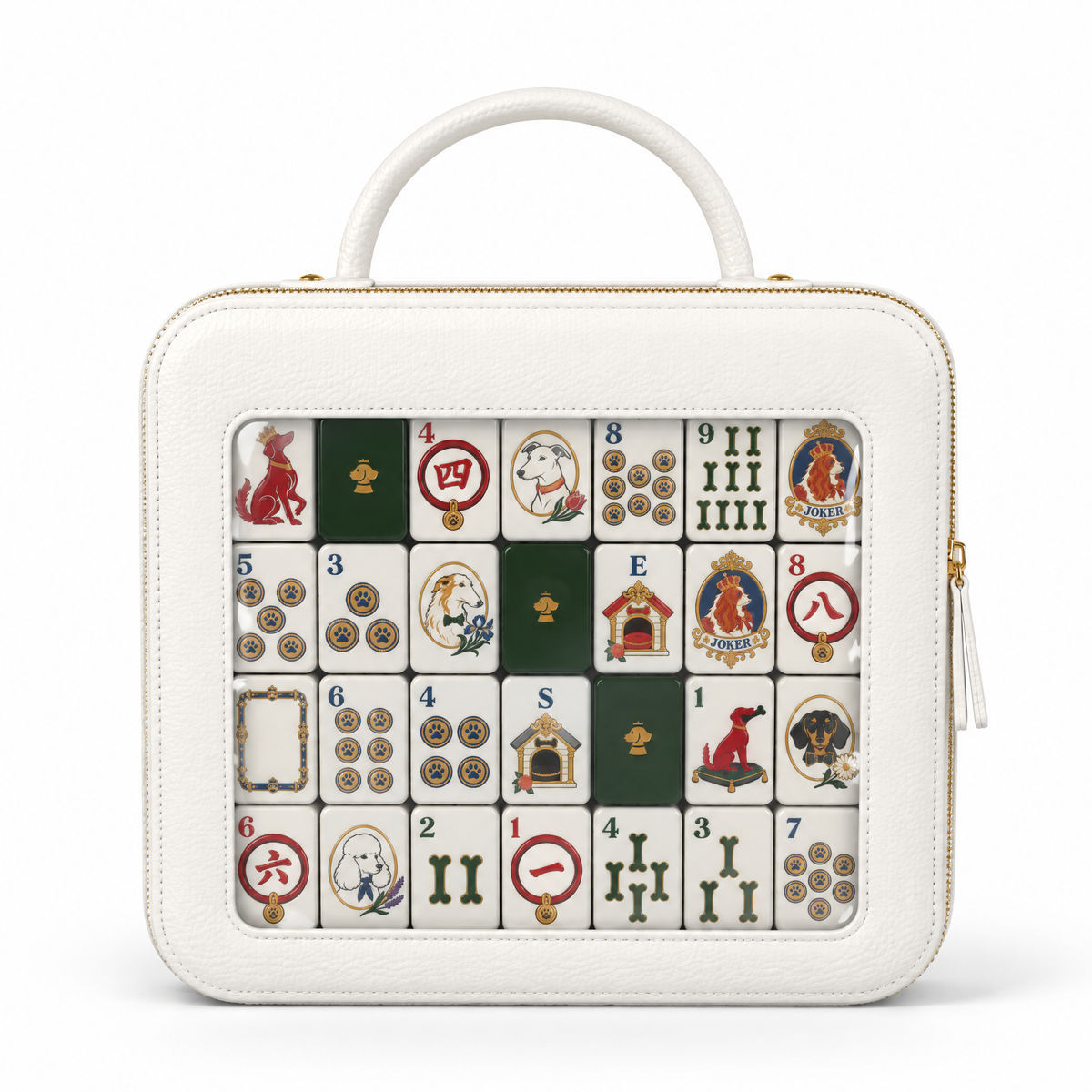
Dogging means calling (claiming) a tile a player has just discarded, out of turn, to complete a pung (three identical tiles), kong (four identical), quint (five), or sextet (six). You announce "pung," "kong," "quint," or "sextet," expose the set on the table with the jokers (if any) clearly marked, and then discard a tile to end your turn. You can only dog a tile if it completes a set matching the current year's National Mah Jongg League card hand you're building—and only if no player has called it before you. Dogging interrupts the normal turn order: the player after the discarder continues play once you've discarded. Common mistake: dogging a tile without a matching hand on the card, or trying to dog into a pair (only melds of three or more). Learn the National Mah Jongg League card structure and the priority rules (pung beats nothing; kong beats pung; quint beats kong; sextet beats quint) to avoid costly errors. --- 🀄 Shop best-selling mahjong sets →
What exactly does "dogging" mean in American mahjong?
Dogging is an immediate out-of-turn claim on a tile another player has just thrown. The moment a tile hits the discard pile, any player (not just the next player) can call it if they can use it to form an exposed meld. You don't wait for your turn; you interrupt the game flow. The player who dogs exposes the set, then discards to restart the sequence. It's one of three main ways to claim a discarded tile—alongside winning (claiming for mahjong) and quinting or sexteting—and it's the most common move in active play.

How do I know if I can dog a tile?
First, check your hand against the current year's National Mah Jongg League card. Look for a hand (a complete 14-tile combination) that includes the exact meld you'd form by dogging. Second, verify that the meld works: a pung is three identical tiles (e.g., three 5 Dots); a kong is four identical; a quint is five; a sextet is six. Jokers fill in for any number within the meld—but all other tiles in that section of the hand must match the card pattern exactly. Third, confirm the tile is still "up for grabs": no one has called it yet, and it hasn't been buried or picked up by the next player. If the next player has already drawn from the wall, the discard is closed and you cannot dog it.
What's the difference between dogging and other claims?
Dogging claims a tile for a pung, kong, quint, or sextet—three or more identical tiles. Winning is claiming a tile to complete your entire 14-tile hand (two pairs plus four melds, or a special hand). Quinting or sexteting are technically also dogs, but they refer to the five- or six-tile versions. The key rule: priority order. If two or more players want the same tile, the claim is awarded in this sequence: sextet > quint > kong > pung > win (lowest to highest priority). If one player wants to win and another wants to quint, the win takes the tile. If one wants to pung and another to quint, the quint wins. This creates strategic tension: do you dog now to build toward mahjong, or pass and hope the next discard helps you more?
Can I dog a tile if I'm going for a "no joker" hand?
Yes, but only if the meld you form contains no jokers. The National Mah Jongg League card includes sections marked "no joker" or "all same"—patterns that earn bonus points (or are required for certain combinations) only if you've used zero jokers in that hand. Dogging is legal; you simply expose the set and confirm with the table that no joker was used. Common mistake: dogging into a no-joker hand, then realizing you've accidentally picked a tile that forces a joker elsewhere in your hand structure. Before you dog, mentally verify the entire hand stays joker-free if you complete that one meld. If it doesn't, pass.
What should I do if two players dog the same tile at once?
Call the highest-priority claim. If Player A wants to pung (three identical) and Player B wants to kong (four identical), Player B wins the tile. If both are making the same type of claim (both punging), the player closest to the discarder in turn order gets it—typically clockwise. If both are equidistant (rare), many groups house-rule a re-draw or agreement to let the faster caller take it. Always agree on turn order before the game starts. Disputes slow the table and sour the game. Once a claim is announced clearly and heard, it's locked; you cannot retract a dog.
🎁 See our most-loved mahjong sets & accessories →
Dogging Strategy: When Should You Actually Call?
Situation | Dog or Pass? | Why |
You dog a pung; you're 3 tiles from mahjong | Dog | High payoff; the meld is worth the trade. |
You dog a pung; the next player is one tile away | Pass | Silence is golden—don't feed them. |
You need two specific tiles for a pung; the discard gives only one | Pass | You're not ready; wait. Partial melds waste your turn. |
The tile completes two different hands on the card (no joker + joker version) | Dog | You control which hand to pursue after this move. |
A quint is available; you can pung instead | Dog the quint | Higher priority; you're blocking others. |

Step-by-step: How to execute a dog correctly
Listen and watch. The player before you discards and calls out the tile (e.g., "8 Crak").
Check your hand fast. Do you hold two more 8 Craks (or one and a joker)? Does your hand on the card include this meld?
Call it aloud. Say "pung," "kong," "quint," or "sextet" clearly. Do not hesitate; if you wait, it's a pass.
Expose the set. Lay the three/four/five/six identical tiles face-up on the table in front of you. If jokers are in the set, mark them clearly (many players arrange them face-down or slightly offset).
Discard. Remove one tile from your hand and place it on the discard pile, face-up.
Play resumes. The player who would have gone next (not the discarder) now draws from the wall and plays as normal.
✨ Find your Mahstead set — free US shipping →
Common dogging mistakes (and how to avoid them)
Mistake 1: Dogging without a valid hand on the card. You see a tile you want and call it, but when you check the card, no hand uses this meld. Penalty: in most clubs, you must meld it or return it to play, and your turn is forfeit. Fix: before you dog, mentally cross-check the card. Many players keep a finger on the card while playing to speed this up.
Mistake 2: Dogging into a pair. American mahjong requires all melds to be three or more tiles. If you dog a second tile of a kind (not a third), you cannot make a legal meld. Fix: pairs are for the final two tiles (the "eyes") of your completed hand. You can only dog a meld of three or more.
Mistake 3: Claiming a tile after the next player has drawn. Once the next player's hand is above the wall and they've drawn, the discard is dead. You cannot dog. Fix: call immediately when the tile lands. If you hesitate, you lose it.
Mistake 4: Dogging a tile that doesn't match the hand layout on the card exactly. The card says "1 Bam, 2 Bam, 3 Bam" (a sequence in another variant); in American mahjong, you can't dog sequences—only identical-tile melds. Fix: learn the American card format. The card shows only pungs, kongs, quints, sextets, and pairs. Nothing else is legal.
Mistake 5: Using a joker in a "no joker" hand without catching it. You dog a pung, expose it with a joker, and only then realize the entire hand on the card is marked "no joker." You've broken the hand. Fix: before you expose, mentally verify the entire hand is joker-free if required.
What to check before you buy a mahjong set to play at home
Tile clarity and size: Tiles must be large enough to read quickly during a dog call. Acrylic tiles with crisp engravings help spot suits fast. See our best-selling sets—they're sized for easy reading and claim-calling.
Joker marking: Ensure jokers are visually distinct (color, mark, or texture) so you can instantly flag them when exposing a dog.
Complete tile count: American mahjong uses exactly 152 tiles plus 8 jokers in play. A full set holds these plus spares. Confirm the count before you play your first game.
Card included or accessible: You need the current year's National Mah Jongg League card at the table to verify legal hands. Print or laminate it for durability.
Rack and pusher setup (optional but helpful): A quality rack with pushers lets you organize tiles so you can spot melds—and spot dogging opportunities—faster. Consider a rack if your group plays quickly.
How dogging differs in other mahjong variants
Chinese/Hong Kong mahjong: Players can call a discard for a chow (sequence like 4-5-6 of the same suit), pung, kong, or win. Dogging is called "chow" or "pung" but includes sequences. Jokers don't exist; wildcards work differently. Priority rules vary by region.
Riichi mahjong (Japanese): Discards are called "claiming" only for a pair (the winning hand completion). Sequences (chows) and melds can be called mid-game, but the mechanic differs radically from American play. No "dogging" terminology; the game is turn-based and more rigid about claim timing.
Taiwanese mahjong: Similar to Hong Kong but with different point values and hand types. Dogging-like claims exist, but the card and valid hands differ from American mahjong.
American mahjong stands alone in its rigid card-based system and its identical-tile-only meld rule. No sequences. No complex wildcards. This simplicity makes dogging faster and clearer than in Asian variants—and higher-stakes for strategy.
Why dogging matters for your game
Dogging is a tempo weapon. A skilled player dogs when it builds momentum, passes when it starves an opponent, and reads the table to sense who's one tile away. Over ten hands, doggers who make smart calls—and even smarter passes—will win more frequently than hesitant players. Dogging also teaches you the card: each time you consider a dog, you're scanning the card for patterns and building instant recognition.
Master dogging, and you've mastered American mahjong's rhythm.
🀄 Shop best-selling mahjong sets →

FAQ
Can I dog a tile if it's the 14th tile I need to win?
No. If a tile completes your entire hand (all melds plus pair), you win—you don't dog. Winning is a separate claim with highest priority over any pung, kong, quint, or sextet another player might call.
What happens if I dog but my hand is illegal?
Most clubs rule that your meld stands exposed, but your hand is dead (you cannot win that round). You're out of play. Some groups penalize the player financially. Always verify the card before you call.
Can I dog a tile if no one else wants it?
Yes. Dogging requires only that you have a legal hand using the tile. Other players' interest doesn't matter. If you call it first and clearly, it's yours.
If I dog a pung, do I have to use a joker if I'm short one tile?
Yes. If you have only two 5 Dots and need three for the pung, the third position must be a joker (or a blank if your set includes them). The meld is still valid; you just flag the joker.
Can I take back a dog if I realize I made a mistake?
No. Once you've called "pung" (or kong, quint, sextet) aloud and exposed the tiles, the dog is locked. You cannot retract. This is why you check twice before you call.
Does the discarder get a turn again after I dog?
No. After you dog and discard, the next player in turn order (not the discarder) draws and plays. The discarder's turn is skipped.


View More
View More
View More
