
How to Play Quints Hands in American Mahjong
Last updated: Nov 23, 2026
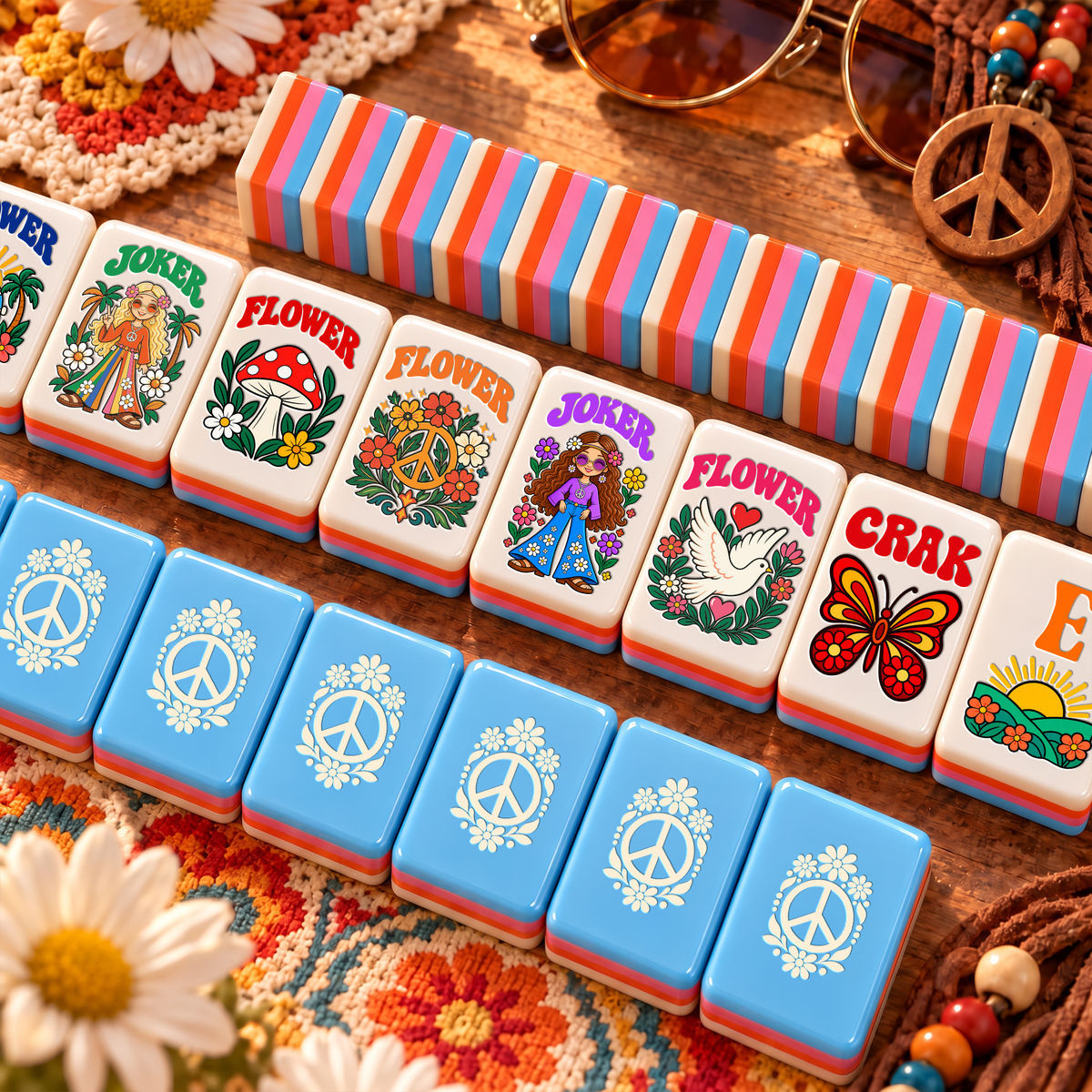
A quint is five identical tiles (e.g., five 3 Dots) exposed together as one meld on your rack. American mahjong permits quints alongside pungs (3), kongs (4), and sextets (6)—but only from the current year's National Mah Jongg League card. To form a quint, you need all five copies of a tile: three from your original hand, one drawn, and one joker substituting for the fifth (since only four real copies exist per tile). You cannot call a quint when another player discards; you must have four copies already in hand before drawing the fifth or using a joker. Quints appear in specific patterns on the card each year—study the patterns section to know which hands allow them. Beginners often confuse quints with kongs; remember: a kong has four identical real tiles, a quint has five (four real + one joker). When you complete a quint, expose all five together in a neat row on your rack and announce "quint" aloud so the table confirms. Mahstead's best-selling mahjong sets include four copies of each tile, so you'll always have the base tiles you need. 🀄 Shop best-selling mahjong sets →
What's the difference between a quint and a kong?
A kong exposes four identical real tiles—all four copies of that tile in play. A quint exposes five tiles: four real copies plus one joker acting as the fifth. Both are single melds on your rack. A kong is called when a discarded tile or your own draw completes four identical tiles already in hand; a quint cannot be called from discard—you must assemble four real copies first, then draw the fifth or add a joker. Once exposed, both count as separate melds toward your hand pattern on the card.

How do you form a quint step-by-step?
Step 1: Retain four identical tiles in your hand (e.g., all four 1 Craks). Step 2: When you draw a tile or receive one during the Charleston, if it does not complete your hand, check whether a joker in your hand can substitute as the fifth tile. Step 3: If you have a joker available and four real identical tiles, lay all five on your rack in a row, with the joker clearly visible in the group. Step 4: Announce "quint" or "five" so the table confirms it is legal for your current hand pattern. Step 5: Continue play—the quint remains exposed and counts as one completed meld. Never use a joker to complete a pair, and never add a sixth tile to a quint.
Which American mahjong hands actually use quints?
Not every hand on the current year's card includes quints—they are optional patterns. When studying how to read a mahjong card, check the patterns section to identify rows marked with quints. Typically, quint patterns appear in bonus or mixed-suit sections. For example, a pattern might read "Quint + Pung + Kong + Pair in Bams" or "Two Quints + Pair in mixed suits." Before each session, review your card and highlight hands that use quints so you recognize them mid-game. If no quint patterns are relevant to your current hand, ignore five-tile combinations—focus on the melds required. Many players play weeks without forming a quint; they are not required for any hand and are simply an alternative pattern when the card offers them.
What mistakes do players make with quints?
Calling a quint from discard: You cannot announce and expose a quint when another player discards a tile. You must have four identical tiles in hand beforehand. This is the most common error. Using two jokers in a quint: A quint uses exactly one joker as the fifth tile; you cannot use two jokers or a real fifth tile. If you have all five real copies (impossible in standard play, since only four exist), you must treat it as a pung and a pair or separate melds, not a single quint. Adding a sixth tile: Once a quint is exposed, it is complete. Do not add a sixth tile—the exposure is locked. Forgetting to announce: Always say "quint" aloud when you lay down five tiles so the table hears and approves before play resumes. Silent exposures risk dispute.
Mistake | Why it breaks the hand | How to avoid it |
Calling quint from someone's discard | Quints must be pre-formed in hand | Keep four real copies in hand first |
Using two jokers in one quint | Only one joker per meld | Use one joker; keep extras for other melds |
Exposing six identical tiles | Quints lock at five tiles | Count aloud before laying down |
Not announcing | Table cannot verify legality | Say "quint" and pause for confirmation |
How does a joker work inside a quint?
In a quint, the joker is not optional—it is required to reach five tiles, since only four identical real tiles exist in play. The joker takes the value and suit of the fourth real tile to complete the set. For example, if you have four 7 Bams and one joker, the joker becomes a fifth 7 Bam. Once the quint is laid on your rack, the joker remains visible and face-up within that group; it is locked into the quint and cannot be moved or reassigned to another meld. You can have other jokers in hand for use elsewhere (in other kongs or pungs, if your hand permits). Read how jokers work for a full breakdown of joker rules across American mahjong. Never try to "borrow" a joker from an exposed meld once it is laid down.
🎁 See our most-loved mahjong sets & accessories →

Can you pick up a discarded tile to complete a quint?
No. You cannot call a quint from discard. If another player discards a tile and you do not have four identical tiles already in hand, you cannot declare a quint. You can only form a quint using tiles you already hold (four real copies) plus a joker you already hold, or by drawing a tile from the wall that completes the quint. If your draw does not help, your turn ends and play passes. This rule keeps quints rare and prevents the game from stalling while players wait for a single tile.
Real table example: spotting a quint pattern
You are playing and your hand pattern for this round is "Quint + Pung + Kong + Pair in mixed Honors and Bams." After the Charleston, you hold three 1 Bams (the bird tile), two 5 Winds (North), one Red Dragon, three 2 Bams, three East Winds, two jokers, and some other tiles. As play progresses, you draw another 1 Bam (fourth copy) and retain your two jokers. On your next turn, you draw a tile that does not help, but you realize you can lay down: four 1 Bams + one joker = your quint. You expose these five on your rack and announce "quint." You now need a pung, a kong, and a pair from your remaining tiles to win. If you draw the fourth East Wind and a 2 Bam later, you can expose a pung of East Winds and a kong of 2 Bams plus your Red Dragon pair, and you have won.
What to check before you play quints
Card confirms quint pattern: Before forming a quint, verify on the current year's card that your hand pattern actually includes a quint requirement—do not assume. If the pattern reads "Pung + Pung + Kong + Pair," quints are not part of that hand.
You have four real identical tiles: Count your hand carefully. You need all four actual tiles of one value/suit; if you have only three, you cannot form a quint without drawing the fourth.
You have a joker available: Quints always use one joker. If all your jokers are committed to other melds (or you drew no jokers), you cannot form a quint.
Play continuity: Never pause the game while trying to decide if a quint is legal. Study how to read a mahjong card during setup or between rounds so decisions are quick.
✨ Find your Mahstead set — free US shipping →
Does American mahjong differ from other variants on quints?
Chinese, Hong Kong, and Riichi mahjong do not use quints in the traditional sense because they permit sequences (chows) and allow calling melds from any discard, rules that American mahjong forbids. American mahjong is unique in American rules, isolation—only exposures are pungs, kongs, quints, and sextets, and hands come strictly from the annual card. If you play multiple variants, quints are a feature only in American play; do not assume quints exist in other games at the table.
For hosting weekly American games, explore mahjong racks with pushers to keep exposed melds (including quints) neat and visible to all players, and consider a comfortable mahjong mat so all four players can see the board layout clearly. A well-organized setup prevents disputes over which tiles form which meld.

FAQ
Can I use a real fifth tile as a quint if I somehow have five identical tiles?
No. Only four identical tiles exist per tile type in standard American play. You cannot have five real copies. If you have four real tiles and a joker, that is a valid quint. If you have only four real tiles, expose a kong, not a quint.
What happens if I expose a quint incorrectly and the table catches the error?
In friendly play, you reshuffle the exposed tiles back into your hand and your turn ends; play passes to the next player. In formal league play, incorrect exposures may result in forfeiture of that hand. Always verify the pattern before laying down.
Can a quint be broken up (e.g., moving the joker to another meld) once it is exposed?
No. An exposed meld is locked. Once you lay down a quint, the joker stays in that quint for the rest of the hand. You cannot remove or reassign it.
If two players both want to form a quint on the same turn, who goes first?
In American mahjong, only one player acts per turn. If you draw a tile that completes a quint, you expose it and announce immediately. If the player before you drew a tile that would have completed a quint, they had their chance; now it is your turn.
How many jokers do I need in my hand to form a quint?
One joker per quint. If your hand pattern includes two quints, you need two jokers (one for each quint) plus four real tiles for each of the two quints. This is rare and challenging to assemble.
Are quints worth more points than pungs or kongs in scoring?
Scoring is determined by the hand pattern you complete, not by the meld type. A hand containing a quint scores the same as the card lists it, regardless of whether you used a quint, kong, or pung in that position. Review American mahjong scoring for how points are assigned per hand.


View More
View More
View More
