
How to Play Chinese Official Mahjong: Rules & Setup
Last updated: Nov 23, 2026
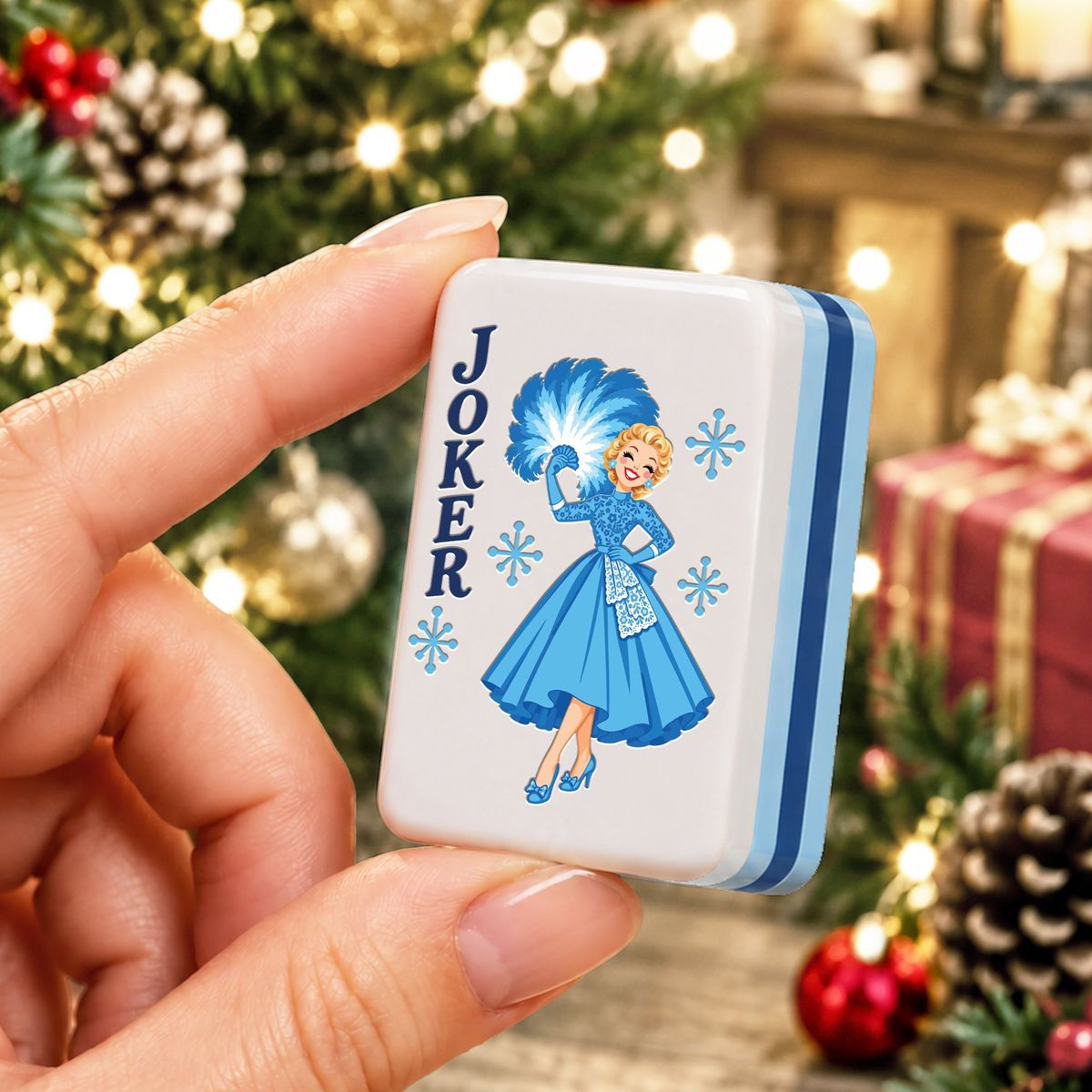
Chinese official mahjong uses 136 tiles: three suited ranks (Bams, Craks, Dots) numbered 1–9, four copies each; four winds; three dragons; and no flowers or jokers. Players draw from a wall of 136 tiles face-down, not a shuffled pool. The goal is to form a "winning hand"—typically one pair plus four melds (three-tile pungs or four-tile kongs). A hand ends when someone completes a legal combination or the wall is depleted. Games move faster than American mahjong because there's no annual card or Charleston ritual; play follows simple, standardized patterns. Chinese official mahjong is played in China, Singapore, and increasingly worldwide. A basic game takes 30–60 minutes.
What tiles are in a Chinese official mahjong set?
A Chinese official mahjong set contains exactly 136 tiles. That's 108 suited tiles (Bams, Craks, Dots 1–9, four of each), 16 winds (four each: North, East, South, West), 12 dragons (four each of Red, Green, White). No flowers, no jokers, no blanks. This is the International Standard. When you compare American sets (152 tiles with flowers, jokers, and no numbered dragons as rank), the core difference is that Chinese official strips away decoration and adds dragons as a playable rank. Most acrylic sets sold for casual play come with best-selling mahjong sets that clearly label each suit and wind so beginners don't confuse N/E/S/W with numbered tiles.
🀄 Shop best-selling mahjong sets →

How do you set up the game and deal tiles?
The player in the East position (dealer) sits and faces West. The other three sit North, South, and West, each facing their opposite. Before play, players decide who starts by throwing dice; the dealer rolls, and the hand begins. All 136 tiles are shuffled face-down in a long line (the wall), two rows of 34 tiles each, left to right. The dealer draws 14 tiles; each other player draws 13. The dealer plays first, discarding one tile face-up to the table center. Players then take turns: draw one tile from the wall (going clockwise), then discard one tile. Every tile you draw and discard is visible to all players. If the wall empties before anyone wins, the hand is a draw (no points awarded).
What makes a legal winning hand in Chinese official mahjong?
A winning hand in Chinese official mahjong is one pair (two identical tiles) plus four melds. A meld is either a pung (three identical tiles) or a kong (four identical tiles). You cannot use sequences (1-2-3 of the same suit as separate tiles, though some variants allow chows). You win by drawing or claiming a discarded tile that completes your fourth meld. Example: you hold Red, Red, Red (pung), 5 Bam, 5 Bam, 5 Bam (pung), 2 Crak, 2 Crak, 2 Crak (pung), East, East (pair), and you draw East—you now have four melds and a pair, so you win immediately and declare "win" or "hu." The tile that completes your hand can be a draw from the wall or a discard from another player. Unlike American mahjong, there's no annual card dictating valid hands; all hands follow the same pair + four melds rule.
Can other players steal your discard (called "chow" in some variants)?
In Chinese official mahjong, yes—other players can claim your discard if it completes a pung, kong, or winning hand. If you discard a tile and another player has two identical tiles, they can say "pung" and take it, then immediately discard a different tile. If you discard the tile they need to win, they can say "win" and take it. This is called "claiming." The key difference from American mahjong: American players can only expose pungs, kongs, and higher melds if they're ready to show them; in Chinese official, you can claim a discard in real time, and claiming always interrupts turn order. If your discard creates a win opportunity for multiple players, the one closest to you in turn order (usually the next player clockwise) gets priority. Discarded tiles are placed face-up in the center of the table so all players can see them clearly.
How does Chinese official mahjong differ from American mahjong?
Aspect | Chinese Official | American |
Tiles per set | 136 | 152 |
Flowers & jokers | None | Flowers (8), jokers (8) |
Dragons | Rank (Red/Green/White) | Honor (not numbered) |
Annual card | No—all hands use pair + 4 melds | Yes, issued each spring |
Charleston | No tile pass before play | Yes—mandatory 3-pass ritual |
Sequences (chows) | Not in standard official | None allowed in American |
Speed | ~30–60 min per game | ~45–90 min per game |
Wall draw | Face-down, orderly | Shuffled face-down pool |
Claiming discards | Common; interrupts turn | Limited; rarely exposed |
The biggest practical difference: American mahjong requires the National Mah Jongg League card (changes yearly); Chinese official never does. Both use the same suit names and tile count per suit, so if you know American, you recognize the tiles immediately. Chinese official is also faster and simpler to teach because there's no complicated scoring or hand validation—you just make pair + 4 melds and win.

What scoring systems are used in Chinese official mahjong?
Chinese official mahjong has multiple scoring standards depending on the playing group. The most common basic system awards points based on how you won. If you draw from the wall (called "drawing a win" or "zimo"), you earn a full point from all three other players. If you claim a discard (called "winning off a discard" or "hu"), you earn one point from the player who discarded the tile. A round has multiple hands until one player reaches a set score (often 5 or 10 points total). More formal tournaments use tiered point values: certain melds (all pungs, all terminals and honors, or specific patterns) earn bonus points called "fans." For casual play among friends, many groups simply play until someone wins three or four hands. There is no "going out" mechanic like in American mahjong; every hand ends when someone wins or the wall is empty. Some groups add house rules (e.g., doubling points if you win on your own draw), but the official rules keep scoring simple.
🎁 See our most-loved mahjong sets & accessories →
What are common beginner mistakes?
Misunderstanding tile rank. New players often confuse dragons (Red, Green, White) with numbered tiles because American sets don't feature ranked dragons. In Chinese official, Red dragon, Green dragon, and White dragon are each a separate rank, like a suit. You cannot make a sequence across them.
Forgetting there are no flowers or jokers. If you learned on American tiles, you'll reach for a flower by habit. Chinese official sets have neither. Every tile is a playable rank.
Claiming too early. If another player discards a tile and you have two copies, you can claim it—but only if you truly need it for a pung, kong, or winning hand. Don't claim just to interrupt the game; each claim uses up one of your turns and forces a discard, so use it strategically.
Not watching the discard line. Because claiming is common, every player must track what's been discarded. If you need a Red dragon, watch the pile. If three are already out, you know no more are coming from those players' hands.
Playing too fast. Chinese official games move quickly, but beginners should slow down for the first 10 hands to cement the pattern. Once pair + 4 melds becomes automatic, speed follows naturally.
How long does a typical game last?
A single hand (from deal to win or wall empty) usually lasts 3–5 minutes once everyone understands the rules. A session is typically 8–16 hands, so a full game runs 30–90 minutes depending on group speed and skill. American mahjong, by contrast, often takes 45–120 minutes per game because the Charleston and annual card validation add setup and decision time. Chinese official eliminates that overhead, making it ideal for quick sessions or casual weekly meetups. If you're hosting, budget an hour for a full learning game and 30–45 minutes for experienced players.
What should you check before you buy a Chinese official mahjong set?
Tile size and weight. Chinese sets come in two common sizes: small (27–28 mm) for portable play, and standard (30–35 mm) for comfortable handling. Acrylic sets are lighter and travel well; heavier resin or bamboo sets feel more premium but are less portable.
Tile marking clarity. Each suit (Bam, Crak, Dot) should be distinct. Winds and dragons must be clearly labeled in English or bilingual characters so you don't mix them up mid-game.
Complete tile count. Verify the set has all 136 tiles: 108 suited, 16 winds, 12 dragons. Count or ask the seller.
Included accessories. Many sets come with a storage bag or case, pushers for organizing your hand, and sometimes dice. Check what's included before you order so you're not surprised.
Spare tiles or replacements. Some sets include one or two extras in case a tile cracks. This is a bonus, not standard.
If you're comparing to American mahjong sets, remember that we at Mahstead sell 160-tile sets (152 playing tiles plus spares), which are larger than a Chinese official set. If you want a dedicated Chinese official set with portability in mind, prioritize lightweight acrylic and a padded case. If you're learning Chinese official after American, you can often borrow or use an American set conceptually—just ignore the flowers and jokers, and treat dragons as a numbered rank. Once you're confident, invest in a proper 136-tile Chinese set so you have the exact tile distribution and can host cleanly.
✨ Find your Mahstead set — free US shipping →
What to check before you buy
Tile count: Confirm 136 tiles exactly (108 suited, 16 winds, 12 dragons).
Size & weight: Small (27–28 mm) for travel; standard (30–35 mm) for home play.
Markings: Suits and winds clearly labeled; no ambiguity between ranks.
Storage: Check if a bag, case, or dice are included.
Accessories: Look for pushers and scoring chips if provided.
Spare tiles: Extra tiles or blanks are a nice-to-have, not essential.

FAQ
Can I use an American mahjong set to play Chinese official?
Yes, if you ignore flowers and jokers. American sets have the same 108 suited tiles and 16 winds. Treat the three dragons as ranked tiles (Red, Green, White) instead of honors. The extra tiles don't interfere; just set them aside. However, a dedicated 136-tile Chinese set is cleaner and avoids confusion.
Is Chinese official mahjong the same as Hong Kong mahjong?
No. Hong Kong mahjong uses 108 tiles (no winds or dragons), allows sequences (chows), and has more complex melds and scoring. Chinese official is simpler, includes winds and dragons, and uses only pungs and kongs. Hong Kong is faster but harder to learn.
What if nobody wins before the wall runs out?
The hand is a draw. No one scores points. Tiles are reshuffled, and the next hand begins. In a 16-hand game session, 1–2 draws are normal.
Can I play Chinese official mahjong with 3 or 2 players?
Standard rules are for 4 players. With 3, each player draws 45 tiles and the wall has only 1 tile (too fast). With 2, it's effectively not playable. Some groups have house rules for 3-player variants, but official Chinese mahjong is 4-only.
Where can I learn Chinese official mahjong in person?
Check local community centers, libraries, university clubs, or cultural organizations (especially Chinese cultural associations). Online tutorials and apps are also available, though nothing replaces playing in person. Many casual games welcome beginners; ask if anyone plays before committing.
How does Chinese official mahjong scoring work if multiple people could win?
The player closest to the discarder (usually the next player in turn order clockwise) wins first. If you draw from the wall (zimo win) while someone else could claim a discard, your draw takes priority. This prevents disputes and keeps play fair.
Do I need to memorize tile positions or patterns like in American mahjong?
No. Chinese official mahjong has no annual card, no hand patterns, and no seasonal changes. The only rule is pair + 4 melds. You memorize nothing except the tile names and basic meld rules. This makes it much easier for total beginners.
Is there an international tournament standard for Chinese official mahjong?
Yes. The International Mahjong Federation (IMF) governs tournaments. Rules are standardized, and tournaments are held worldwide. Casual play varies by group, but official competition follows strict IMF guidelines.


View More
View More
View More
