
How to Play Cantonese Mahjong: Rules & Tile Setup
Last updated: Nov 23, 2026
Cantonese mahjong is a fast-paced Hong Kong variant played with 144 tiles: three number suits (1–9 in each), seven pairs of honours (winds and dragons), and eight flower tiles. Unlike American mahjong, Cantonese permits chows (three consecutive numbers), calls mid-game, and "eye only" wins (a pair of identical tiles with no melds). Each player draws one tile per turn; the dealer goes first and retains the turn after a draw or discard. A winning hand needs one eye plus four melds of three tiles each (or all seven eyes). Scoring depends on the number of melds and whether chows are included. Cantonese favours speed and fewer elaborate patterns; we recommend starting with a 144-tile acrylic set from our best-selling mahjong sets collection to avoid confusion with American variants.
Cantonese mahjong feels like a different game from American mahjong, even though both use coloured tiles and honour suits. The biggest shock? Cantonese is simpler in structure but faster in pace. You're drawing and discarding every turn, calling melds openly, and winning in under an hour. We've switched between American and Cantonese games weekly for years; here's what you need to know to play confidently.
What tiles do you use in Cantonese mahjong?
A Cantonese set has 144 tiles: 36 in each number suit (Bams, Craks, Dots—four copies of each number 1–9), 16 honours split into winds and dragons (four copies each of North, East, South, West, Red Dragon, Green Dragon, White Dragon), and eight flowers (one each, sometimes numbered 1–8 or shown as plum, orchid, bamboo, chrysanthemum). No jokers; no blanks. You pull exactly 144 tiles onto the table—no spares.
Key difference from American: American uses 152 tiles plus jokers. Cantonese uses 144 and no substitutes. Your tile count is final from the moment you shuffle.

How do you set up and begin a Cantonese hand?
Shuffle all 144 tiles face-down and form a long wall eight tiles high and nine tiles across (east wall) on each side. Designate a dealer (East Wind). Players sit in compass order: East, South, West, North. East draws from the corner of their wall (bottom-right corner on the east side of the wall) and discards one tile to the center. South goes next, drawing from the wall to their right. Play rotates counter-clockwise through North, West, back to South, then East.
Each player holds thirteen tiles after the initial draw; the dealer holds fourteen and discards first. Once a tile hits the discard center, any player can call it—but you must complete your call immediately (no "I might call it"). If no one calls, the next player draws.
What melds can you expose, and when?
You can expose pungs (three identical tiles), kongs (four identical tiles), chows (three consecutive numbers in the same suit: 1–2–3, 5–6–7, etc.), and flowers (any flower goes in its own meld). Unlike American mahjong, chows are active and callable; you name the chow aloud and lay it on the table. Flowers are always exposed the moment you draw them—set them aside and draw an extra tile from the wall to replace it.
When someone discards a tile, you can call it for a pung, kong, or chow only if it completes a meld you are ready to lay. You cannot hold a called tile in your hand; it must form a visible meld immediately. This is where speed enters the game—you have seconds to decide.
Common mistake: calling a tile for a chow when the discard was not the final number needed. Practice naming the complete chow aloud before placing tiles down: "1–2–3 Bams" makes it clear.
What makes a winning hand, and how do you score?
A winning hand is one eye (a pair of identical tiles) plus four melds. The melds can be any mix of pungs, kongs, chows, and flowers. Some hands require all pungs (no chows); others reward chows; still others require honour tiles or "clean" hands (one suit only, plus honours). Scoring is simpler than American: count the number of melds and whether the hand contains chows, honours, or is all one suit.
Scoring example:
1 honour meld, 3 chows, 1 pung = 2 points (honour tiles add 1 point).
All pungs, no chows = 2 points (pungs are harder).
One suit plus winds = 3 points (clean hand bonus).
Winning tiles are typically worth 1–8 points per hand, depending on the rule set; players agree on a point value beforehand (often 1 cent per point or a flat stake).
Difference from American: American scoring reads from an annual printed card and can climb to 70+ points per hand. Cantonese scoring is fixed and memorized; play is quicker and more casual.
How does Cantonese mahjong differ from American and other variants?
Variant | Tile Count | Chows Allowed? | Jokers? | Win Condition | Pace |
Cantonese | 144 | Yes; callable | None | 1 eye + 4 melds | Fast (30–50 min) |
American | 152 + 8 jokers | No; not callable | Yes; substitute | 1 eye + 4 melds from annual card | Moderate (45–90 min) |
Chinese (Simplified) | 136–144 | Yes; callable | Sometimes | Varies by region | Moderate |
Riichi (Japanese) | 136 | Yes; concealed | None | 1 eye + melds (many scoring patterns) | Slow (60+ min) |
We play Cantonese when we want fast games and flexible scoring. We pull out the best-selling mahjong sets for American night because the tiles and jokers are purpose-built. If you're learning Cantonese, start with a 144-tile acrylic set to keep it separate from your American collection.
🀄 Shop best-selling mahjong sets →

What should you practice first as a beginner?
Start by learning tile recognition: memorize the three suits, the four winds, three dragons, and flowers. Lay out your set and name every tile aloud for ten minutes. This is the foundation; rushing past it causes calling errors mid-game.
Next, practice building walls and initial draws without scoring. Shuffle, form walls, deal thirteen tiles to each player. Practice calling melds (pung, chow, kong) on discards without keeping score. Spend two or three sessions here. Then introduce scoring—count points at the end of each hand, not during.
Real-world tip: when learning with friends, post a cheat sheet of scoring rules on the wall. Everyone checks it after a win; no one feels embarrassed asking. We keep a laminated card propped next to the mahjong mats during our first-time games.
What supplies do you need to play Cantonese mahjong at home?
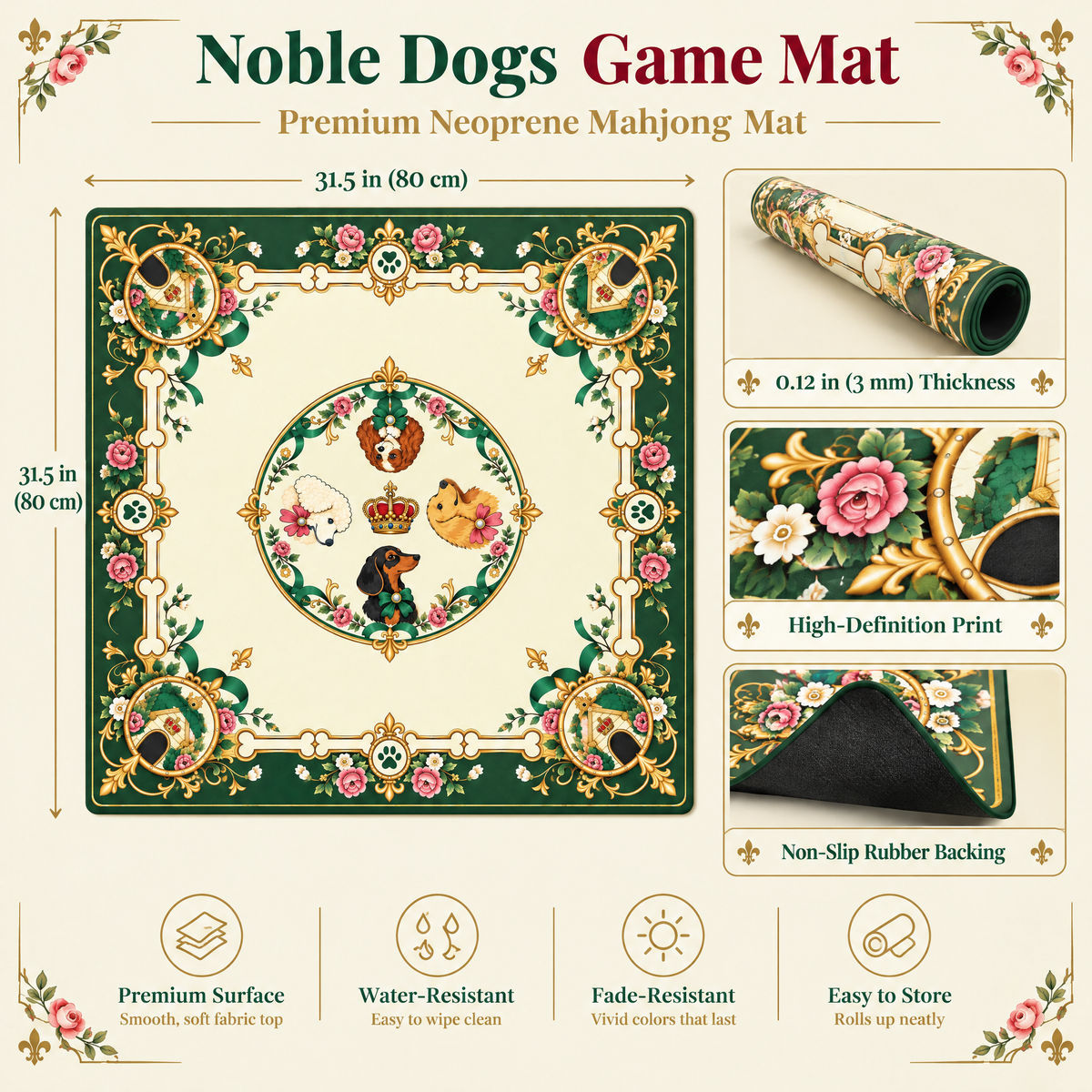
A complete Cantonese set includes 144 tiles (Bams, Craks, Dots, winds, dragons, flowers), a pair of dice, and racks (optional but helpful to keep your hand organized). You'll also want a mahjong mat or cloth to protect your table and define the discard zone—essential for fast play where tiles are scooped into the center.
For regular hosting, add mahjong racks with pushers so players don't tire their hands, and a travel bag or case if you rotate games between homes. We store our Cantonese set in a compact case and keep our American set at home; separating them prevents on-table confusion.
🎁 See our most-loved mahjong sets & accessories →
Common mistakes—and how to avoid them
Calling too late. In Cantonese, once a tile lands in the discard zone, the window closes fast. If you hesitate, the next player draws. Practice saying "pung" or "chow" the instant you decide. We time ourselves: three-second rule. Slower? Skip the hand and observe.
Forgetting flowers. Flowers go out immediately when drawn; many beginners pocket them and discard later, breaking the game. Make it a reflex: draw a tile, check for a flower first, expose it, draw a replacement.
Mixing tile recognition. Red Dragons, Green Dragons, and White Dragons look different but new players confuse them under poor light. Use a well-lit table and quiz yourself before play starts. An acrylic set from our collection is durable and clear—no faded paint to squint at.
Calling a meld you can't complete. You announce "chow" but then lay down the wrong numbers. Once called, the meld is final. Before calling, touch the three tiles you are claiming and say the sequence aloud. Builds a habit.
✨ Find your Mahstead set — free US shipping →
What to check before you buy a Cantonese mahjong set
Tile material. Acrylic is durable and washable. Bamboo/wood feels premium but chips if dropped. Plastic is lightweight but dulls quickly.
Tile size. Standard is 1.25 inches; check the packaging. Smaller tiles suit tight tables; larger tiles suit older eyes.
Print clarity. Characters and suit symbols must be crisp. Inspect a photo on the product page; zoom in on the dragons and winds.
Completeness. Confirm 144 tiles, two dice, and racks (if bundled). Count them before your first game—missing tiles are rare but not impossible.
Storage. Does it come in a case or box? How sturdy is it? If you travel or host often, a quality bag or case is worth the investment.
Separation from American sets. If you own both variants, buy them in visibly different colours or storage to prevent table accidents.
Key takeaway
Cantonese mahjong is faster, simpler, and more social than American play. The 144-tile structure, callable chows, and fixed scoring let you play a full round in 30–50 minutes. Start by drilling tile names and wall-building, then add scoring. Host a practice session with patient friends; keep a scoring cheat sheet visible. Invest in a clear acrylic 144-tile set from a dedicated mahjong supplier so your tiles are crisp and your game is smooth. The difference between a fun evening and a frustrating one often comes down to tile clarity and having the right variant on the table.

FAQ
Can I use an American mahjong set to play Cantonese?
No. American sets have 152 tiles, jokers, and different honours. The tile count and mechanics are incompatible. Use a 144-tile Cantonese set.
How many people play Cantonese mahjong?
Four players, standard. Two and three-player versions exist but are rare; four-player is the traditional and easiest starting point.
Is Cantonese mahjong easier than American mahjong?
Easier to learn (fixed scoring, fewer rules); faster to play (30–50 minutes). American requires annual card reference and joker strategy, so it's less intuitive but more complex once mastered.
What's the difference between chows in Cantonese and American mahjong?
Cantonese chows are callable mid-game and openly exposed. American mahjong has no chows at all; only pungs, kongs, and quints are exposed. This is the biggest rule difference.
Where can I find a Cantonese mahjong group to join?
Check community centers, libraries, senior centres, and cultural associations in your area. Cantonese mahjong is popular in communities with Cantonese-speaking populations; ask at local dim sum restaurants or post on community message boards.
Do I need racks and pushers for Cantonese mahjong?
No, but they help. Racks keep your hand tidy and reduce hand fatigue during long sessions. Many casual players skip them; competitive or regular players add them for comfort.
What's the best tile material for a beginner set?
Acrylic. It's durable, clear, easy to clean, and affordable. Bamboo feels better but chips; plastic wears fast.


View More
View More
View More
