
Mahjong Tiles Dimensions: Standard Sizes for American Play
Last updated: Nov 23, 2026
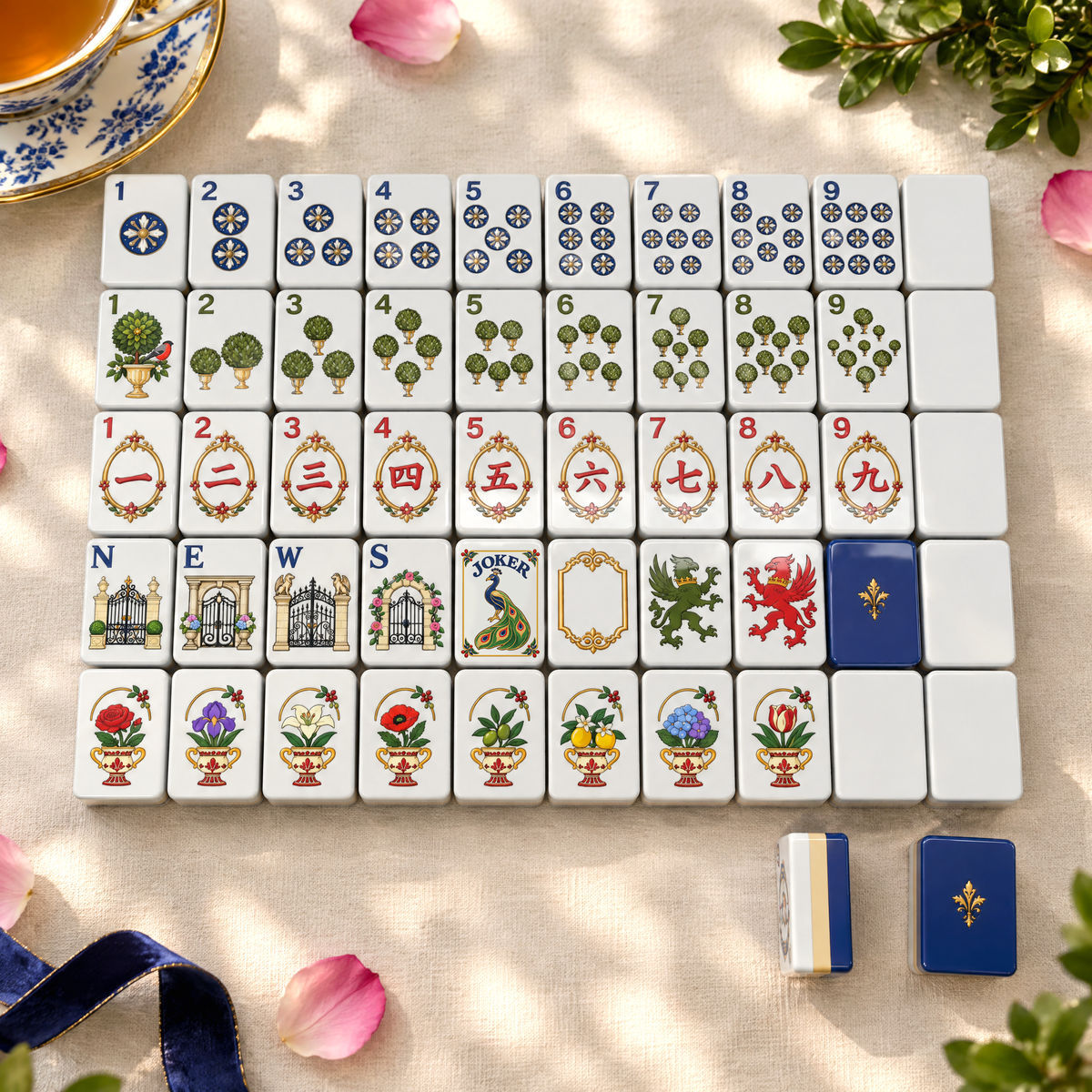
American mahjong tiles are standardized at approximately 1 inch wide by 1.3 inches tall by 0.5 inches thick, a size that fits comfortably in a player's hand and on a standard bamboo rack. The 152 playing tiles in a complete set (plus 8 jokers in a 160-tile set) are uniform in weight and thickness so no tile tumbles differently when drawn from the wall. Material—bone and bamboo, acrylic, or wood—affects weight and durability but not the core dimensions. Acrylic tiles from our best-selling mahjong sets keep their dimensions stable across climate and years of play, whereas bone and bamboo can swell or shrink slightly. When you order, confirm the tile count is 152 playing tiles plus 8 jokers (never fewer), and check that engravings or custom designs don't add thickness that blocks rack movement or wall-building.
Why does tile size matter for actual play?
Tile size affects shuffle speed, rack fit, wall stability, and hand comfort during long games. Tiles too small feel cramped; tiles too large won't sit evenly in standard racks or on your mat. American mahjong racks and discards are designed for the 1" × 1.3" × 0.5" footprint, and if your tiles deviate significantly, you'll struggle to build walls cleanly or read exposed pungs and kongs. If you have players with arthritis or limited hand strength, tiles on the smaller end of the standard range are easier to manage. Confirm dimensions before you buy, especially if ordering custom-engraved sets.

How do acrylic tiles compare to bone-and-bamboo in terms of size stability?
Acrylic tiles hold their dimensions year after year, regardless of temperature swings or humidity in your game room. Bone and bamboo absorb moisture: they can swell in humid seasons or shrink in winter heating, causing racks to feel loose or walls to wobble. Over decades of weekly play, bone-and-bamboo sets often show slight dimensional creep, whereas acrylic remains rock-solid. If you live in a climate with high humidity or dramatic seasonal changes, acrylic's stability is worth considering. Engraved American mahjong sets in acrylic keep consistent dimensions whether you're playing in Dallas heat or a basement in Buffalo.
🀄 Shop best-selling mahjong sets →
What happens if your tiles are too thick or too thin?
Too-thick tiles can't nestle tightly in bamboo racks, forcing you to hold tiles in your hand instead—awkward during long rounds and risky if you accidentally bump the rack. Too-thin tiles feel insubstantial and can crack under pressure or bend when stacked. Either extreme makes wall-building sloppy: walls should stand vertical and tight, with each tile sitting flush against its neighbor so you can't see the face during draws. Engravings on acrylic tiles should be shallow (not beveled or deeply cut) so they don't interfere with tile fit. If your set doesn't feel right after your first game, contact the seller before you invest hours in play.
Is there a difference in tile dimensions across variants like Chinese, Hong Kong, or Riichi mahjong?
Yes—variants use different tile counts and sizes. Chinese traditional mahjong uses 144 tiles and square tiles closer to 1 inch across all sides; Hong Kong mahjong also runs 144 tiles but with slightly longer aspect ratios. Riichi (Japanese) mahjong uses 136 tiles in a narrower, taller profile than American tiles. American mahjong is distinct: 152 tiles, the rectangular 1" × 1.3" × 0.5" profile, and no chow sequences allowed. If you're switching variants or hosting a multi-game table, don't mix tile sets—American racks and card hands won't align with Asian dimensions or tile types. Stick to one variant per night.

What should you actually check before buying a set?
Check | Why | Red flag |
Tile count (152 play + 8 jokers) | Incomplete sets break hand validity | Fewer than 160 total tiles |
Thickness consistency | Racks won't hold uneven tiles | Some tiles noticeably thicker or thinner |
Engraving depth | Deep cuts catch on bamboo | Beveled or raised engravings |
Weight balance | Shuffling should feel even | Some tiles clatter or slide unevenly |
Fit in rack | Wall-building must be clean | Tiles jam or rattle in standard bamboo racks |
Before your first game, lay out a full rack of tiles in a borrowed or standard bamboo rack—don't assume online photos show the real fit. Build a short wall (stack tiles as you would in play) to test stability. If your local mahjong club or a friend has an older set, compare the feel side-by-side; one session of hands-on comparison saves weeks of regret.
🎁 See our most-loved mahjong sets & accessories →
How do custom engravings affect tile dimensions and playability?
Custom engravings should never increase tile thickness or add sharp edges that catch on racks or mats. At Mahstead, engraving is done on acrylic tiles with shallow, smooth detail so the 0.5-inch thickness stays intact and the tile face remains readable without snagging bamboo. Deeply etched or 3D-relief engravings can add 0.05–0.1 inches to thickness, enough to cause rack friction or wall instability. If you're ordering engraved sets—names, dates, club logos, or decorative patterns—ask the maker to confirm that engravings stay within the standard thickness tolerance. Shallow engraving is faster and safer for playability; deep engraving looks fancier but costs you fluidity at the table.
✨ Find your Mahstead set — free US shipping →
What to check before you buy
Tile count: Confirm 152 playing tiles plus 8 jokers (never fewer).
Thickness tolerance: All tiles should measure 0.5 inches ±0.03 inches.
Rack fit: Request a photo or video of tiles in a standard bamboo rack before purchase.
Engraving depth: Ask if custom designs are shallow-etched (safe) or deeply carved (risky for play).
Fit on your mat: If you own a mahjong mat, test the tile footprint in the discard well and tile positions before committing to a full game.
Material stability: For humid climates, acrylic outperforms bone-and-bamboo over years of play.

FAQ
Can I use Chinese or Riichi mahjong tiles with an American mahjong set and rack?
No. Chinese and Riichi tiles have different dimensions, counts, and tile faces. American racks and mats are designed for the 1" × 1.3" × 0.5" profile; Asian tiles won't sit evenly. Stick to one variant per set.
What's the ideal tile weight for shuffling?
Tiles should feel substantial in your hand but not so heavy they hurt your wrists after an hour of shuffling. Acrylic tiles typically weigh 3–5 grams each; bone-and-bamboo tiles can reach 6–8 grams. Try before you buy if possible.
Do engraved tiles take longer to wear out?
No. Shallow engravings don't weaken tiles. Deep etching or beveling can create stress points that crack over years, but shallow engravings on quality acrylic are durable.
Why do some tiles feel different sizes even though they're from the same set?
Manufacturing tolerance, age, or moisture absorption. Bone-and-bamboo tiles swell and shrink with humidity. Acrylic is more stable. If variation is significant, contact the seller—it signals quality control issues.
Can I use oversized or compact tiles for casual play?
Yes, but they're misaligned with standard racks, mats, and card layout spaces. For weekly money games or league play, American-standard dimensions are required. For learning or casual family play, smaller or larger tiles work if all players agree.
How do I know if my tiles are damaged or warped?
Stack a rack of tiles tightly and look along the top edge for gaps or tilting. Spin individual tiles on a flat table—they should spin smoothly without wobbling. Cracks, discoloration, or chips are visible damage; slight warping is usually material age or humidity.


View More
View More
View More
