
How to Play 2468 Hands in American Mahjong
Last updated: Nov 23, 2026
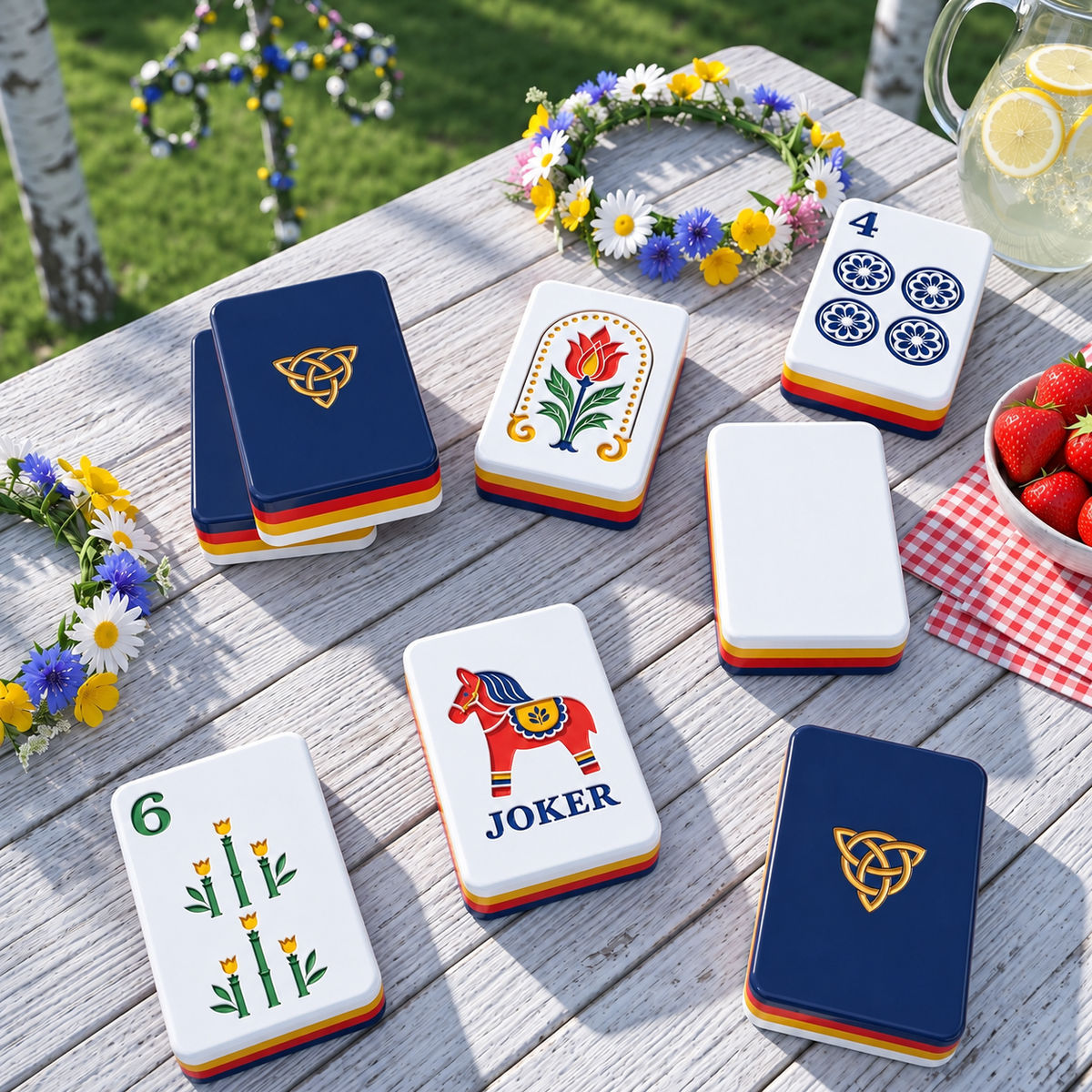
2468 hands are patterns on the current year's National Mah Jongg League card where tiles are grouped by the even numbers 2, 4, 6, and 8 across one or more suits. The "2468" name refers to the numbers themselves, not the count of tiles—a 2468 hand typically uses 14 tiles arranged as pungs (3 identical), kongs (4 identical), or quints (5 identical), plus one pair, all in even-numbered tiles. You build them during play by collecting matching tiles and calling or exposing melds as they form. The card changes every spring, so your 2468 options shift yearly; some years offer more 2468 patterns than others. Jokers can substitute for any single tile except in a pair. Most players encounter 2468 hands early because even numbers cluster naturally during the Charleston and early draws. A complete American mahjong set includes all tiles you need to form any hand on the card.
2468 hands are one of the most common winning patterns in American mahjong. Learn to recognize them, build them strategically, and avoid the pitfalls that trip up most players.
What does "2468" actually mean on the card?
The term "2468" refers to patterns made entirely from tiles numbered 2, 4, 6, and 8—the even-numbered tiles in one or more suits. On the National Mah Jongg League card, you'll find these patterns listed in a dedicated section. A 2468 hand never includes 1, 3, 5, 7, or 9. The pattern name tells you exactly which suits and meld types are required: for example, "2468 Pung/Quint/Kong" might mean one pung of 2 Dots, one quint of 4 Bams, one kong of 6 Craks, and one pung of 8 mixed suits, plus a pair. The card itself is your absolute reference—no hand is valid unless it appears there exactly as written.

How do you spot a 2468 hand during play?
Watch your hand after the Charleston and your first few draws for clusters of even tiles. If you pick up two 4 Dots, keep them; if a third 4 Dot appears in your next two draws, you have the start of a 2468 pung. Scan the card's 2468 section early in the game—most players who win with 2468 hands decided on their target within the first three rounds. Mark or mentally flag one realistic 2468 pattern as your primary goal; have a backup in case your draws shift. If the player opposite you is calling 2, 4, 6, or 8 Dots frequently, your odds of completing a 2468 in that suit drop sharply—shift to a different suit or switch hands entirely. This split-second decision-making separates quick wins from slow, frustrated losses.
What's the step-by-step process to build a 2468 hand?
Step 1: After the Charleston, review your 14 tiles and count how many even numbers you hold across all three suits.
Step 2: Open the current year's card to the 2468 section and identify three realistic patterns you could build from your current tiles or near-misses (e.g., you have two 2 Bams and two 6 Dots).
Step 3: Discard non-even tiles first—all 1s, 3s, 5s, 7s, 9s, and all honors (winds and dragons) unless they appear in your chosen pattern. This signals to the table that you're chasing evens and preps your hand for rapid melds.
Step 4: Call any pair of even tiles as soon as you have two. In American mahjong, you don't have to expose them, but securing your pair early locks down half your hand.
Step 5: As you draw and discard, pursue the meld type your pattern requires—if it calls for a pung of 4 Bams, prioritize collecting a third. Once you have two of the three tiles in any meld, jokers become your best friend; one joker fills the gap.
Step 6: Expose (lay down) melds only when you have them complete and are confident in your hand. Exposed melds signal your direction to the table; avoid exposing until you're close to winning.
Step 7: Track discards from the three players. If all four 8 Craks are out (one in your hand, three discarded), you cannot win a hand requiring an 8 Crak pung—pivot to a backup pattern immediately.
Step 8: When all melds and your pair are complete, declare "Mahjong" and lay down your entire hand. The card must match your hand exactly, or the hand is invalid and you incur a penalty.
Common mistakes that cost you the 2468 hand
Mistake 1: Holding too many even tiles too long. New players often keep all even numbers, hoping for flexibility. This clogs your hand. Keep only tiles that fit your three target patterns; discard the rest by round three.
Mistake 2: Not checking the card often enough. The card changes every spring. If you memorized last year's 2468 patterns, you're chasing a hand that may no longer exist or may have changed meld type. Check the card after every major meld decision.
Mistake 3: Ignoring joker placement rules. A joker can substitute for any tile in a pung, kong, or quint—but never in a pair and never in a single tile exposure. If you're one tile short of a 2-Crak pung, one joker fills it. If you need a pair of 4 Dots, you cannot use a joker; both tiles must be real.
Mistake 4: Staying in a dead pattern. If you need two more 6 Bams and all four are already out (one in your hand, three discarded by opponents), that pattern is dead. Experienced players call this "chasing a ghost." Pivot immediately to your backup.
Mistake 5: Exposing melds too early. Once you expose, the table knows your direction. If you expose a pung of 2 Dots in round two and then pivot to a hand requiring 4 Craks, you've telegraphed weakness and your opponents adjust their discards. Expose only when you're one or two melds from mahjong.
Mistake 6: Confusing 2468 with other even patterns. Some players misread the card and think all even-tile patterns are "2468." On the card, you'll also see patterns labeled "All Even" or "Even Mixed" that may allow additional tiles. Read the pattern name and meld types word-for-word every time.
Mistake 7: Forgetting winds and dragons can appear in 2468 patterns too. Many 2468 hands include one or more honor tiles—a pung of East Winds, a kong of Red Dragons, or a quint mixing Bams and Dots with a wind. Check the full pattern; don't assume it's all numbered tiles.
How to read your specific 2468 pattern on the card
The mahjong card structure is standardized; learning to parse it once saves hours of confusion. Find the 2468 section (usually a dedicated area of the card). Each row shows one hand. Read left to right: Pattern name (e.g., "2468 All Pung") → meld types and tiles (e.g., "Pung 2 Bam, Pung 4 Dot, Pung 6 Bam, Pung 8 Dot, Pair 2 Crak"). Copy this exact layout into your hand. If your layout doesn't match the card, it's not mahjong. Some 2468 hands also appear in the "Consecutive Run" or "Like Numbers" sections; these are bonus patterns worth learning. Keep a printed or digital card at the table. Glance at it before declaring mahjong—a one-second verification prevents penalty hands and keeps you credible at the table.
Pattern Type | Common 2468 Example | Meld Count | Suit Rule | Why It Works |
All Pung | Pung 2, Pung 4, Pung 6, Pung 8, Pair | 4 melds + pair | Often single suit | Easy to spot; many 2468 pungs print yearly |
Mixed Pung/Kong | Pung 2 Dot, Kong 4 Crak, Pung 6 Bam, Pung 8 Dot, Pair | 4 melds + pair | Multi-suit | Requires flexibility; pays off mid-game when draws scatter |
Quint-heavy | Quint 2, Quint 4, Pung 6, Pung 8, Pair | 4 melds + pair | Often multi-suit | Harder to complete; fewer players chase it; less table interference |
Like Numbers | 2222, 4444, 6666, 8888, Pair | Special meld rule | Same number, varied suit/honors | Rare but high-value; demands joker management |
🀄 Shop best-selling mahjong sets →

Why does your set and mat matter when chasing 2468 hands?
A clear, durable American mahjong set with crisp tile markings saves you seconds every discard—and seconds add up when you're counting even numbers under pressure. Worn or faded tiles force you to squint and slow your game. A mat with clear rows and columns keeps your hand, melds, and discards organized, so you don't miss a draw and accidentally create a false pair. When you're building 2468 hands, you're already tracking four different numbers and three suits; a jumbled hand layout invites errors. Racks with pushers let you neatly arrange your even tiles in numerical order, making your 2-4-6-8 progression instantly visible without fumbling. These aren't luxuries—they're decision-support tools that keep your 2468 hand tracking sharp.
What to check before you buy a new mahjong set
Before committing to a set, confirm:
Tile size and weight feel right in your hand. If you have small hands or arthritis, oversized tiles may slow your game. If you prefer a substantial feel, lightweight acrylic sets may feel cheap. Hold a set or ask a friend if possible.
Tile markings are crisp and durable. Run your finger over the numbers—are they raised or painted? Painted markings fade; raised engravings last years of weekly games.
The set includes all 152 playing tiles plus spare jokers. American mahjong is always played with 152 tiles and 8 jokers. A complete set ensures you never have to hunt for a missing tile mid-game.
The carrying case or bag suits your storage. If you host games at home, a sturdy bag keeps your set dust-free. If you travel to games, a hard case protects tiles in transit.
Your mat and tiles coordinate visually. A bright, clear mat with dark or high-contrast tiles reduces eye strain during long games. Mismatched colors or reflective surfaces slow tile recognition.
🎁 See our most-loved mahjong sets & accessories →
Why other players catch on to your 2468 hunt—and how to stay flexible
Once you've exposed your first 2468 meld, the entire table knows your direction. Smart opponents adjust: they stop discarding 2s, 4s, 6s, and 8s in suits you've signaled, and they watch for your backup patterns. This is table dynamics, not cheating—it's how good American mahjong is played. To stay ahead:
Keep two backup hands ready at all times. If your primary 2468 hand dies, pivot to a second-choice 2468 or an entirely different pattern. Hesitation costs tiles and tempo.
Discard borderline tiles early. If a 2 Crak could fit both a 2468 hand and a different pattern, discard it in round one or two, before it signals conflicting intent.
Watch the discard pile like a hawk. Track which even tiles have been played. If two of the four 4 Bams are discarded early, your odds of winning a 4 Bam pung drop to 50%. Adjust expectations.
Stay quiet about your hand. Don't hint at your pattern or expose until you're one meld away. Let opponents second-guess.
Real-world example: a 2468 hand from start to finish
Round 1, after Charleston: You hold 2 Dot, 2 Dot, 4 Bam, 4 Bam, 6 Crak, 8 Dot, East, Red Dragon, and five other tiles. You scan the card and spot "Pung 2 Dot, Pung 4 Bam, Pung 6 Crak, Pung 8 Dot, Pair 2 Crak" as your primary target.
Rounds 2–3: You discard all non-even tiles (East, Red Dragon) and hold tight to your 2 Dots and 4 Bams. A 2 Crak is discarded; you don't pick it. By round three, you have two 2 Dots, two 4 Bams, one 6 Crak, and one 8 Dot. Your target is still alive but needs three more tiles.
Rounds 4–6: You draw a 2 Dot (pung complete), then a 4 Bam (pung complete). Two melds are done. The player to your left discards a 6 Crak; you pick it. One 6 Crak in hand. You need two more 6 Craks or a joker. An opponent discards an 8 Dot; you pick it. Now you need one more 6 Crak and a pair of 2 Craks.
Round 7: An 8 Dot is drawn; that pung is complete. You now have three of four melds and hold your original two 2 Dots and one 2 Crak. You need one more 2 Crak to complete the pair. The player opposite discards a 2 Crak; you pick it. Pair complete.
Round 8: You have three complete pungs and one pair. One 6 Crak pung is missing one tile. A joker is drawn. Joker fills the gap. You declare mahjong, lay down your hand, and confirm it matches the card. You win.
✨ Find your Mahstead set — free US shipping →

FAQ
Can you use a joker in a 2468 hand pair?
No. Jokers can substitute for any tile in a pung, kong, or quint, but never in a pair. Both tiles in your pair must be real, identical tiles.
Does "2468" mean four tiles of the same number?
No. "2468" refers to a pattern using the four even numbers 2, 4, 6, and 8—one pung or kong or quint per number. It has nothing to do with four of the same tile.
What if my 2468 pattern includes a wind or dragon tile?
Check the card carefully. Some 2468 hands include a pung of East Winds, a kong of Red Dragons, or mixed honor/number combinations. The card specifies which tiles go in each meld.
How do I know if my 2468 hand is dead?
Count the four copies of each tile you need. If all four are already out of the wall (one in your hand, three discarded), that tile is gone forever, and any meld requiring it is dead. Pivot to a backup immediately.
Should I expose my first 2468 meld right away?
No. Expose only when you're confident in your pattern and want to signal your direction or lock down your melds. Early exposure gives opponents time to block you.
Can a 2468 hand have a quint instead of a pung?
Yes. On the card, some 2468 hands require a quint (5 identical tiles) instead of a pung (3) or kong (4). Read your specific pattern; jokers can fill gaps in quints too.


View More
View More
View More
