
Common Mistakes in Wuhan Mahjong: Rules, Tile Traps, and How to Avoid Them
Last updated: Nov 23, 2026
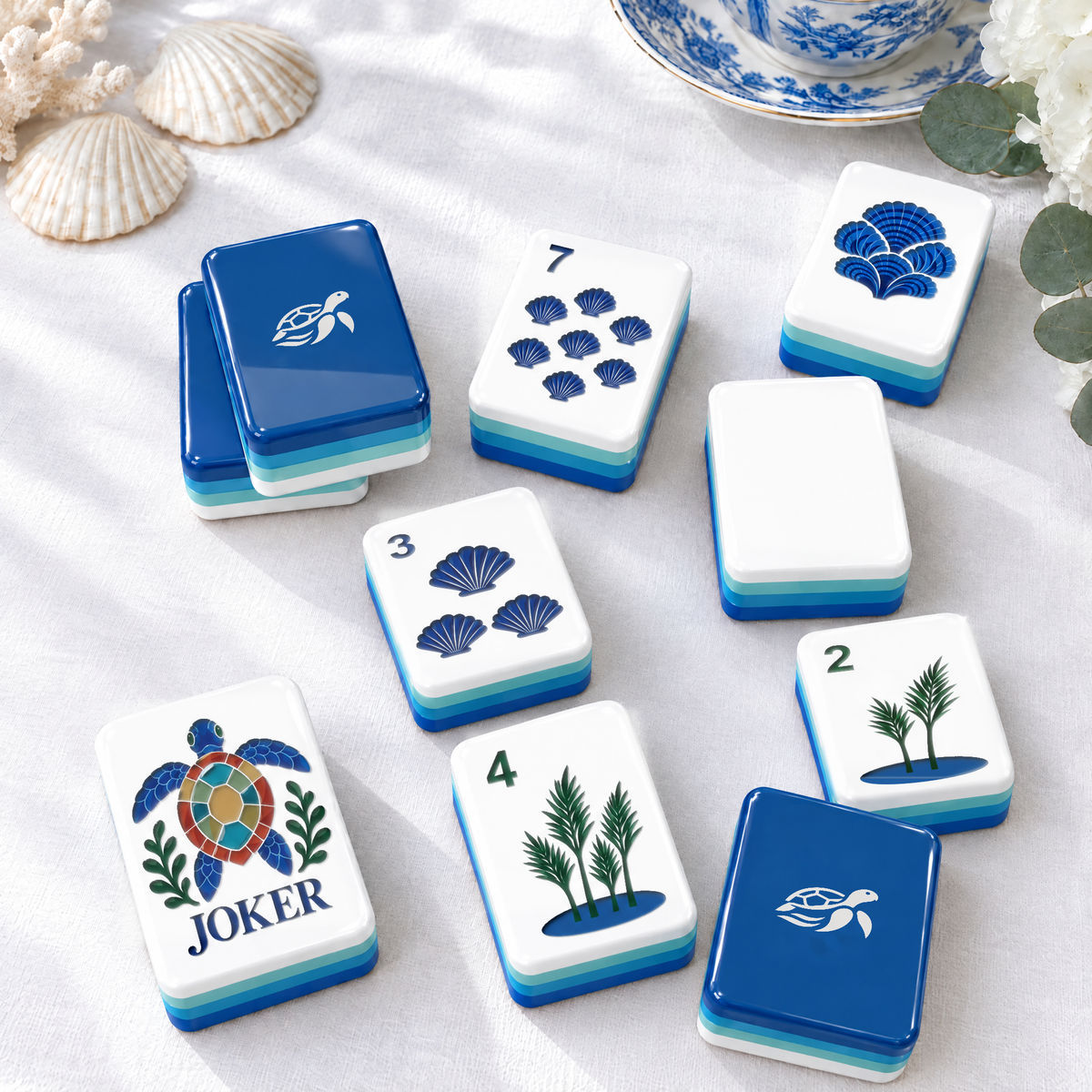
Wuhan mahjong (武汉麻将), played across central China, uses a 108-tile set (one Bam through 9 Bam, Crak, and Dot; winds; dragons; no flowers or jokers) with four players seated by compass and a live dealer system where the dealer stays as long as they win. The biggest mistakes beginners make are miscounting the wall (the 108 tiles are divided into 27 stacks of 4, not drawn individually), misidentifying scoring patterns (Wuhan has fixed point values per hand type, not the season-based multipliers of other regions), and breaking the wall at the wrong tile, which invalidates the entire hand draw. A complete game cycle (one round per player as dealer) takes 45 minutes to 2 hours. American mahjong uses 152 tiles, jokers, a card-based hand system, and no dealer advantage—the two games are fundamentally incompatible. Wuhan's scoring hinges on declaring "hu" (胡, a complete hand) at precisely the right moment; delay or miscount, and your win becomes a loss or penalty.
Why do new players miscalculate the wall in Wuhan mahjong?
The wall is built in stacks of four tiles, but players often count individual tiles instead of stacks. In Wuhan, you build 27 stacks (108 tiles ÷ 4), sit them in a square, then break the wall at a random numbered position. If you've drawn three tiles from the wall and mistakenly think you need to draw from tile 47 instead of stack 12, you're pulling from the wrong position—the entire draw sequence becomes invalid and the hand is voided. Count stacks, not tiles. Mark your wall with a small separator token so everyone sees the four-tile grouping. The dealer must break the wall using a public dice roll, never by eye.

How does Wuhan's dealer system trap American players?
In American mahjong, the dealer role rotates regardless of wins or losses. In Wuhan, the dealer (庄家, zhong jia) keeps the position after a win and only passes after a loss or tie. This fundamentally changes strategy: a player holding a near-complete hand will push for completion under dealer pressure, whereas in American play there's no such incentive. American players new to Wuhan often "give up" too early, folding tiles they could have held for dealer advantage. The dealer also draws first and plays last in the round—always act aware of dealer position and never assume turn order is clockwise throughout. Dealer position shifts clockwise only when the dealer loses.
What scoring errors cause disputes in Wuhan mahjong?
Wuhan scoring assigns fixed point values to hand patterns (all simples, all terminals, dragon pungs, mixed honors) based on tile combinations, not multipliers applied to a base. American players expect scores to compound or scale; Wuhan scores are additive or binary—you either have the pattern or you don't. The most common error is awarding points for partial patterns: for example, claiming extra points for two dragon pungs when the hand only qualifies if all three dragons are punged. Read the hand rulebook specific to your city variant (Wuhan differs from Chongqing, which differs from Sichuan). Write the point values for each winning pattern on a reference sheet and place it face-up on the table during play. All four players must agree on the hand before tiles are discarded.
Why do players call "hu" at the wrong moment and lose?
In Wuhan, you declare "hu" (complete hand, ready to win) only when you draw a tile that completes a legal pattern. Many newcomers call "hu" prematurely—after drawing two-thirds of a winning hand—and must either forfeit that position or pay a penalty depending on house rules. Once you declare "hu," you must hold that hand; you cannot draw another tile or adjust your melds. American players accustomed to the National Mah Jongg League card system (where you match a hand number and jokers fill gaps) often overthink the call. In Wuhan, the hand is simpler: four melds (each three tiles: pung, kong, or chow) plus a pair. If your hand satisfies this structure and matches a scoring pattern, and you draw a completing tile—only then declare. Never declare "hu" because you think the next tile will help.
What tile-swap and counting errors happen in the Charleston equivalent?
Wuhan has no formal Charleston. Instead, players exchange tiles during a brief "wash" phase before the wall is built. Players pass tiles left, right, and across in specific sequences, but many mistake the direction or count: some pass four tiles instead of three, or pass in the wrong sequence, corrupting the initial hand distribution. Also, because Wuhan is often played for money, players sometimes hide or miscount tiles before the wall is built—if a player ends up with more than 13 tiles in hand, the game is paused, and house rules determine whether to restart or penalize. Count aloud: "I am receiving three tiles from my left neighbor, now I have 13." After all passes are complete, every hand must contain exactly 13 tiles, and the dealer draws the 14th to begin play. Never assume; always recount.
Mistake Category | How It Happens | Consequence | Prevention ---|---|---|--- Wall miscounted | Counting tiles instead of stacks | Invalid draw sequence, hand voided | Mark stacks with a token; count aloud Dealer advantage ignored | Treating dealer as random like American play | Poor strategy, early folds | Check dealer position every turn; adjust aggression Scoring pattern misread | Claiming partial-pattern bonuses | Disputes, wrongful payout | Reference sheet visible; all four agree before payout "Hu" called early | Declaring before a tile-completing draw | Forfeit or penalty | Declare only after drawing a completing tile Tile exchange error | Passing wrong number or direction in wash | Hand inequality, restart needed | Count aloud; verify 13 tiles per hand before wall build
🀄 Shop best-selling mahjong sets →

Why American players get confused switching between Wuhan and American mahjong
The two games share tile imagery and four players, but almost nothing else. American mahjong uses 152 tiles plus jokers, a card-based hand system updated every year, no dealer advantage, and sequences (chows) as legal melds. Wuhan uses 108 tiles, no jokers, fixed hand patterns, dealer retention, and prohibits chows in most variations (only pungs, kongs, and a pair). Switching between the two mid-week—playing American on Tuesday, Wuhan on Thursday—causes tile blindness: you'll reach for a joker that doesn't exist, read a hand off the card that isn't valid, or assume the dealer rotates automatically. Keep a one-page summary of each game's core rules at the table. If you're new to Wuhan, play American-only for a month first, then switch cleanly for a full season of Wuhan before mixing them again.
What to check before you buy or borrow a Wuhan set
If you're hosting Wuhan mahjong for the first time, you'll need a 108-tile set specific to the Wuhan variant (some regional sets sold as "Chinese mahjong" omit dragons or flowers incorrectly). Verify that your set includes no jokers and no flowers—if it does, it's not a true Wuhan set. Check that winds are labeled (North, East, South, West) clearly, not as symbols alone, so new players can read them at a glance. A good mahjong mat sized for a 108-tile set (slightly smaller than an American mat) keeps tiles organized and prevents miscounts. Many Wuhan players also use a travel bag to transport the set safely, especially if you're moving between homes or venues weekly. Do not use an American set for Wuhan—the extra 44 tiles and jokers corrupt the game. Borrow or buy a Wuhan-specific set; they're widely available online and cost significantly less than American sets because they contain fewer tiles.
🎁 See our most-loved mahjong sets & accessories →
How to teach Wuhan rules to a mixed table of new and experienced players
Start by playing a practice hand with no money and all tiles face-up so everyone sees the wall build, draw sequence, and hu declaration in real time. Assign a "scorekeeper" who is fluent in Wuhan and let them read each winning hand aloud before payment is exchanged. Explain the dealer system first: "East dealer plays first and lasts. If East wins, East stays. If East loses, the deal passes to South (or your house convention)." Next, explain the wall: "We build 27 stacks, break at a random position, then draw clockwise in groups of two or four depending on house rules." Finally, walk through a simple winning hand—all simples, no honors—so players see that a complete hand is four groups of three plus a pair, nothing more. Play three hands without money. Then play one hand for small stakes so players feel the pressure and learn the timing of "hu" declaration. Never mix American and Wuhan rules in the same session, even by accident.
Common house-rule variations that trip up visitors
Wuhan rules differ by city and even by club. Some versions allow only pungs and kongs (no chows); others allow chows but with strict restrictions. Some require you to declare "hu" with a special call; others require a silent sign. Some award bonus points for "all pungs" (no chows at all); others don't recognize it. Money play varies: some tables play "even money" (all losers pay the winner equally); others use "full payment" (loser pays winner directly based on hand value). If you're visiting a Wuhan table for the first time, ask before you sit down: "What are your house rules for chows, bonus patterns, and payment?" Have the host write them on a card and keep it visible for the first three hands. Never assume that Wuhan rules in Dallas match Wuhan rules in San Francisco—they often don't.
✨ Find your Mahstead set — free US shipping →
What to check before you buy or host
Verify your set has exactly 108 tiles: one through nine of each suit (Bam, Crak, Dot), four winds, three dragons, no jokers, no flowers, no blanks.
Test that all tiles are readable (not worn, faded, or cracked) before inviting players.
Print a one-page house-rule summary for your table so no one has to guess.
Use a timer or phone app to track "hu" declarations—someone will forget and call early.
Mark the wall with a token or chip so players see the four-tile stacks, not individual tiles.
Assign a scorekeeper who knows Wuhan scoring; do not rotate this role mid-game.

FAQ
Is Wuhan mahjong the same as Chinese mahjong?
No. Wuhan is one regional variant of Chinese mahjong; Cantonese, Sichuan, Chongqing, and Shanghai variants exist with different tiles, hand patterns, and scoring. Always confirm which variant your table plays before sitting down.
Can I use an American mahjong set to play Wuhan?
No. American sets have 152 tiles, jokers, and flowers. Wuhan uses only 108 tiles (no jokers, no flowers). The two sets are incompatible; using the wrong set voids the game.
What does "hu" mean, and when do I call it?
"Hu" (胡) means you have a complete, winning hand. Call it only after you draw a tile that completes your hand to four melds plus a pair. Do not call early or you forfeit or pay a penalty depending on house rules.
Why does the dealer stay in position after a win in Wuhan but not in American mahjong?
Wuhan's ruleset preserves dealer advantage across multiple hands to increase strategic tension and payouts. American mahjong rotates dealer after every hand to ensure fairness across seasons of play.
How many tiles does each player hold at the start of a Wuhan game?
Each player holds exactly 13 tiles at the start. The dealer draws the 14th tile and plays first. After each turn, a player draws one tile and discards one, keeping hand size at 13 (or 14 as the current player).
What happens if someone miscounts the wall and we draw from the wrong position?
The entire hand is voided, and the wall is rebuilt. No payout occurs. To prevent this, always count stacks aloud and use a separator token to mark the draw position before the round begins.
Can I call "hu" if I draw a tile that matches a pattern but I haven't melded yet?
No. In most Wuhan variants, you must have melded (exposed at least one meld face-up) before calling "hu" on a draw. "Hidden" hu (all tiles in hand, concealed) has different scoring or is forbidden depending on house rules. Ask your scorekeeper.


View More
View More
View More
