
How to Pick a Mahjong Hand: Step-by-Step Guide for Beginners
Last updated: Nov 23, 2026
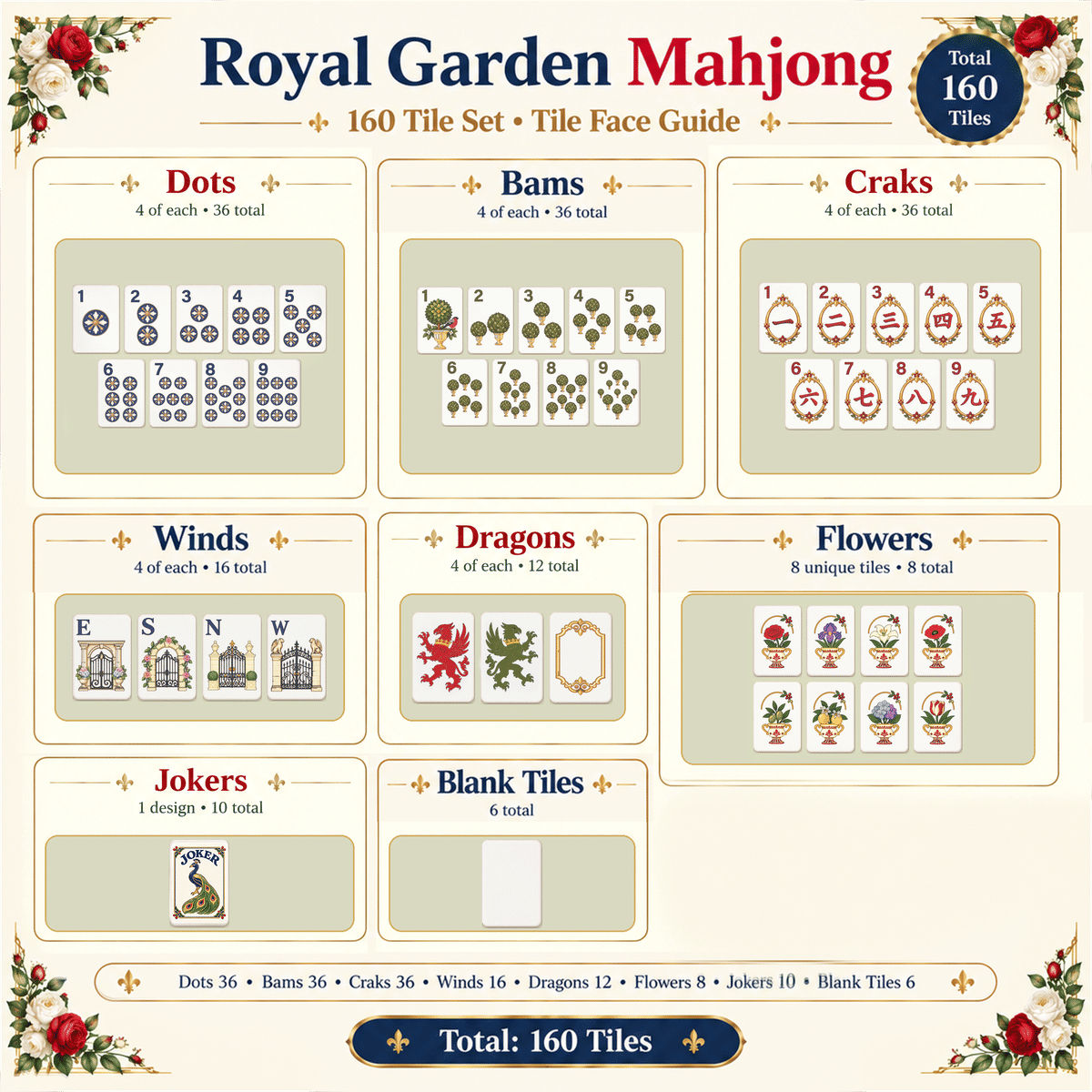
Hand selection in American mahjong is the core skill that separates players who guess from those who win consistently. When you draw or receive tiles during play, you're constantly comparing your 13 tiles against the laminated card in front of you to find one or more valid hands you could complete. A hand consists of four melds (groups of 3–6 identical tiles or sets of pairs) plus one pair, all drawn from the current year's National Mah Jongg League card — no others are legal. The card is organized by hand type (like "2024 Consecutive Run, Like Numbers" or "2024 All Pung Hand"); you read left to right through each section to spot your pattern. Speed improves with practice and a quality card holder, but the real skill is learning to recognize which tiles move you closer to completion while discarding safely. Mahstead players use printed cards during the Charleston and keep them accessible throughout play to avoid costly errors.
What exactly is a mahjong hand?
A mahjong hand is one complete pattern from the National Mah Jongg League card. It consists of exactly four melds (groups) and one pair. Each meld is either a pung (three identical tiles), kong (four identical tiles), quint (five identical tiles), or sextet (six identical tiles). The pair is always two identical tiles and can never include a joker. When all 14 tiles in your hand match one row on the card, you win and declare "mahjong."

How do you read the mahjong card to find your hand?
The card is printed in sections by category—like "Consecutive Run," "Like Numbers," or "All Pung"—and each row shows one legal hand. You scan left to right and top to bottom through the section that fits your tiles. For example, if you have mostly identical groups, you'd look in the "All Pung" section; if your tiles are numbered 3–4–5, 6–7–8 and so on, search "Consecutive Run." The card color and year mark it as current and legal for that season. Knowing how to read the mahjong card prevents hours of frustration at the table.
What's the difference between a closed hand and an exposed hand?
A closed hand is 13 tiles hidden in your rack, plus one drawn tile you hold—no one else sees what you have until you win or fold. An exposed hand means you've already laid down melds (pungs, kongs, quints, or sextets) on the table for all to see. You can call an exposed pung, kong, quint, or sextet and add a tile to it from the wall or discards, but in American mahjong you cannot call a chow (sequence) or expose a pair. Once exposed, your melds are locked—you cannot rearrange them. Many beginners mistakenly expose too early and lose flexibility; hold your hand closed as long as possible to keep options open.
How do jokers change which hands you can pick?
Jokers are wildcards that substitute for any single tile in a meld or pair. American mahjong includes exactly 8 jokers in a standard 152-tile set. A joker can replace a Bam, Crak, Dot, wind, or dragon—whatever the hand requires. However, jokers can never fill a single tile slot alone, and you cannot use a joker in a pair. If your hand calls for "Red Dragon, Red Dragon" and you hold only one Red Dragon, a joker can act as the second Red Dragon to complete the pair. Many hands on the card explicitly show jokers as part of the pattern, marked with "J" or a special symbol; always check the card to confirm jokers are allowed in your chosen hand before you play it.
🀄 Shop best-selling mahjong sets →
What are the most common hand-picking mistakes?
Mistake 1: Playing a hand not on the current year's card. The National Mah Jongg League publishes a new card every spring; hands from last year are no longer legal. Always check the year and card color before declaring mahjong. Mistake 2: Misreading suit symbols. Bams look like bamboo sticks, Craks like wheels, Dots like circles—the pictures are distinct, but squinting under bad light causes confusion. Use quality mahjong sets with clear, large tile markings to avoid costly misreads. Mistake 3: Forgetting that pungs must be identical. Three 3 Dots is a valid pung; "3 Dot, 4 Dot, 5 Dot" is not—it's a sequence, and sequences cannot be exposed or called in American mahjong. Mistake 4: Placing a joker incorrectly. A joker cannot be the single tile in a pung slot, nor can it be part of a pair (even as one of two). Mistake 5: Holding too many tiles of one suit early. Flexibility wins; distribute your early discards across suits to keep options alive.

How do you practice picking hands faster?
Drill with a partner outside of play. Lay out random tiles and set a timer for 30 seconds; search the card for any hand that could be made. When you find one, verify it contains exactly four melds plus one pair and all tiles match the card entry. Repeat until card-reading becomes muscle memory. After the Charleston passes and before the wall opens, top players mentally sketch two or three possible hands based on their starting 13 tiles—this keeps them ahead of the wall draw. Play slower games with no time pressure first; speed follows naturally. Keep a pen and notepad nearby during games to track which hands you've spotted; over weeks, patterns emerge and your card scan accelerates. Many weekly players report that hand-spotting time drops from 10 seconds per decision to 2–3 seconds after 20–30 games.
Stage | Hand-Spotting Time | Focus | Practice Method |
Beginner | 15–30 sec | Accuracy over speed | Card drills, off-table tile sets |
Intermediate | 5–10 sec | Reducing reads per scan | Timed practice, live slow games |
Experienced | 2–5 sec | Recognizing patterns instantly | Weekly play, mental note-taking |
🎁 See our most-loved mahjong sets & accessories →
What's the role of tile racks and card holders in hand selection?
Racks keep your tiles upright and organized so you can spot patterns quickly; poor visibility costs time and invites errors. A quality rack holds 18 tiles (you use 14 during play but hold 18 during the Charleston and opening draw). Pushers let you slide tiles gently without dropping or bumping them and revealing your hand to others at the table. Card holders keep the current year's National Mah Jongg League card at eye level, tilted to reduce glare—this prevents neck strain over a 2–3 hour session and keeps your focus on the card and your tiles, not wrestling with floppy paper. Mahstead racks with pushers are designed for one-handed tile management and include sturdy card holders that stand at the right angle. Without them, you're essentially playing with one hand tied behind your back.
How does hand selection change in other mahjong variants?
In Hong Kong mahjong, hand types are far fewer and simpler—mostly pungs and kongs with simpler winning patterns. Chinese Classical mahjong has sequences (chows), which can be exposed or called, unlike American mahjong; this opens dozens of additional hand types. Riichi mahjong uses a similar meld system but has bonus scoring for certain hand shapes and sequences play a major role. Taiwanese mahjong permits a much wider range of hand declarations and scoring multipliers. The guide to how to play American mahjong focuses on the card-driven, pung-heavy ruleset most common in North America; if you play one of the other variants, research the specific hand catalog for that region before sitting down.
What should you check before you buy a mahjong set for learning?
Tile clarity: Verify that Bams, Craks, and Dots are visually distinct, that numbers are large and easy to read, and that suit symbols are not faded. Card quality: The laminated National Mah Jongg League card (issued each spring) should come with your set or be purchasable separately; a flimsy or worn card leads to misreads. Rack height and size: Test a rack sample if possible, or read reviews about whether tiles fit securely without pinching or falling. Set completeness: A standard 160-tile set includes 152 playing tiles plus spare tiles; confirm yours counts all suits and wind/dragon tiles before play. Storage: A padded bag or case keeps tiles, racks, and cards protected if you're playing at multiple homes or in a league. Investing in a set you enjoy handling and a mat that defines your play area transforms a confusing first experience into a welcoming one.
✨ Find your Mahstead set — free US shipping →
What to check before you buy
Tile size: Standard American sets use large tiles (roughly 1.5" × 1"). Confirm dimensions match your rack width so tiles don't jam.
Card legibility: Print quality matters; a pixelated or tiny card ruins hand-spotting speed. Look at photos before purchase.
Set origin year: Sets from prior years won't work unless they include the current National Mah Jongg League card.
Rack compatibility: Bamboo and acrylic sets may have different tile thickness; racks must be sized to match.
Travel needs: If you play weekly at different locations, a set with a bag or case saves stress and tile loss.

FAQ
Can I use a hand from an old mahjong card if I know it's valid?
No. Only hands on the current year's National Mah Jongg League card (updated every spring) are legal. Playing an old hand results in an automatic loss and may violate league or house rules.
What if I think I see a hand but I'm not 100% certain it matches the card?
Verify by reading aloud left to right: tile type, suit, number, and any joker markings. If one tile doesn't match, it's not your hand. When in doubt, ask the other players or scorekeeper to confirm; a moment of pause beats declaring a false hand.
How many hands should I memorize before playing my first game?
You don't need to memorize any. The card is legal and encouraged at the table; new players sit beside it during play. Memorization happens naturally over 10–20 games as patterns repeat.
Why can't I use a joker in a pair?
A pair must always be two identical tiles for scoring accuracy and house rule consistency. Jokers are wildcards for melds (groups of 3+) only, keeping the pair slot sacred and preventing dispute.
If I'm playing an exposed hand with four melds out on the table, can I change my mind and pick a different hand?
Once you expose a meld, it's locked and cannot be rearranged into a different hand. You must either complete the hand you've started or fold. This is why experienced players hold hands closed as long as possible.
Do different regions have different card layouts or rules for hand selection?
Yes. The National Mah Jongg League card (used in North America) is region-specific. Chinese, Hong Kong, Taiwanese, and Riichi variants have entirely different hand catalogs and rules. Always confirm which variant and card you're using before play begins.


View More
View More
View More
