
How to Deal in Two-Player Mahjong: Setup & Rules
Last updated: Nov 23, 2026
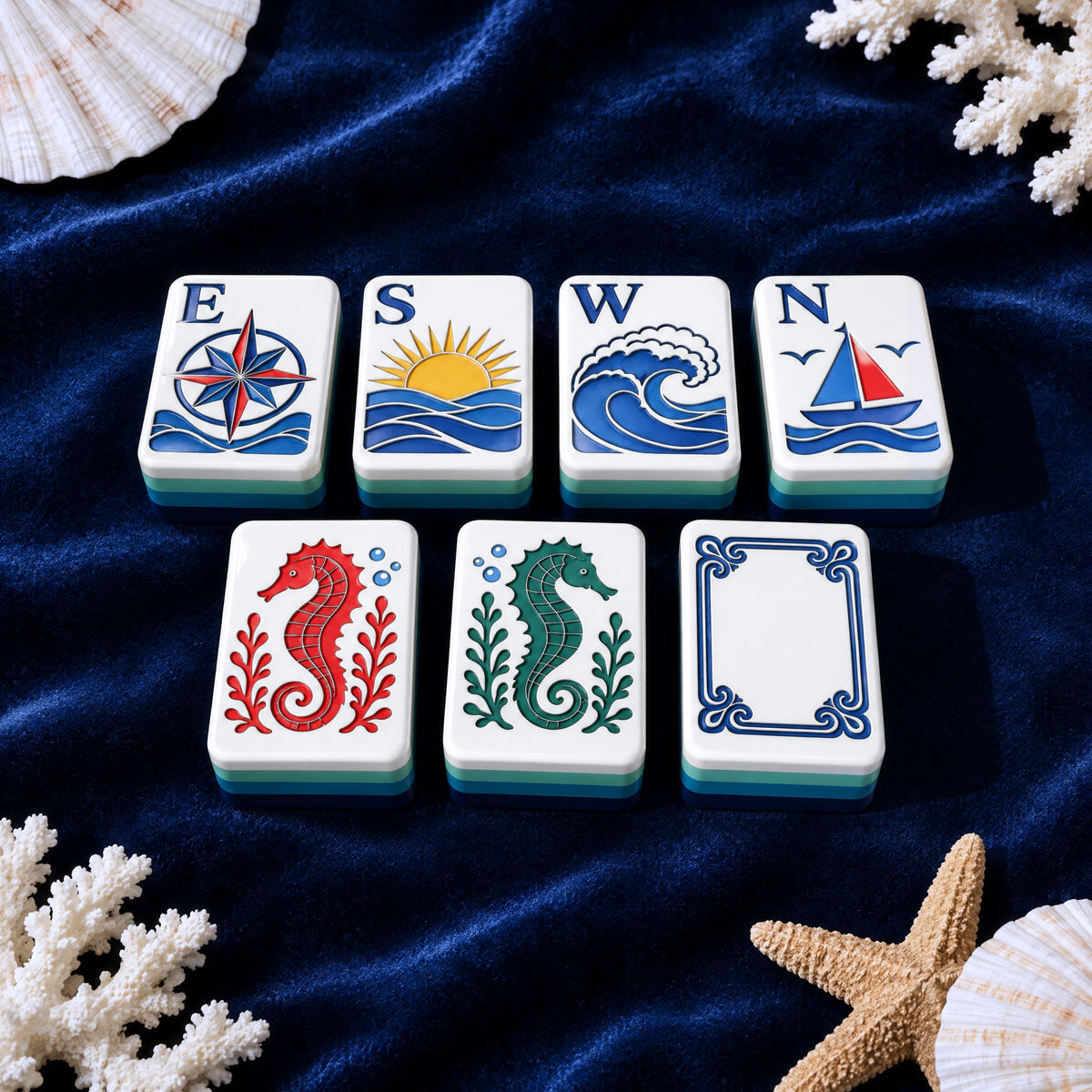
American mahjong is designed for four players, so two-player dealing requires modification. Each player receives 13 tiles (instead of the usual 14 after the draw), and you skip the Charleston—pass tiles one-on-one instead. Build a wall with all 152 tiles and 8 jokers (a standard set), then deal by alternating wall sections: East takes tiles from the wall's far end, West from the near end, splitting draws until each holds 13. Discard immediately; the first hand typically comes from the current year's National Mah Jongg League card, though you may agree on simplified hands for practice. The game uses identical rules for melds (pungs, kongs, quints, sextets) and scoring. Chinese and Riichi two-player games use sequences (chows) and different tile counts, so clarify your variant before dealing.
Two-player mahjong isn't the standard American format—the game was born for four chairs—but many of us play it when a third or fourth can't make game night. The dealing method, tile distribution, and winning hand definitions all shift when you're sitting across from one opponent instead of around a square table.
Why is American mahjong hard to adapt to two players?
American mahjong's 14-tile hand, four-player wind rotation, and the Charleston (tile-passing ritual) all depend on four seats. Remove two players and the game breaks: winds lose meaning, the Charleston becomes awkward, and hand complexity designed for four becomes impossible to balance. Most two-player American games simplify by using fewer tiles, dropping the Charleston, and agreeing on a small set of hands beforehand.

What's the correct two-player dealing setup?
Build your wall with all 152 tiles plus 8 jokers, arranged in a full rectangle (as if for four players). Decide who deals first—East is traditional. East sits on one side, West on the other. Instead of the four-player spiral deal, you alternate: East draws a stack of tiles from one end of the wall, West draws an equal stack from the opposite end. Continue alternating until each player has 13 tiles and one live tile remains in hand for discard. This mimics the principle of distributed drawing without the ceremonial four-way sequence. No Charleston is played; you may pass tiles directly or skip passing entirely for speed. Start the discard phase with East throwing one tile face-up.
How do you avoid the most common dealing errors?
The biggest mistake: miscounting the wall. A standard set contains exactly 152 playing tiles plus 8 jokers. If your set is 160 tiles, the extra pieces are spares and never go into play—remove them before building the wall. Second error: treating two-player like four-player dealing and leaving a 14-tile hand in hand—stick to 13. Third: losing track of which wall end is "live" after dealing; mark it clearly or agree upfront. Fourth: allowing the Charleston; it invites chaos in two-player rhythm. Finally, confusing two-player American with two-player Chinese (which uses sequences and a 14-tile hand)—confirm your rulebook before the first deal.
What hand options work for two-player American mahjong?
Because two-player American removes four-player complexity, most groups agree on a single page of the current year's National Mah Jongg League card—or a curated subset—rather than using all seasonal hands. Many experienced pairs narrow it to 10–20 hands of mixed difficulty (basic Like Numeral, basic Consecutive Run, one or two complex Dragon/Wind patterns). This keeps the game playable and fair. You can also print a simplified two-player card or write hands on index cards: for example, "three Pungs + one Kong + one Pair" or "Quint in Bams, Quint in Dots, two Pairs." The goal is mutual enjoyment, not tournament rules. If you later add a third or fourth player, you'll adapt back to the full seasonal card.
How does two-player mahjong scoring differ from four-player?
In standard American mahjong, East wins and all other players pay based on hand value and whether East or a non-East won. With two players, you have only East and West, so scoring simplifies: the winner takes payment from the non-winner (or both pay/receive equal points if you prefer). Some groups use the full American point table; others agree on a flat payment (e.g., "winner gets 1 point per hand value level"). The National Mah Jongg League card assigns values (4 to 12 points per hand); you can use those or make a house rule. Record wins to track sessions. The lack of a four-player settlement means you skip the center pool and four-way angle—so agree on your payment method before East deals.
Comparison: Two-Player Variants at a Glance
Aspect | American (2-player adapted) | Chinese (2-player standard) | Riichi (2-player standard) |
Tile count per hand | 13 (deal only) | 14 (including draw) | 13 (including draw) |
Sequences allowed? | No | Yes (chows) | Yes (sequences) |
Sets in hand | Pungs, Kongs, Quints, Sextets only | Pungs, Kongs, Chows | Pungs, Kongs, Chows |
Wall size | Full 152 + 8 jokers | 144 tiles (no suits, no jokers) | 136 tiles (no flowers, no seasons, no jokers) |
Charleston used? | No (skip it) | Not typically | Not typically |
Winning tile source | Self-draw or opponent discard | Self-draw or opponent discard | Self-draw, opponent discard, or robbing the kong |
Basis | American rulebook adapted | Chinese classical rules | Japanese standardized rules |
🀄 Shop best-selling mahjong sets →

What tiles and equipment do you actually need?
A standard 160-tile acrylic set (like those in our best-selling collection) contains exactly 152 playing tiles and 8 jokers, plus spare tiles you'll never touch during play. For two players, one complete set is all you need. Remove the extras before dealing to avoid confusion. You'll also benefit from a mahjong mat to define the play zone and protect tiles; a cloth mat with corner pockets keeps the wall compact and reduces accidents. If you play weekly, racks with pushers help each player organize their 13 tiles neatly—one rack per player is ideal. For carrying to a friend's house, a padded bag safeguards your set. Dice are optional in two-player (you can just agree who deals), but having them keeps the dealing fair and fast.
🎁 See our most-loved mahjong sets & accessories →
What to check before you buy or deal
Tile count: Confirm your set has exactly 152 playing tiles + 8 jokers. If it's 160 or more, identify and remove the spare blanks or jokers.
Suit spelling: Verify your tiles use "Bam," "Crak," and "Dot" (not alternatives). This matters only for clarity when teaching, not for two-player play.
Joker rule: In American mahjong, jokers cannot fill a single tile or a pair—only use them in melds of 3+ (Pung, Kong, Quint, Sextet). This applies to two-player too.
Hand source: Choose one of these: (a) agreed subset of the current year's National Mah Jongg League card, (b) a simplified house card you both understand, or (c) basic agreed patterns (three Pungs + one Kong + one Pair). Clarify before dealing.
Variant confirmation: Confirm you're both playing American (no sequences), not Chinese or Riichi (which allow sequences and use different tile counts).
Wall building: Use all 152 tiles and all 8 jokers in the wall; do not add spare tiles into play.
Pass rule: Decide: no Charleston, or a one-on-one exchange? Agree beforehand.
How does two-player dealing differ from three- or four-player?
In standard four-player American mahjong, East deals using a spiral draw around four seats, and each player receives 13 tiles in hand plus 1 tile drawn to start play (14 total). The Charleston passes tiles clockwise. Three-player games also adapt—each player draws from the wall in turn, skipping one wind direction, and usually receive 14 tiles in hand. Two-player removes the third and fourth seats entirely, so you deal from opposite ends of the wall and reduce the in-hand count to 13 to preserve the tile economy. The principle remains: distribute from a common wall, draw in turn, and finish when all players have tiles. The smaller player count makes turn order and draw timing far simpler.
✨ Find your Mahstead set — free US shipping →
Can you use a standard American mahjong hand card in two-player?
Yes and no. The current year's National Mah Jongg League card (issued every spring) lists about 70 hands across three seasonal play periods. Many of these hands are technically winnable with two players—for example, any pattern using Pungs, Kongs, Quints, and Sextets will still work. However, the full card assumes four players, four winds, and the Charleston, so using every hand in two-player games can feel unbalanced: some hands may become very hard to make, others trivial. Most experienced pairs choose one or two pages of hands they like, or create a small house card. This keeps winning achievable and the game fun. Learn how to read the league card in detail, then decide which patterns fit your two-player rhythm.

FAQ
Do I need a full four-player mahjong set to play two-player?
Yes. A standard set contains 152 tiles and 8 jokers—the exact count needed for two players. You use the entire set to build the wall; the difference is how many tiles each player draws and how hands are structured. You don't need multiple sets.
Why can't I just play two-player American mahjong with the four-player rules as-is?
American mahjong's four-player format includes wind rotation (East, South, West, North), the Charleston tile pass, and a 14-tile hand—all designed for four seats. With two players, winds become meaningless, the Charleston impossible, and a 14-tile hand exhausts your draws too fast. Two-player requires adaptation.
If I'm learning for the first time, should I start with a simplified hand list?
Absolutely. Begin with 8–10 basic hands (e.g., three Pungs + one Kong + one Pair; two Quints + one Quint or Kong + one Pair). Once both players understand tile mechanics and winning conditions, introduce more from the league card. This accelerates learning and keeps early games fun.
What's the difference between two-player American, Chinese, and Riichi?
American uses no sequences, a 13-tile in-hand count (in two-player), 152-tile wall, and jokers. Chinese allows sequences, uses 144 tiles, no jokers, and is centuries old. Riichi is Japanese, standardized, uses 136 tiles, and includes robbing the kong. They're entirely different games; pick one variant and stick to it.
Can I play two-player mahjong casually without the league card?
Yes. Agree on a simple hand pattern (e.g., "any four Pungs + one Pair"), write it down, and deal. This is perfectly valid for casual play. Once you're comfortable, the league card offers more variety and depth—but it's not required.
If my set has 160 tiles instead of 152, what do I do with the extras?
The 8 extra tiles are spares (usually bonus jokers or blanks). Set them aside in a bag or envelope before you build the wall. Never add them to the 152 playing tiles; the wall must contain exactly 152 tiles and 8 jokers for fair play.
How do I keep track of whose turn it is to draw in two-player dealing?
Alternate strictly: East draws a stack from one wall end, West draws from the opposite end, then East again. Mark which end is which with a small note or token so you don't lose your place. After dealing, the player with fewer tiles draws first to equalize.
Is it true that jokers can be used anywhere in two-player mahjong?
No. In American mahjong—whether two-player or four-player—jokers can only fill a tile within a Pung (3), Kong (4), Quint (5), or Sextet (6). They cannot form a single tile, a pair, or a sequence. This rule is absolute.


View More
View More
View More
