
How to Deal in Three-Player Mahjong: Rules & Setup
Last updated: Nov 23, 2026
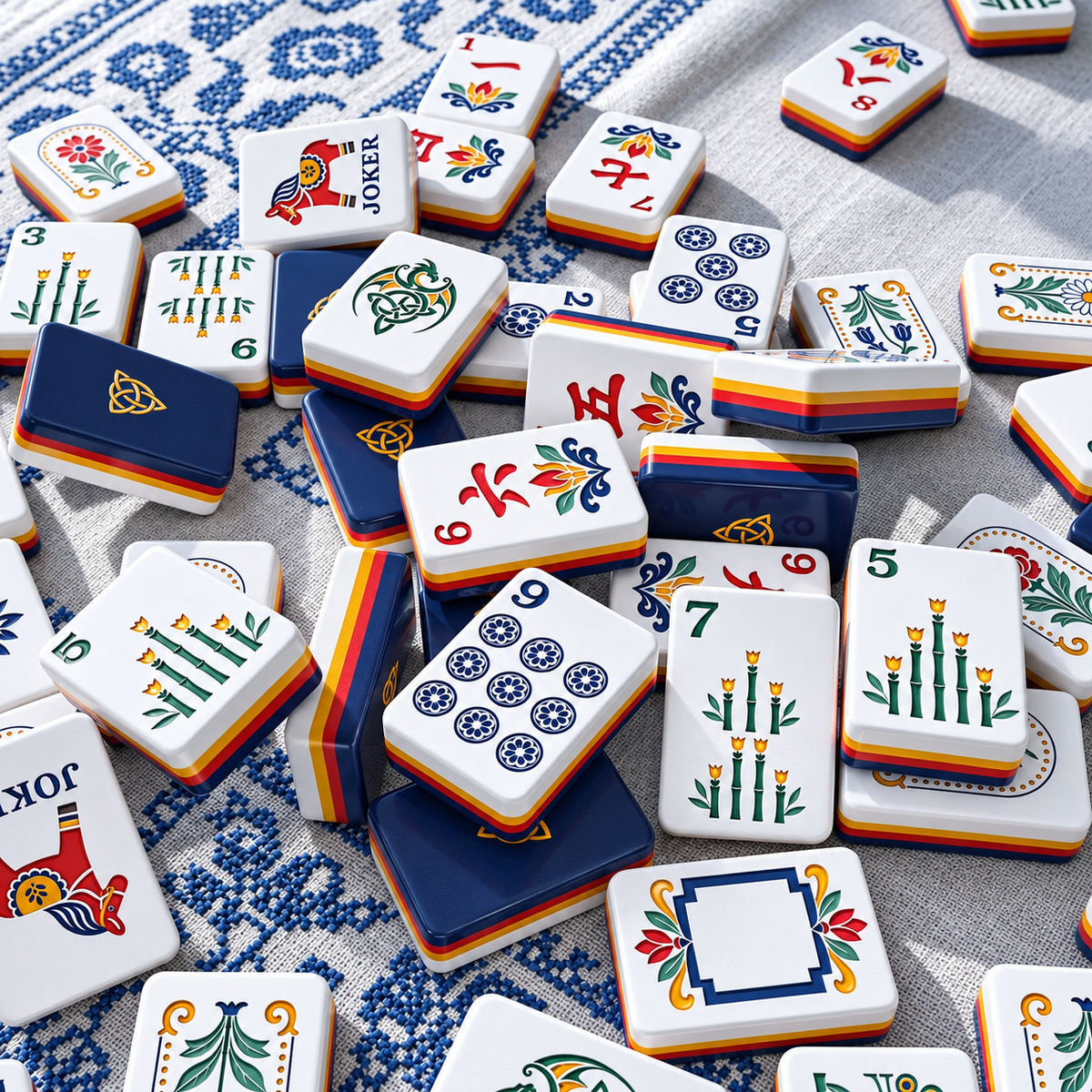
In three-player American mahjong, you use 108 tiles instead of the standard 152: remove all tiles of one suit (e.g., all Dots) and deal 13 tiles to each player instead of 14. The dealer sits East, draws and discards first, and rotates clockwise after each hand. The dead wall (the end 16 tiles dealers draw from) is smaller—just 12 tiles. This variant works best when you have exactly three players; it's recognized under house rules rather than formal league play, though some regional groups use published variations. The trade-off: faster games with tighter hand possibilities, but fewer tile combinations mean some standard card patterns won't fill.
Which suit do you remove, and why does it matter?
Remove the entire Dot suit (all 36 tiles: 1–9 Dots in four copies each) to keep symbols balanced. Dots are traditional because they're visually distinct from Bams (sticks) and Craks (circles), so removal is obvious at a glance. You can remove Bams or Craks instead—house choice—but consistency matters: all players must agree before the first hand, because wind and dragon tiles stay, and removing a suit changes which pungs and kongs are possible on any given year's card. Once you remove one suit, the remaining 108 tiles include Bams, Craks, winds, dragons, flowers, jokers, and blanks (if your set has them).

How do you deal 13 tiles per player in three-player mahjong?
Dealer (East) draws 14 tiles as usual during the deal itself—never from the live wall. Non-dealers each receive 13 tiles. After the initial deal, all three players draw and discard from the live wall in turn order (East → South → West → East again), keeping their hand at 13 until someone wins. This is a single-step modification: divide the 108 tiles by three (36 each), then in the dealing ritual, give dealer one extra tile at the end, so East has 14 and South and West have 13 apiece. The wall setup is identical to four-player, except the live wall is smaller and jokers substitute for missing tiles in hands much more often.
What happens to the dead wall when you play with three players?
The dead wall (the set-aside tiles the dealer draws from during play, also called the "kong wall") shrinks to 12 tiles instead of 16. In standard four-player American mahjong, the dealer reserves 16 tiles at the end of the wall; in three-player, you reserve 12. This change keeps the game balanced: fewer live tiles means kongs are more impactful, and the dead wall exhaustion happens sooner. If a player declares a kong, the dealer draws from the end of the dead wall and continues play; if the dead wall runs out before anyone wins, the hand is a draw. The live wall still exhausts first in almost every game, so the dead wall rarely matters—but when it does, the shorter count prevents unnatural hand stretches.
How does rotation and scoring work across three-player hands?
Dealer (East) sits in position 1 and goes first. After East's hand ends, the dealer position rotates to the next player clockwise (South becomes East, West becomes South, East becomes West). Unlike four-player mahjong, where you typically play four consecutive hands as dealer before rotating—one for each position—three-player often runs three consecutive hands, then rotates seats. Scoring follows house rules: most groups use the same point scale as four-player (e.g., self-drawn hands pay all three non-winners; a winning discard is paid by that discarder only), but some reduce payouts by 25% to reflect the smaller pool. Agree on scoring before playing your first hand; post it where everyone sees it.
What if you use the actual three-player card or variant ruleset?
Some regional groups and online platforms publish formal three-player variants with their own card, distinct hand patterns, and adjusted quint/sextet rules. The most common is the "three-player elimination" format, where certain hands are removed from the card entirely to account for the missing suit. If your group uses a published three-player card (often regional or club-specific), follow that card exactly, as it will define which hands are legal and where jokers fit. Most casual three-player games, however, use the current standard National Mah Jongg League card and simply remove one suit, accepting that some patterns won't be reachable—this keeps learning simple and preserves card familiarity. Check with your group before your first game to confirm which method you're using; confusion here will derail early hands.
Setup Element | Four-Player | Three-Player | What Changes |
Tiles in play | 152 | 108 | Remove one entire suit (36 tiles) |
Tiles per player | 14 dealer, 13 others | 14 dealer, 13 others | Deal size stays the same |
Dealer draw pool (dead wall) | 16 tiles | 12 tiles | Shorter reserve pool |
Total hands before seat rotation | Often 4 (N, E, S, W) | Often 3 (three dealers) | Dealer role rotates sooner |
Card reference | Current year NMJL | Current year NMJL or regional variant | Same or variant |
Payouts (house rule) | Standard | Often 75% of four-player | Reflect smaller pot |
🀄 Shop best-selling mahjong sets →

Do you need a special set for three-player mahjong?
No. Any standard 160-tile American mahjong set works for three-player; the extra tiles beyond the core 152 are spares and never enter play anyway. Because you're removing exactly one suit (36 tiles), you keep 108 and discard 36, which means you use only the tiles you deal from a regular set. The jokers, blanks, and flowers stay the same. If your set includes engraved titles or designs, three-player doesn't change anything—you're just leaving the removed suit in its bag. The only advantage: if your group plays three-player frequently, some players keep a dedicated smaller bag with only the 108 tiles pre-sorted, which speeds setup. A standard best-selling American mahjong set from our collection is entirely sufficient.
What common mistakes do new three-player groups make?
Forgetting to remove the suit before dealing. If you shuffle all 152 tiles and deal, you'll end up with mismatched hand sizes and a broken wall—restart and remove the suit first.
Rotating dealer incorrectly. Some players rotate West to East, then East to South, creating confusion. Agree: East → South → West → East (clockwise around the table), and write it down.
Using the card for a suit that's been removed. If you removed Dots, check the card pattern: if it calls for a pung of 5 Dots, that hand is not playable this round. Skip it and move on—don't "substitute" with Bams.
Miscounting the dead wall. Mark the 12 dead-wall tiles physically (use a rack divider or a pen mark on the mat) so no one mistakenly draws from the live wall when the dead wall is meant to be used.
Unclear payout agreement. Before play, state: "Discarder pays double; self-drawn pays all three." Without this, disputes end games early.
What to check before you buy or start a three-player group
Confirm your set has at least 108 usable tiles – any standard 160-tile set qualifies.
Choose which suit to remove – agree with your group in advance (Dots is traditional).
Decide: current-year card or three-player variant? – look up local groups or online forums to see what's standard in your area.
Set payouts in writing – post them on the table or mat before the first hand.
Practice the first hand slowly – dealer role rotation and the smaller wall can feel awkward until you've done it once.
Use a mahjong mat with clear zones – three players around a circular mat can accidentally breach the wall boundary; a mat with marked dead-wall sections helps.
🎁 See our most-loved mahjong sets & accessories →
How does three-player compare to two-player and four-player variants?
Three-player mahjong sits between two-player mahjong (which requires a bot or dummy hand) and standard four-player. It's faster than four-player—fewer players mean fewer discards before a win—but more complex than two-player because there's no ghost position. Wind rotations are simpler: after three hands, everyone has been dealer once. Hands tend to be more defensive in three-player; fewer opponents means fewer people watching your discards, so bluffing and reading other players' strategies becomes more acute. Most groups choose three-player only when a fourth player is unavailable; it's not recognized by the National Mah Jongg League as official league play, so casual games and house rules dominate. If you're learning mahjong, start with four-player to build muscle memory, then try three-player once you're comfortable with hand recognition and wall mechanics.
✨ Find your Mahstead set — free US shipping →
Set yourself up for success with the right tools
Playing three-player means tighter wall dynamics and faster hand cycles. A well-designed mahjong mat with clear dead-wall markers prevents accidental draws from the wrong zone. Racks with pushers help three players organize 13 tiles neatly without the cramped feeling of a full four-player game. If you're hosting regular three-player sessions, a durable travel bag or case makes it easy to transport your set with just one suit pre-removed and bagged separately. Many of our customers use our sets for exactly this kind of house-game flexibility—the tiles are crisp and readable under varying light, and the acrylic durability holds up through frequent reshuffles.

FAQ
Can you play three-player mahjong with any year's card?
Yes. Use the current year's National Mah Jongg League card; remove one suit and deal as described. Some regional groups publish three-player variants with their own cards—check locally first.
What if someone calls "mahjong" but used a tile from the removed suit by mistake?
The hand is void. Verify the winning hand uses only the 108 tiles in play; if a tile from the removed suit appears, discard the hand, penalize the player (house rules vary), and restart that round.
How do you handle a kong in three-player?
Same as four-player: declare the kong, draw from the dead wall, and continue. The dead wall shrinks to 12, so exhaustion happens slightly faster—keep track.
Is three-player mahjong played anywhere formally?
No. The National Mah Jongg League recognizes only four-player American mahjong. Three-player is a house-rule variant; groups define their own rules, hand eligibility, and payouts.
Do you need a smaller mat for three players?
No; a standard four-player mat accommodates three comfortably with more personal space per player. A marked dead-wall zone on the mat is helpful to prevent wall-drawing errors.


View More
View More
View More
