
Is Mahjong Harder Than Poker? A Player's Honest Breakdown
Last updated: Nov 23, 2026
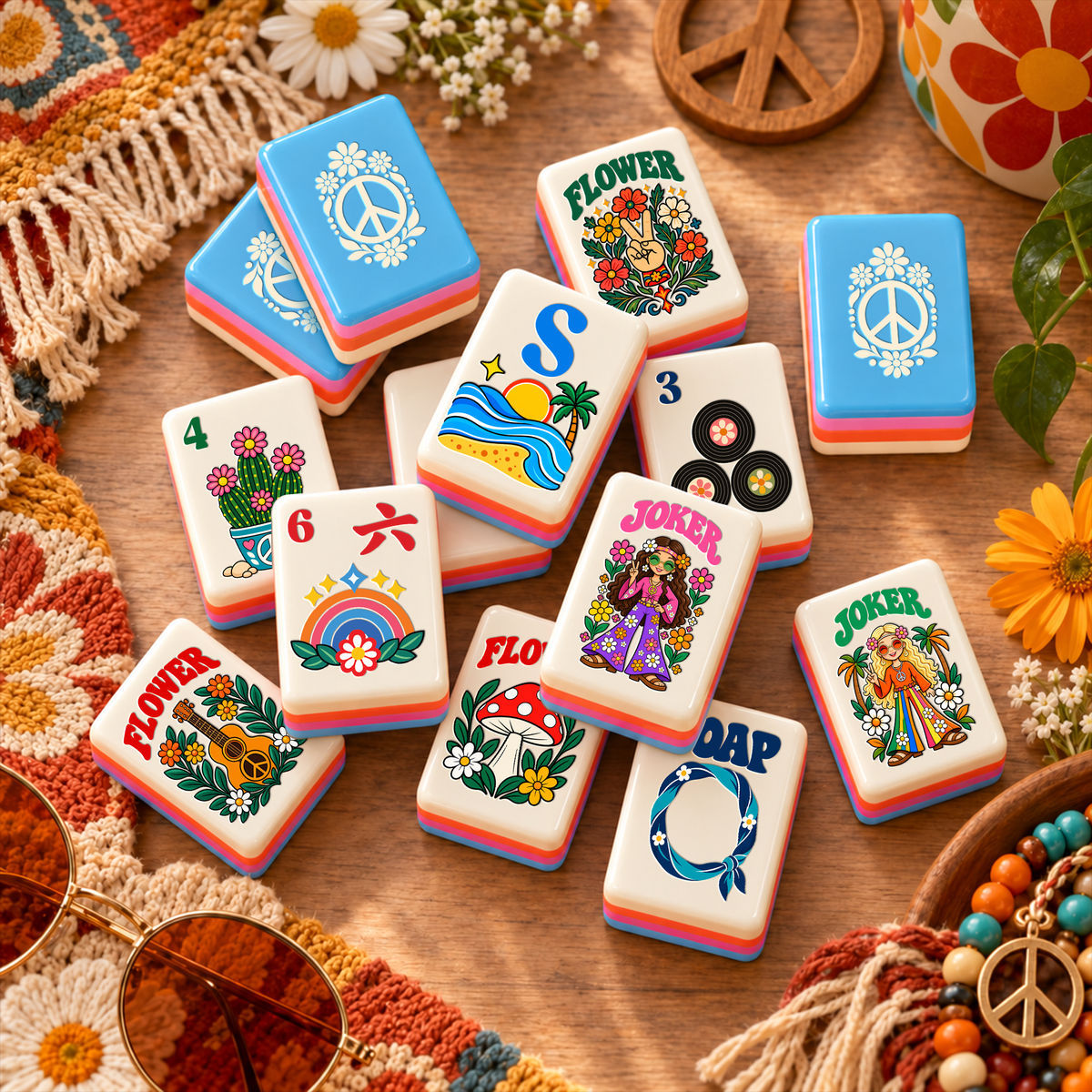
Mahjong is not objectively harder than poker—they're different puzzles. Mahjong demands higher memory load: you must memorize the current year's hand card (combinations of tiles that win), recognize 152 unique tiles instantly, and track what fourteen players have discarded. Poker's rule set never changes. However, mahjong's decision tree is shallower once you know the card; poker requires constant psychology and bluff-reading. Most poker players find mahjong's memory barrier steeper; most mahjong veterans find poker's unpredictability exhausting. If you have strong visual memory and enjoy pattern recognition, mahjong feels easier. If you thrive on reading people and adaptability, poker likely suits you better. Neither game is "harder"—they filter for different minds. We recommend starting with a quality set from our best-selling collection and the current hand card to remove one variable while you learn. --- 🀄 Shop best-selling mahjong sets →
What Makes Mahjong Feel Harder at First?
New mahjong players hit a wall poker players don't: the hand card. You must memorize or have constant access to combinations that change every spring. Poker rules stay the same forever; mahjong rules rotate annually. This forces active learning every year. Additionally, you're tracking not two hole cards but fourteen visible tiles per player and remembering what was discarded in the last twelve turns. Poker requires reading three other players; mahjong demands tracking three plus a constantly shifting discard history. The barrier is environmental, not intellectual.

Why Poker Feels Harder to Mahjong Players
Once you own the current year's hand card, mahjong becomes a memory + pattern game with predictable outcomes. Poker never stabilizes. Every hand rewires itself: your opponents' recent folds, stack sizes, position, bet sizing tells, and range assumptions shift every thirty seconds. Mahjong players often find poker's emotional variance destabilizing—you can play perfectly and lose to luck more often than in mahjong, where a winning hand is either legal or it isn't. Poker also punishes hesitation ruthlessly; mahjong gives you the discard pile to study. We find experienced mahjong players often say poker "never lets you settle."
Memory vs. Psychology: The Core Difference
Factor | Mahjong | Poker |
Memory demand | Very high (hand card + discard tracking) | Low (hand rules never change) |
Psychological reading | Minimal (tiles don't bluff) | Extreme (entire game) |
Rule changes per year | Yes (annual card) | No |
Luck factor | Low (drawn tiles are random, hand is fixed) | High (river cards, coolers) |
Time to "competence" | 4–6 weeks with daily card review | 3–6 months of play |
Adaptability needed | Low (same card for 12 months) | Constant (every session, every opponent) |
Mahjong tests crystallized intelligence (stored knowledge and pattern matching). Poker tests fluid intelligence (real-time problem-solving under pressure). Your comfort with each depends on which type you naturally favor.
How Learning Curves Really Compare
Starting a mahjong game: spend the first thirty minutes reading the hand card until you stop reaching for it. Mahjong players plateau quickly—after four weeks of weekly games, most identify legal hands reflexively. Improvement after that is marginal.
Starting poker: you lose steadily for two months while learning position, pot odds, and hand ranges. You don't "get it" until you've felt those losses emotionally. Poker's learning curve is longer but steeper. A mahjong novice can be competent in a single evening; a poker novice will donate money for weeks.
🎁 See our most-loved mahjong sets & accessories →
Many families switch from poker nights to mahjong nights because the rule ceiling is lower. If you're comparing them for a group: mahjong onboards new players faster. Poker builds deeper long-term skill—and longer-term frustration for beginners.

The Practice Factor: Why Your Answer Depends on Your Goal
If you're asking "which should I learn?"—mahjong if you want to play confidently within two weeks; poker if you're willing to invest months for deeper gameplay. If you're asking "which is more fun?"—that's personal, but we notice that poker players drawn to mahjong cite relief: no bluffing, no soul-crushing bad beats, no needing to memorize game theory. Mahjong players tempted by poker cite thrill: more variance, more table talk, less "solved" feeling.
We recommend trying mahjong first if you're risk-averse or have limited weekly time; start with a dedicated American mahjong set from our best-selling collection and invite friends for a single evening. The memory barrier breaks quickly, and you'll know within four hours whether the pattern-matching puzzle grips you. If it does, buy the current year's hand card and commit to weekly games through spring. If poker's psychology calls instead, you already know how that path feels.
One Honest Angle: The Hidden Difference
Mahjong has a ceiling. Once you master the current card, you improve incrementally through position play and reading opponents' speed—small gains. Poker has a staircase. Every major tournament update, metagame shift, or new opponent type forces you to rebuild. Mahjong players often describe the game as "meditative"—you're solving the same puzzle with slight variations. Poker players describe it as "alive"—never the same game twice. If "meditative" appeals, mahjong is easier and more satisfying long-term. If you need novelty, poker's chaos will feel less hard because it'll feel more engaging, even as you lose more often early on.
✨ Find your Mahstead set — free US shipping →
What to Check Before You Buy a Set
If mahjong wins your comparison:
Confirm your group plays American mahjong, not Chinese or Hong Kong (different rules and tiles).
Buy a 160-tile set with a carrying case if you'll host; check it includes the current year's hand card or budget for one separately.
Verify the tiles are large enough to read numbers without squinting—many sets online have tiny numerals.
Test that racks with pushers fit your table space and hand span before committing to a full setup.
For groups playing every week, a dedicated mat saves furniture and speeds cleanup.
If poker wins: you already know where to start, and you know to expect a slower, tougher climb.
Deeper Reading
For a complete mahjong rules overview, see how to play American mahjong. If you're new to the game, start with mahjong for beginners.

FAQ
Can I learn mahjong and poker at the same time?
Yes, but not well. Mahjong requires active hand-card memorization for twelve weeks; poker demands full attention to opponents and positions. We recommend mastering one before starting the other to avoid confusion and frustration.
Do mahjong and poker use the same strategy principles?
Partially. Both reward position awareness and opponent tracking. Mahjong strategy is more mathematical (tile probability, hand completion speed); poker strategy is more psychological (bluffing, range balancing). A skilled mahjong player has a 30% head start learning poker positional play; a poker expert has almost no advantage in mahjong until week three of study.
Is mahjong easier if I already play card games?
Not significantly. Card games teach you hand management and counting, which help slightly. But mahjong's annual rule change and tile-recognition demand are sui generis. We see bridge players and rummy veterans learn mahjong in the same timeframe as casual gamers—about four weeks to competence.
How often do mahjong rules change compared to poker?
The National Mah Jongg League releases a new hand card each spring, so winning hands rotate yearly. Poker's rules never change—straights are always straights. However, poker strategy evolves constantly due to metagame shifts and player innovation. Mahjong is stable year-to-year after spring; poker is perpetually unstable.
Which game is faster to play per hand?
Mahjong is faster. American mahjong hands typically finish in 10–15 minutes; poker hands average 5–8 minutes but require side pots, reshuffles, and hand-reading debates that extend play. A mahjong evening fits neatly into two to three hours; poker often runs longer.
Can beginners enjoy mahjong on their first night?
Yes. Give new players the hand card and thirty minutes of practice. By hour two, most players identify legal hands confidently and enjoy the game. Poker beginners rarely feel competent until week two of regular play.
Does mahjong have a bigger luck factor than poker?
No—quite the opposite. Mahjong luck is limited to tile draw (what you're dealt). Poker luck includes draws, flops, and river cards, meaning skill is diluted more by variance. In mahjong, a stronger player wins most nights; in poker, a stronger player wins slightly more nights over many months.


View More
View More
View More
