
How to Deal in Hong Kong Mahjong: Rules, Steps & Strategy
Last updated: Nov 23, 2026
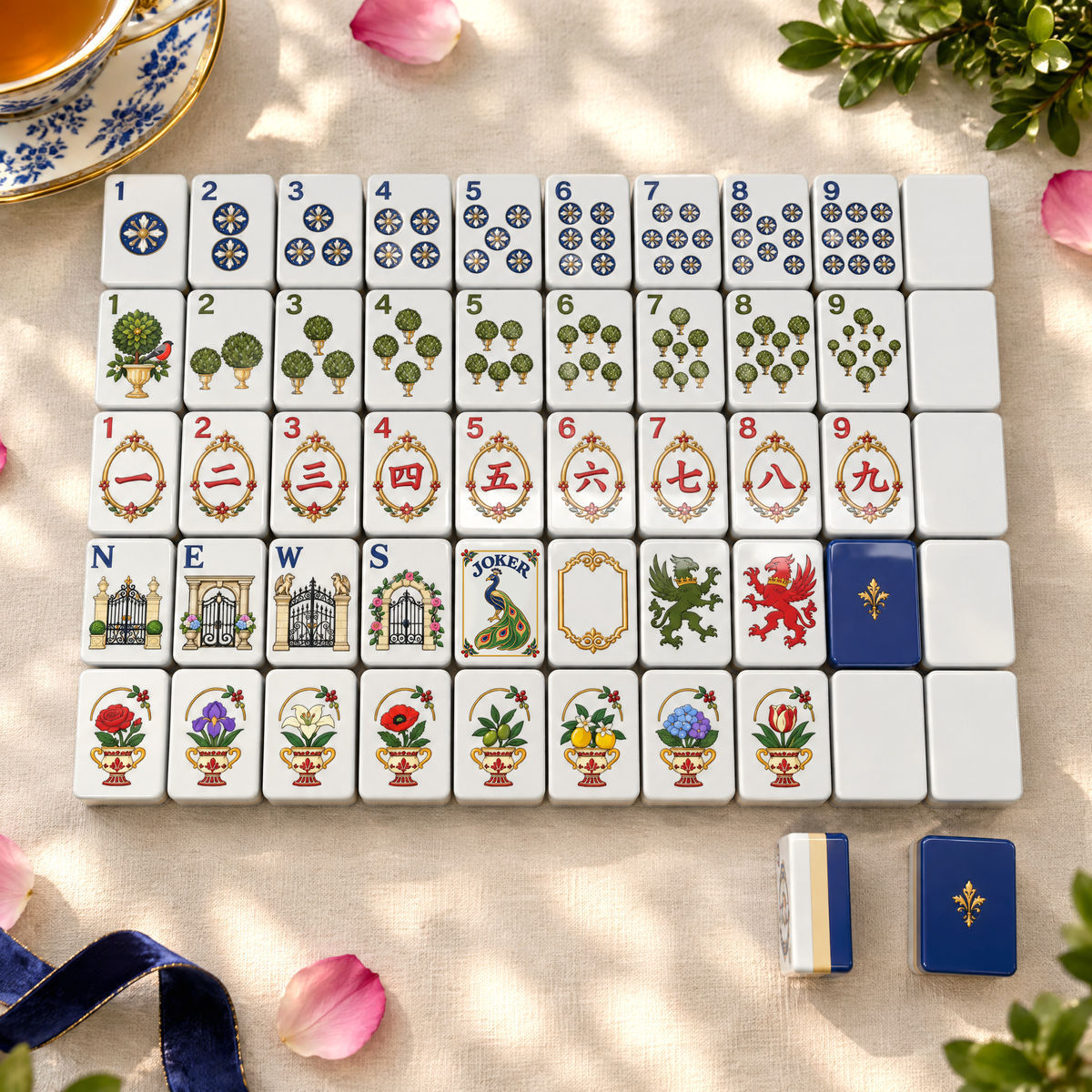
In Hong Kong mahjong, the dealer (Banker) builds and draws from a living wall of stacked, face-down tiles. Unlike American mahjong—where the wall is pre-built and tiles are drawn from the top—Hong Kong dealing requires active wall construction: players stack their 34 tiles (not 13 initial plus draws) into pairs arranged before them, then rotate the wall counter-clockwise after each discard. The dealer draws 14 tiles (the other three players draw 13); drawing happens in groups of four tiles at a time, going around the table. The wall rotates after each hand; if East wins, East stays Banker; if someone else wins, that player becomes East and the Banker seat shifts. Dealing takes roughly 2–3 minutes once practiced. You'll need a Hong Kong mahjong set (144 tiles, no jokers or American-style flowers) and a mat or smooth table surface. Common errors include counting tiles wrong, not rotating the wall correctly, or miscalculating the break point—all fixable with a checklist.
In Hong Kong mahjong, dealing is an active, structural part of the game—not just drawing tiles, but building the wall itself. We play Hong Kong regularly in our group and have learned that a smooth deal prevents disputes and keeps the game moving. Here's exactly how to manage it.
What is the "living wall" and why does it matter?
In Hong Kong play, the wall is called living because players build and manage it actively during the hand, unlike American mahjong where a pre-made wall sits neutral until drawn. Each player, before the deal begins, stacks their 34 tiles face-down into 17 pairs (called "stacks" or "bricks"). These four stacks sit in front of each player, arranged in a square formation around the table. The Banker (East) then draws the first tile from the break point on the wall. The living wall itself exists only as the combined stacks; it isn't a dealer's centerpiece. This design means every player has agency in wall integrity and makes dealing faster and more transparent—no central dealer building in secret. The wall rotates counter-clockwise after each discard phase, so the break point shifts and the game stays dynamic.

How do you stack and position the tiles correctly?
Proper stacking prevents errors and slowdowns. Each player arranges 34 tiles into 17 pairs (two tiles per pair, standing upright so only you can see the top of each pair). Stack these pairs into four rows of four pairs each (16 pairs = 32 tiles) plus one row of one pair (the 17th pair = 2 tiles). Position your stack on your side of the table, starting at the far left and moving right. The Banker, once all stacks are ready, declares the break point—a count into one of the stacks (e.g., "break at position 7") using dice or a set number. This determines which pair becomes the first tile drawn. Count from your right (the lower-ranked seat) toward your left. After the Banker takes two tiles, the next player in rotation takes two, then the next, rotating counter-clockwise around the table. Each player takes two tiles per turn in the first round (eight tiles per player total after the Banker's first draw), then the Banker takes another two. Continue until all players have their full hand: Banker 14 tiles, all others 13 tiles. The second draw phase uses the same sequence, advancing around the living wall.
What's the correct sequence: who draws when?
The deal order is strict and must be followed to avoid re-dealing. First draw phase: Banker (East) draws two tiles, then South draws two, then West draws two, then North draws two. Second round: Banker draws two, South draws two, West draws two, North draws two. Third round: Banker draws two, South draws two, West draws two, North draws two. Fourth round: Banker draws two, South draws two, West draws two, North draws two. After this, Banker draws one more tile (the 14th), bringing Banker to 14 tiles total. Now Banker discards one tile face-up into the center (the discard pile), and play begins. The remaining tiles in the wall become the drawing wall for the rest of the hand—players will draw and discard in turn, always from the same break point onward. If tiles run out, the hand is declared a draw (a kong or dead wall scenario, depending on house rules). Always count aloud as you draw to verify correctness; this is standard practice and prevents silent errors.
How does the wall rotate and when does it change?
After each hand completes—either by a player's win or a draw—the wall rotates and the Banker seat may shift. If East (Banker) wins, East remains Banker and deals again; the wall is broken down and rebuilt by the same players. If a non-Banker wins, that player becomes the new East (Banker) and moves to the Banker position. The player who was East moves to North, North moves to West, West moves to South, and South moves to North—a counter-clockwise rotation of seat positions. Each player retains their original seat at the table, but their role (Banker, South, West, North) rotates. The wall for the new hand is broken down completely; players gather their tiles and re-stack 34 tiles each. The new Banker declares the break point, and the deal sequence restarts. This rotation is why learning seat names (not player names) matters: you need to know whether you're East, South, West, or North to know your draw order. If unsure of rotation, use a reference sheet during the first few hands—it becomes automatic quickly.

What are the most common dealing mistakes and how do you fix them?
We've seen three mistakes repeatedly at the table, and each one halts the game until corrected.
Mistake | Cause | How to Prevent | Fix if It Happens |
Miscounted initial stacks (not 34 tiles per player) | Rushed stacking or not verifying before the break | Count aloud: "17 pairs = 34 tiles." Recount before declaring the break point. | Gather all tiles, return to center, restack, restart the deal. |
Wrong break point (drew from wrong stack) | Banker miscounted or misunderstood the dice result | Clarify the break point aloud before the first draw. Have another player verify the count. | Gather all tiles, restart the deal with the correct break point. |
Skipped a player in the draw rotation (South didn't draw, for example) | Attention lapsed mid-deal; player distracted. | Announce each player's turn aloud: "Banker draws two. South draws two." Go around the table verbally. | Stop immediately, recount tiles each player holds. If the error is minor, have the skipped player draw their missing tiles before play proceeds. |
The fastest fix is always prevention: speak the deal aloud, count tiles with the group, and verify the break point once before the Banker's first draw.
🀄 Shop best-selling mahjong sets →
Should you use tools to help manage the deal?
Dice help randomize the break point fairly and are essential in Hong Kong play. A pair of standard six-sided dice is rolled by the Banker or another player to determine the break count. Many Hong Kong sets include dice designed for this purpose. A smooth mahjong mat reduces sliding and misaligned stacks, especially if your table is uneven or bare. Some players also use small markers (coins, chips) to track the break point visually. Mahjong racks with pushers are less common in Hong Kong play than in American, but some players use them to organize their hand once drawn. A mahjong bag or case keeps your set safe during transport; Hong Kong sets are 144 tiles and compact, so a small drawstring or padded case works well.
If you are building a Hong Kong mahjong collection, our best-selling sets include solid 144-tile options designed for clarity and durability through repeated deals.
How do you verify the deal is correct before play starts?
Before anyone discards, do a final check: 1. Count Banker's tiles aloud (14).2. Count each other player's tiles aloud (13 each).3. Verify all remaining tiles stay in the wall (undrawn).4. Ask the table, "Ready?" If anyone says no, pause and recount the disputed position. This 10-second ritual eliminates nearly all dealing disputes. Many groups make the Banker responsible for calling out the final check; others rotate this duty. We've found that the Banker calling the check prevents assumptions and speeds up replay if needed.
What to check before you buy a Hong Kong mahjong set:
Tile count: Must be exactly 144 (no jokers, no blanks, no American-style flowers or bonus tiles).
Finish and legibility: Engraved characters should be clear and not fade after repeated shuffling.
Weight and stack stability: Tiles should be heavy enough to stack securely without sliding.
Accompaniments: Dice, mat recommendations, or a instruction card are helpful but not essential.
🎁 See our most-loved mahjong sets & accessories →

FAQ
Can an American mahjong set be used for Hong Kong dealing?
No. American sets contain 152 tiles (including jokers, flowers, and bonus tiles), while Hong Kong uses 144 tiles without jokers or flowers. The extra tiles will disrupt the stack count and break point calculations; use a dedicated Hong Kong set.
If the Banker wins, do they deal again or pass to the next player?
The Banker deals again. In Hong Kong mahjong, the Banker (East) keeps the position and re-deals if they win. Only when a non-Banker wins does the Banker seat rotate to the winning player.
How long should a deal take from start of stacking to the first discard?
About 2–3 minutes once everyone is familiar with the sequence. Beginners may take 4–5 minutes. Speaking aloud and counting together speeds this up significantly.
What happens if someone picks the wrong number of tiles during the deal?
Stop immediately. Gather all tiles back into the wall, verify each player's stack is 34 tiles, re-declare the break point, and restart the deal. This is why the pre-play count is critical.
Is the break point always declared by dice, or can players choose?
Traditionally, dice are rolled to randomize the break point fairly and prevent bias. Some casual games allow a player to count to a number of their choice, but dice are standard in formal or competitive play and in most Hong Kong clubs.
Do all four players build their wall stacks at the same time, or does the Banker go first?
All four players build their stacks simultaneously before the deal begins. This prevents information leakage and keeps the game fair. Once all stacks are confirmed, the Banker declares the break point and begins drawing. ✨ Find your Mahstead set — free US shipping →


View More
View More
View More
