
How Many Tiles in Singapore Mahjong
Last updated: Nov 23, 2026
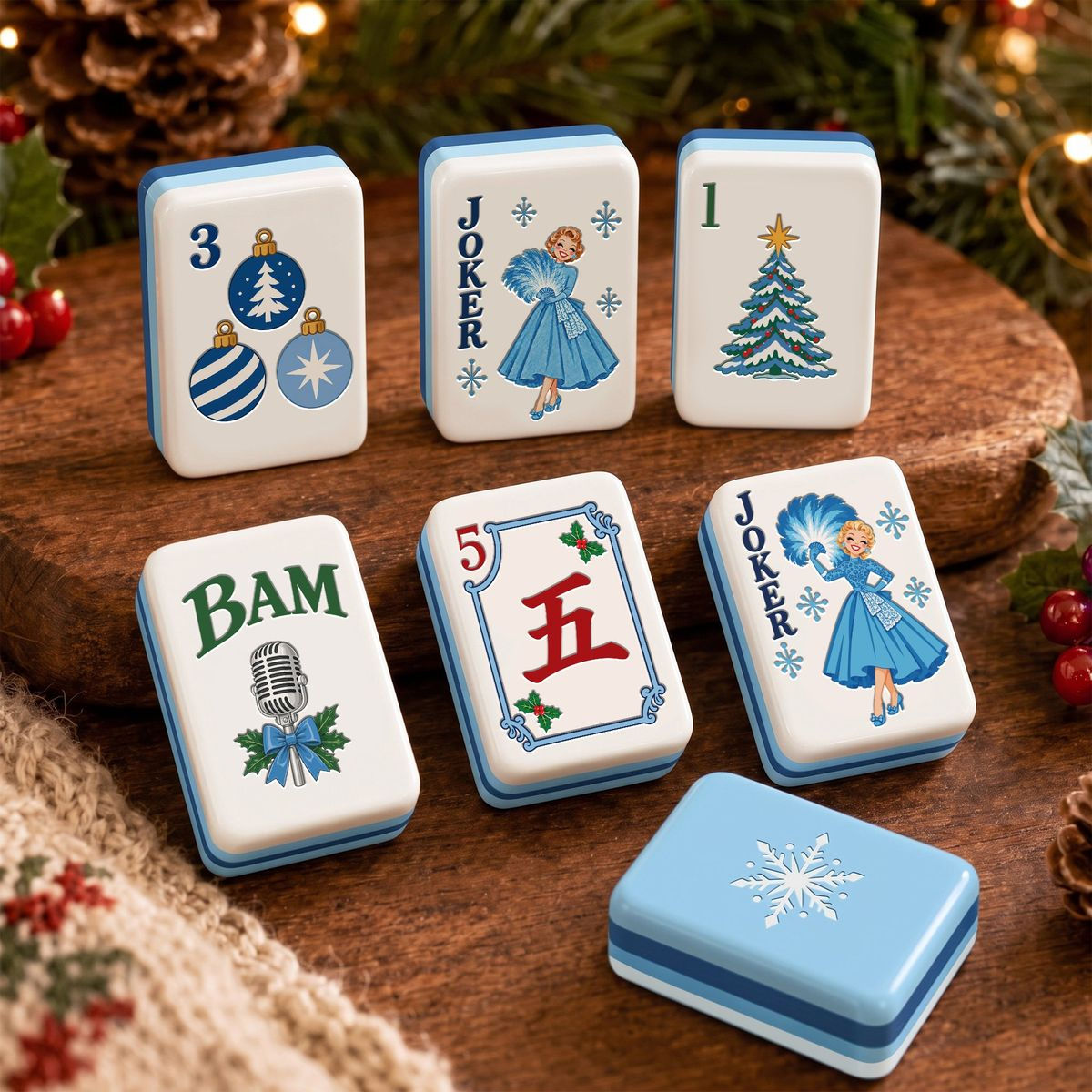
Singapore mahjong uses exactly 144 tiles in active play: three suits (Bams, Craks, Dots) numbered 1–9 with four copies each (108 tiles), plus 16 winds (four each of North, East, West, South) and 12 dragons (four each of Red, Green, and White/Soap). There are no flowers or jokers in the base game. The tiles are typically made from bamboo, bone, or acrylic, and the variant is popular across Southeast Asia as a faster, simpler alternative to American mahjong. If you're hosting games with players familiar with Singapore rules, you'll need a set explicitly labeled for that variant; American sets have eight extra tiles (flowers and jokers) that aren't used in Singapore play, so purchasing a 152-tile American set leaves you holding unused tiles. Mahstead offers acrylic mahjong sets in various designs—some adaptable across variants—with built-in storage and free US shipping.
Why Singapore mahjong has fewer tiles than American mahjong
American mahjong adds eight flowers (in pairs) and eight jokers to reach 152 tiles total. Singapore mahjong omits flowers and jokers entirely, keeping the game lean and the hand-drawing pace brisk. This reduction wasn't arbitrary: Singapore players standardized around the 144-tile format to shorten rounds and reduce luck variance from joker substitutions, making the game rely more on strategy and tile reading. The absence of jokers also means you cannot substitute wild tiles, so hand composition is stricter and discards carry higher weight in reading opponents' intentions.

How Singapore tile counts compare to other variants
Variant | Total Tiles | Suits | Winds | Dragons | Flowers | Jokers | Notes |
Singapore | 144 | 3 (108) | 4 (16) | 3 (12) | None | None | Fastest play; pure strategy |
American | 152 | 3 (108) | 4 (16) | 3 (12) | 4 pairs | 8 | Jokers = wild tiles |
Hong Kong | 144 | 3 (108) | 4 (16) | 3 (12) | None | None | Similar to Singapore; older style |
Chinese | 144 | 3 (108) | 4 (16) | 3 (12) | None | None | Seasonal tiles optional |
Riichi | 136 | 3 (108) | 4 (16) | 3 (12) | None | None | Japanese; no winds or dragons calls |
Singapore and Hong Kong both use 144 tiles without jokers. The main difference lies in naming conventions and nuanced hand-winning patterns, not tile count. American mahjong's eight extra tiles fundamentally change strategy: jokers act as wild tiles that fill gaps in exposed melds, while the four flower pairs add bonuses during dealing. If you switch between American and Singapore games, expect different hand probability and calling rhythm.
What to check before you buy a Singapore mahjong set
Before purchasing, confirm the set is labeled for Singapore, Hong Kong, or Chinese mahjong—not American. Count or verify that the set includes exactly 144 tiles with no jokers or flowers. Check whether the set comes with a rack or mat; Singapore play benefits from acrylic racks with pushers to organize your hand clearly, especially during rapid discard cycles. Ensure tiles are marked clearly (Bam, Crak, Dot symbols are standard; some sets use numerals instead). If your group plays occasionally, buy once and compare to another group's set to confirm compatibility—tile size and symbol style matter for comfort and readability across a table.
🀄 Shop best-selling mahjong sets →

Does a 152-tile American set work for Singapore mahjong?
Technically yes, but with friction. You'll have eight unused tiles (four flowers and four jokers) sitting in the box. Players accustomed to Singapore rules ignore jokers entirely and don't know how to use flowers, so those tiles create confusion and waste. You'd also store extra weight in your bag and set-up time on table. If your core group plays only Singapore, invest in a 144-tile set built for that variant. If your group rotates between American and Singapore, keep two dedicated sets—one 152-tile for American rules, one 144-tile for Singapore—and label them clearly to avoid mid-game errors.
How Singapore tile distribution affects hand-building strategy
With no jokers, every meld must use only identical or consecutive tiles; you cannot substitute a joker for a missing number. This makes hand reads more reliable: a visible 3 Dot means your opponent actually holds or discards 3 Dots, not a joker masquerading as 3 Dots. Discards become critical information—if East throws two consecutive numbers in Dots and never touches Bams, you can infer East's hand shape with higher confidence. In American play, jokers muddy that clarity. The 144-tile format also shortens rounds: fewer tiles in the wall and no joker delays mean games conclude faster. Players new to Singapore mahjong often underestimate how much tile reading drives strategy; without jokers, defensive play (tile denial) matters more than in American games.
🎁 See our most-loved mahjong sets & accessories →
Hosting Singapore mahjong: set-up checklist
Before guests arrive:
Verify your set has exactly 144 tiles (no flowers, no jokers).
Confirm all four players understand Singapore rules, or print a one-page hand summary.
Set up a acrylic mat to protect the table; Singapore play moves faster, so a mat reduces tile noise and protects wood.
If using racks with pushers, ensure all four are uniform height and width so no player gains sightline advantage.
Test tile visibility under your room's lighting—acrylic tiles should show symbols clearly from 3 feet away.
Shuffle tiles face-down for 2–3 minutes; Singapore uses no formal Charleston (tile-passing ritual), so go straight to wall-building and dealing.
What to check before you buy
Count or verify the set includes exactly 144 tiles with no jokers or flowers. Confirm the set is labeled for Singapore, Hong Kong, or Chinese mahjong, not American. Check whether tiles are acrylic, bamboo, or bone; acrylic sets are lightweight and durable for frequent hosting. Ensure symbols are clear under your room's lighting. If you own an American 152-tile set, do not use it for Singapore games—the eight extra tiles (flowers and jokers) create rule confusion and clutter your box. Compare your set side-by-side with a friend's Singapore set to verify tile size and symbol compatibility. For storage and transport, mahjong bags and cases keep your 144 tiles safe; a dedicated mat and racks reduce setup time and improve table clarity, especially during rapid Singapore play.
✨ Find your Mahstead set — free US shipping →

FAQ
Can I play Singapore mahjong with an American 152-tile set?
Yes, but with friction. You'll have eight unused tiles (flowers and jokers) that confuse players learning Singapore rules. If your group plays only Singapore, buy a dedicated 144-tile set to avoid waste and rule conflicts.
Are Singapore and Hong Kong mahjong the same?
Both use 144 tiles with no jokers or flowers. The main difference is hand-winning patterns and naming conventions, not tile count. Sets are often labeled interchangeably, so verify the rules card matches your group's variant.
What's the fastest way to set up a Singapore mahjong game?
Shuffle 144 tiles face-down for 2–3 minutes, build the wall, and deal. Singapore skips the Charleston (the tile-passing ritual used in American mahjong), so you go straight to play.
Do I need racks and pushers for Singapore mahjong?
No, but they help, especially with rapid play. Racks organize tiles clearly, and pushers speed up discard calls. Without them, expect longer thinking time and occasional tile-dropping accidents.
Where can I find a Singapore mahjong set online?
Search for "144-tile mahjong set Singapore" or "Hong Kong mahjong set." Confirm the set explicitly excludes jokers and flowers. Acrylic sets are durable and lightweight for frequent hosting across the US.
If I play both American and Singapore mahjong, should I own two sets?
Yes. American mahjong uses 152 tiles with jokers and flowers; Singapore uses 144 with neither. Keeping two labeled sets avoids mid-game rule disputes and speeds setup for each variant.


View More
View More
View More
