
Zung Jung Mahjong Rules: A Complete Guide for Players
Last updated: Nov 23, 2026
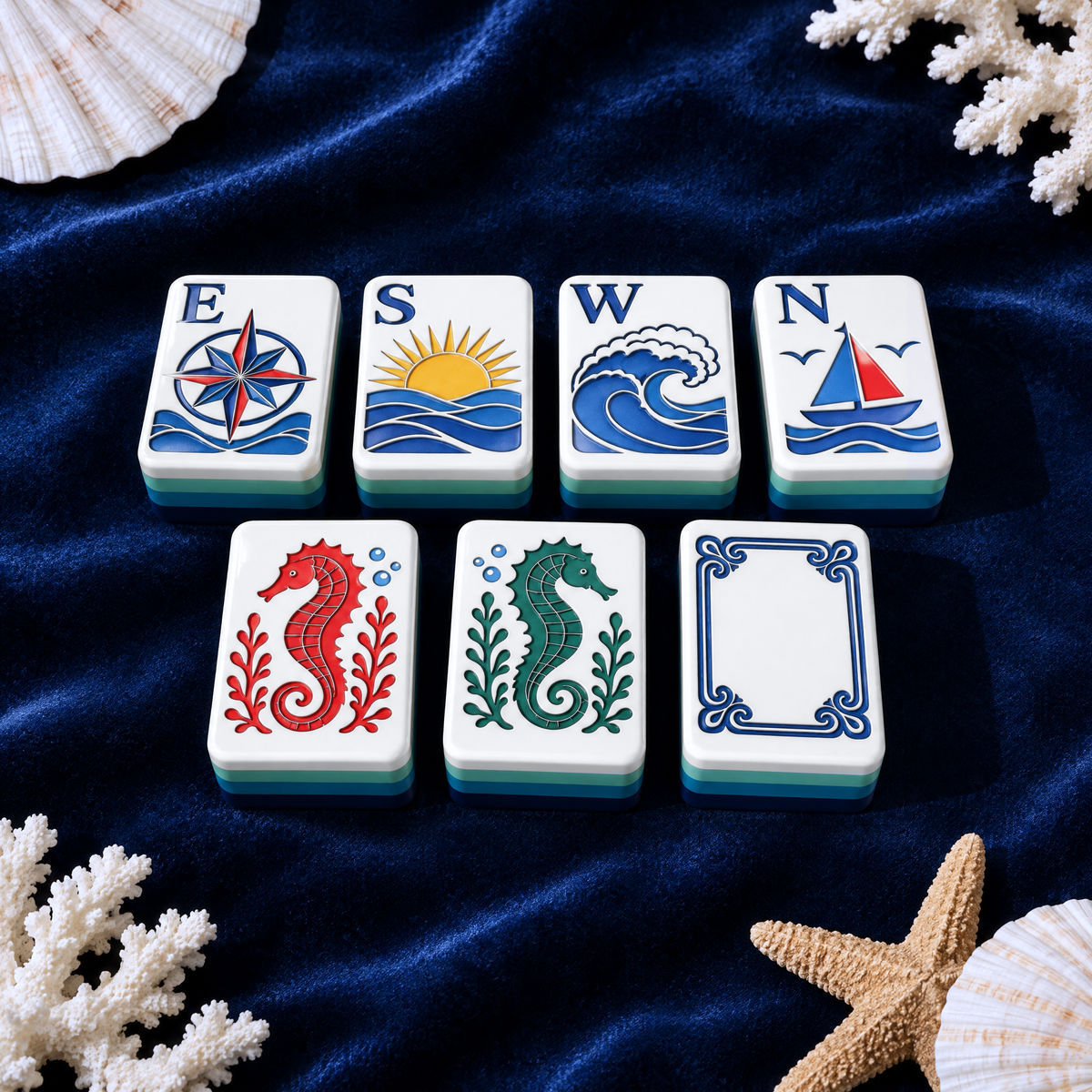
Zung Jung (also called Cantonese mahjong) is the Hong Kong variant played with 136 tiles instead of the 152-tile American standard. The game uses three number suits (Bams, Craks, Dots 1–9), winds, dragons, and flower tiles; unlike American mahjong, you can form and call sequences (chows: three consecutive numbers like 4–5–6 Dots). Winning hands require a specific composition: normally 1 pair plus 4 melds (each meld a pung, kong, or chow), though many patterns exist. Scoring is point-based rather than hand-list-based. Games play faster than American mahjong because winning logic doesn't depend on a printed hand card. Zung Jung suits experienced players who enjoy strategic depth and fewer rigid patterns. If you're learning mahjong for the first time, American mahjong rules may be more accessible; if you already play American, transitioning to Zung Jung requires understanding sequence mechanics and faster pattern recognition.
What are the core winning hand requirements in Zung Jung?
In Zung Jung, a winning hand (called tingpai or "ready hand") consists of 14 tiles arranged as one pair plus four melds. Each meld is either a pung (three identical tiles), kong (four identical tiles), or chow (three consecutive tiles of the same suit). Unlike American mahjong, chows are allowed—and you can call them when another player discards the tile you need. The pair must be two identical tiles (often called the "eye"). When you've built 13 tiles and need only one more tile to complete a 14-tile hand, you are ready and announce it; drawing or being gifted that final tile wins the round immediately.

How do American and Zung Jung mahjong differ?
The differences are structural and strategic. American mahjong uses 152 tiles and requires hands to match a printed league card updated yearly; you cannot form sequences (chows), only exposed pungs, kongs, quints, and sextets. Zung Jung uses 136 tiles and allows chows—you form hands by logic and pattern knowledge, not by reference to a card. American play uses a ritual called the Charleston (a three-stage tile pass before the hand begins); Zung Jung skips the Charleston and begins drawing and discarding immediately. Scoring in American mahjong awards points only for a completed hand on the league card; Zung Jung scoring multiplies or adds points based on hand composition and circumstances (like whether you won by drawing yourself or via another's discard). American rounds can last 30–60 minutes per hand; Zung Jung rounds often finish in 10–20 minutes because players are not hunting a single list of valid patterns.
Feature | American Mahjong | Zung Jung (Hong Kong) |
Tile count | 152 | 136 |
Sequences (chows) | Not allowed | Allowed & callable |
Hand reference | Annual league card | Memory + logic |
Charleston | Yes (3-pass ritual) | No |
Scoring | Fixed points per hand | Point multiplier system |
Typical round duration | 30–60 min | 10–20 min |
Winning composition | Match card pattern | 1 pair + 4 melds |
What melds can you call or expose in Zung Jung?
A meld is any group of three or four tiles you present as a set. A pung is three identical tiles (e.g., three 5 Dots); it can be formed from your draw or called when another player discards the tile you need. A kong is four identical tiles; once you declare it, you draw an extra tile from the end of the wall to maintain 14 tiles. A chow (or "sequence") is three consecutive tiles of the same suit in ascending order—for example, 4 Bams, 5 Bams, 6 Bams. Chows can only be called from the player sitting directly to your left; you cannot call a chow from any other discard. Honours (winds and dragons) cannot form chows, only pungs and kongs. Calling a meld immediately exposes it face-up on the table; your hand becomes partly visible, and other players adjust strategy accordingly. This open play contrasts sharply with American mahjong, where the only callable and exposable melds are pungs, kongs, quints, and sextets—and sequences do not exist.
🀄 Shop best-selling mahjong sets →
How does the discard and ready-hand system work?
Each turn, you draw one tile from the wall (or receive a gift tile if you've called a meld and drawn an extra). You then discard one tile to the center pool, face-up. Other players watch the discard and decide whether to call it. If you call a pung, kong, or—if the discard is from your left—a chow, you take that tile and immediately expose the meld. If you do not call a discard and no one else does, it remains in the pool and play moves to the next player. Once you've arranged 13 tiles into a ready state (called tingpai), you do not discard; you announce you are ready or "ting." From that moment, you can only win by drawing the exact tile(s) you need or by someone discarding one of those tiles and you calling it. If you call the winning tile, you shout tsu or mahjong. If you draw the winning tile yourself, you win without needing permission. The round ends immediately, and scoring begins.

What are the main scoring categories and hand bonuses?
Zung Jung scoring is point-based and varies by hand type and winning circumstance. A basic hand (known as a fan or "double") assigns 1 point. Bonus points (faan) multiply based on hand composition: an all-pungs hand (no chows) is worth 2 points; an all-honours hand (winds and dragons only) is worth 6 points; a hand with all one suit is worth 6 points. Winning by your own draw (self-draw or zimo) often earns a bonus. Winning by another's discard (hu) has a slightly lower payout. If you go bust (declare ready but cannot win on any remaining tile), you may face a penalty or be forced to pay other players. Scoring conventions vary by region and house rules—Hong Kong rules, Taiwan rules, and online Zung Jung versions all differ slightly. Before playing in a new group, ask explicitly: How many points per winning hand? Do bonuses stack or replace? What is the bust penalty? Agreeing on scoring before the game starts prevents disputes.
🎁 See our most-loved mahjong sets & accessories →
Common mistakes newcomers make when switching from American to Zung Jung
The biggest error is forgetting that chows are allowed and can be called. American players trained to avoid sequences sometimes freeze when a chow appears—costing them winning opportunities. A second mistake is misunderstanding which discard can be called for a chow: only your left neighbour's discard. Calling from the wrong discard is illegal. Third, players often misjudge the ready state; announcing "ting" too early locks you into waiting for specific tiles, and if one of those tiles is drawn by you but you've declared ready to win only from a call, you cannot win. Fourth, mixing up the pair requirement: the pair must be two identical tiles, not two different tiles. Fifth, new players sometimes try to use jokers in Zung Jung; most variants use only the 136 base tiles and no jokers or wilds, though some regional variants add jokers—check house rules. Sixth, American players often expect to consult a hand card for legality; Zung Jung has no such card, so you must know valid patterns or ask experienced players before the round begins.
✨ Find your Mahstead set — free US shipping →
Should you buy a separate set for Zung Jung, or use your American mahjong set?
A 160-tile American mahjong set contains 152 playing tiles plus spare jokers and blanks; Zung Jung uses 136 tiles with no jokers or blanks in standard play. If you own an American set and want to play Zung Jung, you can remove the eight jokers and four blanks (if present) and play with the remaining 144 tiles—but you will be 8 tiles short of a proper Zung Jung set and will have no spares for damaged or lost tiles. Some players tolerate this; others prefer a dedicated 136-tile Zung Jung set with proper spare tiles. Zung Jung sets are less common in North America but available online. If you play both variants regularly, owning both sets ensures you have the correct tile count and composition for each. American players who play Zung Jung casually can borrow or improvise; serious Zung Jung players should invest in a dedicated set designed for that variant.
What to check before you buy a mahjong set for Zung Jung play
Tile count: Confirm 136 tiles (not 144, 152, or 160). Standard Zung Jung does not use jokers.
Suit colours and markings: Verify Bams (usually red), Craks (usually green), Dots (usually blue or white) are clear and distinct.
Honours tiles: Check that winds (N, E, S, W) and dragons (Red, Green, White) are present and legible.
Flowers and seasons: Some Zung Jung sets include flower and season tiles; check local rules to confirm they're used.
Tile durability: Bamboo or acrylic tiles are common; ensure edges are smooth and paint won't chip during play.
Storage: A padded bag or wooden case protects tiles during travel and extends set life.
Spare tiles: Some Zung Jung sets include 2–4 spare tiles; confirm they match the main set's colour and engraving.

FAQ
Can you form a chow with honour tiles (winds or dragons) in Zung Jung?
No. Honour tiles can only form pungs (three identical) or kongs (four identical). Chows require three consecutive number tiles of the same suit—Bams, Craks, or Dots. This restriction keeps honour combinations predictable and prevents ambiguous sequences.
What happens if you call a meld but cannot complete your hand?
Once you call a meld, it is exposed and you cannot take it back. If the meld is illegal (e.g., called from the wrong player or using a wrong tile), it is usually corrected immediately and play resets. If the meld is legal but you later cannot win, you simply discard a tile as normal and play continues.
Is Zung Jung played with money, or is it point-based only?
Both. Many casual Zung Jung games are point-based: players track scores and play for fun or small friendly stakes. Some groups play for money; the per-point value is agreed before the game. Always clarify betting rules (or confirm there is no betting) before joining a table.
How do you announce "ready" (ting) in Zung Jung?
You typically say "ting" aloud and may tap the edge of the wall or make a gesture understood in your group. Some players hold back one or two tiles and place them slightly apart to signal readiness. Methods vary by region; watch experienced players and copy their style.
What is the difference between self-draw (zimo) and calling a discard (hu) in scoring?
Self-draw (drawing your own winning tile from the wall) usually awards a higher payout—often double or a bonus. Calling a discard (winning by another player's discard) pays less, sometimes half the self-draw value. The exact multiplier depends on local rules; confirm before playing.
Can you play Zung Jung with fewer than four players?
Zung Jung is designed for four players. Two- or three-player variants exist but require rule changes (different tile draws, adjusted melds, modified scoring). Check with your group if fewer than four are present; do not assume standard rules apply.
How long does a typical Zung Jung game last?
A single hand usually takes 10–20 minutes. A full session (8–12 hands) typically runs 2–4 hours, depending on player speed and chat. This is faster than American mahjong, which can take 30–60 minutes per hand due to the Charleston and hand-card checking.


View More
View More
View More
