
How Many Tiles in Classical Chinese Mahjong
Last updated: Nov 23, 2026
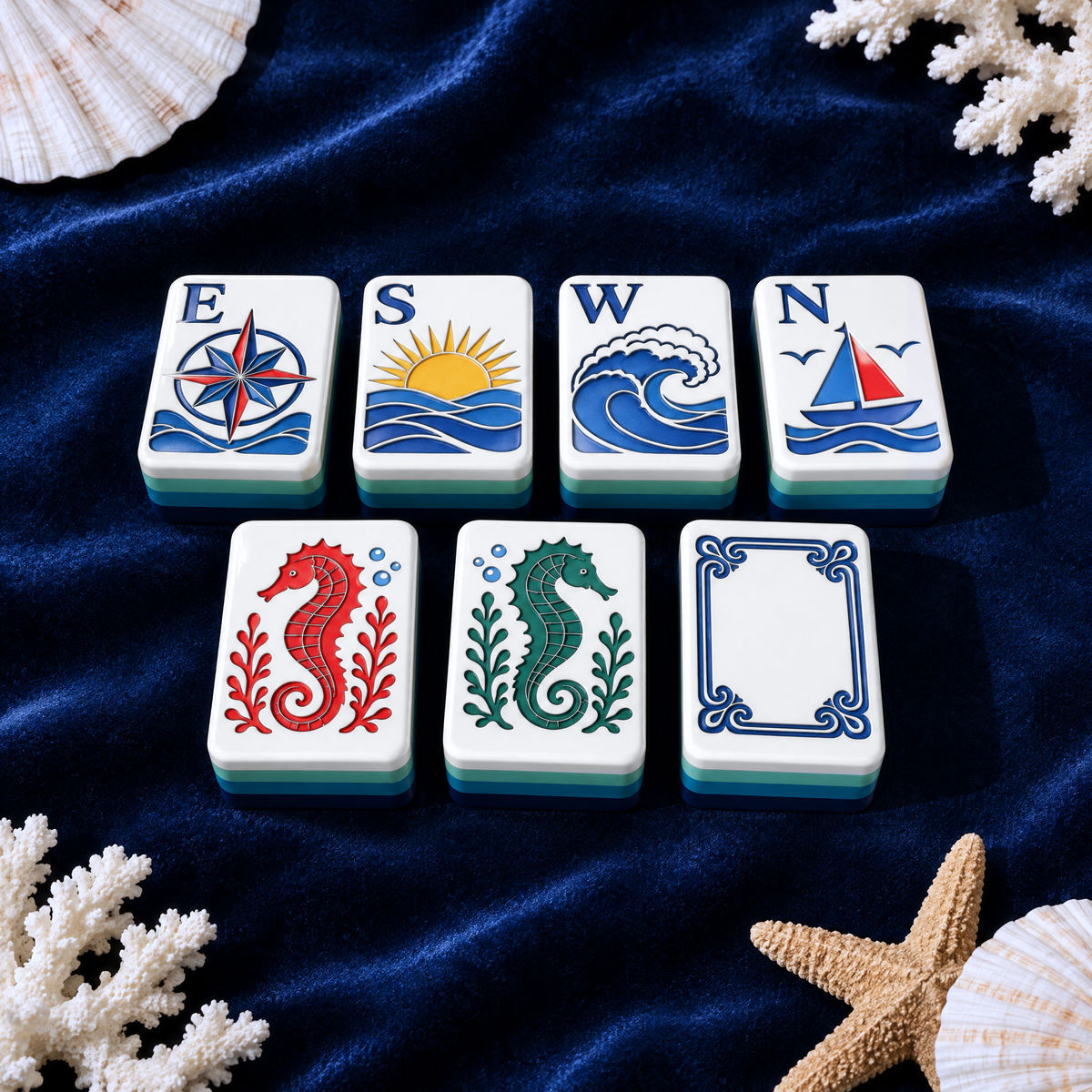
Classical Chinese mahjong uses exactly 144 tiles: 108 suited tiles (Bamboos, Characters, and Dots, numbered 1–9, four copies each), 16 winds (four of each direction), 12 dragons (four of each: Red, Green, and White), and 8 flowers. This differs sharply from American mahjong, which plays with 152 tiles plus 8 jokers—American sets add winds, dragons, and jokers in different quantities and rules apply differently to their use. Classical Chinese rules forbid jokers entirely; all 144 tiles must be present to play. When shopping for a classical Chinese set, confirm the tile count matches 144 exactly and verify the dragon and wind distribution. Mahstead offers best-selling mahjong sets designed for American play; if you seek classical Chinese equipment, ask your supplier to confirm the tile count before purchase, as many Western retailers stock only American-format sets. 🀄 Shop best-selling mahjong sets →
Why does classical Chinese mahjong have fewer tiles than American?
American mahjong evolved separately in the 1920s–1930s among Western players and deliberately added extra tiles—more winds, dragons, and eight jokers—to increase hand complexity and scoring diversity. Classical Chinese mahjong, codified centuries earlier, maintained the original 144-tile structure. The rules reflect this: American play forbids jokers in single tiles or pairs and allows exposed kongs and quints; classical Chinese treats all tile categories identically and uses no wild cards. The 144-tile count is not a limitation but a design feature that changes probability and strategy fundamentally. If you play classical Chinese regularly, sticking to 144 prevents confusion and keeps hand calculations accurate.

What tiles make up the classical Chinese 144?
Classical Chinese mahjong breaks into four categories. Suited tiles (108 total): three suits—Bamboos, Characters, and Dots—each numbered 1–9 with four copies per number. Winds (16 total): East, South, West, North, four copies each. Dragons (12 total): Red, Green, White, four copies each. Flowers (8 total): Spring, Summer, Autumn, Winter, each appearing twice. This structure is identical across all classical Chinese variants—Cantonese, Fujian, and Shanghai play recognize the same base 144. No blanks, no jokers, no additions. The simplicity of this count makes classical Chinese easier to standardize globally than American mahjong, which layers regional house rules onto its 152-tile foundation.
How does 144 compare to American mahjong's 152?
Aspect | Classical Chinese | American |
Base tiles | 144 | 152 |
Jokers | 0 (not used) | 8 (required) |
Total play | 144 | 152 playing tiles + 8 jokers |
Dragons | 4 Red, 4 Green, 4 White | 4 Red, 4 Green, 4 White |
Winds | 4 E, 4 S, 4 W, 4 N | 4 E, 4 S, 4 W, 4 N |
Flowers | 8 (4 pairs) | 8 |
Suited tiles | 108 (3×9 ranks, 4 copies) | 108 (3×9 ranks, 4 copies) |
Sequences (Chows) | Allowed, exposed/hidden | Forbidden; no calling chows |
Hand source | Codified regional rules | Annual National Mah Jongg League card |
The extra 8 American tiles are jokers, which act as wildcards in place of any other tile and change hand probability significantly. Classical Chinese strategy relies on pure tile-drawing probability; American strategy navigates joker scarcity and placement rules. Neither is "better"—they are distinct games. If you learn on 144, switching to 152 requires relearning hand odds and joker discipline. Explore how to play American mahjong to see the differences in rules, or read about what's in an American mahjong set to understand American tile composition in detail.

Can you play classical Chinese mahjong with an American set?
Technically, yes—but only by ignoring the 8 jokers. An American set (160 tiles total: 152 playing tiles plus spares) includes all 144 classical Chinese tiles plus jokers and extra blanks. You can remove the jokers and play classical Chinese rules with the base 144. However, this wastes the American set's special tiles and is inefficient. More importantly, American sets are calibrated for American rules: hand sizes, exposure patterns, and scoring differ, so playing classical Chinese on an American set may feel misaligned. Additionally, if you play both variants, mixing sets creates errors—players forget which jokers exist in which game. Our recommendation: own a dedicated 144-tile classical Chinese set if you play that variant regularly, and a separate best-selling mahjong set for American play. Clarity prevents mistakes and speeds games.
🎁 See our most-loved mahjong sets & accessories →
Which variants use 144 tiles?
Classical Chinese, Cantonese, Fujian, Shanghai, and most other Asian variants use the standardized 144-tile set. Hong Kong mahjong, popular in Southeast Asia, also plays with 144. The only major Western variant is American mahjong, which uses 152 playing tiles plus jokers. When you read "Riichi mahjong" (Japanese variant), it too uses 136 tiles—fewer than classical Chinese because it omits flowers and adds a different structure. Thai mahjong sometimes adds flowers or uses 144 with house rule modifications. If you travel or play internationally, confirm the variant before choosing equipment: a European or Australian player in a classical Chinese game needs 144 tiles, but a Western player hosting American games needs best-selling mahjong sets. The variant name tells you which tile count applies.
What to check before you buy a classical Chinese set
Tile count confirmation: Ask the seller directly for 144 tiles (base game) without jokers or extras. Many Western retailers don't stock pure classical Chinese sets; they default to American 160-tile formats. Request written confirmation of the 144-tile count.
Tile marking clarity: Classical Chinese sets use Chinese characters (simplified or traditional) or symbol marks. Verify the language and style match your regional variant—Cantonese, Fujian, and Shanghai may use different glyphs for the same tiles.
Material and durability: Classical Chinese sets are often plastic or bone. Check whether tiles are smooth (encouraging smooth discards) and whether racks are included, since classical Chinese play typically uses racks differently than American.
Joker absence: If the listing mentions jokers, it is not a classical Chinese set—it is an American set that can technically be played without jokers, but it is not the correct equipment. Avoid confusion and cost by buying the correct variant.
Regional authenticity: If you play a specific regional variant (Cantonese, Shanghai), confirm the set follows that variant's tile rules. Some classical Chinese sets mix conventions, which can trip experienced players.
✨ Find your Mahstead set — free US shipping →

FAQ
Can I use a 144-tile classical Chinese set to play American mahjong?
No. American mahjong requires 152 playing tiles plus 8 jokers. Jokers are essential—they are wild cards that enable many hands on the annual League card. A 144-tile set lacks jokers entirely. Attempting American play without them makes hands unplayable and scoring impossible.
What is the difference between 144 tiles and 152 tiles?
Classical Chinese mahjong uses 144 tiles (no jokers). American mahjong uses 152 playing tiles plus 8 jokers (160 total in a standard set). The 8 extra tiles in American are jokers, which can substitute for any other tile and change hand probability and strategy significantly.
Do all classical Chinese mahjong sets have 144 tiles?
Yes. The standard classical Chinese mahjong set has always used 144 tiles across all regional variants (Cantonese, Fujian, Shanghai, Hong Kong). If a set claims to be "classical Chinese" but lists a different tile count, it is either an American hybrid or mislabeled. Always confirm the 144-tile count in writing.
Why does American mahjong have 8 jokers?
American mahjong evolved independently in the 1920s–1930s among Western players who added jokers to increase complexity and hand variety. Jokers act as wildcards and appear on the annual National Mah Jongg League card in many hand patterns. Classical Chinese mahjong, centuries older, uses no jokers—all hands are formed from the base 144 tiles only.
Where can I find a true 144-tile classical Chinese mahjong set?
Specialty mahjong retailers, import shops, and online sellers focused on classical Chinese games carry 144-tile sets. Western retailers like general game stores often stock only American 160-tile sets. Search specifically for "classical Chinese mahjong," "Cantonese mahjong," or "Hong Kong mahjong" and confirm the tile count with the seller before purchase.
How many tiles does each player draw in classical Chinese mahjong?
In classical Chinese mahjong, each player receives 13 tiles at the start, and the first player draws a 14th tile. The remaining 108 tiles form the wall. This differs from American mahjong, where each player draws 13 tiles and the dealer draws 14; the wall size adjusts based on the 152 playing tiles plus jokers.


View More
View More
View More
