
Is Mahjong Harder Than Pinochle? A Candid Comparison
Last updated: Nov 23, 2026
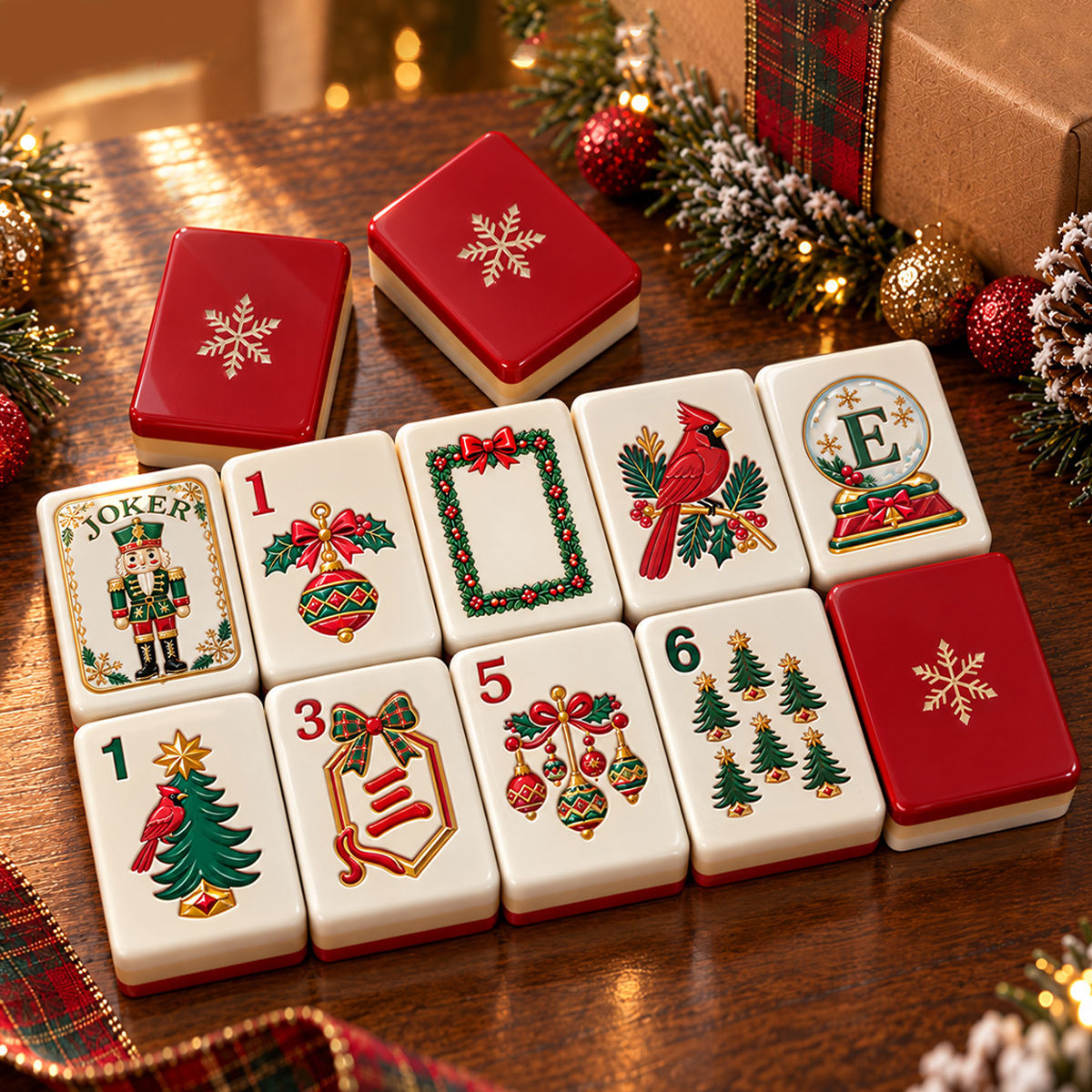
Mahjong is not inherently harder than pinochle—they're hard in different ways. Pinochle relies on memorized card-combination scoring and trick-taking strategy; American mahjong depends on pattern recognition, the current year's National Mah Jongg League card, and tile-grouping logic. Pinochle typically takes 2–4 hours per game and demands deep knowledge of 49 melds; mahjong takes 1–2 hours per game and requires learning 100+ hand patterns (refreshed annually). Pinochle favors players strong in math and card hierarchy; mahjong rewards spatial thinkers and pattern spotters. Neither is universally "harder"—your brain's strengths matter more than the game itself. Both reward practice, both punish careless play, both build loyal weekly groups. The real question isn't which is harder, but which clicks with how you think.
Mahjong and pinochle both landed in American living rooms around the same time and both demand serious mental muscle. We've sat at tables where fierce pinochle players picked up mahjong and struggled for three months—and vice versa. The gap isn't about intelligence; it's about which skills each game trains and rewards.
What makes pinochle's rules so demanding?
Pinochle uses a deck of 48 cards (9–Ace in each suit, two of each) and revolves around memorizing 49 distinct melds (combinations) with fixed point values. A beginner must learn that four Aces in one hand scores 100 points, while four Kings scores 80, and three Aces scores 30—and these values hold true every game, forever. The game also requires suit counting, opponent hand-tracking, and bidding judgment. A typical game runs 2–4 hours because scoring after each hand involves cross-checking melds against a printed chart. Once you learn the 49 melds and basic bidding, the game doesn't change. You play the same rule set at 8 p.m. next Thursday that you played last year.

How does mahjong's learning curve differ?
American mahjong uses a 152-tile set (three suits: Bams, Craks, Dots; winds and dragons; flowers; 8 jokers) and has no fixed melds at all. Instead, the National Mah Jongg League publishes a new card every spring with 100+ valid hand patterns. You cannot play a hand that isn't on the current year's card. This means you learn patterns, not rigid values. A pattern might read "2468 Bams, 2468 Craks, 2468 Dots"—three identical sequences. Next hand, the card says you can win with "quint Winds + quint Dragons + quint Dots + one pair"—a completely different structure. Mahjong games last 1–2 hours, and the constant card reference keeps everyone's mind fresh. Pinochle players often call this "not real mahjong" because it feels like playing from a cookbook; mahjong players love it because each game feels fresh.
Skill Tested | Pinochle | American Mahjong | Winner (Depends On You) |
Memory (fixed rules) | High | Low | Pinochle if you hate surprises |
Pattern recognition | Medium | Very high | Mahjong if you love spatial thinking |
Bidding / negotiation | High | Low | Pinochle if you love the table talk |
Annual relearning | None | Yes, spring card | Mahjong if you want novelty |
Time per game | 2–4 hours | 1–2 hours | Mahjong if time is tight |
Math on the fly | Medium | Low | Pinochle if you live for scoring |
Beginner friendliness | Hard (49 melds) | Medium (card helps) | Mahjong if you have a printed guide |
Why do pattern-lovers pick mahjong while math minds stick with pinochle?
Pinochle asks: "Do you know what these four cards are worth, and can you count tricks?" It's deductive and hierarchical. Mahjong asks: "Can you spot that three separate sequences of 1-3-5 match the card?" It's visual and instantaneous. We've noticed that players who loved Tetris or Scrabble typically gravitate toward mahjong; players who loved bridge or accounting tend to stay with pinochle. Both games punish careless play—a miscounted meld in pinochle costs you the hand; a wrong tile call in mahjong sends you into a dead hand. But the type of punishment feels different. Pinochle's mistakes feel like math errors. Mahjong mistakes feel like you weren't looking hard enough.
Check our pillar guide for complete American mahjong fundamentals

Which game is actually easier for beginners to start?
Mahjong has an advantage: the card does the work for you. Sit at a table with a best-selling mahjong set and the printed card, and a patient teacher, and you can play a real hand in 20 minutes. Pinochle requires you to learn all 49 melds before you sit down, or you'll slow the table to a crawl. That said, mahjong's first six weeks feel slower because you're constantly checking the card. Pinochle's first six weeks feel faster—but only because you've already memorized the rules; you're not truly comfortable until month three. By month four, both games feel natural. We recommend mahjong if you want faster initial gratification; pinochle if you enjoy a steeper learning curve that feels like "mastery."
How do the games differ in social pace and table energy?
Pinochle is built around bidding—you're negotiating, bluffing, and trash-talking over card strength before a single trick drops. The table conversation is loud and strategic. Mahjong is built around silent focus—everyone studies the tiles, scans the card, and plays quickly. Discards happen fast; the rhythm is contemplative and tense. If you love the social back-and-forth, pinochle wins. If you love concentrated intensity broken by jokes between hands, mahjong wins. Neither is wrong. Both build weekly friendships. But the texture of friendship is different. Pinochle tables sound like poker nights; mahjong tables sound like a library punctuated by victory cheers.
🀄 Shop best-selling mahjong sets →
What should you check before you commit to one game?
Ask yourself these questions:
Do you enjoy memorizing fixed rules forever, or refreshing your knowledge yearly?
Do you like loud negotiation, or quiet pattern spotting?
Can you spare 3–4 hours per session, or do you need to be done in 90 minutes?
Does math scoring excite you, or does it feel like homework?
Have you ever been drawn to jigsaw puzzles, or do you prefer card hierarchies?
Is your table already running one game, or are you starting fresh?
Most people answer these questions and immediately know which game fits. If you're torn, play one session of each before buying a set or deck. Both games demand a small investment—a quality American mahjong set runs roughly the same as a pinochle deck and scorepad—but your time investment over 12 weeks is real. Don't waste it on the wrong game.
The honest truth: mahjong is not harder than pinochle. It's differently hard. Pinochle asks you to remember and calculate; mahjong asks you to recognize and adapt. Thousands of players have tried both and chosen one. We run weekly mahjong games here at Mahstead because the pattern recognition and fresh-card energy keep us coming back. But we respect every pinochle table in Texas. Pick the game that matches your mind, find a patient teacher, and commit to eight weeks. Then you'll know for real.
🎁 See our most-loved mahjong sets & accessories →

FAQ
Can I play mahjong if I'm terrible at math?
Yes. American mahjong is low-math—you match tile patterns to a card, not calculate scores. Pinochle demands meld-value arithmetic. Mahjong suits non-mathematical minds better.
Is pinochle or mahjong faster to learn to play one complete game?
Mahjong wins (20 minutes with a coach and card). Pinochle requires pre-learning all melds—you can't pick it up by watching. Plan three weeks of study before pinochle feels natural.
Do I need special equipment to play either game?
Pinochle needs a 48-card deck and a scorepad (your phone works). Mahjong needs a 152-tile set with the current year's National Mah Jongg League card printed or digital, a mat, and racks with pushers to keep tiles visible and organized.
Which game do casual players pick more often?
Both are equally popular in weekly home groups. Mahjong dominates in the Southwest and among Asian communities; pinochle holds strong in the Midwest. Your region and friend group matter more than popularity.
Can I play mahjong or pinochle online?
Yes, both have digital versions. But serious players say the tile-feel and in-person rhythm are irreplaceable—online strips away the social energy that makes these games worth playing.


View More
View More
View More
