
How Many Flowers in a Mahjong Set?
Last updated: Nov 23, 2026
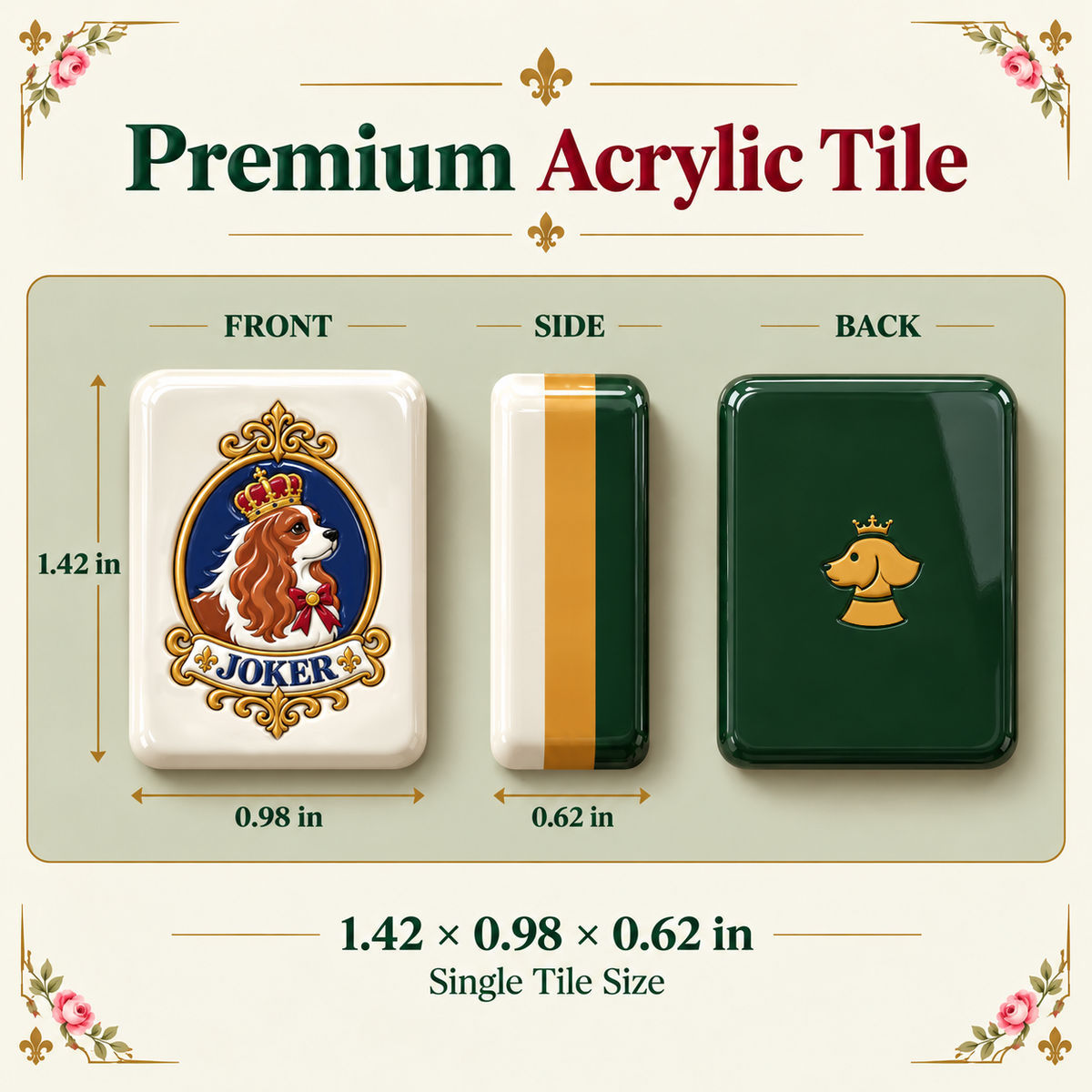
American mahjong sets contain exactly 8 flowers: one of each seasonal design (spring, summer, autumn, winter), repeated twice. Flowers are not suited—they belong to no Bams, Craks or Dots family. When you draw a flower during play, you immediately expose it, set it aside, and draw a replacement tile from the wall; that flower earns you bonus points and an extra turn. Flowers never form melds, never sit in your hand, and never appear in winning combinations. All standard 160-tile American sets include the full 8-flower complement, and Mahstead's engraved sets let you personalize flower designs while keeping the classic game mechanics intact.
A standard American mahjong set always contains exactly 8 flowers—one of each season (spring, summer, autumn, winter), appearing twice each. Flowers are unique: they're not part of the three number suits (Bams, Craks, Dots), they don't have numerical values, and they never sit in your hand during play. When you draw a flower, you expose it, set it aside, and immediately draw a replacement tile from the wall to keep your hand at 13 tiles. Each flower you collect at the start of your turn or during the draw awards bonus points and grants you an extra draw. This mechanic makes flowers a major advantage throughout the game.
What exactly are the 8 flowers in American mahjong?
The 8 flowers are individually named for the four seasons, repeated twice. Spring, summer, autumn, and winter each appear once; then the cycle repeats. Unlike winds (four directions) or dragons (three types), flowers have no numeric rank or suit association. They're purely ornamental in design but mechanically crucial—every legitimate American game set manufactured in the past 40 years includes all 8. On Mahstead's best-selling mahjong sets, the flower designs are often engraved or embossed to match the overall aesthetic, so your flowers feel cohesive with your Bams and Craks.

Why do flowers matter if you never use them in a hand?
Flowers are high-value because they trigger immediate rewards. The moment you draw a flower, you expose it (place it face-up at your seat), set it aside in your scoring area, and draw a fresh tile to replace it—this replacement tile does not end your turn; you get a bonus draw without discarding. At the end of the hand, you score points for every flower you collected; the exact value depends on the year's National Mah Jongg League card hand listings. A player with four flowers (one of each season) often gains a significant scoring edge over a player with none. Many hands on the card reference bonus flowers as part of their name or point value, so flowers directly influence which combinations are playable each turn.
How do flowers work when you draw them during play?
When you draw a flower on your turn, you immediately show all players the tile, place it in your exposure area (the area in front of you where melds sit), and draw a replacement tile directly from the wall without discarding. This happens before you decide which tile to discard. If you draw a flower in response to another player's discard (a "dead" wall draw), you still expose, set aside, and draw again. If you draw multiple flowers in one turn—for example, drawing a flower, then drawing another flower as your replacement—you repeat the process for each one until your hand contains 13 non-flower tiles again. The National Mah Jongg League card specifies the exact bonus points per flower and any season-specific rules for that year.
Do different mahjong variants (Chinese, Hong Kong, Riichi) use flowers the same way?
No. Chinese and Hong Kong mahjong typically include 8 flower tiles (sometimes called honour tiles or terminals), but they function very differently: you draw them into your hand and use them to form sets, much like number tiles. Riichi (Japanese) mahjong includes neither flowers nor American-style dragons—it uses only number suits, honours (winds and dragons as separate sets), and terminal tiles. Thai mahjong adds flowers but handles them as decorative honour tiles. The American variant is distinctive because flowers are never held in hand, never melded, and never appear in any winning combination—they're pure bonus generators that sit outside your active play. If you're learning American mahjong for the first time, this no-hand rule for flowers is a key thing to internalize early.
What's the difference between American flowers and other bonus tiles?
American mahjong flowers are fundamentally different from winds and dragons. Winds (four compass directions: north, east, west, south) and dragons (red, green, white) can form pungs (three identical tiles), kongs (four identical), or appear in some exposed combinations on the card. Flowers never do. Flowers are also different from jokers, which substitute for any tile in a meld but can't be used for pairs or single tiles. A flower doesn't substitute for anything—it's worth points but takes up none of your hand space. The closest comparison is the bounus tile in some rule sets of Taiwanese mahjong, which similarly triggers extra draws and points; however, the American flower scoring is tied to the current year's official card and varies annually.
Tile Type | Count | Hand Role | Melds? | Bonus Points? |
Flowers | 8 (2 each season) | Never held | No | Yes, automatic |
Winds | 16 (4 each direction) | Hand or exposed | Yes, as pung/kong | Only if in winning combo |
Dragons | 12 (4 each color) | Hand or exposed | Yes, as pung/kong | Only if in winning combo |
Jokers | 8 | Never for pair or single | Substitute only | No, they're wildcards |

How many flowers can one player collect in a hand?
You can collect all 8 flowers in a single hand—it's rare but possible. The moment you draw your fourth unique flower (one spring, one summer, one autumn, one winter), you've achieved a bonus milestone; collecting all eight intensifies your advantage. Most hands never see one player draw more than two or three flowers because the draw pile cycles quickly and other players also draw flowers. However, if you're in the position closest to the dead wall (the wall where flowers and replacement tiles come from), your odds of drawing flowers improve. Sitting in the "flower seat" (a term some players use informally) is a slight statistical edge early in the hand.
What happens if someone forgets to expose a flower they drew?
This is a rule violation in formal play. If a player draws a flower but fails to expose it immediately, it should be caught before they discard their next tile. The penalty depends on your group's house rules or the official American Mahjong Players Association (AMPA) rules you follow: typically, the flower is treated as illegally held, the hand may be declared a dead hand (a no-score round), or the player forfeits bonus points for that flower and any future flowers that hand. Most casual home games are more forgiving—gently remind the player and let play continue. In tournament settings, the rule is strict: expose flowers instantly, always.
How do you score the flowers on your final hand?
Scoring flowers depends on the current year's National Mah Jongg League card. The card lists bonus points for flowers—often something like "one flower = 5 bonus points" or a higher bonus for collecting all four seasons. You count your exposed flowers at the end of the hand (they're sitting face-up in front of you, not in a meld on the card). Add the bonus points to your base hand score. The exact values change yearly as the card is updated each spring, so always refer to that year's card before scoring. Learn more about American mahjong scoring to see how flower bonuses fit into the full point system.
🀄 Shop best-selling mahjong sets →
What to check before you buy a set with flowers
Before purchasing a mahjong set, confirm it includes all 8 flowers. Mahstead's 160-tile sets always include the complete flower suit. If buying secondhand or from unclear listings, ask the seller: "Does this set have four seasons, each appearing twice?" Some very old sets or damaged collections may be missing flowers. A missing flower doesn't make the set unplayable—you can use a blank tile as a substitute or sit out that flower draw—but it's suboptimal. Verify the flower designs are clear and distinct from other tiles, especially if the set uses symbol printing rather than engraving; poor contrast makes it easy to misread a flower during a fast draw.
🎁 See our most-loved mahjong sets & accessories →
When choosing an engraved set for flowers, consider whether you want traditional season symbols (plum, orchid, bamboo, chrysanthemum) or custom artwork. Mahstead's engraved American mahjong sets let you personalize flower designs—some groups commission sets with local landmarks or family emblems on the flowers to make them instantly recognizable during fast play. Custom flowers are purely cosmetic; the game rules don't change. But a visually distinct set makes it easier to spot a flower at a glance, which is crucial when the wall is moving fast. If you're hosting regular games, a set with bold, legible flowers (engraved acrylic or high-contrast printing) will speed up play and reduce confusion.
✨ Find your Mahstead set — free US shipping →

FAQ
Do all 8 flowers have to be in play for a game to be valid?
Yes, in American mahjong all 8 flowers must be in the set and available for draw. If a flower is missing, most house rules allow a blank tile substitute, but a complete set with all 8 flowers is always the standard.
Can I use a flower tile as a joker or in place of another tile?
No. Flowers are never jokers and never substitute for any other tile. Jokers are separate (typically 8 of them in a 160-tile set) and are the only tiles that substitute. Flowers exist only to be drawn, exposed, and scored.
What if I draw two flowers on the same turn?
Expose and set aside the first flower, draw a replacement tile, then check whether that replacement is also a flower. If it is, repeat: expose it, set it aside, and draw again. Continue until you draw a non-flower tile. Each flower awards you bonus points and uses one of your "bonus draws" for that turn.
Is there a rule about which season flower is worth more points?
No, all four seasons (spring, summer, autumn, winter) are worth the same points—the value is determined by the year's National Mah Jongg League card. There's no hierarchy; drawing a spring flower is no better or worse than drawing a winter flower in terms of bonus points.
Can flowers be part of a special hand pattern on the card?
Not in the sense of melds, no—flowers never form pungs, kongs or sequences. However, some hands on the card may reference flowers as a bonus condition (e.g., "this hand is valid only if you have one flower" or "collect all four seasons for extra points"). Always check that year's card for flower-related hand bonuses.
If someone drew a flower but I didn't see it, how do I know?
A flower should always be exposed—placed face-up in front of the player's seat. If you're unsure, ask the player, "How many flowers do you have?" Flowers must be visible to all players at all times. If a player claims a flower but it wasn't exposed, call it out as a violation before the hand ends.


View More
View More
View More
