
Mahjong case care guide: protect your set long-term
Last updated: Nov 23, 2026
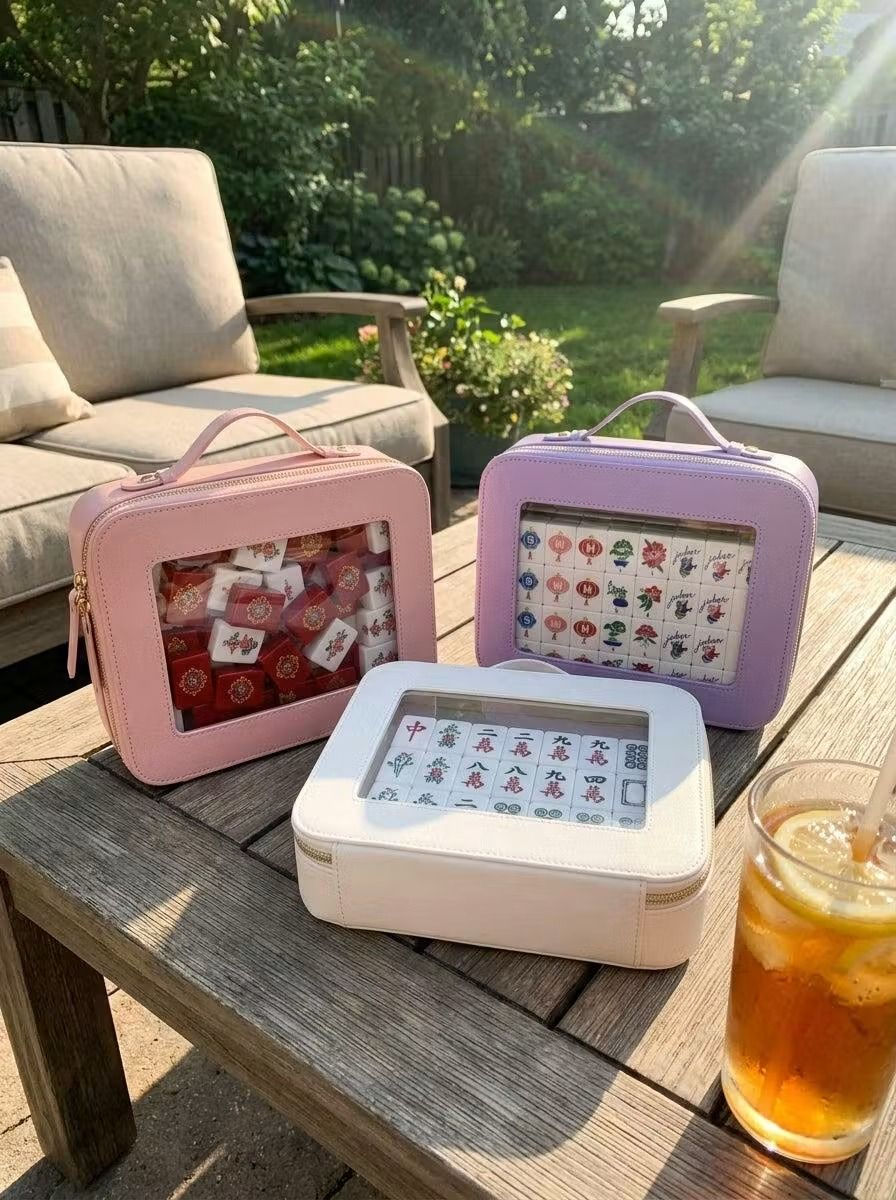
Mahjong cases protect 160 tiles, racks, mats and dice from moisture, dust, UV damage and cracking during storage and transport. Cases vary widely: zippered soft bags suit occasional players and travel; hard-shell or padded cases defend against drops and crushing; divided trays prevent tile chipping. Clean tiles quarterly with a soft, dry microfiber cloth—never water. Store cases upright in cool, dry spaces away from direct sunlight and heating vents; avoid basements prone to humidity swings. Check latches, zippers and foam annually; replace cases if interior padding flattens or exterior damage exposes tiles. Mahstead ships sets in reinforced packaging, and buyers who store cases properly report minimal wear over five years of weekly play.
Your mahjong case protects 160 tiles, racks, mats and dice from moisture, dust, UV damage and cracking during storage and transport. Cases vary widely: zippered soft bags suit occasional players and travel; hard-shell or padded cases defend against drops and crushing; divided trays prevent tile chipping. Clean tiles quarterly with a soft, dry microfiber cloth—never water. Store cases upright in cool, dry spaces away from direct sunlight and heating vents; avoid basements prone to humidity swings. Check latches, zippers and foam annually; replace cases if interior padding flattens or exterior damage exposes tiles. Mahstead ships sets in reinforced packaging, and buyers who store cases properly report minimal wear over five years of weekly play.
Why does humidity ruin mahjong sets faster than heat?
Moisture warps acrylic tiles, loosens joinery, and breeds mold on felt and fabric. Acrylic expands and contracts unevenly when humidity swings; prolonged dampness causes clouding and brittleness. Heat alone causes slow fading; humidity + heat creates rapid delamination. Keep cases in spaces below 60% relative humidity—basements, garages near water heaters, and windowsills in humid climates are the worst offenders. A dry closet or climate-controlled room is ideal. If your region has seasonal humidity peaks, run a small dehumidifier near storage shelves, or place silica gel packets inside the case (replace every three months). This single step prevents 80% of tile degradation we see in our Dallas workshops.
What's the best way to clean acrylic tiles without damaging them?
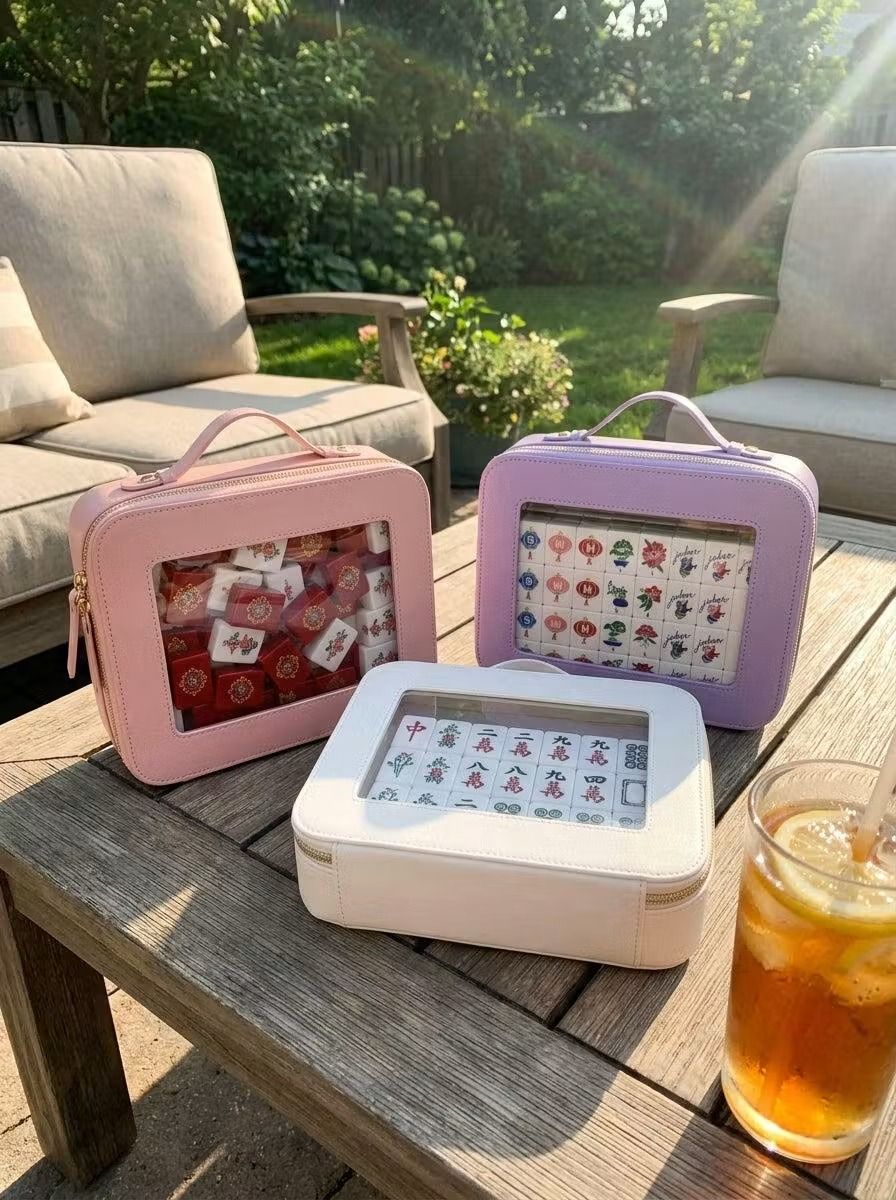
Never soak, spray, or use solvents on acrylic tiles. Use only a soft, dry microfiber cloth—one pass per tile, gently. If tiles are dusty, wipe after each session. For stubborn residue (felt pen marks, table dust), breathe lightly onto a small section of the cloth and rub in one direction; the moisture from your breath is safe. For felt or dragon designs, a brush designed for eyeglasses works well. Avoid paper towels (they scratch) and compressed air (pressurized moisture). Deep clean annually: lay tiles on a clean towel, wipe each side, then let air-dry for 30 minutes before packing. Never immerse tiles or use heat lamps to dry—acrylic will warp. Most players clean tiles three times per season; we do it after the first and last game of each month.
How do you store a case so nothing cracks or warps?
Store cases upright on a flat, level shelf—never stacked, tilted, or in a tight wedge. Tilting stresses hinges and can cause tiles to slide inside, chipping corners. Store away from direct sunlight (UV fades colors and weakens acrylic) and heat sources (radiators, fireplaces, south-facing windows). Avoid temperature swings: don't store in unheated garages, attics, or crawlspaces where winter cold and summer heat cycle constantly. A climate-controlled closet is perfect. Keep cases off the floor (damp air pools there) and away from windows. If your home has radiant floor heating, place cases on a shelf at least three feet up. Arrange cases so the largest, most-used one is easiest to reach—repeated grabbing of a buried case stresses zippers and latches.
What maintenance signs mean it's time to replace a case?
Check your case quarterly. Replace it if: foam interior is flattened (no longer cushions tiles), exterior seams are separating, zippers stick or won't close fully, latches crack or no longer latch, mold or mildew smell persists after airing, padding shows water stains, or tiles touch exposed hard plastic. A compromised case leaves tiles vulnerable during transport and allows dust inside storage. Budget for a new case every five to seven years of weekly play, sooner if used for frequent travel. Before replacing, photograph your old case's interior layout so you pack the new one identically. Don't repair a torn case with tape or glue—moisture will still penetrate, and repairs can snag tiles. When the case goes, donate it to a local community center if it's still structurally sound; many programs reuse them for beginners' sets.
What's the difference between soft and hard cases, and which should you buy?
Case type | Best for | Protection level | Why choose it | Typical lifespan |
Soft zippered bag | Casual/travel, light carry | Dust, minor drops | Lightweight, fits tight spaces, affordable | 3–4 years |
Padded soft case | Weekly players, local transport | Dust, moisture, minor drops | Compact, washable exterior, balanced cost | 5–7 years |
Hard-shell or rigid case | Frequent travel, rough handling | Crushing, drops, moisture sealing | Maximum durability, professional appearance | 7–10 years |
Divided tray case | Organized home storage | Dust, tile chipping, separation | Tiles stay sorted, easy access, no sliding | 5–8 years |
Soft cases work well for players who host weekly games at the same location and carry sets occasionally. Hard cases suit players who travel monthly or more, or who haul sets in car trunks with other cargo. Padded soft cases are the sweet spot for most households: they protect adequately, pack flat, and don't feel bulky in a closet. Choose a case with compartments or dividers if you own multiple mats or racks—mixing loose tiles with hard racks causes chipping. All our travel bags come designed with tile protection in mind, so you'll spend less time worrying and more time playing.
Should you store jokers, blanks, and spare tiles separately?
Yes. Spare jokers, blanks, and any extra tiles that come with a 160-tile set are spares and should never be mixed with the 152 playing tiles. Store spares in a small cloth pouch or labeled ziplock bag inside or beside the main case. This prevents accidental use during a game and keeps playing tiles always ready. Mark the pouch clearly: "Spares—do not play." If a tile breaks or gets lost during the year, you have a tested replacement. Jokers are especially fragile because players handle them constantly; store a couple of extras away from the main deck. If a spare tile breaks, don't panic—you can still play with 151 tiles (the game adapts), but having a spare extends the playable life of your set by years.
🀄 Shop best-selling mahjong sets →

What to check before you buy a new case
Measure your set before ordering. Most 160-tile sets are roughly 10" × 7" × 3.5"; verify the case interior dimensions are at least 1 inch larger on each side to avoid crushing tiles. Check that the case includes separate slots or compartments for racks, mats, and jokers—one big cavity invites sliding and chipping. Feel the foam thickness (at least 1/2 inch on all sides is standard). If ordering online, read the material description: nylon exterior holds up better than thin polyester in humid climates. Confirm that zippers are YKK or equivalent (commercial-grade); cheaper zippers jam and split. If the case includes a strap, tug it—it should hold your body weight without separating from the case. For frequent travelers, look for cases with wheels or a handle that fits over a rolling suitcase handle. Test all latches and hinges before your first game to ensure they work smoothly.
🎁 See our most-loved mahjong sets & accessories →
Shipping and first unpacking: protecting your case in transit
Mahstead ships sets in reinforced packaging designed to cushion 160 tiles during mail and ground transport. When your case arrives, inspect it immediately for damage—don't wait days. Check for dents, crushed corners, water stains, or broken latches before you open it. If the exterior is damaged, take photos and contact Mahstead with your order number before playing. Open the case gently; some cases are wrapped tightly to prevent sliding, and you may need to gently peel back packaging. Verify all 152 tiles are inside (count the jokers first—should be 8), then spot-check a few tiles for cracks or cloudiness. Air out the case for 24 hours in a well-ventilated room to release any plastic odors. Don't dive into a game immediately; let tiles settle. Store the shipping box for at least three months in case you need to return the set; strong cases often arrive compressed and need 48 hours at room temperature to return to true shape.
✨ Find your Mahstead set — free US shipping →
Seasonal care: adjusting storage for winter and summer
Winter: Cold, dry air is ideal for acrylic, but heating systems create dry + warm spots near vents. Store cases away from radiators and baseboard heaters. If your home drops below 50°F at night, acrylic becomes brittle—it won't crack from cold alone, but sudden temperature swings will. Keep cases in an insulated closet, not an unheated garage.
Summer: Heat and humidity are the worst combination. UV rays fade designs, especially on engraved sets. Close blinds during peak sun hours (10 a.m.–3 p.m.). If you live in a humid climate, run an air conditioner in your storage room; even two hours daily at 60% humidity or lower will protect tiles. Avoid storing near air-conditioning condensation (outside units, window units).
Spring and fall: Temperature swings cause acrylic to expand and contract. These transitional seasons are actually the highest-risk times for tile chipping. Check your case twice during spring and fall for signs of stress: small white lines or crazing on tiles (precursor to cracks). If you see crazing, move your case to a more stable temperature zone immediately.
Case longevity: a five-year maintenance timeline
Year 1: Check zippers monthly; replace spare jokers if any break. Clean tiles after every game.
Year 2: Inspect foam for compression. Wipe exterior with a damp cloth once per season.
Year 3: Test all latches and hinges; apply silicone lubricant to sticky zippers (one small drop, then wipe off excess).
Year 4: Replace silica gel packets if used. Check for mold or odor inside case; if found, air-dry for 48 hours and wipe interior with a dry cloth.
Year 5: Evaluate whether padding is still firm. If it's soft or unresponsive when you press it, the case is approaching end of life. Plan to replace by year six.
Most players rotate two cases: one for home and one for travel. This halves the stress on each case and extends their combined lifespan to 10+ years. Having a backup also means you can clean one thoroughly while the other is in use.
When to retire a case and upgrade to a new one
A case has reached the end of its useful life when:
Latches or hinges won't hold or are cracked. Tiles will shift during transport, causing damage.
Padding is flattened or crumbly. You have zero shock absorption; one drop or stack will crack tiles.
Zippers are permanently jammed or teeth are missing. You can't reliably seal the case.
Mold or mildew persists after airing. Interior is compromised; spores will spread to tiles.
Exterior has large cracks or holes. Water and dust will infiltrate.
Retiring a case doesn't mean discarding it. If the structure is sound but cosmetic, donate it to a community center, library, or senior center running a beginner mahjong program. Many nonprofits gladly reuse worn cases for teaching sets. If the case is broken beyond use, recycle the fabric and foam separately according to your local guidelines (most cases are not curbside recyclable). Before you retire a case, transfer all contents to your new travel bag or case and photograph the old setup so you replicate the organization in the new one.

FAQ
Can I use a regular plastic storage container instead of a mahjong case?
Not long-term. Plastic bins trap moisture, lack cushioning, and offer no protection for tile edges. Tiles will cloud, crack, and stick together. A dedicated case has ventilation, padding, and compartments. If you're in a pinch for a week, a plastic bin with silica gel works short-term, but upgrade immediately.
How often should I replace the silica gel packets inside my case?
Replace them every three months during humid seasons (spring, summer, early fall). In dry climates, twice yearly is enough. Check packets by feel—if they're hard and dry, they're still working; if soft or clumpy, they're saturated with moisture and should be discarded. You can reuse packets by drying them in a warm oven (200°F for 30 minutes), but it's cheaper to buy new ones.
Is it safe to store my mahjong case in a basement?
Only if your basement is climate-controlled and stays dry year-round. Most basements have humidity swings and can flood. Basements are the worst place for acrylic tiles—I've seen entire sets ruined by basement moisture in a single winter. Use a climate-controlled closet, bedroom, or living room shelf instead.
My tiles have white crazing lines—can they be repaired?
Crazing is permanent and signals that acrylic is breaking down from temperature or humidity stress. It won't get worse if you move the case to a stable environment immediately, but the lines won't disappear. Crazing usually precedes cracking by months. Move your case, lower humidity, and avoid temperature swings. If crazing spreads to many tiles in weeks, your case location is still too stressful; find a better spot.
Do I need to oil hinges and latches on my case?
Only if they're sticking or squeaking. Use a tiny drop of silicone spray lubricant (not oil, which collects dust) on hinges every two years. Wipe off excess. Most cases don't need maintenance—good storage practices (dry, stable temperature) prevent most hinge and latch problems.
Can I travel with my mahjong set on an airplane?
Yes. Pack the case in your checked or carry-on luggage. Cases meet TSA guidelines. Checked luggage is safer (less jostling) but slower; carry-on is faster. If you're checking it, wrap the case in a towel or old shirt inside your luggage for extra cushioning. Avoid overstuffing—let the case sit flat. Never stack heavy items on top of a mahjong case in luggage. Remove any liquids (cleaning products, lotions) from nearby items to prevent spills.


View More
View More
View More
